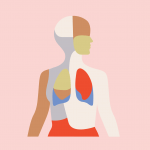
Treating Glioma Near 'Eloquent' Areas Of The Brain
- In glioma, the term “eloquent” is used to describe areas of the brain that control key functions, like movement (motor cortex), speech and language, sensation, vision, and coordination/balance.
- When a glioma grows near or within one of these areas, treatment decisions become more delicate. The goal is no longer just removing or treating the tumor; it is doing so without harming the person’s ability to live independently.
- The goal of surgery for glioma is to achieve “maximal safe resection,” removing as much visible tumor as possible while protecting function.
- To achieve this, surgeons use a variety of tools which may include functional (awake) mapping. During awake mapping, surgeons gently stimulate regions and ask patients to speak or move — helping them define in real time which tissue is “essential” and which can be removed.
- Being awake during part of brain surgery may sound frightening, but for diffuse gliomas near critical areas, it can make the difference between a good outcome and a serious deficit.
Gliomas in these key areas present some of the most complex decisions in modern neuro-oncology.
Read MoreTreating ‘Eloquent’ Areas Of The Brain
Doctors use the term eloquent to describe parts of the brain that control critical, everyday functions. These include:- Movement (motor cortex)
- Speech and language
- Sensation
- Vision
- Coordination and balance
Damage to these areas can cause immediate and sometimes permanent neurological problems such as difficulty speaking, weakness on one side of the body, loss of vision, or changes in personality and cognition.
When a glioma grows near or within one of these regions, treatment decisions become more delicate. The goal is no longer just removing or treating the tumor; it is doing so without harming the person’s ability to live independently.
The First Step: Diagnosis And Genetics
When imaging suggests a glioma, the most important step is obtaining tumor tissue whenever safely possible.
MRI scans can strongly suggest a glioma, but they cannot tell the whole story.
Obtaining tissue allows doctors to:
- Confirm the diagnosis
- Assign a tumor grade (1 through 4)
- Identify critical genetic features, especially IDH mutations
“There’s certain characteristics on the imaging that make it more suspicious for a glioma. But ultimately we know that the most important thing is to have tissue available,” Dr. Botero explains. “And so the first step in diagnosis will typically be done by a neurosurgeon, which is to either obtain a biopsy or if possible to try to resect as much tumor as possible.”
Tissue can then be observed under a microscope to look for features that would indicate glioma.
“Then … throughout the past 20 years, what we’ve learned is that the most important thing beyond how the tumor looks under the microscope is really understanding the molecular and genetics of the tumor,” Dr. Botero adds. “…So we work very closely with pathology to really understand underlying genetics and mutations that allow us to then grade these tumors of anywhere from grade one to four.”
What Is Molecular Testing?
Molecular profiling or testing may identify important biomarkers that can define diagnosis, prognosis, and predict response to treatment.
This should be part of discussions between you and your healthcare team after a cancer diagnosis. With glioma, something known as an IDH mutation is particularly important.
“This is a specific mutation that happen in tumors. When you find them, they show both a different prognosis and different treatment options. So it’s very important to assess carefully for these mutations,” Dr. Botero adds.
Gliomas with an IDH mutation often grow more slowly and may respond well to certain therapies, making them a candidate for more targeted treatment options, like vorasidenib (brand name Voranigo). It is worth noting that the tumor grade is a factor in these targeted treatment options.
Molecular testing is typically performed on a sample of tumor tissue. This tissue is obtained from either surgery or a biopsy. Pathologists conduct the testing; these doctors are specially trained to study the characteristics of tumor tissues.
Molecular testing is widely available throughout the country, making it accessible to most patients diagnosed with gliomas.
Surgery In Eloquent Areas Of The Brain
When you go into the operating room for diffuse glioma resection, surgeons combine several tools and techniques to help protect brain function.
They may use:
- Microscopic visualization & tactile feedback: The surgeon uses vision and touch to distinguish tissue
- Neuro-navigation (“brain GPS”): This preoperative imaging serves as a map
- Intraoperative ultrasound: This real-time imaging is used to spot residual tumor
- Functional (awake) mapping: Waking phases of surgery test language or movement
Being awake during part of brain surgery may sound frightening, but for diffuse gliomas near critical areas, it can make the difference between a good outcome and a serious deficit.
During awake mapping, surgeons gently stimulate regions and ask patients to speak or move — helping them define in real time which tissue is “essential” and which can be removed.
Because diffuse gliomas are infiltrative, even the most skilled surgery can’t guarantee total eradication of every abnormal cell. The goal is maximal safe resection — removing as much visible tumor as possible while protecting function.
Surgeons may perform what’s called supramarginal resection, which means going just a bit beyond what looks abnormal to remove microscopic extensions (additional cancerous material).
But there are hard limits. Once tumor reaches critical brain areas, safety becomes the priority. At that point, a surgeon might stop even if some tumor remains visible.
What Comes After Surgery?
After surgery, the care team reviews how much tumor remains on MRI, where the residual tumor sits, and the tumor’s molecular profile — as well as factors like the patient’s age, symptoms, and life goals
Historically, patients faced two main options: watchful waiting with close MRI monitoring OR additional treatment with chemotherapy and radiation.
Today, there is a third path for many patients with IDH-mutant tumors. IDH inhibitors are oral medications designed to specifically target the IDH mutation driving tumor growth.
As Dr. Botero explains, these drugs work by blocking a key metabolic pathway the tumor relies on, essentially slowing or halting its growth
Chemotherapy and radiation are powerful and effective — but they come with costs, especially in the brain. Radiation, in particular, can cause long-term cognitive effects that may only become apparent years later.
IDH inhibitors offer benefits, such as:
- They can stabilize tumor growth for many years
- They allow patients to delay chemotherapy and radiation
- They are generally well tolerated
Many patients on IDH inhibitors continue working full-time, raising families, and living active lives — even years into treatment
More Aggressive Treatment Strategies
Eloquent brain location can sometimes push doctors toward earlier, more aggressive treatment.
If residual tumor sits near areas controlling movement or speech, even small amounts of growth could have serious consequences.
In these cases, doctors may recommend earlier chemotherapy and radiation or deferring IDH inhibitors to a later phase.
This is not because IDH inhibitors are ineffective, but because stability alone may not be enough when the margin for error is tiny.
Questions To Ask Your Doctor
- Is my tumor in or near areas of the brain that affect key functions?
- Based on my tumor’s location, am I a candidate for surgery?
- What are the potential risks associated with surgery?
- What other treatment options should I consider based on the tumor location and grade?
Learn more about SurvivorNet's rigorous medical review process.