
Understanding Colon Cancer
- Cleveland 19 News anchor Nichole Vrsansky never felt sick, but a routine screening found colon cancer. After successful surgery, she has a message for everyone 45 and older: don’t wait to get checked.
- Colon cancer is highly treatable and curable when detected early. Screening options include at-home tests like Cologuard, though medical experts recommend a colonoscopy for more effective detection.
- Colorectal screenings are generally advised starting at age 45, but individuals with higher risk factors, such as a family history of colon cancer, may need earlier testing. Consulting a doctor about screening options is recommended.
- Know that it is normal to feel sad about changes in your life that might be brought on by death or a cancer diagnosis. Some days can be tougher than others, and overall, talk therapy is helpful — so it’s important to reach out to your doctor, to a therapist or to support groups in your community if you are struggling after loss.
- If you have a colon cancer screening coming up or have recently had one, you may have questions you want answered. SurvivorNet’s proprietary AI tool “My Health Questions” is designed specifically for patients and caregivers.
Vrsansky, a hometown favorite from the Cleveland suburb of Westlake, Ohio, who joined 19 News in 2015, took to Facebook on Tuesday to share her diagnosis and explain how a checkup changed everything.
Read More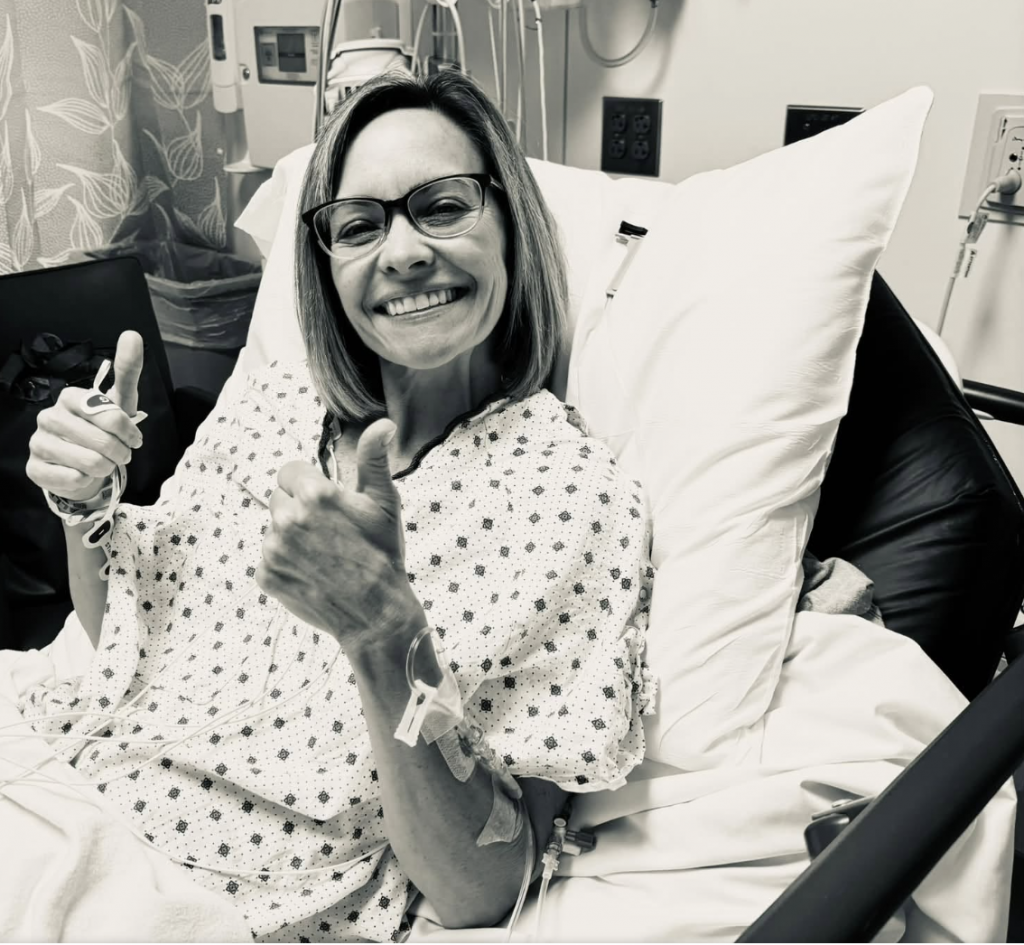
Thankfully, her surgery went well. “Surgery was a success,” she shared, adding with characteristic optimism, “I have some recovery ahead, but I got this. I’m healing, staying strong and I’ll be back on TV soon!”
While she’s grateful for her own outcome, Vrsansky was quick to recognize that cancer has hit others far harder, adding, “I know I’m not alone. So many others are fighting battles of their own. Many far more difficult than mine.”
Long before her own diagnosis, Vrsansky witnessed loved ones face cancer, describing family members and friends who fought “like true warriors,” some of whom did not survive.
For Vrsansky, who has spent years telling the stories of cancer survivors on air, the disease is now personal in a new way.
It’s their courage, she explained, that is now fueling her through recovery. She continued, “THEIR strength is what inspires me now. And I promise to make them proud.”
Expert Resources on Colorectal Cancer
- ‘Colon Cancer Has a PR Problem’: ‘Today’ Anchor Craig Melvin Urges Black Americans to Learn Their Family History, Talk About It
- How to Approach Treatment for Advanced Colon Cancer
- Colon Cancer Symptoms
- Why a Tailored Approach to Colon Cancer Treatment Matters
- SurvivorNet Guide: Treating Early-Stage Colon Cancer
- How Is Rectal Cancer Treated Differently Than Colon Cancer?
- Treating a Bowel Obstruction Caused by Colon Cancer
Vrsansky said she decided to go public because she believes her experience can help others. “If sharing my story saves even one life, it’s all worth it,” she wrote.
Her message to followers was clear and urgent: don’t put off your screening. “So please, if you’re 45 or older and haven’t had a colonoscopy, schedule one,” she urged. “If you’re due for your next screening, don’t put it off. BOOK THE APPOINTMENT. DON’T WAIT.”
Vrsansky had no idea anything was wrong, insisting she had “no symptoms.”
“A routine screening found my cancer early. And that screening may have saved my life,” she explained further, using her platform to spread a simple but urgent message: make the appointment, and make sure the people you love make theirs too.
“You don’t have to feel sick to need a screening. You don’t have to wait for symptoms. It could save your life. It could save someone you love.”
View this post on Instagram
Vrsansky concluded her post by thanking the people who carried her through the hardest moments.
She expressed deep gratitude to her family, friends, and coworkers for the prayers, texts, care packages, meals, and blue ribbons, the symbol of colorectal cancer awareness, that reminded her she was never alone.
“When life brought me to my knees, you reminded me just how much love surrounds me. I have felt it every step of the way, and I will never forget it,” she continued.
She also thanked her care team at Cleveland Clinic, including Dr. Scott Steele, Dr. Ariel Nehemiah, and Miko Grendow, along with the nurses and support staff, saying she is “forever grateful.”
“Today, I am counting my blessings. I am healing. I am hopeful. I am a SURVIVOR. And if there’s one thing I hope you take away from my story, it’s this: PLEASE DON’T WAIT. Your life is worth the appointment,” Vrsansky wrote.
Colon Cancer Is Treatable and Curable When Caught Early
Vrsansky’s experience is a powerful reminder that early colon cancer often causes no symptoms at all, which is exactly why screening matters.
Colon cancer is very treatable and curable if caught early. Colon cancer screenings can involve at-home tests such as Cologuard, but a colonoscopy is more effective, according to SurvivorNet experts.
The cancer starts when abnormal lumps called polyps grow in the colon or rectum. It takes up to 10 years for a colon polyp to become full-blown cancer, according to SurvivorNet experts.
When you have a colonoscopy, the gastroenterologist looks for polyps inside your intestine. Although polyps can’t be felt, they can be picked up by screening tests before they cause a problem, such as colon or rectal (colorectal) cancer.
A polyp found during a colonoscopy can be removed, which can prevent the development of cancer. Almost all polyps that are removed are precancerous, meaning that they have not yet progressed to cancer.
The American Gastrointestinal Association lowered the recommended initial age for colorectal screening from 50 to 45. However, experts recommend screening earlier for some people who may be at an increased risk of developing colon cancer, such as those with a family history of the disease.
WATCH: Debunking misconceptions about colon cancer.
The most common warning sign of colon cancer is a change in bowel habits. Changes in the size or shape of bowel movements may cause constipation or diarrhea. A change in stool color, particularly black or tarry stools, can indicate bleeding from a tumor deep in the colon.
Other symptoms can be harder to pinpoint, such as abdominal pain and unintentional weight loss. Finally, some tumors bleed a small amount over a long period of time, resulting in anemia (low red blood cell count) that is picked up on blood work.
A Colonoscopy Explained
A colonoscopy is a screening test that allows doctors to examine the inside of the colon for signs of cancer or other abnormalities.
To prepare, the colon must be completely emptied. Your doctor will prescribe a bowel prep—a liquid solution taken the night before—that works as a strong laxative and triggers multiple loose stools to clear the colon.
With the colon clean, the gastroenterologist can carefully inspect the lining and remove or evaluate any polyps or suspicious areas.
Follow‑up timing depends on what’s found. If polyps are present, especially larger or multiple ones, doctors typically recommend repeating the colonoscopy in three to five years.
WATCH: What Doctors Look for During Colonoscopies
What Treatment Options Exist for Colon Cancer?
“There are a lot of advances being made in colorectal cancer,” Dr. Heather Yeo, a surgical oncologist and colorectal surgeon at NewYork-Presbyterian/Weill Cornell, previously told SurvivorNet.
Colon cancer treatment is more targeted, meaning doctors often test for specific changes or genetic mutations that cause cancer growth.
Biomarkers are key to tailoring specific treatments. Biomarkers are molecular patterns becoming more commonly used in colon cancer diagnosis, prognosis, and management. According to the National Cancer Institute, a biomarker is “a biological molecule found in blood, other body fluids, or tissues that is a sign of a normal or abnormal process, or a condition or disease,” such as cancer.
“In colon cancer, we’re starting to look more and more at people’s biomarkers, so we’re starting to take the cancers, sequence them, understand where the different mutations are to figure out whether or not someone has a normal gene here or an abnormal gene,” Dr. Yeo explained.
“Those are the areas that people want to be able to target a little bit more. We’re getting close to more of what we would call precision medicine, meaning we can start looking at people’s genetic mutations and think about how they might respond to different drugs.”
WATCH: Colon cancer symptoms.
There are different types of biomarkers, including DNA, proteins, and genetic mutations found in blood, tumor tissue, or other body fluids. The biomarkers most commonly used in colon cancer management are:
- Genetic mutations within the tumor, such as MMR/MSI, KRAS, BRAF, and HER2
- Bloodstream carcinoembryonic antigen (CEA)
CEA is a protein produced by most tumor cells (but not all) and can be picked up in the bloodstream. High CEA levels do not establish a colon cancer diagnosis. However, higher CEA levels correlate with a worse prognosis and potential metastasis. Carcinoembryonic antigen is important for post-treatment follow-up to ensure the cancer hasn’t returned. Be sure to check with your doctor before treatment starts to ensure a CEA blood sample has been obtained.
More on Treating Colon Cancer
Surgery and chemotherapy are common approaches to colorectal cancer.
Some examples of Food and Drug Administration (FDA) approved chemotherapy drug treatments include:
- FOLFOX: leucovorin, 5-FU, and oxaliplatin (Eloxatin)
- FOLFIRI: leucovorin, 5-FU, and irinotecan (Camptosar)
- CAPEOX or CAPOX: capecitabine (Xeloda) and oxaliplatin
- FOLFOXIRI: leucovorin, 5-FU, oxaliplatin, and irinotecan
- Trifluridine and tipiracil (Lonsurf)
WATCH: Understanding Your Options with Metastatic Colon Cancer
Among metastatic colon cancer patients, multiple treatment options exist, including surgical and non-surgical options.
One treatment option includes an oral treatment called Fruquintinib, which is a targeted therapy for adults with metastatic colorectal cancer who have tried other treatments. Results from a trial published last year showed the drug improved overall survival and progression-free survival, which measures the amount of time before the cancer returns or spreads. It works by blocking the growth of blood vessels, which increases tumor growth.
Once you get to the metastatic setting, many patients “just run out of options,” Jennifer Elliott, head of solid tumors at Takeda, explained to SurvivorNet at the ASCO Annual Meeting. So it was critically important for Takeda to do this deal to in-license fruquintinib. We hope to give patients another option.”
Fruquintinib has been approved in China since 2018 and was originally developed by the Chinese biopharmaceutical company HUTCHMED. In January 2023, Takeda Oncology acquired the exclusive worldwide license for the drug outside of mainland China, Hong Kong, and Macau.
What You Should Know About Colon Cancer Risk Factors
For some people, certain risk factors can influence their risk of getting colon cancer. They include the following:
- Are older. About 90% of cases are in people aged 50 or older, according to the U.S. Centers for Disease Control & Prevention (CDC). Yet it is possible to get this cancer earlier in life.
- Have inflammatory bowel disease. Crohn’s disease or ulcerative colitis can, over time, cause cells in your intestines to turn cancerous.
- Have a family history of this cancer. Just under one-third of people who get colon cancer have family members with the disease.
- Have a gene mutation. About 5% of colorectal cancers are caused by an inherited genetic mutation that causes syndromes such as familial adenomatous polyposis (FAP) or hereditary nonpolyposis colorectal cancer (Lynch syndrome).
- Don’t exercise very often. Staying active can lower your risk.
- Eat a diet that’s high in meat. Regularly eating red meats like burgers and steaks, and processed meats such as hot dogs and bacon might put you at higher risk. Eating more fruits, vegetables, and whole grains instead might lower your risk.
- You are overweight or obese. Having too much weight increases your risk of both getting colon cancer and dying from it.
- Drink a lot of alcohol. Limiting alcohol to one drink daily for women and two drinks daily for men could help lower your risk.
- Use tobacco. Long-term smokers are more likely to get this cancer than nonsmokers.
The Spike in Colon Cancer Cases in Young Adults
The average age people are diagnosed with colon cancer is 68 for men and 72 for women, according to the American Cancer Society.
However, the National Cancer Institute reports that since the 1990s, colorectal cancer cases have been rising among adults younger than 50. Research published in CA: A Cancer Journal for Clinicians found that the proportion of cases in people younger than 55 “increased from 11% in 1995 to 20% in 2019.”
“We know rates are increasing in young people, but it’s alarming to see how rapidly the whole patient population is shifting younger, despite shrinking numbers in the overall population,” cancer epidemiologist and lead study author Rebecca Siegel said.
Researchers are still trying to determine why younger people are being diagnosed in more significant numbers. Some experts point to risk factors, which include obesity, physical inactivity, and smoking, as a possible explanation for the increase.
“We don’t know for sure why we are seeing earlier onset and death from colon cancer,” Dr. Yeo explained.
“It is likely a combination of factors, including diet and genetics as well as access to care and some environmental factors.”
WATCH: How Doctors Look for Polyps.
Most colon cancers can be prevented if people are regularly screened. The screening usually involves a colonoscopy, in which a long, thin tube attached to a camera is used to examine the colon and rectum. If no polyps are discovered, the following screening won’t be needed for ten years.
“We know that colon cancers can be prevented when polyps are found early,” Dr. Yeo told SurvivorNet. “Lowering the screening age helps somewhat with this, but access to care is a real problem,” Yeo added.
The U.S. Preventive Services Task Force (USPSTF) lowered the recommended initial age for a colorectal screening from 50 to 45 in 2021.
The American Cancer Society had recommended the same change in 2018. Since then, the American Gastroenterological Association and the U.S. Multi-Society Task Force on Colorectal Cancer have also supported lowering the recommended starting age.
Questions To Ask Your Doctor
If you have a cancer screening coming up or have recently had one, you may have questions you want answered. SurvivorNet’s proprietary AI tool “My Health Questions” is designed specifically for patients and caregivers.
WATCH: How One Cancer Survivor and Her Sister Used “My Health Questions” to Navigate Care
This powerful resource is embedded across the SurvivorNet website and delivers structured responses grounded in clinical guidelines and medically reviewed research to help people better understand their treatment options and feel more confident navigating care.
My Health Questions can also help patients come up with useful questions ahead of their next appointment.
‘Adversity and the Art of Happiness,’ How Hardship Makes You Stronger
Contributing: SurvivorNet Staff
Learn more about SurvivorNet's rigorous medical review process.


