Facing Stage 4 Cancer with Grit, Grace, and a Guitar in Hand
Country blues singer Nat Myers, 35, is battling stage 4 sarcoma, a type of cancer that starts in soft tissues… found mostly in the arms, legs, chest, and abdomen according to the National Cancer Institute. The diagnosis forced him to cancel shows and reshaped his life, but hasn’t silenced his music or spirit.
Despite doctors giving him weeks to live, Myers remains defiant: “I live by my odds and not theirs… I will overcome this.” His chemotherapy treatment has shown signs of progress, shrinking his tumors, though its physical toll cannot be ignored.
Chemotherapy stops cancerous cells from growing, dividing, and spreading to other organs. It works by traveling through the bloodstream and killing cancerous cells. However, the process also impacts healthy cells, leading to the grueling side effects we’ve come to know.
Your doctor will help you manage the side effects by either adjusting your medication or offering recommendations to help you cope, such as pressure bracelets and breathing exercises for nausea or cryotherapy, which minimizes hair loss.
For more on how to manage chemotherapy side effects, check out SurvivorNet’s digital guide.
Nat Myers, the 35-year-old country blues artist known for soul-stirring tracks like “Yellow Peril” and “Undertaker Blues,” is confronting the fight of his life. Once recognized by his signature long hair and raw, poetic sound, Myers is now navigating a stage 4 cancer diagnosis that has upended his world in just a few months.
“My hair has been falling out again, but I’m working on a lotta new ones, like this rag. Calling it Young Mind, Old Soul,” he shared in a recent Instagram post, while refusing to let go of his creative spirit.
Earlier this year, Myers began feeling unwell and initially believed he was battling a stubborn infection. But the truth was far more serious.
“What I thought was a prolonged lung infection turned out to be much more sinister, with growths around my heart and pulmonary artery,” he revealed in a GoFundMe post.
Doctors diagnosed Myers with stage 4 sarcoma, a rare and aggressive cancer that affects soft tissues like muscles, tendons, and blood vessels.
NASHVILLE, TENNESSEE – OCTOBER 09: Nat Myers performs during The Prine Family Presents: You’ve Got Gold Celebrating The Songs Of John Prine at The Basement East on October 09, 2023, in Nashville, Tennessee. (Photo by Mickey Bernal/Getty Images)
“Soft tissue sarcoma is a broad term for cancers that start in soft tissues… found mostly in the arms, legs, chest, and abdomen,” according to the National Cancer Institute. Myers noted that his tumors had spread to his arms and veins.
The diagnosis forced Myers to cancel a string of performances and shift his focus to his health. But even as medical professionals gave him a prognosis of mere weeks to live, Myers refused to surrender.
“Doctors of varying humanity have given me days or weeks to live, but I live by my odds and not theirs,” he wrote defiantly.
His resolve is unwavering.
“I am taking things day by day and conserving and building the energy I need to overcome this affliction. I refuse to speak from the past tense, because there is beauty and life in the struggle I am currently fighting, and I will overcome this,” Myers said.
In September, a glimmer of hope emerged. Myers shared that his tumors were responding to chemotherapy.
NASHVILLE, TENNESSEE – FEBRUARY 27: Nat Myers attends the opening of “American Currents: State of the Music” at Country Music Hall of Fame and Museum on February 27, 2024, in Nashville, Tennessee. (Photo by Jason Kempin/Getty Images for Country Music Hall of Fame and Museum )
“Because my tumors appear to be responding to the chemo, they want me to keep the course as it is with OSU,” he said on Instagram. “But they said that as trials present themselves, & as the tumors shrink, isolated therapies & more options, are already in their pipeline, & part of the plan they are mapping out for me.”
Still, the treatment has taken a toll.
“I barely made it through. I have never been so blue, and never been so grateful,” he admitted.
Despite the fatigue and emotional weight, Myers has continued to push forward. As autumn arrived, so did signs of recovery—and a return to the stage.
“I’m excited to hit the road this September & October & see a bunch of y’all,” he announced on Instagram, marking his comeback with a string of concert dates.
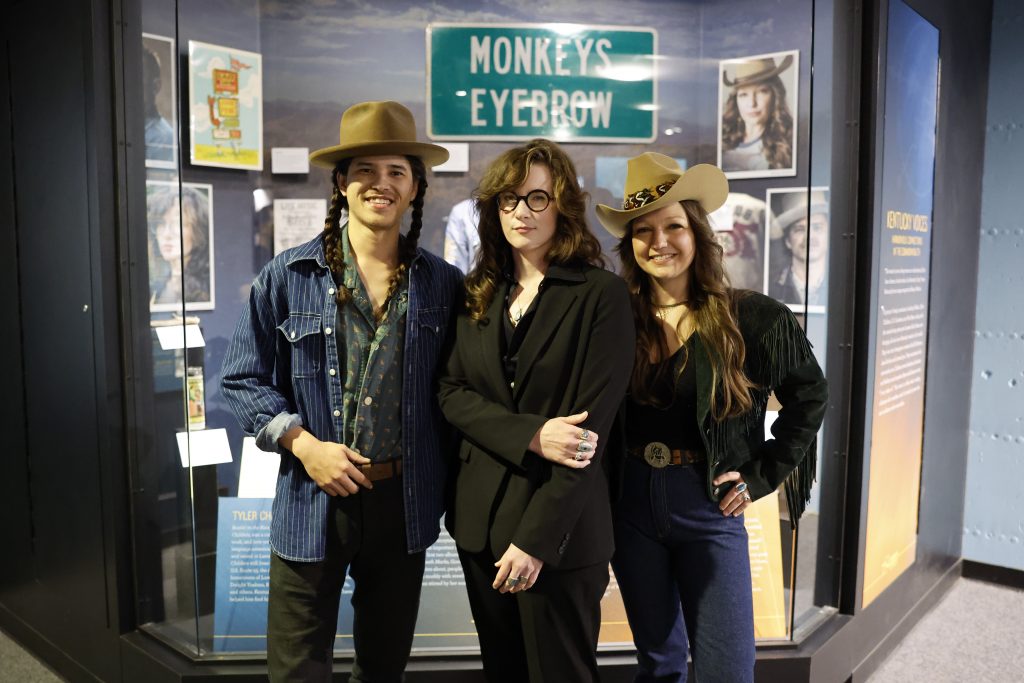
NASHVILLE, TENNESSEE – FEBRUARY 27: (L-R) Nat Myers, S.G. Goodman, and Kelsey Waldon attend the opening of “American Currents: State of the Music” at Country Music Hall of Fame and Museum on February 27, 2024, in Nashville, Tennessee. (Photo by Jason Kempin/Getty Images for Country Music Hall of Fame and Museum )
That announcement came just days after another personal blow: the passing of his father.
“Rest easy, daddy, may your body and mind be whole again. Look over your poor son,” Myers wrote in a heartfelt tribute, accompanied by photos of his late father.
Now, with his once-flowing hair replaced by a shaved head, Myers is reclaiming his place in the spotlight. He plans to tour across the U.S. and Europe, bringing his music—and his message of resilience—to fans old and new.
“MUSIC!!! The best medicine,” wrote one fan, Celeste, in response to his post. “Sending you continuous prayers and love, bluegrass brother. You are a light and inspiration to so many.”
Through grief, treatment, and uncertainty, Nat Myers continues to sing, proving to himself and others battling a diagnosis that, though your life is changed, you can still cling to what brings you joy and happiness as you fight towards healing.
Myers says, “I was told that chemo does a complete 180 on one’s body chemistry, and I feel the poison and the cure.” Chemotherapy is a common cancer treatment, and while it can be tremendously effective, getting through it is often easier said than done. Chemotherapy is an effective tool for oncologists to help treat cancer by stopping cancerous cells from growing, dividing, and spreading to other organs. Chemo works by traveling through the bloodstream, killing cancerous cells. However, the process also impacts healthy cells, leading to side effects.
Patients almost universally experience fatigue, often alongside gastrointestinal side effects, such as nausea. Doctors have many effective medications to combat chemo-induced nausea. “But mitigating that fatigue often depends on the patient,” says Dr. Renata Urban, a gynecologic oncologist at the University of Washington in Seattle.
WATCH: What You Think You Know About Chemotherapy Side Effects May Be Wrong
“Neuropathy is probably one of the most challenging side effects,” says Dr. Renata Urban, a gynecologic oncologist at the University of Washington in Seattle. Neuropathy results from damage to the peripheral nerves. It usually resolves after chemotherapy treatment, but sometimes symptoms can persist. While it’s typically characterized by numbness or a pins-and-needles sensation in the hands and feet, neuropathy can have several different symptoms, including:
Weakness in the hands or feet
Stabbing or burning pain in the hands or feet
Difficulty gripping, such as when holding a fork
Difficulty with fine motor skills, such as writing or buttoning a shirt
Nausea and vomiting are common side effects of chemotherapy. When chemotherapy affects the rapidly dividing cells in the stomach lining, the resulting cellular havoc in the gastrointestinal tract can lead to side effects such as nausea and vomiting. However, doctors can help patients mitigate the hit with various medications before, during, and after treatment.
“Part of the chemotherapy prescription includes a set regimen of anti-nausea medications,” says Dr. Renata Urban, a gynecologic oncologist at the University of Washington in Seattle. “We also ensure that patients have medications at home that they can use should they develop nausea after treatment.”
Hair loss is another side effect of chemotherapy.
WATCH: Coping with hair loss.
“For cancer patients, losing one’s hair can be unbelievably stressful. To start with, the dread of losing one’s hair can lead to some sleepless nights and feelings of anxiety,” Dr. Samantha Boardman, a New York-based psychiatrist and author, told SurvivorNet.
Chemotherapy can cause hair loss. It usually begins about three to four weeks after chemotherapy and continues throughout treatment.
It happens because this treatment targets quickly dividing cells throughout the body. That includes cancer cells but also hair cells.
Most patients can expect regrowth four to six weeks after treatment. However, it is possible when your hair grows back, you may notice some changes in its color and texture.
Doctors don’t have an arsenal of prescription medications to combat fatigue. However, you can do several things to help minimize the hit and restore your energy.
Exercise: While it may be counterintuitive, physical activity can help alleviate side effects, especially fatigue. “Although ovarian cancer is not common, we often draw upon the experience of patients with breast cancer and colon cancer that have shown that physical activity can not only improve quality of life but may also have beneficial impacts on cancer outcomes,” Dr. Urban says.
Eat well: Even though nausea may interfere with your ability to eat a healthy diet, it’s essential to ensure you’re eating appropriately, getting enough protein, and not losing weight. Not only will nourishing your body support your recovery, but it may also help you feel more energized.
Sleep: Want to mitigate fatigue? Be sure to maintain your regular sleep-wake cycle while on treatment. Sticking to a set sleep schedule helps reduce fatigue by ensuring enough hours for your body to heal and restore itself each night. It may also help you recover more quickly by keeping energy levels high during the daytime.
Questions for Your Doctor
If you are undergoing chemotherapy and anticipate doing so in the future, you may want to begin conversations with your doctor about how to manage it best. Here are a few questions to help you kickstart your discussion.
How can I best prepare for chemotherapy to minimize side effects?
Are there any dietary or lifestyle changes I should make during treatment?
What symptoms should I watch out for, and when should I contact you if I experience them?
Are there any medications or supplements that can help manage chemotherapy side effects?
How often will I need to receive chemotherapy, and how long will the treatment last?
How will chemotherapy affect my immune system, and what precautions should I take to avoid infections?
Can you provide resources or referrals to support services, such as counseling or support groups, for coping with the emotional and psychological aspects of chemotherapy?