The Power of Creative Passion During Cancer
- Actor James Van Der Beek, 48, says he is feeling “lit up” with heightened creativity after a recent trip back to New York City, where he became emotional while singing with a pianist for a secret project, saying that moment brought him out of pain for the first time in days.
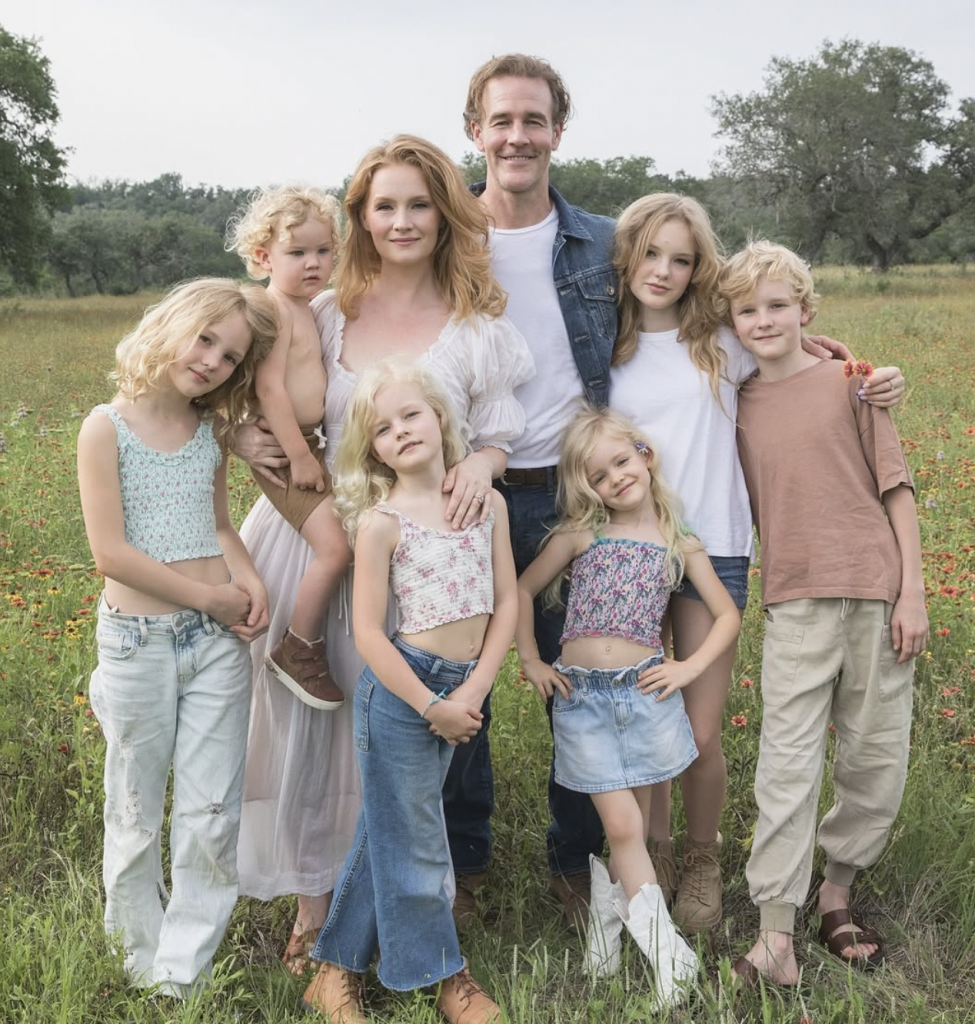
- The husband and father of five, who has been living with advanced colon cancer since August 2023, has been sharing his personal journey on social media as he navigates new challenges while living with the disease, reigniting all of his childhood dreams and passions.
- Many survivors turn to artistic expression as a way to cope with the range of emotions a cancer diagnosis can bring. During these challenging times, turning to therapy such as music, dancing, painting, and other forms of art can be extremely helpful.
“When we create, we are literally aligning our energy with that of the creator. We become creators,” the Dawson’s Creek alum captioned a recent Instagram video, detailing a beautiful experience he had singing for a top-secret project. “And in that place of creation… I truly believe anything is possible.”
Read More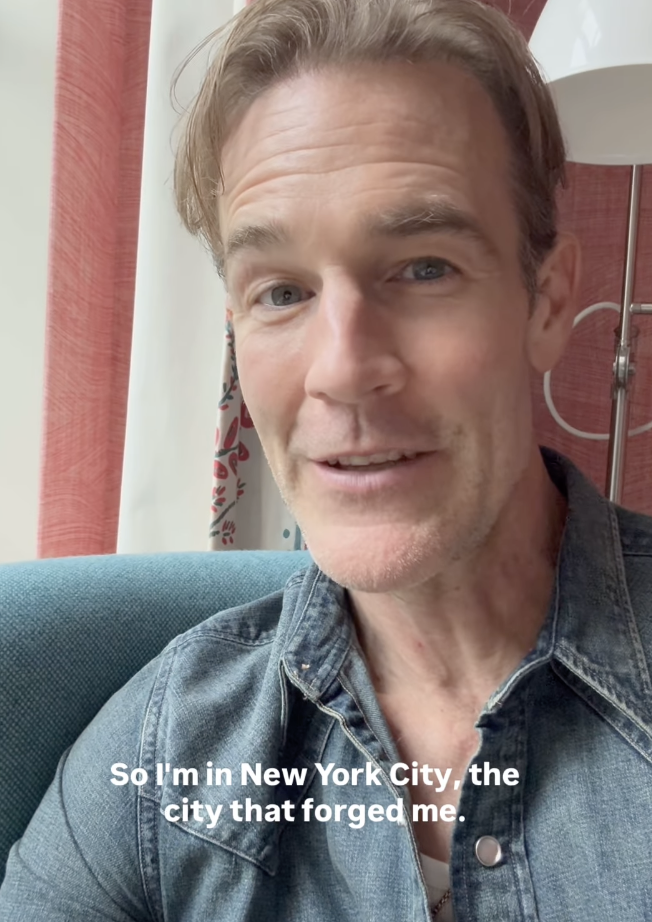
At age 15, when Van Der Beek was “running around” the city auditioning, “all I wanted to do was to sing on Broadway, that’s why I got in the industry,” he shared.
“And then at age 20, I accidentally became a teen idol and so that plan went out the window,” he continued, going on to say that he had to reformulate his artistic path.
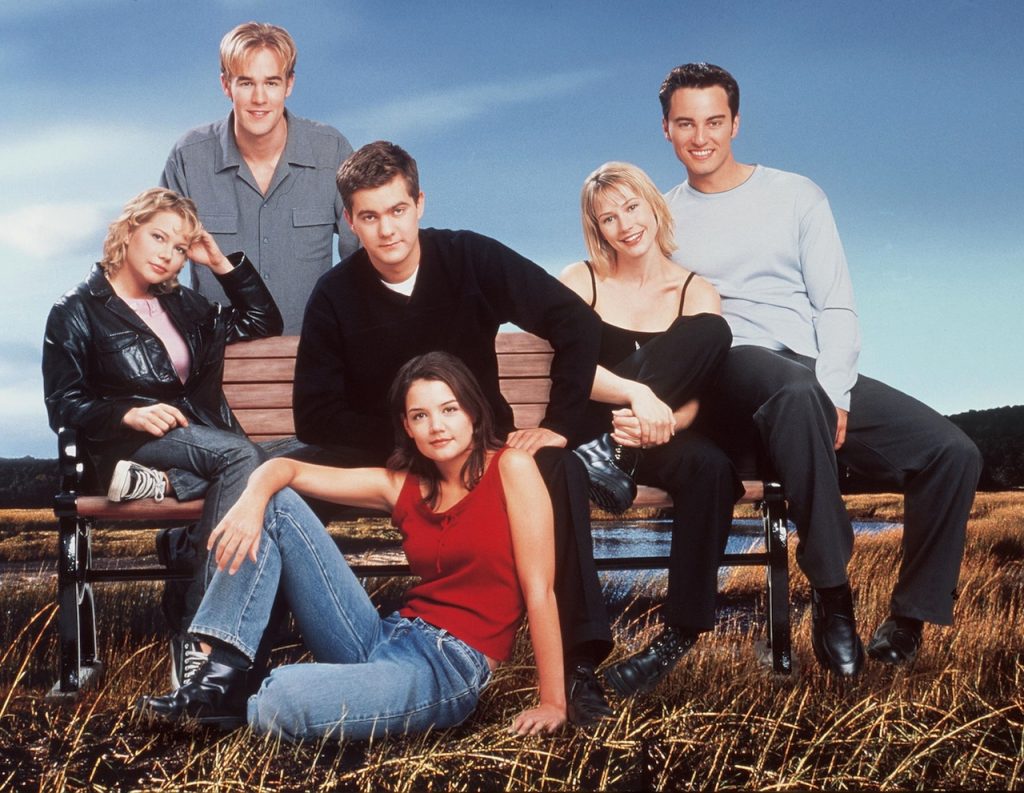
“20-year-old me was like, ‘the Matt Damon career, that’s what I want’ and it’s a career that only one guy in the world gets to have, and that’s Matt Damon,” Van Der Beek added with a little laugh.
RELATED: Creativity and Self-Improvement: 8 Ways to Bring More Art Into Your Daily Life
He admitted to “beating himself up” a bit for not going for that [leading man] career goal sooner, explaining that he then moved to Texas and started a family, “did all these beautiful things.”
“But then today, in New York City, I got to sing,” he teased of a new project. “And I got to be that flow of creativity with somebody else playing the piano and I was so emotionally lit up I was overcome, I almost started to cry.”
Keep On ‘Dreaming and Goal-Setting’
“And it just occurred to me how many of us out there are running around trying to accomplish goals from younger, reactive, less wise versions of ourselves and how much happier we would be if we could erase those outdated goals — forgive ourselves for not meeting that bar. And just go do something that lights us up. That has always lit us up, that has always been a passion.”
Pursuing a Passion Helps Define and Build Resilience
“How much happier would we be? And how much good could come from that? I mean, I was singing today and I was not in pain for the first time in four days. It’s been a rough week, I’ll be honest with you, but that passion cured it — at least temporarily.”
Signing off to his fans, he said, “Anyway, happy dreaming and happy goal-setting, everybody.”
Turning to Artistic Expression Amid Cancer
Many survivors turn to artistic expression as a way to cope with the range of emotions a cancer diagnosis can bring. During these challenging times, turning to therapy such as music, dancing, painting, and other forms of art can be extremely helpful.
In 2020, researchers studied the outcomes of therapeutic art-making in patients undergoing radiation oncology treatment. Although the research was limited in scope, it found patients reported decreased depression, anxiety, drowsiness, and tiredness after mindfulness-based art therapy intervention.
Dr. Dana Chase, a gynecologic oncologist at UCLA Health, told SurvivorNet that emotional health and good quality of life are associated with better survival and better outcomes. Art therapy can influence a cancer patient’s overall emotional health.
Also speaking from experience on this topic, we previously sat down with two-time cancer survivor, Bianca Muniz, who found solace in creating music while she was undergoing cancer treatment.
Her cancer journey began at just 11 years old when she was diagnosed with ovarian cancer. Then, at 22 years old, she was diagnosed again, but this time with breast cancer. Muniz says that undergoing numerous different treatments did have an impact on her voice, but she never let that get in the way of her love of performing, and cancer actually served as a muse for creating new music.
WATCH: Two-time cancer survivor used music therapy to help her along her journey
“This experience has had two different effects on my creativity and my music, so I’ve gotten a lot of inspiration from it,’ Muniz said. “But also the side effects of treatment, of chemo — and surgery — have definitely had a little bit of a negative effect on my voice, but then again, I love performing. I always feel happy after I’ve performed.”
The Link Between Art and Your Health
Doctors and researchers have uncovered a growing connection between the arts—like music and visual expression—and personal healing in recent years. As highlighted by SurvivorNet, creative pursuits have proven especially powerful for cancer survivors. For example, actor Val Kilmer found solace in art during his cancer journey; when acting became too physically demanding, he leaned into artistic expression as a meaningful way to cope with stress and support his recovery.
For some, the link between art and healing is unsurprising.
“Across the history of time, music has been used in all cultures for healing and medicine,” said Dr. Shilagh Mirgain, a health psychologist at the University of Wisconsin School of Medicine and Public Health, in an interview with UW-Health. “Every culture has found the importance of creating and listening to music.”

Many psychologists are incorporating art therapy into their work with patients. According to the American Art Therapy Association, art therapy can accomplish many goals, such as improving cognitive and sensory motor functions and nurturing self-esteem and self-awareness. It can help patients œcultivate emotional resilience and become more insightful about their personal obstacles.
Lofty goals, of course, but therapists are finding that patients are reacting well to the treatment, which can benefit people battling cancer and chronic disease.
Art Has Many Benefits
In The Music of Strangers, a 2016 film, world-renowned cellist Yo-Yo Ma travels with the Silk Road Ensemble worldwide, learning about music in different parts of the globe.
Ma discusses his decades-long career in making music and his growth with the Ensemble, a collective of about fifty members who have performed for millions of fans worldwide.
“We started as a group of musicians getting together and seeing what might happen when strangers meet,” says Ma. “Now, when I’m with them, I feel a huge amount of creativity and trust. I am supported, inspired, and energized by their work.”
The film also emphasizes how artistic creativity is essential to everyday life.
People who incorporate the arts, such as music, art, theater, and literature, into their daily lives seem to thrive. In fact, surrounding yourself with the arts can improve the quality of your life in many ways.
8 Ways to Incorporate the Arts into Your Daily Life
- Use apps! Art and technology are not incompatible. Try creation apps like ProCreate to help you design your own work. Subscribe to apps like DailyArt, which send you an image of a new piece of art daily and a description of the work and the artist.
- Visit museums. Many museums are open during the day, so why not take a walk during your lunch break to see the exhibits? Many are free and open to the public, such as the Smithsonian galleries in Washington, DC. Don’t live or work near a museum? Many museums and art centers have virtual exhibits you can visit at your own leisure.
- Join a book club. Book clubs are more popular than ever! Find a book club in your area by checking out social media sites or visiting your local library. You can also start one on your own!
- Enjoy the arts every minute of your day. If you have a long drive, listen to an audiobook (many are free through your library) or subscribe to a particular artist or genre on Spotify.
- Take a class. Spend one evening a week or part of your weekend taking a class at your local community college, library, or community center. Have you always wanted to learn about photography, ceramics, playing the piano, or using watercolors?
- Start a sketchbook or journal. Spend a few minutes a day working in a journal or drawing in a sketchbook. Don’t have a set agenda, “just put down your thoughts or ideas, without editing yourself, or pick up your pencil and begin sketching.
- Make the ordinary extraordinary. Look at your phone case, wallet, mousepad, and iPad case. Are they boring? Is there room to make them more interesting? Why not invest in a more artistic item? Shop at stores that sell the work of local artists or check out sites like Etsy, where many artists set up shop.
- Steep your space in art. Say goodbye to bare walls or boring cubicle spaces. Incorporate art in every aspect of your daily space.
Stream The Music of Strangers and other films about inspiring people on SurvivorNetTV.
Understanding Colon Cancer and Van Der Beek’s Diagnosis
James Van Der Beek learned he had colorectal cancer last year after getting a colonoscopy done. He told PEOPLE in his tell-all interview that his bowel issues led him to get checked.
“I thought maybe I needed to stop coffee. Or maybe not put cream in the coffee. But when I cut that out and it didn’t improve, I thought, ‘All right, I better get this checked out,'” he said.
View this post on Instagram
Before Van Der Beek’s interview was published, the beloved actor wrote the following alongside a November 3, 2024 Instagram post, “‘It is cancer…’ Each year, approximately 2 billion people around the world receive this diagnosis. And I’m one of them. There’s no playbook for how announce these things, but I’d planned on talking about it at length with People magazine at some point soon… to raise awareness and tell my story on my own terms. But that plan had to be altered early this morning when I was informed that a tabloid was going to run with the news.
“I’ve been dealing with this privately until now, getting treatment and dialing in my overall health with greater focus than ever before. I’m in a good place and feeling strong. It’s been quite the initiation, and I’ll tell you more when I’m ready.
“Apologies to all the people in my life who I’d planned on telling myself. Nothing about this process has occurred on my preferred timeline… But we roll with it, taking each surprise as a signpost, pointing us toward a greater destiny than we would have discovered without divine intervention,” he continued. “Please know that my family and I deeply appreciate all the love and support.”
View this post on Instagram
Colorectal cancer happens when polyps are not removed and become cancerous. It can take up to 10 years for a colon polyp to become cancerous, according to SurvivorNet experts.
“We know that colon cancers can be prevented when polyps are found early,” Dr. Heather Yeo, a surgical oncologist who specializes in colorectal cancers at Weill Cornell Medicine, told SurvivorNet.
“Lowering the screening age helps somewhat with this, but access to care is a real problem,” Dr. Yeo added.
Dr. Zuri Murrell, a colorectal cancer surgeon and Director of the Cedars-Sinai Colorectal Cancer Center, previously explained the colonoscopy procedure to SurvivorNet.
“When we see a polyp, we actually physically take the polyp out through the colonoscope,” he explained. “What does that mean? That means we basically put a wire through with a little bit of a flange at the end, and we pull the polyp out. Now, note there is no pain with that. Inside the colon, there are no pain fibers. So, there’s no pain.”
The advantage of a colonoscopy is that your doctor can remove any polyps found during the test. Many colon cancers can be caught on colonoscopy before they develop or when the polyps are small enough to be removed without surgery.
Looking for Polyps During Colonoscopy
The American Gastrointestinal Association lowered the recommended initial age for a colorectal screening from 50 to 45.
The U.S. Preventive Services Task Force recommends guidelines that state colon cancer screenings should begin at 45 years old. This is in response to the increase we see in colon cancer diagnoses in younger adults.
However, many insurance companies still do not cover the cost of screenings for those under 50. In the past, the disease had predominantly been found in adults 50 years or older, but for those predisposed to getting it at a younger age, these new guidelines could help catch it earlier.
Understanding Treatment Options
Although, Van Der Beek has chosen to keep the details of his colon cancer journey and treatment process private, it’s important to understand that your doctor has many ways to treat colon cancer, depending on what stage the cancer is, including:
- Surgery
- Radiation therapy
- Chemotherapy
- Targeted therapy
- Immunotherapy
Surgery
Surgery is the main treatment for most early-stage colon cancers, according to the doctors SurvivorNet spoke with. The surgeon will remove the part of the colon or rectum where there is cancer, along with a small area of healthy tissue around it. Taking out as much of the cancer as possible is important for improving your outcome.
The surgery may be performed through small incisions (laparoscopy), or through a larger incision. Some people may need to wear a special bag (ostomy) to collect wastes after surgery.
Deciding When to Operate on Colon Cancer
Radiation Therapy
This treatment aims high-energy x-rays at the cancer to destroy the abnormal cells. The radiation can come from a machine outside your body, or be placed directly inside your body. Sometimes people get radiation before surgery, to shrink the tumor and make it easier for the surgeon to remove. This is called neoadjuvant radiation.
Chemotherapy
This treatment uses strong medicine to stop cancer cells from dividing, no matter where they are in your body. You may get a combination of chemotherapy drugs as your first treatment. Chemotherapy has been very well studied for colorectal cancer, and it is known to improve survival.
The most common therapy is a combination of chemo drugs called FOLFOX:
- FOL = leucovorin calcium (folinic acid)
- F = fluorouracil
- OX = oxaliplatin
Your doctor may add medications like irinotecan (FOLFIRI) or cetuximab, depending on how well your tumor shrinks with treatment and other specifics about your particular cancer. For FOLFOX, the medications are given through the vein and require regular doctor visits.
To determine exactly which chemotherapy regimen you get, your doctor will consider your age and how well you might tolerate the side effects of chemotherapy. Gene mutations (for example, BRAF and KRAS) and the location of the primary colon tumor also factor into the decision.
You can also get chemotherapy before colon cancer surgery, which is called neoadjuvant chemotherapy. Getting chemo first helps to shrink the tumor, which can make both the surgery and recovery easier, according to SurvivorNet’s experts. Chemo is also a treatment for cancer that returns after therapy.
Targeted Therapy
This treatment targets substances like proteins or genes that the cancer needs to grow. This makes targeted therapy more precise than chemotherapy, and less likely to damage healthy cells. One example of targeted therapy is bevacizumab (Avastin), which stops the growth of new blood vessels that feed tumors. Another group of targeted therapies are called epidermal growth factor receptor (EGFR) inhibitors, which block the cancer from growing.
Immunotherapy
This treatment makes your own immune system a more efficient cancer fighter. A group of drugs called checkpoint inhibitors, which includes pembrolizumab (Keytruda) and nivolumab (Opdivo), work by preventing cancer cells from hiding from your immune system. Checkpoint inhibitors may extend the amount of time before the cancer spreads.
Dr. Paul Oberstein, on which treatments doctors use to turn stage 4 colon cancer into a chronic but manageable disease
Contributing: SurvivorNet Staff
Learn more about SurvivorNet's rigorous medical review process.