
Understanding GLP-1 Weight Loss Drugs
- “Mean Girls” star Daniel Franzese, 48, has lost 135 pounds in three years without GLP-1 weight-loss drugs, crediting a health scare, regular workouts, cutting out alcohol and sugar, and counting macros.
- There’s a range of weight-loss medications on the market today. Novo Nordisk makes semaglutide, sold under the brand names Ozempic, Wegovy, and Rybelsus, while tirzepatide is marketed as Mounjaro and Zepbound. Other options include phentermine (brand names Adipex-P and Lomaira), an appetite-suppressing prescription drug; Contrave, which combines naltrexone and bupropion; and bupropion on its own, the generic version of Wellbutrin.
- According to the CDC, carrying excess weight or having obesity raises the risk of developing 13 different types of cancer, including cancers of the breast, colon, ovaries, and stomach.
- Anyone thinking about starting a weight-loss medication should discuss the decision with their healthcare provider first, and should treat diet and exercise as an essential part of any treatment plan rather than a substitute for it.
- SurvivorNet’s sister site, SNWeightloss, provides a wide range of expert-driven resources on GLP-1 medications, including how they function, their potential uses, side effects, and emerging research that continues to offer hope for people managing weight loss while also potentially lowering cancer risk.
- If you’re considering a weight-loss medication, talk with your health care team about whether it is right for you and how nutrition and regular physical activity can support your overall treatment plan. For more answers to your health questions, explore SurvivorNet’s proprietary AI tool, “My Health Questions.”
The 48-year-old recently took to Threads, Instagram’s sister app, to share a before-and-after comparison of his transformation. He posted it in reply to a thread inviting people to share their weight-loss journeys to motivate others.
Read More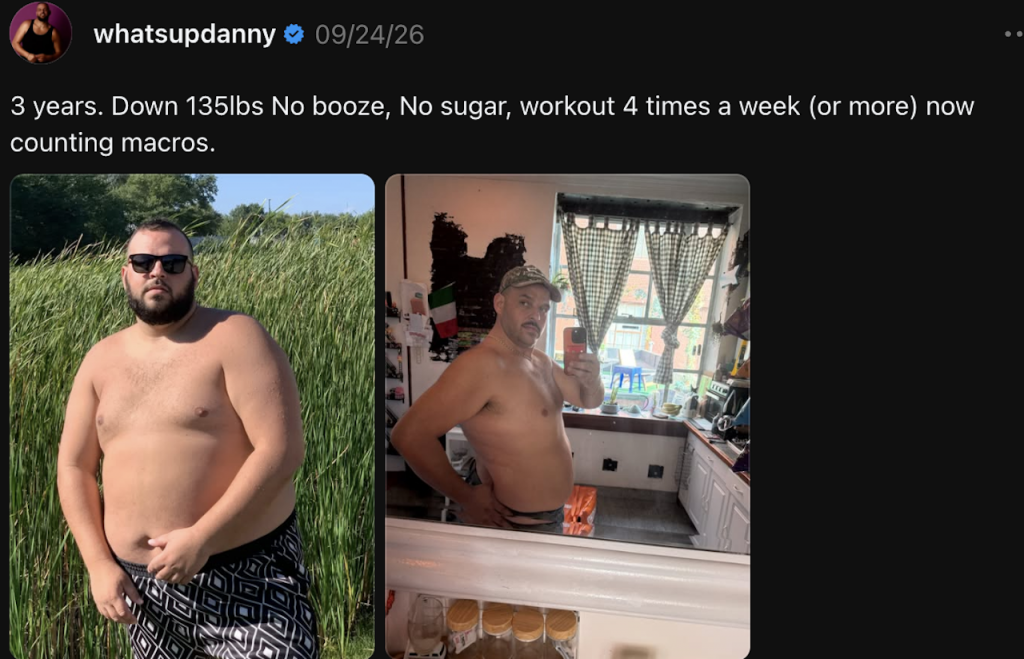
Fans flooded the replies with congratulations, praising his dedication and calling the change impressive.
Expert Resources On Healthy Living
- Zero Booze is Best For Cancer Prevention & Five Hours Per Week Of Exercise! New American Cancer Society Prevention Guidelines
- New Hard Evidence That Exercise Measurably Reduces Anxiety– 150 Minutes Per Week Makes The Difference
- Meditation Expert Mallika Chopra on How to Teach Mindfulness Techniques to Children During These High-Stress Times
- Major Reduction in Cancer Risk by Following Old Standbys Diet and Exercise
- SN & You Presents Mental Health: Coping With Emotions
- GLP-1 Weight Loss Drugs: Side Effects and Risks Patients Should Be Aware Of
Franzese first opened up about his progress in a July 2025 interview with TMZ, when he was 120 pounds down. TMZ caught up with him as he headed into a workout the same week as the Los Angeles premiere of Lindsay Lohan’s Freakier Friday.
After noting his 120-pound loss, he explained what sparked the change and how he was doing it.
RELATED: GLP-1 Weight Loss Drugs: Side Effects and Risks Patients Should Be Aware Of
“I mean, I just, I had a little bit of a health scare about two years ago, and I was just like, all right, you know, it’s time to get healthy. I wanted to try the Ozempic thing, but it depletes your muscles and stuff,” Franzese told TMZ.
“So I’ve been working out at the gym. I’m here at NoHo Gym. And when I go home to my family in Fort Lauderdale, I’m at Symmetry Fitness, just trying to, like, just trying to hustle, just trying to stay healthy.”
Franzese’s hesitation about GLP-1 drugs reflects a common concern, as rapid weight loss can include muscle along with fat; according to an analysis of the STEP 1 trial published in the Journal of the Endocrine Society, people taking semaglutide lost 15% of their body weight over 68 weeks, and their total lean body mass dropped by 9.7%.
It’s important to note that GLP-1 RAs are generally considered safe, but like all medications, they come with potential side effects.
These can include:
- Nausea, vomiting, diarrhea, or constipation
- Stomach discomfort or reflux
- Possible increased risk of gallstones due to rapid weight loss
- Rare concerns about thyroid cancer (though large studies have shown conflicting results and no definitive increase in thyroid cancer risk)
“The most commonly reported side effects with GLP-1 agonists tend to be gastrointestinal in nature because this is a gastrointestinal hormone. What’s commonly reported is nausea and patients tend to have more side effects the first time they take medication, and it tends to decline as they take that same dose again,” Dr. Holly Lofton, director of the Medical Weight Management Program at NYU Langone Health in Manhattan, previously told SurvivorNet, adding that measures can often be taken to help mitigate side effects.
View this post on Instagram
In the 15 months since, he has lost another 15 pounds, bringing his total to 135.
Back on August 13, Franzese shared a selfie showing off his new physique.
He captioned the post, “Tbh [to be honest] kinda feeling good about these progress pics. The chesticles are hittin today. Doing a lot of Kettle bell stuff and enjoying it. Swipe for the reality check still got work to do. Who wants to workout?”
A ‘Mean Girls’ icon
Born May 9, 1978, Franzese is still best known as Damian Leigh, the witty best friend of Lizzy Caplan’s Janis Ian in Tina Fey’s 2004 cult classic Mean Girls.
Damian delivered some of the film’s most quoted moments, including the candy-cane gram line fans still repeat two decades later: “Four for you, Glen Coco! You go, Glen Coco! And none for Gretchen Wieners. Bye.”

Off screen, Franzese publicly came out in 2014 in an open letter to Damian. He has since become an outspoken LGBTQ+ and HIV/AIDS activist, and he continues to act and perform stand-up comedy.
Franzese’s tour runs from October 1 to December 16, with 17 shows: 11 in October, 5 in November, and one in December.
He wrote alongside a recent Instagram post, offering his upcoming tour dates, “Apparently I’m leaving the house. A LOT.
“I’m coming to a college, comedy club, theater, bungalow, frozen tundra or undisclosed location near you.NY → SC → OH → NJ → LA → SF → FL → ALASKA. Alaska makes 48 states I’ve performed in. Your move, South Dakota and Hawaii.”
View this post on Instagram
Understanding GLP-1 Receptor Agonists & How They Work
GLP-1 receptor agonists (GLP-1RAs) are a group of medications primarily used to manage type 2 diabetes. They help lower blood sugar levels by mimicking a natural hormone that regulates insulin release and appetite.
It’s important to note that there are a variety of drugs available right now for weight loss, such as Novo Nordisk’s semaglutide — sold under the brand names Ozempic, Wegovy, and Rybelsus — and Eli Lilly’s tirzepatide — sold under the brand names Mounjaro and Zepbound.
Others include phentermine (Adipex-P, Lomaira), a prescription medication that reduces appetite; Contrave (naltrexone/bupropion); and bupropion (the generic form of Wellbutrin).
Additionally, an oral (pill) form of semaglutide is reaching a broader patient population after the FDA approved the pill in 2025.
GLP-1 RAs mimic a hormone your body naturally makes (called glucagon-like peptide-1) that helps regulate blood sugar and feelings of hunger. Initially developed to treat type 2 diabetes by lowering blood sugar levels, these medications were later found to have an impressive effect on appetite control. As a result, many people who take them lose significant amounts of weight.
“GLP-1 … is a hormone that is secreted in the L cells of the intestines, and we all make GLP-1 after we start to eat a meal,” Dr. Holly Lofton, Director of the Medical Weight Management Program at NYU Langone in Manhattan, previously told SurvivorNet.
“After food reaches the stomach, the stomach sends GLP-1 to the brain to signal that hunger is no longer present, and the person starts to feel more full. In the hypothalamus, specifically in the brain, once the brain receives that GLP-1, it sends a message to the person to stop eating.”
The native GLP-1 that our bodies make and the GLP-1 agonists go to the brain and block appetite signals, go to the stomach to help it empty more slowly, and help shrink fat cells, Dr. Lofton added.
And weight reduction is not the only effect these medications may have.
Researchers are learning that GLP-1 RAs could also influence other behaviors — such as smoking or alcohol use — and possibly reduce certain health risks that come with obesity. In fact, several large studies show that people taking GLP-1 RAs have better heart health, lower rates of kidney problems, and may even be less likely to develop some types of cancer.
Should You Consider a GLP-1 RA?
Deciding on a weight loss approach — whether it’s lifestyle modifications, medication, or surgery — is highly personal. Some points to consider with your healthcare team include:
- Your Overall Health: Do you have type 2 diabetes or other chronic conditions affected by weight? GLP-1 RAs can improve blood sugar control and lower cardiovascular risks, in addition to promoting weight loss.
- Cancer Risks: If you have a strong family history or other risk factors for obesity-related cancers, long-term medication use might offer extra benefits — but the evidence, while promising, is still growing.
- Commitment and Cost: These medications often require lifelong use to maintain weight loss. Make sure you feel comfortable with the potential side effects, follow-up visits, and ongoing costs.
- Alternatives: Bariatric surgery [weight loss surgery], structured lifestyle changes, and other treatments may also reduce cancer risk and help you lose weight. Talk with your doctor about which option is best suited to your overall health and personal goals.
GLP-1 receptor agonists are powerful tools in the fight against obesity. Emerging research suggests they may also help reduce the risk of certain cancers associated with excess weight, potentially to a degree that mirrors — or, in some respects, surpasses — that of bariatric surgery. However, questions remain about long-term adherence, muscle loss, side effects, and whether the benefits persist after stopping the medication.
If you’re considering a GLP-1 RA, it’s crucial to have a thorough discussion with your healthcare provider about the benefits, risks, and costs of treatment. Together, you can map out a plan that helps you achieve healthier weight control, lowers your risk for certain obesity-related cancers, and enhances your overall well-being for the long run.
Weight Loss & Cancer Risk
Researchers are continuing to uncover important connections between weight and cancer risk.
A study published in JAMA highlights the powerful connection between obesity and cancer: obesity is linked to roughly 10% of all new cancer diagnoses in the United States each year, and for certain cancer types, it may be a contributing factor in nearly half of all diagnoses.
For oncologists, the findings provide a more nuanced view of what counts as meaningful weight loss.
“One of the biggest takeaways from this paper is that people with classical obesity often need to lose more than 10% of their body weight to meaningfully reduce cancer risk,” Dr. Neil Iyengar, Associate Professor, Co-director of Breast Medical Oncology, and Director of Cancer Survivorship at Emory Winship Cancer Institute, tells SurvivorNet.
“Diet, exercise, and lifestyle changes are essential for maintaining a healthy weight, but reaching that level of weight loss can be incredibly difficult for many. That’s why the discussion also includes tools like GLP-1 receptor agonists and bariatric surgery [weight loss surgery], which can help support the kind of significant weight loss associated with lowering cancer risk.”
Iyengar is open to the idea of testing the effectiveness of GLP-1 agonists in oncology and figuring out how safe they are in battling cancer, previously telling SurvivorNet, “I don’t think that there’s mechanistically anything that’s particularly worrisome. GLP-1 agonists do a lot of things that we don’t fully understand yet.”
Dr. Samantha Newman, at Memorial Sloan Kettering Cancer Center, also spoke with SurvivorNet on this matter, explaining, “GLPs are amazing medications. They change people’s lives regarding cardiac risk and diabetes. They have widespread benefits.”
WATCH: The Key Factors For Weight Loss On New Blockbuster Drugs
GLP-1 medications like Ozempic work through mechanisms that extend beyond the scale. Dr. Lofton points to a broad range of documented benefits.
“Some of the benefits for using GLP-1 agonists can be weight loss, improvement in glycemic control or blood glucose, decreased risk of weight-related conditions such as various cancers, like breast cancer, endometrial cancer, colon cancer, liver disease,” Dr. Lofton tells SurvivorNet.
The Centers for Disease Control and Prevention (CDC) says, “Being overweight or having obesity are linked with a higher risk of getting 13 types of cancer.”
WATCH: NYU’s Dr. Holly Lofton explains what we do know about GLP-1RAs and cancer risk
Research published in the journal “Cancers” says that “obesity also increases the risk of dying from cancer and may influence the treatment choices. About 4–8% of all cancers are attributed to obesity.”
Some of the cancers associated with being overweight or obese include:
- Colon
- Breast
- Ovarian
- Esophagus
- Pancreatic
- Multiple myeloma
- Endometrial
- Liver
WATCH: Living a healthy lifestyle.
According to the National Cancer Institute (NCI), fat tissue “produces excess amounts of estrogen,” which is associated with an increased risk of certain cancers, including breast, ovarian, and endometrial cancer. The NCI says a person who is severely obese is “7 times” more likely to be diagnosed with endometrial cancer.
Obesity is associated with high levels of insulin, which can lead to colon, kidney, prostate, and endometrial cancer.
Obesity can affect cancer survivors in various ways, including the chance of cancer recurrence and overall quality of life.
To learn more about your ideal healthy weight, determine your body mass index (BMI).
Body weight exceeding what body mass index deems appropriate for your height and weight can help determine body fat content. Although your BMI can help you determine whether you are at a healthy weight, underweight, overweight, or obese, other factors may also affect your overall health.
The NCI analyzed several studies to observe the impact of physical activity on overall cancer risk. The NCI says that “higher levels of physical activity are linked to lower risk of several types of cancer.”
Regular exercise, a balanced diet, and stress management are some ways people can lead a healthy life. For cancer survivors, a healthier lifestyle alongside getting regular checks for recurrence may improve their quality of life.
Contributing: SurvivorNet Staff
Learn more about SurvivorNet's rigorous medical review process.


