
Understanding Dense Breasts and Cancer Risk
- Utah mom Dani Kurtz found a lump in her armpit, but her mammogram came back normal. Follow-up ultrasound and MRI revealed seven tumors across both breasts. Kurtz, who has dense breasts, had a bilateral mastectomy, chemotherapy and radiation, and finished treatment in late 2025.
- About 43% of U.S. women who get mammograms have dense breasts, which can hide cancers on a mammogram.
- The USPSTF recommends a mammogram every other year for women 40 to 74, while the American College of Radiology recommends yearly screening from 40. Women at higher risk because of family history or a genetic mutation may need to start earlier.
- There’s no single screening protocol for dense breasts. Experts agree a mammogram is the starting point, ideally 3D, but disagree on what to add.
- Supplemental options include 3D mammography, ultrasound, MRI and molecular breast imaging. Ask your doctor about your breast density and risk. 3D mammography “allows us to find more cancers and to significantly reduce our false-positive rate,” says Dr. Connie Lehman of Massachusetts General Hospital.
With dense breast tissue and a mother who also had breast cancer, Kurtz knew a normal mammogram didn’t guarantee she was cancer-free.
Read More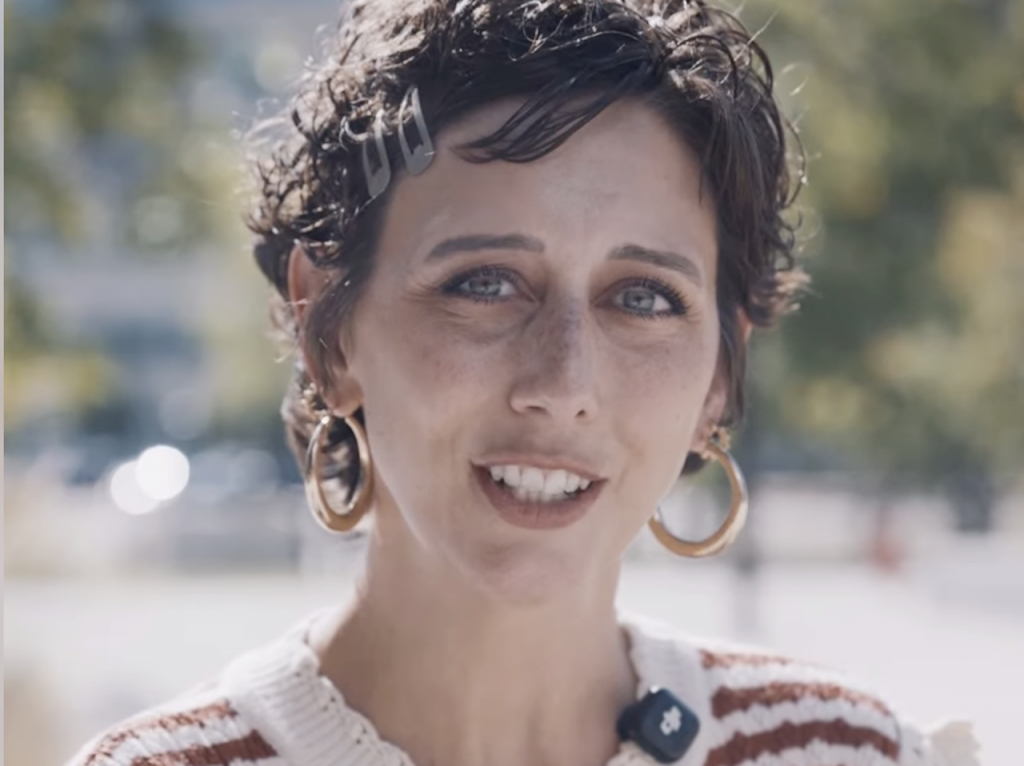
According to the American Cancer Society’s Cancer Prevention & Early Detection Facts & Figures 2025-2026, about 43% of U.S. women who get mammograms have dense breasts, meaning they have more glandular and connective tissue than fat. It has nothing to do with breast size or how firm the breasts feel.
Women with dense breasts face a higher risk of breast cancer, and standard 2D mammograms are less accurate for them. Supplemental imaging such as ultrasound, 3D mammography or MRI may hide potential cancers the mammogram misses.
Since September 2024, the FDA has required that mammogram results tell patients whether their breasts are dense and explain that density can make mammograms less sensitive.
“Know Our Bodies”
Now on the other side of treatment, Kurtz is sharing her story in the hope that it encourages other women to put their own health first.
“As women and moms and wives, we often pour our energy into caring for everyone else. And sometimes we neglect ourselves,” she said.
“In addition to getting mammograms and other screenings, it’s just important to know our bodies.”
Her advice for anyone who notices something that doesn’t feel right is simple: speak up.
“Talk with your doctor, and they’ll ask you more questions and decide if anything needs to be looked into,” Kurtz explained.
Now, as she settles into life after cancer, she’s leaning on a lesson her family has long lived by.
“We have a saying in our family that we can become bitter or we can become better for what we go through,” explained Kurtz. “And in that new norm, I just want to make sure that I’m better for it and appreciate what we have, and look at life with a new lens of gratitude for not what isn’t, but what is.”
Kurtz’s story is a powerful reminder that a normal mammogram doesn’t always tell the whole story, especially for women with dense breasts. If you notice a lump or any change in your body, don’t ignore it, even if your last screening was clear. Ask your doctor whether you have dense breasts and whether supplemental imaging like ultrasound, 3D mammography or MRI might be right for you.
WATCH: When You’re Getting a Mammogram, Ask About Dense Breasts
Screening Options For Women With Dense Breasts
Many experts recommend that women with dense breasts consider additional screening alongside their mammograms.
The dense tissue has a “masking effect on how well we can perceive cancer and find cancer on mammograms,” Dr. Cindy Ly, a radiology doctor at NYU Langone Medical Center, told SurvivorNet in an earlier interview.
Glandular tissue within dense breasts appears white on mammograms, which can help mask potential cancer. The “frosted glass” effect from the glandular tissue can thus mask cancerous areas, especially developing ones. Undetected, these cancers can progress, growing large and advanced.
They will then likely require more intensive treatments to cure or can become incurable altogether.
Women with dense breasts may not know they have it based on feeling alone. It’s important to know that breast density is determined by its appearance on a mammogram. Dr. Connie Lehman, the chief of the Breast Imaging Division at Massachusetts General Hospital, previously explained to SurvivorNet that fatty breast tissue appears gray on an X-ray.
Conversely, dense breast structures appear white during an X-ray. Cancers also appear white on an X-ray, meaning the dense breast structures can mask the possibility of cancer. Luckily, advanced mammograms exist to help doctors navigate this obstacle.
WATCH: 3D Mammograms explained.
“Digital mammography, it turns out, significantly improves the quality of the mammogram…It’s 3D or tomosynthesis mammography,” Dr. Lehman explains.
“This allows us to find more cancers and to significantly reduce our false-positive rate. With digital mammography 3D tomosynthesis, we’re taking thin slices through that breast tissue, like slices of a loaf of bread. We can look at each slice independently rather than trying to see through the entire thickness of the loaf of bread. So those thin slices help us find things that were hidden in all the multiple layers,” Dr. Lehman adds.
Additional testing can be considered for dense breasts, depending on a woman’s personal history, preferences, and her physician’s guidance. These tests include:
- 3-D Mammogram (Breast Tomosynthesis): This technology acquires breast imaging from multiple angles and digitally combines them into a 3D representation of the breast tissue. This allows physicians to see breast tissue architecture better, even in dense breasts. 3D mammograms are fast becoming the standard way of performing mammography.
- Breast Ultrasound: Ultrasound uses sound waves, not radiation, to create images of the breast. Because it doesn’t rely on X-rays, it can spot some cancers that dense tissue hides on a mammogram. It is widely available, relatively inexpensive and requires no injected dye. Some centers use automated whole-breast ultrasound (ABUS), which scans the entire breast in a standardized way. The tradeoff is more false alarms: ultrasound flags more findings that turn out not to be cancer, which can lead to extra follow-up imaging or biopsies. It also finds fewer cancers than MRI, so it’s often offered to women who can’t have an MRI or prefer not to.
- Breast Magnetic Resonance Imaging (MRI): An MRI machine uses magnets to create highly detailed, intricate images of the breast. These are mostly reserved for women with an extremely high breast cancer risk. Guidelines differ on whether dense breasts alone warrant an MRI (see above), but MRI is generally recommended for women at high risk, such as those with BRCA1 or BRCA2 mutations or a strong family history.
- Molecular Breast Imaging (MBI): MBI is a newer imaging technique that uses a radioactive tracer to detect breast cancer. It is beneficial for women with dense breasts. However, MBI is not as widely available as other screening methods.
What Screening Do Experts Recommend for Dense Breasts?
There is no single screening protocol for women with dense breasts. Major medical groups disagree about what, if anything, should be added to a mammogram.
Most experts agree on where screening starts. A mammogram remains the foundation, and many doctors prefer 3D mammography, also called digital breast tomosynthesis (DBT).
How often that mammogram should happen depends on whom you ask. The U.S. Preventive Services Task Force (USPSTF) recommends a mammogram every other year for women ages 40 to 74. The American College of Radiology (ACR) favors yearly screening beginning at 40 for women at average risk.
For women who are otherwise at average risk, the guidelines split on supplemental screening:
- NCCN: Under National Comprehensive Cancer Network guidelines, women should start yearly 3D mammograms at 40. Those with extremely dense breasts are advised to add MRI starting at 50, or as early as 40, while women with heterogeneously dense breasts should talk with their doctor about whether extra imaging makes sense.
- ACR: The radiologists’ group recommends breast MRI for women with dense breasts who want supplemental screening. Contrast-enhanced mammography or ultrasound are fallback options for those who can’t have an MRI.
- American College of Physicians: ACP issued new guidance in April 2026 in Annals of Internal Medicine. For women with heterogeneously or extremely dense breasts, it suggests doctors consider adding 3D mammography, but it advises against supplemental MRI or ultrasound. Doctors are asked to weigh benefits, harms, radiation exposure, availability, cost and the patient’s own values. The guidance drew criticism. Breast cancer advocates argued that it relies on outdated information and could add to confusion among women.
- USPSTF: The task force found the evidence insufficient to recommend for or against supplemental ultrasound or MRI in women with dense breasts, and it leaves that decision to clinicians’ judgment.
The disagreement comes down to tradeoffs. The randomized DENSE trial, published in the New England Journal of Medicine, followed more than 40,000 Dutch women with extremely dense breasts. Among women who had the added MRI, it found about 16.5 cancers per 1,000 screenings. It also cut the rate of cancers found between screenings roughly in half, from 5.0 to 2.5 per 1,000. The cost was false alarms: MRI produced about 80 false-positive results per 1,000 screenings, which can mean anxiety, more testing and biopsies.
Expert Breast Cancer Resources
- Bi-Annual Mammograms At Age 40 Now Recommended For Most Women, What The New Breast Cancer Screening Guidelines Mean For You
- Black Women May Need To Start Breast Cancer Screening At 42, According To A New Study
- Doctors Say New FDA-Approved Breast Cancer Screening Tool Using AI Won’t Replace Traditional Mammograms But Will Enhance Them
- Breast Cancer: Introduction to Prevention & Screening
- The Mammogram Debate: Should Women Start Breast Cancer Screening at 30?
Women at higher risk follow a different path. The ACR says women with a lifetime breast cancer risk of 20% or higher, or an inherited genetic predisposition such as a BRCA mutation, are considered high risk and should begin MRI screening in their mid-to-late 20s. The group also recommends yearly MRI starting between 25 and 30 for women who received significant chest radiation when young. The ACR urges all women, especially Black women and women of Ashkenazi Jewish descent, to get a risk assessment by age 25. Doctors can estimate risk with tools such as the Breast Cancer Surveillance Consortium’s Risk Calculator, which factors in breast density.
Paying for extra imaging can be a hurdle. By May 2025, insurers in 34 states and Washington, D.C., were required to cover supplemental screening, but each state sets its own rules on who qualifies, according to research presented at the ACR’s 2026 annual meeting. A 2026 JAMA commentary noted that these state laws are applied unevenly and often leave out women covered by Medicare, the VA, Tricare or self-funded employer plans.
WATCH: How to cope with complex and changing emotions.
What Causes Dense Breasts?
Doctors don’t fully understand why some women have dense breasts and others don’t, but several factors seem to play a role.
Genes are one. Breast density tends to run in families, so if your mother or sister has dense breasts, you’re more likely to have them too.
Hormones matter as well. Estrogen and progesterone can make breast tissue denser, which is one reason women typically have denser breasts before menopause, when hormone levels are higher. For the same reason, women who take hormone therapy after menopause may see their breast density go up.
Age and body weight also make a difference. Breasts tend to become less dense as women get older and glandular tissue is gradually replaced by fat. Women with less body fat also tend to have denser breasts, while women who carry more weight tend to have more fat in their breast tissue.
Additionally, there’s no proven way to reduce breast density in order to lower cancer risk. And although extra body fat tends to make breasts less dense, gaining weight isn’t the answer.
According to the American Cancer Society, excess body weight is linked to at least 13 types of cancer, including breast cancer after menopause. Any benefit from lower density would likely be outweighed by those risks.
The better approach is to maintain a healthy weight through diet and exercise, know your density, and talk with your doctor about whether you need screening beyond a mammogram.
Questions To Ask Your Doctor
If you have a breast cancer screening coming up or have recently had one, you may have questions you want answered. SurvivorNet’s proprietary AI tool “My Health Questions” is designed specifically for patients and caregivers.
WATCH: How One Cancer Survivor and Her Sister Used “My Health Questions” to Navigate Care
This powerful resource is embedded across the SurvivorNet website and delivers structured responses grounded in clinical guidelines and medically reviewed research to help people better understand their treatment options and feel more confident navigating care.
My Health Questions can also help patients come up with useful questions ahead of their next appointment.
Contributing: SurvivorNet Staff
Learn more about SurvivorNet's rigorous medical review process.


