
Understanding Multiple Myeloma
- For two years, former college basketball player Otis blamed his back pain on old injuries, until a salmonella infection led to blood tests that uncovered multiple myeloma, a rare blood cancer, at age 40.
- A stem cell transplant and the bone-strengthening drug ended his back pain in 2018, but when his cancer returned after several lines of treatment, he received Carvykti, a one-time CAR T-cell therapy that can lead to long-lasting remissions but requires careful patient selection and close monitoring at specialized centers.
- Otis has shown no signs of myeloma since March 2025, and he and his wife, Tracy, a nurse practitioner, urge others to keep pushing for answers when symptoms don’t improve.
- Multiple myeloma is a rare type of blood cancer that occurs when white blood cells called plasma cells (the cells that make antibodies to fight infections) in your bone marrow grow out of proportion to healthy cells.
- The disease can lead to bone damage or loss, resulting in pain for the patient. The spine, pelvis, and rib cage are the most commonly affected areas. If you have back pain, you most likely do not have multiple myeloma. But it’s important to get your symptom checked out if there are no obvious reasons for your back pain (like lifestyle factors).
- Check out SurvivorNet’s My Health Questions tool, which aims to help people arrive at their doctor appointments “more informed and more confident” as survivorship needs grow.
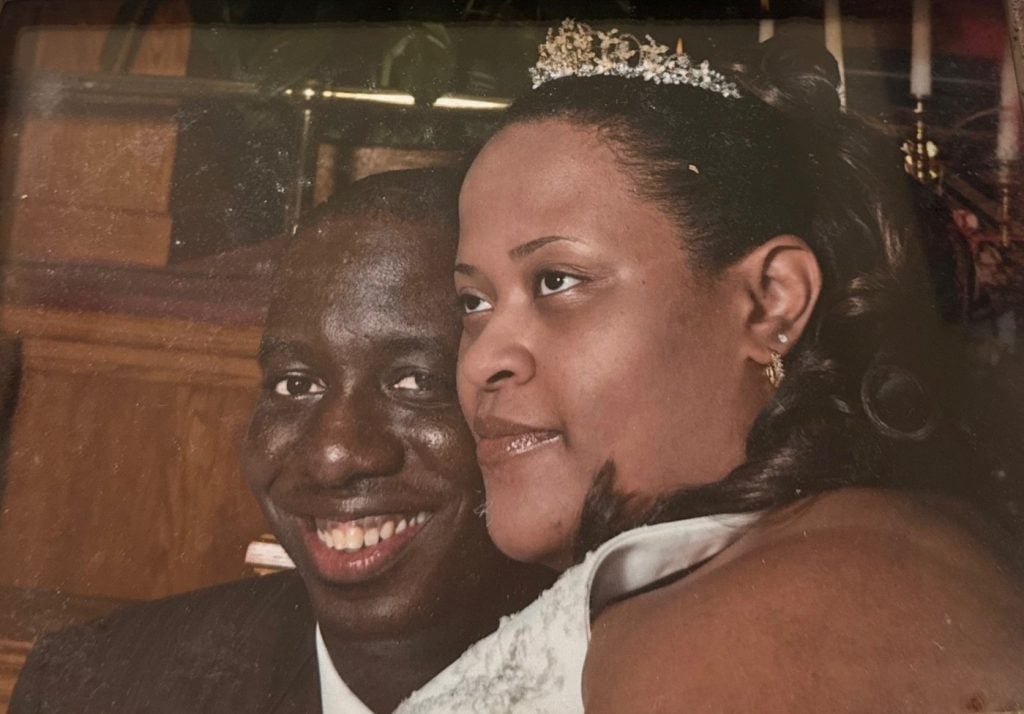
Now, Otis, and his wife, Tracy, a nurse practitioner, are sharing their story with SurvivorNet to raise awareness and encourage others with unexplained symptoms to keep pushing for answers. The couple met in 2005 at a nightclub in Louisville, Kentucky, married in 2007, share three children, and now live in Houston, Texas, where Otis works as an oncology pharmaceutical sales representative.
“He told me that it would be nothing to worry about… but he just wanted to err on the safe side and send me over there to get me checked out. It took from May 2017 all the way until December of that year to diagnose me with multiple myeloma,” said Otis.
For a full guide of resources, please check out SurvivorNet’s multiple myeloma guide HERE.
Looking back, Otis realizes there may have been earlier warning signs. As far back as 2015, he had been dealing with unexplained lower back pain and sciatica, and nothing he tried seemed to help.
“I did everything,” he said. “I went to therapy, I got injections. I went to a doctor where they put me on this machine and they would pull me apart and put me back together. I did everything trying to get my back fixed. And at the end, I actually went under the knife and got surgery performed, and nothing would relieve the back pain. It just continued to get worse.”
Bone pain is one of the most common symptoms of multiple myeloma, according to Memorial Sloan Kettering Cancer Center (MSKCC). The disease can damage or weaken bones, causing pain, and the spine, pelvis, and rib cage are the areas most often affected. When it affects the spine and ribs, it can cause backaches, and a tumor in the spine can also cause shooting pain in the arms or legs, similar to the sciatica Otis experienced.
It’s important to keep in mind that most back pain is not caused by multiple myeloma. Still, if you’re dealing with back pain that has no obvious explanation, such as an injury or lifestyle factors, it’s worth getting it checked out by a doctor.
Looking back, Tracy is grateful Otis went on that “boys trip” to the Dominican Republic, because the salmonella poisoning he picked up there is what ultimately led doctors to his cancer.
“Had it not been for the boys trip and him getting salmonella poisoning … we would’ve never found out, because no one was addressing the root cause of the back pain,” Tracy said. “Everyone was assuming, and even he was assuming, [that] ‘I’m an ex-basketball player, so these are old injuries from basketball.’ So no one ever thought to delve a little bit further.”
Otis added, “I developed sciatica down my right leg, where my leg would feel like it was asleep all day. And I would literally collapse at times. The pain was that bad. Nothing would relieve it.”
Right after Otis’s diagnosis in December 2017, his care team set him on a treatment plan. Otis was able to undergo a stem cell transplant, which uses the patient’s own stem cells, on August 12, 2018, about eight months after he was diagnosed.

“From that very beginning, shortly after he was diagnosed, they immediately were talking stem cell transplant,” Tracy said. “So everything was kind of marching towards getting things in order.”
His doctors also had a hunch about what the transplant might do for his back.
“They said, ‘That back pain that you’re feeling, we have a sneaking suspicion it’s going to go away once you have this,'” Tracy recalled. “And sure enough, it did.”
What is Autologous Stem Cell Transplant?
Thanks to the transplant and the bone-strengthening medication Xgeva, Otis hasn’t had back pain since 2018. His cancer, however, wasn’t done. After several lines of treatment, he received Carvykti, a CAR T-cell therapy that reprograms a patient’s own immune cells to target and destroy cancer, in December 2024. Within months, his tests showed no signs of multiple myeloma for the first time since his diagnosis.
CAR T-cell therapy is typically given as a single infusion and can lead to long-lasting remissions. In clinical trials, it significantly improved survival compared with standard treatments. However, it isn’t right for everyone. Because it can cause serious side effects, it’s only available at specialized treatment centers, requires careful planning and patient selection, and involves close monitoring afterward.
While we’re thrilled Otis found success with Carvykti, which is one of several FDA-approved CAR T-cell therapies now in use, including:
- Abecma (idecabtagene vicleucel)
- Breyanzi (lisocabtagene maraleucel)
- Carvykti (ciltacabtagene autoleucel)
- Kymriah (tisagenlecleucel)
- Tecartus (brexucabtagene autoleucel)
- Yescarta (axicabtagene ciloleucel)
These therapies treat a range of blood cancers, including certain leukemias and lymphomas. For multiple myeloma specifically, Abecma and Carvykti are the two approved options.
Before Otis was even officially diagnosed, his first oncologist mentioned CAR T, then still in clinical trials. “I think during your lifetime, you may be able to get it, and it could actually be your cure,” Tracy recalled him saying.
Years later, after Otis’s myeloma stopped responding to several treatments, and him and his medical team decided it was worth a try.
Asked how he’d describe CAR T to a friend, Otis kept it simple.
“I would tell them that it’s life-changing, number one. It is not as bad as what people make it out to be, number two. Number three is that they make the process out to be very, very long, but it goes by very, very quickly,” he said. “From the moment I started my workup, it was literally a month, month and a half, and I was receiving my cells.”
Tracy also urges patients to learn about the full range of possible side effects, not just the common ones.
“Depending on who you are, you could be the patient that has more of the uncommon things, and you don’t want to be shocked or sideswiped,” she said. “It’s better to know all things than to only know a couple things and then be surprised.”
No Sign of Cancer
Since March 2025, Otis has shown no signs of multiple myeloma. His kappa light chains, a blood marker used to track the disease, dropped to negative for the first time and have stayed there ever since.
“It has stayed there ever since, and it’s never started to creep back up,” he said. “It was a very, very exciting day.”
Today, he receives IVIG, an infusion of antibodies, every month to help prevent infections, and he’s getting his childhood vaccinations again because treatment wiped out his earlier immunity. He sees his oncologist every three months.
Multiple Myeloma Relapse–Decision Making About Treatment Combinations
A Caregiver’s Lessons and a Reminder to Keep Asking Questions
When Otis was diagnosed, his wife Tracy was in shock.
“This is the man that I called my Superman, because he never got sick,” she said. “I was the one who always got sick. He rarely, ever got sick until he got diagnosed. And then it was like, ‘Wait, what? You are human.'”
Just two weeks into Otis’s treatment in January 2018, Tracy’s father suffered a series of strokes that led to a diagnosis of vascular dementia. The family moved him from Kentucky to Tennessee, where they were living at the time, so he could go to rehab.
“Me being the caregiver of the entire family, there is no other caregiver, it’s only me,” Tracy said.

At home, she was also caring for their daughter, who was about to turn seven, and their son, who was just six months old. By March, Tracy was in the emergency room with chest pain. After a cardiac catheterization, doctors found nothing wrong with her heart. It was stress.
“That right there clicked the light for me that if I don’t take care of myself, who’s going to take care of all these people that’s looking at me for help?” she said. “I can take care of everybody else, but if I don’t do things to make sure that my cup is filled, I’m going to be of no use to any of them.”
By the time Otis went through CAR T, the couple had learned their biggest lesson, and it’s one Tracy now shares with other families: activate your village.
“If you don’t ask for help, people don’t know how to help,” she said. “So for the caregiver and the family that’s in support of the patient, and even for the patient themselves, acknowledge that you need help.”
For anyone living with unexplained pain, Otis has direct advice.
“Don’t just take the, ‘Oh, it’s back pain, go get therapy. Oh, go get injections. Oh, go under the knife,'” he said. “I did four or five different interventions for my back, and none of it would work. After the first or second try, if it’s not getting any better, you need to be looking into something different.”
Dr. Kathie-Ann Joseph explains how patient navigators can help throughout the treatment process.
Tracy borrows a phrase from the rare disease community: When you hear hooves, think of zebras, not just horses.
“When you are a healthcare provider, think of everything, the wildest, the zebras of them all, and then narrow down from there,” she said. “Don’t just go with what you’ve always seen.”
The couple leaves patients with three pieces of advice.
- First, bring someone to your appointments, because “you’re only going to hear maybe 50%,” Tracy said.
- Second, advocate for yourself. “Don’t leave the appointment confused, feeling unheard, not satisfied.”
- And finally, if you’re not getting the care you deserve, get a second opinion, “because that may be the thing that saves your life.”
How to Be a Better Caregiver for Your Loved One
Understanding Multiple Myeloma
Multiple myeloma is a rare and incurable type of blood cancer. When you have this cancer, white blood cells called plasma cells (the cells that make antibodies to fight infections) in your bone marrow grow out of proportion to healthy cells. Those abnormal cells leave less room for the healthy blood cells your body needs to fight infections. They can also spread to other parts of your body and cause problems with organs like your kidneys.
RELATED: When Multiple Myeloma Returns, SurvivorNet’s Resources
Sometimes, doctors find multiple myeloma while doing a blood test to look for another condition or when trying to find out what’s causing a patient’s unexplained symptoms.
Doctors use blood and urine tests and imaging tests, such as X-rays or MRIs, to help diagnose multiple myeloma and to guide treatment options. Ultimately, a bone marrow biopsy will confirm the diagnosis.
RELATED: Hematologist and SurvivorNet advisor, Dr. Nina Shah, helps you understand this rare cancer
Multiple myeloma symptoms can range from tiredness, nausea, and constipation. Other symptoms may include:
- Weakness, dizziness, and shortness of breath, which are signs of a low red blood cell count, are called anemia.
- Bone pain, which could be a sign of a fracture.
- Urinating too much or too little, muscle cramps, nausea, and vomiting are symptoms of kidney failure.
- Confusion is caused by too much calcium in the blood.
- Frequent infections because you have too few white blood cells to fight them.
It’s important to know that these symptoms could be attributed to other conditions. If you experience any of these symptoms or are concerned about any changes to your body, you should address them promptly with your doctor.
Hematologist-oncologist Dr. Adam Cohen lays out your options during the maintenance phase of treatment
Meanwhile, multiple myeloma does cause bone conditions. According to the Multiple Myeloma Research Foundation, 85% of multiple myeloma patients have some kind of bone damage or loss.
“The most commonly affected areas are the spine, pelvis, and rib cage,” the Foundation explains.
The reason for this bone loss or damage is that multiple myeloma disrupts the bone remodeling process. The cancerous myeloma cells keep the cells in the bone responsible for removing old bone and rebuilding new bone from working properly.
The disease can also weaken the bone, resulting in fractures. And it can cause thinning of the bones, leading to osteoporosis [meaning the bones are more porous and more likely to fracture].
RELATED: When Myeloma Comes Back, a Newer Treatment Is Showing Remarkable Results
And “in advanced multiple myeloma, a patient may lose inches from his or her height due to compressed vertebrae over the course of their illness.”
So bone conditions can be a symptom of multiple myeloma.
RELATED: Why Do Some People With Cancer Experience Back or Bone Pain?
Getting a Diagnosis
Multiple myeloma is sometimes discovered through a blood test done for another reason, or while doctors are searching for the cause of unexplained symptoms, as in Otis’s case.
Blood tests can also reveal MGUS or smoldering multiple myeloma, two precancerous conditions that usually don’t cause symptoms, according to SurvivorNet’s experts. While most people with these conditions never develop cancer, doctors typically monitor them with regular blood and urine tests, and sometimes a bone marrow biopsy, which involves removing and testing a small sample of the spongy tissue inside the bones, to catch any shift to multiple myeloma early.
To diagnose multiple myeloma and guide treatment, doctors use blood and urine tests along with imaging such as X-rays or MRIs, and a bone marrow biopsy ultimately confirms the diagnosis. Tracking bone health over time also helps doctors understand whether the disease is progressing.
Treatment Options For Multiple Myeloma
Not everyone with multiple myeloma needs treatment right away. If you have smoldering multiple myeloma, your doctor might simply monitor you regularly to see if your disease progresses.
If you develop symptoms or your doctor thinks you need treatment, there are many options. Which of these treatments you receive, and how they are sequenced, depend on several factors, and on whether your treatment team thinks you are a good candidate for a bone marrow transplant.
Bone Marrow (Stem Cell) Transplant
This is also known as a stem cell transplant. It is a procedure to replace diseased bone marrow with healthy bone marrow without myeloma cells. Based on multiple factors, your doctor may decide that a stem cell transplant is best for you. The transplant process can be involved and requires multiple steps. Be sure to discuss this with your treating team to understand what is involved and what options are available.
If you’re not a good candidate for chemotherapy, your treatment options include targeted therapies, biologics, and steroids.
Targeted Therapy
Targeted therapy is now available for patients with multiple myeloma, and targets abnormalities in myeloma cells that allow the cancer to survive. Examples of targeted agents your doctor may use include bortezomib (Velcade), carfilzomib (Kyprolis), and ixazomib (Ninlaro). These drugs are either given in a pill or through an IV and cause myeloma cells to die by preventing the breakdown of certain proteins in myeloma cells. Your doctor may also use other targeted agents in the class of medications known as monoclonal antibodies.
Biologic Therapy
Biologic therapy is another class of medication your treatment team may use to treat your myeloma. These medications use your body’s immune system to help fight and kill myeloma cells. This class of medication is most often given in pill form and includes medications such as thalidomide (Thalidomid), lenalidomide (Revlimid), and pomalidomide (Pomalyst).
Chemotherapy
Sometimes your treatment team may recommend chemotherapy to treat your myeloma. Chemotherapy uses strong medicine to target cancer cells throughout your body. If your doctor recommends a bone marrow transplant, high doses of chemotherapy are used for this purpose.
Steroids
Occasionally, doctors may use corticosteroids such as dexamethasone or prednisone as part of your treatment. Steroids are different from chemotherapy, targeted therapy, and biologic therapy. They work to reduce inflammation throughout your body. Steroids are given as a pill and are also active against myeloma cells.
Radiation
Radiation uses high-dose X-rays to stop cancer cells from dividing. It is sometimes used to target myeloma in specific areas that may be causing you issues or pain. It is also used if there are tumors or deposits of myeloma cells that need to be treated, such as a plasmacytoma — a tumor made of abnormal plasma cells — of the bone.
Sometimes the cancer can return, or relapse, after treatment. If this happens, your doctor can put you on one of the treatments you’ve already tried again, try a new treatment, or recommend that you enroll in a clinical trial.
Any of these treatments can cause side effects, which may include nerve pain and fatigue. Your doctor can adjust your medication if you do have side effects. In general, you should start to feel better once your treatment starts to work.
Extending Survival & Improving Quality of Life With Multiple Myeloma
Then you’ll ultimately reach the maintenance phase of treatment. Now that your doctor has gotten your cancer under control, from here the goal is to keep your disease stable and to maintain your quality of life. The type of maintenance therapy you get and what prognosis you can expect will depend on whether your doctor determines that your multiple myeloma is standard risk or high risk.
One of SurvivorNet’s experts describes the maintenance process for this disease as similar to lawn care. Once you care for your lawn and it’s no longer overgrown (that’s the initial treatment), it will need some tending, but with that attention (such as low doses of maintenance drugs), it can remain healthy.
Why the many phases of multiple myeloma are like caring for your lawn, says hematologic cancer specialist, Dr. Sid Ganguly
Sometimes this disease will return, even when you’re on maintenance therapies. You’ll still have treatments available if this happens.
Though it can be daunting to choose treatments for relapsed multiple myeloma, the medical experts at SurvivorNet are here to help you make sense of them.
Remember that you do have options, and that the goal, which becomes more achievable with each new treatment that’s introduced, is to preserve your quality of life and extend your lifespan.
The Changing Landscape of Multiple Myeloma Care
We don’t use the word hope lightly at SurvivorNet, but with regards to multiple myeloma, patients should truly be hopeful. We can say that because the specialists who’ve been driving the field for the past 20 years all believe that the treatments they now give to patients are drastically better than when they first began their careers. Both medicine and research are extremely promising for people who are recently or newly diagnosed with multiple myeloma. We are indeed at something of an inflection point.
“In multiple myeloma we’ve been blessed in the last twenty years with an extraordinary change in the natural history of the disease, by virtue of the introduction of novel agents–which are biologically targeted, biologically rational approaches to treatment–that have really superseded the older approaches of chemotherapeutics,” says Dr. Paul Richardson, Director of Clinical Research at the Dana-Farber Cancer Institute.
Newer drugs, including combination therapies, more-refined stem cell transplants, and the recent emergence of immunotherapies, have led to a kind of “paradigm change” in how we view and ultimately treat multiple myeloma, says Dr. Richardson. “We’ve seen dramatic changes continue and I think that’s what’s been so exciting and been such a privilege to be part of the field — because these changes have led to further advances.”
With current advancements, average length of life with multiple myeloma has become four times what it was just two decades ago. There has been so much innovation already that individuals who would only live for a few years after treatment are now living for a decade or more, and things will only get better from here.
When speaking about what he’s seen from his own patients, Dr. Richardson is optimistic and joyful. “It’s been such a wonderful thing to see them deal with their disease, go into remission, and enjoy survivorship of 10, 15, and even 20 years–something which, not so long ago, would have been unheard of.”
Contributing: SurvivorNet Staff
Learn more about SurvivorNet's rigorous medical review process.


