
Bringing a Lived Cancer Experience On-screen
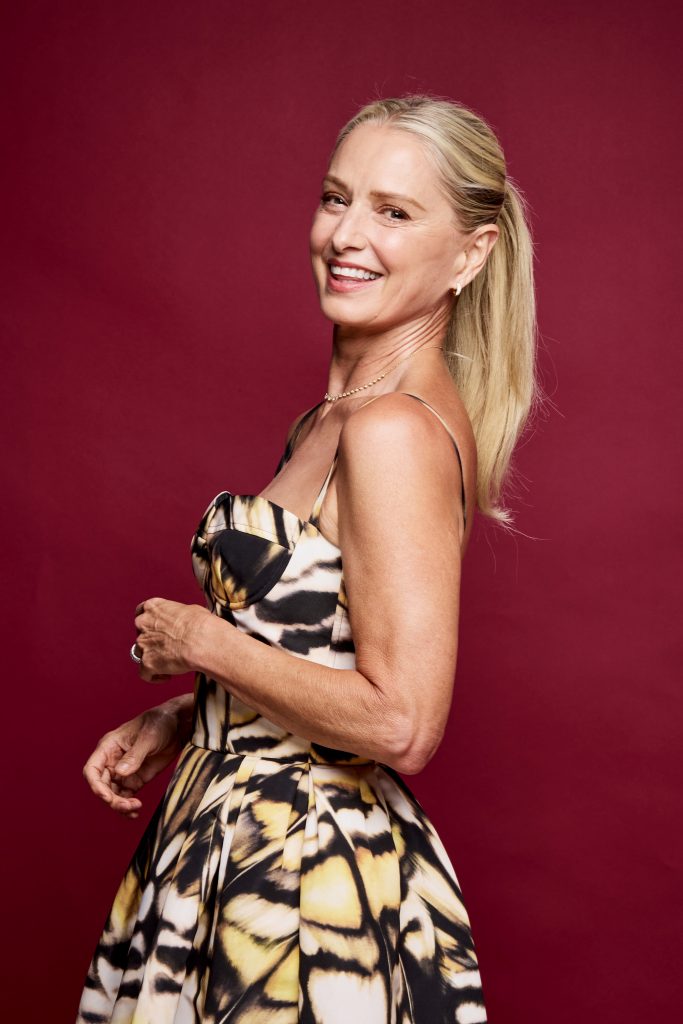
- Actress Katherine LaNasa, 59, says her breast cancer experience reshaped her portrayal of nurse Dana on “The Pitt,” explaining that surviving cancer gave her a deeper understanding of patient fear.
- Her diagnosis journey began decades earlier due to dense breast tissue, a factor that can make cancer harder to detect.
- As breast imaging expert Dr. Connie Lehman explains, “Dense structures block the X-ray… and cancers also block the X-ray. When you have a white cancer hiding in white, dense breast tissue, it can be missed.”
- LaNasa underwent surgery and radiation in 2023 and says small acts of kindness from hospital staff shaped both her healing and her performance.
- Breast cancer survivorship begins after active treatment ends, when patients are closely monitored to stay healthy, recover from side effects, and maintain habits that lower recurrence risk, including completing long‑term therapy, which can last 5–10 years and may cause challenging side effects, Drs. Erica Mayer and Elisa Port explain.
- To help you on your cancer journey, explore SurvivorNet’s proprietary AI tool, “My Health Questions.” This powerful resource, embedded across the SurvivorNet website, was built to bridge that gap by offering on-demand explanations of treatment options, clinical trials, side effects, insurance concerns, and more.
The 59‑year‑old star says her real-life experience battling breast cancer fundamentally reshaped how she approached the character, giving her a deeper emotional understanding of what patients endure and what compassionate caregivers can mean in their darkest moments.
Read MoreView this post on Instagram
Her reflection echoes what many survivors describe. One Instagram user wrote, “Yeah, when you’ve had cancer, you pick up so many new traumas that can really mess with you… needles, the smell of alcohol wipes, even the specific smell of the hospital lobby where you were treated, and so many other little things.”
For LaNasa, those sensory memories and the fear behind them became tools she used to bring authenticity to her character.
A Long Road to Diagnosis: Dense Breasts and Years of Vigilance
LaNasa’s cancer story began decades before her 2023 diagnosis.
“In February 2023, I was diagnosed with Stage I breast cancer,” she told “Women’s Health Magazine.” However, her awareness of breast cancer risk started in her 30s, when she was filming “Three Sisters.”
“In my 30s… I had a mammogram that came back ‘inconclusive.’ I didn’t understand what that meant, so a friend suggested I make an appointment with Dr. Armando Giuliano… He ordered a biopsy.”
She says her results were benign, but the appointment changed her life.
“I was told that I have dense breasts,” she said.
Dense breasts are common, but they can complicate screening. Dr. Connie Lehman, a diagnostic radiologist who specializes in breast cancer at Massachusetts General Hospital in Boston, explains.
“The dense structures block the X-ray, and so that looks white. And, unfortunately, cancers also block the X-ray… When you have a white cancer hiding in white, dense breast tissue, it can be missed.”
Many doctors recommend 3D mammograms for women with dense tissue.
LaNasa admits she wasn’t always diligent about doctor visits—until she learned she had dense breasts.
“To be honest, I wasn’t a person who liked going to the doctor. But I found out that I had dense breasts in my 30s… that was the thing that made me keep getting my screening every year,” she told PEOPLE.
The Diagnosis That ‘Hit Like a Ton of Bricks’
In early 2023, she went in for her annual mammogram, but unlike her previous appointments, this time her results came back cancerous.
. What followed was a whirlwind.

“It hit me like a ton of bricks.”
A silver lining was that the cancer hadn’t progressed to LaNasa’s lymph nodes, meaning it was very early-stage breast cancer, making it easier to treat. Further testing revealed that the actress did not possess the BRCA gene mutation, which increases a person’s chance of developing breast and ovarian cancers. Still, the emotional toll was immense.
“It took being diagnosed with cancer to start to take better care of myself in terms of how much outside stress I’ll allow in.”
Getting Through Treatment
LaNasa’s treatment path involved surgery and radiation, which began in March 2023. During that time, she discovered how meaningful small acts of kindness could be.
“Sometimes the gestures would be small—like bringing me a warm blanket when I had a scan… I felt like somebody cared about me and I could handle anything,” LaNasa explained.
Even after treatment ended, recovery wasn’t linear.
“I had some weird symptoms post-radiation, and I had to seek medical care twice… I had been very brave… But when I felt like I wasn’t going to get un-sick, I had a breakdown in triage in the ER.”
She later told the writers of The Pitt about that moment. They incorporated it into the show.
“In one of the scenes, I slip in and put a warm blanket around someone’s feet who is really struggling. That was based on my own experience.”
LaNasa began filming “The Pitt” just months after dealing with health complications amidst her cancer treatment recovery.
“We filmed The Pitt for seven months… I did feel some trepidation about returning to a hospital setting… When I first walked through the set, it was a little daunting, but I thought, You’ve just gotta put on your big-girl pants. Thankfully, it became home pretty quickly.”
Expert Resources for Breast Cancer Patients With Dense Breasts
Enhanced Screening for Dense Breasts
Women with dense breasts may not know they have it based on feeling alone. Breast density is determined by its appearance on a mammogram.
Dr. Lehman explains to SurvivorNet that fatty breast tissue appears gray on an X-ray. Conversely, dense breast structures and cancer appear white during an X-ray, as previously noted, making the distinction a bit harder to discern. Luckily, advanced mammograms exist to help doctors navigate this obstacle.
WATCH: 3D Mammograms explained.
“Digital mammography, it turns out, significantly improves the quality of the mammogram…It’s 3D or tomosynthesis mammography,” Dr. Lehman explains.
“This allows us to find more cancers and to significantly reduce our false-positive rate. With digital mammography 3D tomosynthesis, we’re taking thin slices through that breast tissue, like slices of a loaf of bread. We can look at each slice independently rather than trying to see through the entire thickness of the entire loaf of bread. So those thin slices help us find things that were hidden in all the multiple layers,” Dr. Lehman adds.
Additional testing can be considered for dense breasts, depending on a woman’s personal history, preferences, and her physician’s guidance. These tests include:
- 3-D Mammogram (Breast Tomosynthesis): This technology acquires breast imaging from multiple angles and digitally combines them into a 3D representation of the breast tissue. This allows physicians to see breast tissue architecture better, even in dense breasts. 3D mammograms are fast becoming the standard way of performing mammography.
- Breast Magnetic Resonance Imaging (MRI): An MRI machine uses magnets to create highly detailed, intricate images of the breast. These are mostly reserved for women with an extremely high breast cancer risk. Dense breasts alone may not be a valid reason to obtain a breast MRI. However, dense breasts in women with genetic mutations, like BRCA1 and BRCA2, or a strong family history of breast cancer could justify obtaining breast MRIs.
- Molecular Breast Imaging (MBI): MBI is a newer imaging technique that uses a radioactive tracer to detect breast cancer. It is beneficial for women with dense breasts. However, MBI is not as widely available as other screening methods.
A new rule from the Food and Drug Administration (FDA) says that facilities offering mammograms must notify patients about their breast tissue density and recommend they speak with a doctor to determine if further screening is necessary. There will be “uniform guidance” on what language to use and what details to share with the patient to make the communication clear and understandable.
Breast Density Doesn’t Remain the Same Over Time, Impacting Your Cancer Risk
Women with dense breasts are at a higher risk for developing breast cancer. This connection has been demonstrated time and again in several rigorous scientific studies. 1 in 6 women with dense breasts are at risk for breast cancer. Comparatively, 1 in 8 women with average breasts are at risk for this cancer. The exact reason for this difference is not fully understood.
Researchers from Washington University School of Medicine in St. Louis and Brigham and Women’s Hospital in Boston analyzed this connection in a new study.
They recruited 947 women between November 2008 and October 2020. All women were cancer-free at the start of the study and received yearly or bi-yearly screening mammograms. Researchers tracked the women’s mammogram reports and breast densities over time.
All women experienced a decline in their breast density during the 12 years. Two hundred eighty-nine women developed breast cancer during this time. Those who developed cancer had a lower rate of decrease in breast density than those who did not. The researchers concluded that the rate of breast density changes may indicate future breast cancer risk.
Understanding Early-Stage Breast Cancer and What Comes Next
Early-stage breast cancer means the tumor is small and hasn’t spread to nearby lymph nodes. According to Dr. Comen, the first step is usually surgery to remove the cancer. This may involve a lumpectomy, where only the tumor and surrounding tissue are removed, often followed by radiation therapy to reduce the risk of recurrence.
However, treatment isn’t one-size-fits-all. Factors like age, tumor size, family history, and personal preference may influence whether radiation is needed or if a patient chooses a more aggressive approach, such as a mastectomy—removal of the entire breast. After surgery, a pathologist examines the tissue under a microscope to help determine the next steps in treatment.
WATCH: Understanding Early Stage Breast Cancer
Diagnostic testing plays a critical role in shaping your care plan. If a mammogram or clinical breast exam reveals something abnormal, your care team may recommend:
- Diagnostic mammogram and breast ultrasound to get a closer look at the breast and nearby lymph nodes
- MRI scans for additional imaging detail
- Biopsy of suspicious areas, including lymph nodes, to confirm cancer
- Tumor marker testing to identify hormone receptors and proteins that influence treatment options
- Additional imaging to check for any signs of metastatic disease
Once all this information is gathered, your cancer is staged—based on tumor size, lymph node involvement, and whether it has spread. Staging helps guide treatment decisions, while hormone receptor and protein marker tests reveal how the cancer behaves and which therapies may be most effective.
Your healthcare team will consider all of these factors—alongside your personal health, values, and goals—to create a treatment plan tailored to you.
Questions To Ask Your Doctor
If you have a breast cancer screening coming up or have recently had one, you may have questions you want answered. SurvivorNet suggests the following questions to kickstart your conversation with your doctor.
- Do I have dense breasts?
- Do I need to undergo additional or more sensitive screening?
- How is my risk level being assessed?
- Will insurance cover additional screening if needed?
Learn more about SurvivorNet's rigorous medical review process.
