
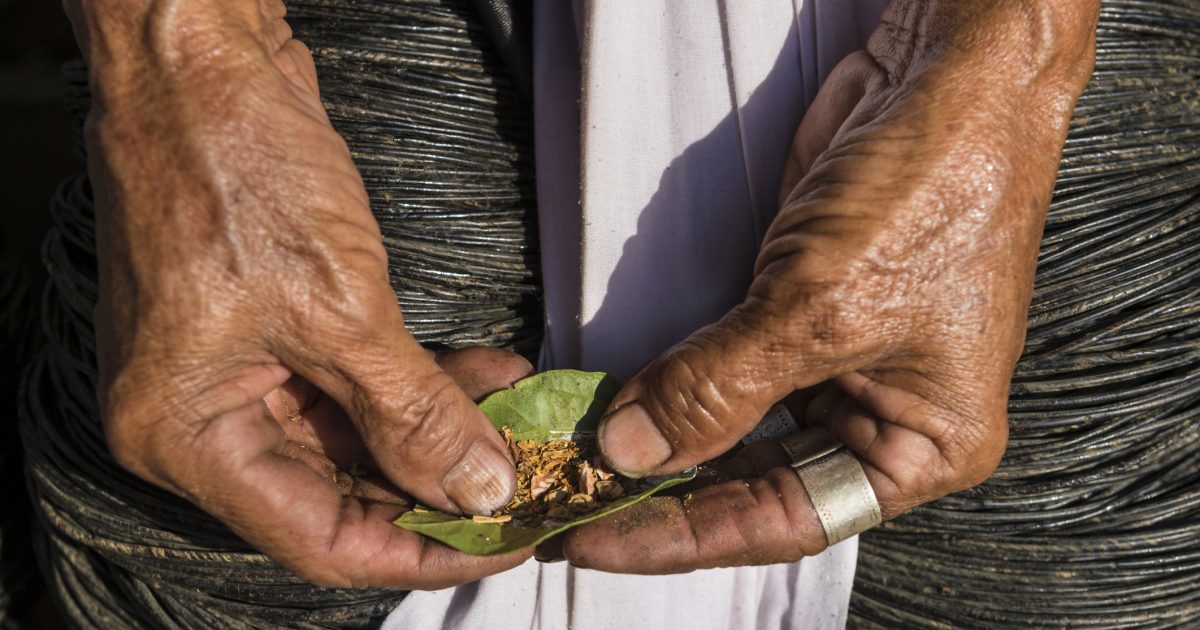
What Is This Cancer-Causing Nut?
- The betel nut may not be widely known in the United States, but it ranks as one of the world’s most addictive substances after caffeine, nicotine and alcohol, and is known as a leading cause of esophageal cancer and other oral cancers.
- The carcinogenic — or cancer-causing — food, grows on the areca palm, which is mainly found in tropical areas of Asia and is mass-produced in pre-packaged quantities in India.
- Though the nuts can be eaten dry, the customary way of chewing it includes a combination of slaked lime, or hydrated lime, and other flavorings such as cinnamon and tobacco.
- Esophageal cancer begins on the inside lining and spreads to the outer layers of the esophagus as it grows. While the U.S. doesn’t have a betel nut problem, lifestyle factors such as smoking or heavy alcohol use, can increase a person’s risk of developing esophageal cancer.
The carcinogenic — or cancer-causing — food, grows on the areca palm, which is mainly found in tropical areas across Asia.
Read MoreBetel Nuts and Oral Cancer
Explaining one of the reasons for that, Prof Hahn Liang-jiunn, an oral cancer specialist at the National Taiwan University Hospital, told BBC that “about half of the men” in Taiwan “still don’t know that betel nuts can cause oral cancer,” he said adding the correlation that “Taiwan’s incidence or mortality rates for oral cancer ranking among the top two or three in the world.”The island country’s “chewing gum,” as it’s known, which is a “centuries-old habit,” is found to wreak so much havoc that the government is finally taking action to help reduce the consumption.
Though the nuts can be eaten dry, the traditional way of eating it includes a combination of slaked lime, or hydrated lime, cinnamon and tobacco. The slaked lime is deemed part of the problem as it causes “hundreds of tiny abrasions” in the mouth, which could be a possible “entry point” for some of the toxic chemicals.
“It opens your eyes. It makes you awake. It brings your senses to life,” David Taim from Port Moresby in Papua New Guinea told The Telegraph of the nut’s appeal, sharing that he started eating them at 3 or 4 years old.
Qui Zhen-huang said he chewed the nuts for 10 years and developed oral cancer 20 years later.
“I started chewing betel nut because everyone at work did it,” said Zhen-huang. “We shared it with each other to build good relations.”
Why is Esophagus Cancer On the Rise?
In another area of betel nut consumption on the Northern Mariana Islands in the Western Pacific, an American head and neck surgeon, William Moss, came to work at a local hospital in 2018. He noticed the difference of the amount of people with oral cancers immediately.
“I noticed right away that the patterns of oral cancer weren’t like they are in the western world. The patients come in with later stage disease, they’re younger overall, the outcomes are terrible and the incidence of it was just through the roof.”
“It’s totally disproportionate,” he added.
Even more troubling is the “staggering” finding that out of 300 people chewing, 87 didn’t know it was a carcinogen.
“It took a collective international effort to bring big tobacco to the table and hold them accountable,” Moss continued. “Here, we have another powerful billion-dollar industry, but the target consumers are marginalized, impoverished populations with minimal education.”
Diagnosing Esophageal Cancer
When it comes to esophageal cancer, the disease begins on the inside lining and spreads to the outer layers of the esophagus as it grows. While the U.S. doesn’t have a betel nut problem, as discussed, lifestyle factors such as smoking or heavy alcohol use, can increase a person’s risk of developing esophageal cancer.
Unfortunately, esophageal cancer is frequently diagnosed at later stages.
“Esophageal cancer, we know is a tough one,” Dr. Brendon Stiles, a thoracic surgeon at Montefiore Medical Center, told SurvivorNet.
“It’s one of the cancers with some of the lowest cure rates out there. But like many cancers, if we find it early, we can often treat it effectively either with surgery, with surgery and chemotherapy, or with chemotherapy and radiation.”
RELATED: Esophageal Cancer: Key Terms to Know
Dr. Stiles says esophageal cancer may be diagnosed at later stages because symptoms of the disease can be tough “to pin down sometimes” so those experiencing them may not think of cancer right away.
It’s important to be aware of signs of this disease, which include:
- Pain/difficulty swallowing
- Weight loss
- Pain behind the breastbone
- Hoarseness/cough
- Indigestion/heartburn
- A lump under the skin
This is why it’s so important to speak to your doctor about getting checked out if you do have concerning symptoms or notice any changes to your body or health. The earlier you are diagnosed, the better the prognosis will be.
Treating Esophageal Cancer
The treatment route you and your medical team decide on after an esophageal cancer diagnosis will depend on several factors, including the severity of the disease and your overall health.
Often, the treatment approach will involve several different types of therapy, Dr. Stiles explained.
Currently, there are several treatment options available for people with esophageal cancer. These include:
- Surgery
- Radiation
- Chemotherapy
- Chemo-radiation
- Laser therapy
- Electroagulation (using heat from an electric current to destroy abnormal tissue)
- Immunotherapy (training the immune system to recognize and attack cancer cells)
“It’s rare these days that I just do surgery for a patient with esophageal cancer. They’ve often gotten other treatments,” Dr. Stiles said.
“Remarkably, with very early stage disease, stage one, a patient can often have their tumor resected endoscopically, through a scope down their esophagus without the need to invasive surgery,” Stiles added. However, it’s important to know that that’s “a very selected group of very early, invasive cancer.”
Getting Diagnosed with Esophageal Cancer
So what’s available for patients with advanced disease?
“Because esophageal cancer is such an insidious disease, and because it has high rates of recurrence and metastasis (spreading), we really try to throw everything we have at it,” Dr. Stiles said.
“For patients with more advanced disease that are not surgically resectable (removable), they can often also be treated with chemotherapy, sometimes with radiation with what’s called local control, to try to shrink the tumor so that patient can eat better.”
He added that some patients may also benefit from newer options like immunotherapy and targeted therapy, which specifically targets proteins that control cancer cell growth, according to the National Cancer Institute.
Questions to Ask Your Doctor
No matter what health condition you are facing, it’s always important to prepare a list of questions for your doctor to help better understand what you are facing, along with learning the treatment options and potential side effects they can bring.
Here is a list of questions to consider when speaking with your care team:
- What are my treatment options? Will I have surgery performed, or chemo, or radiotherapy?
- How soon should I begin treatment?
- How will you determine which treatment is best for me?
- What are the potential side effects of each treatment?
- What are the potential risks of treatment?
- How will we know if treatment is working?
- What’s the goal of this treatment? Will it cure me of cancer, control the disease or stop it from coming back?
- What is the expected recovery time with each treatment option?
- How long will treatment last?
- Will I be able to work while receiving treatment?
Learn more about SurvivorNet's rigorous medical review process.


