

Advocating for Your Health and Fertility
- Three-time cancer survivor Amanda Rice shares how speaking up about a persistent breast symptom helped her get a diagnosis— and why she encourages others to be the “CEO of your own body.”
- After insurance denied coverage for egg freezing before chemotherapy, Rice used her savings and began working to help others who could not afford that option.
- She founded The Chick Mission to help eligible young women access fertility preservation through financial assistance, education and advocacy.
- Rice encourages patients to ask about fertility risks, preservation options, timing and financial support before cancer treatment begins.
- Connecting with fellow survivors helped Rice feel understood, while supporting others became a meaningful part of her healing.
In a sit-down interview with SurvivorNet, Rice shares those experiences and how they inspired The Chick Mission, the nonprofit she founded to help other young women access fertility preservation. Along the way, she learned a lesson she now encourages others to embrace: Be the “CEO of your own body.”
Read More Before her first diagnosis, Rice was in her 30s, living in New York City and working in finance. She had run the NYC Marathon and loved discovering great food and listening to live music. She describes her life then as many New Yorkers do: “work hard, play hard.”
A Symptom She Almost Dismissed
Having always been healthy, she initially struggled to imagine that a change in her body could be something serious. So when she suddenly noticed a little blood coming from her left nipple, she chalked it up to a random minor injury.“That was jarring, but I also used that moment to sort of dismiss it and just basically blamed it on being a klutz and didn’t want to deal with anything other than that as the explanation for it,” she recalls.
But it kept happening. Rice then made an appointment with her gynecologist, but her concern was initially dismissed.
“I flagged the symptom to her and was dismissed as I ‘was getting older’ and ‘breasts are funny’ and I didn’t really find this very funny,” Rice says. She pushed for a mammogram.
Getting answers took a whirlwind of tests and biopsies. By the time Rice heard she had breast cancer, she already suspected it — but finally having a diagnosis brought an unexpected sense of relief.

“That moment of clarity, it’s going to sound funny, but it actually gave me a little bit of relief because now we could figure out the plan and execute,” she says.
Rice says she was diagnosed with stage 1 breast cancer and underwent a mastectomy. After cancer was found in one sentinel lymph node, she had additional lymph nodes removed for evaluation. She sought a second opinion about chemotherapy and chose an oncologist who recommended proceeding without it.
She explains that her decision went beyond his treatment recommendation: She felt confident in his expertise and comfortable with his care.
“We just hit it off in a way that comforted me for the next chapter of this journey,” she says.
Following surgery and reconstruction, she took medication for estrogen receptor-positive breast cancer to help reduce recurrence risk. Her oncologist also explained that some breast tissue could remain after a mastectomy and described what a lump might feel like. Her first cancer had not presented as a lump, so she appreciated knowing what changes to watch for.
Learning to Speak Up
But her experience with cancer was not over. Rice was subsequently diagnosed with melanoma, followed by breast cancer again approximately two and a half years after her first breast cancer diagnosis. Each time, she says, she noticed the changes that prompted further evaluation.
“My body is so incredibly efficient that it keeps speaking to me, and I luckily was listening and pushing for the right care,” she says.
Those experiences shaped how she approaches her health — and the message she shares with others.
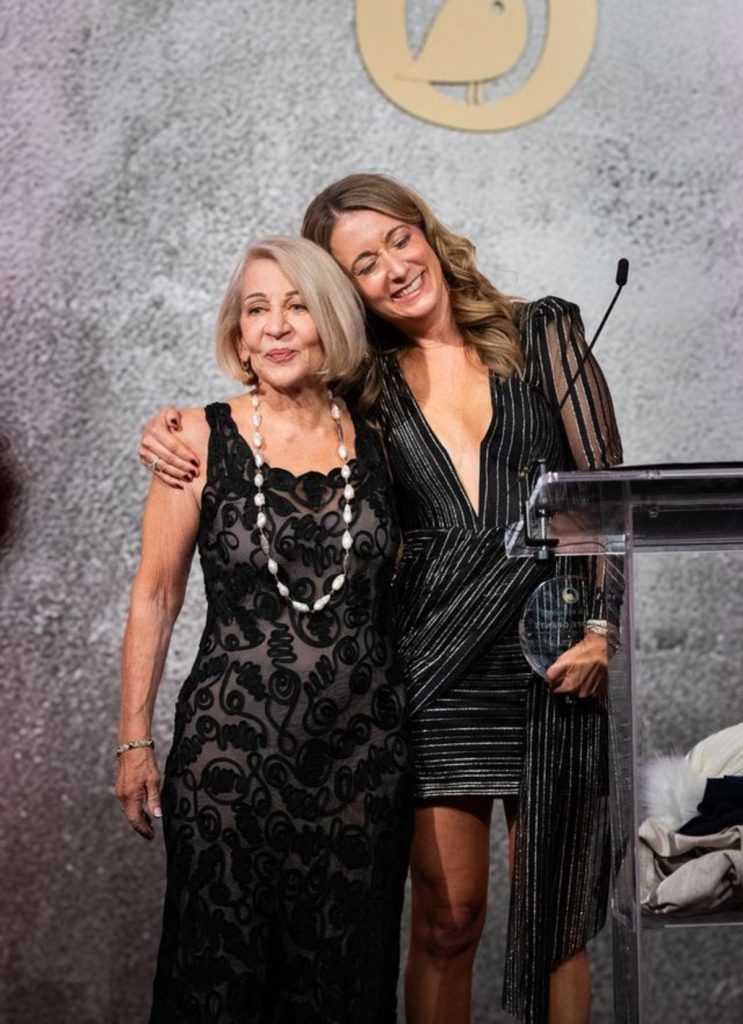
“The best person to know your body is you,” Rice tells SurvivorNet. “And we talk about being the CEO of our own bodies, and that is a critically important thing.”
For Rice, that means taking an active role alongside her medical team: asking questions, reporting changes, and seeking further evaluation when concerns remain unresolved.
“When your gut is telling you something is wrong, I really truly believe that you need to listen to it and you need to push forward,” she says.
Facing Cancer Again — and Decisions About Her Future
By her third cancer diagnosis, Rice could no longer avoid chemotherapy.
She had already undergone a mastectomy and reconstruction, taken medication to reduce recurrence risk, and faced melanoma. Now, another breast cancer diagnosis meant chemotherapy, followed by radiation and long-term medication.
Alongside decisions about treating the cancer, she suddenly had to consider how treatment might affect her ability to have children.
Social workers on her care team explained the potential implications for her fertility. Rice understood why the conversation mattered, but emotionally, it was another difficult decision at an overwhelming time. She wanted to begin treatment and get through it.
Rice nevertheless pursued egg freezing. Because her employer offered fertility benefits, she expected insurance to help cover the procedure.
Instead, she says, the insurer told her she did not meet its definition of infertility. She called back, convinced there had been a misunderstanding, only to receive the same explanation.
The treatment she needed could threaten her fertility, yet she was being denied help to preserve it beforehand.
“They were using this as an excuse to completely dismiss my future,” Rice says. “And that was my breaking point and that was what motivated me to dig deep and do something about it.”
Rice used her savings to freeze her eggs. But she could not stop thinking about people facing the same decision without the financial means to preserve their options.
As she prepared for the next phase of cancer treatment, that realization gave her a purpose beyond her own care.
“I had to take control of something that was so out of my control,” she says.
Building The Chick Mission
Rice began researching how to start a nonprofit while undergoing treatment. She ordered a guide, contacted other organizations and asked what their founders wished they had known.
Her mother, her reproductive endocrinologist, and close friends helped bring the idea to life. Her professional experience raising money gave her another place to start.
The Chick Mission held its first board meeting in November 2017, Rice says, and awarded its first grant on Valentine’s Day in 2018— earlier than planned, because a patient needed help and funding was available.
Today, its Hope Grant program provides financial assistance toward egg freezing for eligible women facing fertility-threatening cancer treatment. The organization also works on education and advocacy to improve access. Applications go through participating fertility clinics, with eligibility based on factors including age, residence, financial circumstances, and medical appropriateness.
Rice wanted a straightforward application process that would not add to the stress of a new cancer diagnosis.
She says the program has already helped 16 babies be born. She also said she was proud to see former grant recipients become advocates, sharing their experiences to help others access care. For Rice, helping someone today and advocating for better insurance coverage are connected parts of protecting patients’ futures.
Making Fertility Part of the Conversation
Rice wants young people facing cancer to know they can ask about fertility — even if they are unsure whether they want children or want more children.
Certain cancer treatments can affect fertility. The National Cancer Institute recommends discussing risks and preservation options with the care team before treatment begins if having biological children may be important. Options can include freezing eggs or embryos, depending on individual circumstances.
Timing and medical appropriateness require coordination between the oncology team and a fertility specialist. Freezing eggs or embryos offers a possible future path to parenthood; it does not guarantee a baby.
Drawing on her own experience, Rice offers these tips for starting the conversation:
- Ask how treatment could affect your fertility. Find out whether your recommended treatment could affect your ability to have biological children.
- Request a referral to a fertility specialist. Ask your oncology team who can explain your preservation options and help determine what is medically appropriate.
- Discuss the timing. Ask whether there is time to pursue fertility preservation before treatment begins. Your oncologist and fertility specialist can coordinate a plan based on your diagnosis and treatment needs.
- Check coverage and financial assistance. Don’t assume you cannot afford fertility preservation. Ask about insurance benefits, help appealing a denial, and organizations that may offer support.
- Come prepared — and keep asking. Write down your questions. If your concerns aren’t being addressed, speak with a nurse, social worker, or another member of your care team.
“You may already have children. You may think you’re done, but cancer doesn’t get to make that decision for you,” she says. “You get to make that decision.”
Finding Community — and a Future Beyond Cancer
Sharing an observation from her own journey, Rice recalls sitting in a cancer hospital waiting room with her mother and realizing people assumed her mother was the patient. She wished she had other young adults around her who understood facing cancer while building a career and imagining a family.
Through volunteering and online communities, Rice found fellow survivors who recognized “scanxiety” and emotional changes that were difficult to explain. While she is beyond grateful for the friends and family who rallied around her, she also deeply appreciated the fellow survivors who offered another kind of understanding.
In turn, helping someone newly diagnosed became a meaningful part of her life, and another part of her mission.
When Rice thinks about successful cancer care, she thinks about removing the cancer and reducing recurrence risk. She also thinks about everything she hoped to experience afterward: a career, a business, a family and meaningful work. Those hopes deserve a place in the conversation.
Advocacy has helped her turn painful experiences into something that benefits others. But her message to someone newly diagnosed begins simply: Give yourself room to process what is happening, and let others help.
“Have a friend reach out if you don’t feel up to it or a family member,” she says, “and we’ve got your back.”
Fertility Preservation After a Cancer Diagnosis
If you’re a young woman diagnosed with cancer, you are likely concerned about your future prospects for having children. Chemotherapy and radiation can harm your eggs, but there are many options for fertility preservation. The main options are freezing your eggs for future use or fertilizing them and freezing the embryos.
Be your own advocate and discuss your options with your doctor, says Dr. Jaime Knopman, Director of Fertility Preservation at the Colorado Center for Reproductive Medicine in New York. Studies have shown that as many as 50 percent of women across the country are not informed about what they can do to preserve fertility before undergoing cancer treatment.
A cancer diagnosis does not always mean you can’t have children.
Dr. Jaime Knopman shares her fertility expertise with SurvivorNet
Infertility can be a side effect of cancer treatment due to how it impacts the body. Various cancer treatments, including chemotherapy and radiation, can affect both men’s and women’s fertility. Before undergoing cancer treatment, patients should speak to their doctors about fertility preservation if they wish to have a family in the future.
Patients should also recognize that infertility is a problem that affects so many people hoping to be parents, and nothing to be ashamed of.
Dr. Knopman says she talks with her patients about the importance of freezing their eggs before beginning treatment, so they’re in a good position no matter what chemo they get.
SurvivorNet’s ‘Breast Cancer Dialogues’ Series: ‘On The Other Side of Breast Cancer, Living With Purpose & Power’
Learn more about SurvivorNet's rigorous medical review process.


