
An Unexpected Turn of Events After Spider Bite Leads to a Diagnosis
- A 62-year-old Virginia man, initially hospitalized after a suspected brown recluse spider bite, later learned his worsening symptoms were linked to acute leukemia.
- After 50 days of treatment, he reached remission but continues daily oral chemotherapy and monthly injections while preparing for a potential bone marrow transplant (also called a stem cell transplant).
- Acute myeloid leukemia (AML) is a rare but aggressive cancer that affects the bone marrow—the body’s blood cell factory.
- Symptoms of AML often stem from abnormal levels of red and white blood cells—both of which are produced in the bone marrow. When these cells aren’t functioning properly, patients may experience fatigue, shortness of breath, and frequent infections due to low oxygen levels and a weakened immune system.
- Dr. Mikkael Sekeres explains that in AML, as cancer grows in a confined space in the bone marrow, the normal cells in this space that produce red blood cells, white blood cells, and platelets begin to die off. This leads to the bone marrow being filled with cancer cells.
- Bobby Spika’s treatment included chemotherapy, and he’s looking forward to a possible stem cell transplant.
- During a stem cell transplant, patients receive healthy donor cells through an IV infusion—similar to a blood transfusion. The IV drips donor bone marrow into the AML patient’s system, allowing it to enter the body through the bloodstream. The process rebuilds the patient’s bone marrow.
- “For all patients of AML who have a relapse of their disease, we know that the only curative option is a bone marrow or stem cell transplant,” Dr. Tara Lin explains. “A stem cell transplant works best when patients are in remission. So the first goal when someone is in relapse is to get them back into remission.”
Bobby Spika told WAVY News that the spider was on his elbow, which sent him to the hospital for weeks. However, as his condition worsened, doctors discovered a deeper underlying issue: leukemia, a form of blood cancer.
Read More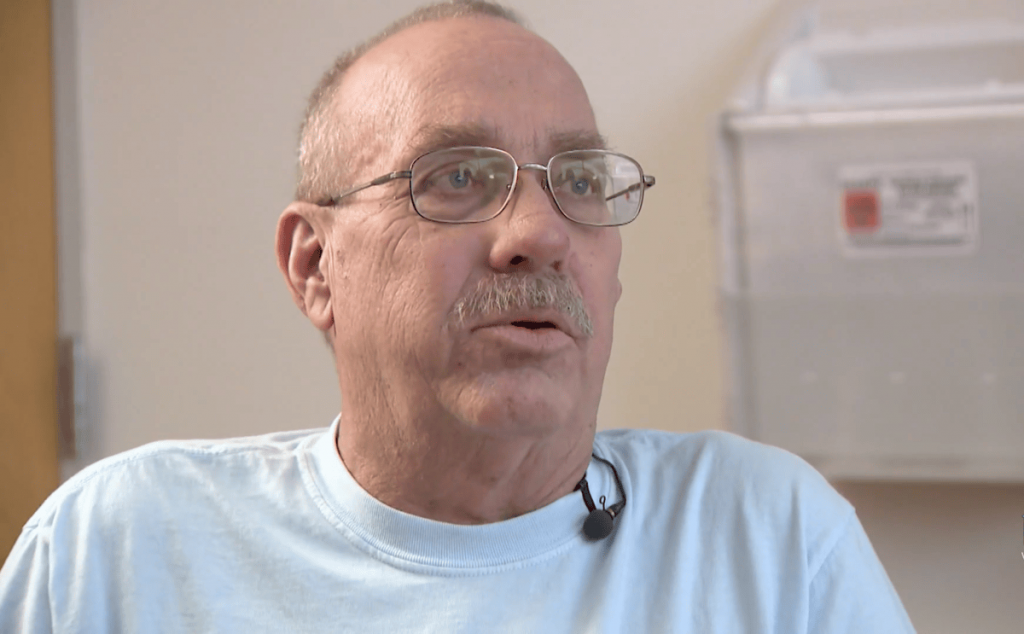
In AML, as cancer grows in a confined space in the bone marrow, the normal cells in this space that produce red blood cells, white blood cells, and platelets begin to die off. This leads to the bone marrow being filled with cancer cells.
ALL, according to the American Cancer Society, is more common in children and adults over 50 and can cause symptoms such as fatigue, dizziness, shortness of breath, fever, night sweats, unexplained weight loss, and easy bruising.
Treatment for ALL often involves chemotherapy, targeted therapy that disrupts cancer cell growth, or immunotherapy, which uses engineered immune cells to attack cancer. Some patients may also undergo a stem cell transplant to replace damaged bone marrow with healthy donor cells.
“The bone marrow is the factory that makes all of the cells that wind up in our bloodstream,” explained Dr. Mikkael Sekeres, chief of hematology at Sylvester Comprehensive Cancer Center at the University of Miami Health System.
“When a person has a cancer of the bone marrow, such as acute myeloid leukemia or myelodysplastic syndromes, that factory gets broken,” Dr. Sekeres added.
WATCH: What is Acute Myeloid Leukemia
“Cancers grow, and they grow in an uncontrollable way,” Dr. Sekeres added.
AML symptoms often arise when abnormal blood cell levels interfere with oxygen delivery and immune function, leading to fatigue, infections, and shortness of breath.
Spika spent 50 days in treatment before reaching remission. He now takes daily oral chemotherapy and receives a monthly injection as part of his ongoing care. A bone marrow transplant, he said, could further support his recovery.
During a stem cell transplant, healthy donor cells are infused through an IV—much like a blood transfusion—allowing the new cells to travel through the bloodstream and rebuild the patient’s bone marrow.
WATCH: What to Expect After a Stem Cell Transplant
“It feels and looks like nothing more than a blood transfusion,” said Dr. Caitlin Costello, a hematologist at UC San Diego Health. “But it’s a moment we’ve spent weeks and months building up to.”
Another treatment option for certain acute leukemias is CAR T‑cell therapy, which modifies a patient’s own immune cells to better recognize and attack cancer.
“CAR‑T therapy aims to give ‘eyes’ to the T‑cells,” said Dr. Siddhartha Ganguly of Houston Methodist Hospital and the Neal Cancer Center.
WATCH: The Value of CAR T-Cell Therapy for Patients.
“We remove the T‑cells, send them to the lab, and insert an anti‑cancer gene before infusing them back. They will seek out the cancer and kill it, much like the video game Pac‑Man,” Dr. Ganguly explained.
While CAR T‑cell therapy can carry side effects, Dr. Ganguly noted that it offers meaningful hope for people facing difficult‑to‑treat blood cancers.
Understanding Acute Myeloid Leukemia Diagnosis
Acute myeloid leukemia (AML) is an aggressive form of blood cancer that starts in the bone marrow—the body’s blood cell factory. This is where stem cells develop into three essential types of blood cells:
- White Blood Cells (WBCs): Defend the body against infection.
- Red Blood Cells (RBCs): Carry oxygen to tissues and organs.
- Platelets: Help blood clot and prevent excessive bleeding.
Inside the bone marrow, stem cells mature into specialized cells through a process of self-renewal and differentiation. Myeloid progenitor cells are responsible for producing RBCs, platelets, and granulocytes (a type of WBC). In AML, this process breaks down.
AML specifically targets myeloblasts—immature cells that should develop into healthy blood cells. Instead, these myeloblasts fail to mature and begin to accumulate in the bone marrow and bloodstream. As a result, the body is left with dangerously low levels of functioning red cells, white cells, and platelets.
According to the National Comprehensive Cancer Network (NCCN), a diagnosis of AML typically requires that 20% or more of the cells in the blood or bone marrow are myeloblasts. However, in some cases, AML can be diagnosed with a lower percentage if certain genetic markers or abnormalities are present.
What to Expect During a Stem Cell Transplant
During a stem cell transplant, patients receive healthy donor cells through an IV infusion—similar to a blood transfusion. The IV drips donor bone marrow into the AML patient’s system, allowing it to enter the body through the bloodstream. These new cells travel through the bloodstream and begin the process of rebuilding the patient’s bone marrow. Most patients remain in the hospital for two to four weeks after the procedure so their care team can closely monitor how the new marrow is developing.
Side effects during this period can include extreme fatigue, nausea, and a weakened immune system. That’s where the medical team steps in to provide critical support.
“What we see on daily blood tests is that the patient’s bone marrow is shutting down,” explains Dr. Costello.
“Their immune system weakens, their body stops producing the blood cells it needs—the literal gas in their tank. That’s when we step in to keep them safe. We can give blood and platelet transfusions to keep that tank full,” Dr. Costello continued.
In addition to transfusions, patients also receive protective antibiotics to guard against infection while their immune system is at its most vulnerable and the new bone marrow begins to take hold.
How Doctors Detect Acute Myeloid Leukemia: Bone Marrow Biopsies
Symptoms of AML often stem from abnormal levels of red and white blood cells—both of which are produced in the bone marrow. When these cells aren’t functioning properly, patients may experience fatigue, shortness of breath, and frequent infections due to low oxygen levels and a weakened immune system.
To confirm a diagnosis, physicians perform a bone marrow biopsy. This procedure involves extracting both liquid marrow and a small chip of bone from the back of the hip to closely examine the cells inside.
“What we can do is actually make slides and look at cells underneath the microscope with our eyes to get a better sense of ‘are all the cells there, are the cells normal, do they look abnormal,’” explains Dr. Tara Lin, Director of the Acute Leukemia Program at the University of Kansas Medical Center.
“Then we do additional testing from there to characterize further any abnormal cells that may be present,” Dr. Lin added.
This microscopic analysis helps doctors determine whether AML is present and how advanced it may be—guiding the next steps in treatment and care.
Spotting a Relapse in Acute Myeloid Leukemia: Why Vigilance Matters
For many patients with acute myeloid leukemia, remission isn’t the end of the journey.
“Unfortunately, for many patients with AML, their disease will come back, and we call that a disease relapse,” says Dr. Lin.
“It’s really important that when a patient has a relapse of their disease, they see someone who has a lot of experience in treating AML,” Dr. Lin added.
WATCH: What Are The Symptoms of Relapse in Acute Myeloid Leukemia
Relapse symptoms can vary, but common warning signs include:
- Fatigue and shortness of breath
- Easy bruising or bleeding due to low platelet counts
- Anemia from reduced red blood cells
- Frequent infections caused by low white blood cell levels
- To catch relapse early, patients in remission are closely monitored.
“If I have a patient with AML who’s in remission, I will follow their blood counts really closely,” Dr. Lin explains. “And if I see a drop in any of those normal counts, I will be prompted to get a bone marrow biopsy to look for disease relapse—earlier rather than later, before the patient develops symptoms.”
This proactive approach helps ensure that any recurrence is identified and treated swiftly, giving patients the best chance at continued recovery.
Treatment Options After Experiencing a Relapse
When acute myeloid leukemia (AML) returns, there’s no one-size-fits-all approach.
“When you go to the national guidelines for AML and relapse, there is no one standard of care,” Dr. Lin says.
“Very often we will recommend that a patient consider a clinical trial to learn more about new therapies that may be more effective at the time of disease relapse,” Dr. Lin continued.
- Standard Therapies
- For patients opting for traditional treatment, oncologists may recommend a different chemotherapy regimen than what was used during initial diagnosis.
- “Several different chemotherapy regimens use different combinations of drugs,” Dr. Lin explains, “and they may be different from what the patient received the first time.”
- Relapse After Long-Term Remission
- If a patient has been in remission for 18 months or longer, doctors may revisit the original induction therapy.
- “We will very often go back to their original regimen to try to get them back into remission,” Dr. Lin says.
- Relapse After Short-Term Remission
- For patients whose remission lasted only a short time, a new strategy is needed. “We will not go back to the treatments they’ve already had,” Dr. Lin notes.
- “We try to come up with something different so we can target the leukemia in a whole new way.”
- The Curative Option: Stem Cell Transplant
- Regardless of the relapse scenario, one goal remains clear: remission.
- “For all patients of AML who have a relapse of their disease, we know that the only curative option is a bone marrow or stem cell transplant,” Dr. Lin explains. “A stem cell transplant works best when patients are in remission. So the first goal when someone is in relapse is to get them back into remission.
A Deeper Look Into the Reengineering Process
Doctors reengineer a patient’s immune system with CAR T-cell therapy by first drawing blood and separating out the T-cells.
Then, using a harmless virus, the T-cells are genetically engineered to produce proteins called chimeric antigen receptors (CARs) on their surface. These receptors enable the cells to recognize and attach to a matching protein, called an antigen, on the tumor cell, just as a key fits into a lock. The process primes the T-cell to recognize the cancer and to fight it.
Next, the modified cells are multiplied into the millions in a laboratory.
The CAR T-cells are specific to your cancer. For example, some types of lymphoma cells have the antigen CD19 on their surface. CAR T-cell therapies for those cancer types only target the CD19 antigen.
A few days before the infusion, you’ll get chemotherapy to clear out some of your immune cells and prime your body to receive the CAR T-cells. This will help the CAR T-cells work better.
Finally, the modified T-cells will be infused back into your body to hunt down the cancer.
Several FDA-approved CAR T-cell therapies are currently in use, including:
- Abecma (idecabtagene vicleucel)
- Breyanzi (lisocabtagene maraleucel)
- Carvykti (ciltacabtagene autoleucel)
- Kymriah (tisagenlecleucel)
- Tecartus (brexucabtagene autoleucel)
- Yescarta (axicabtagene ciloleucel)
These therapies are used to treat various blood cancers, such as certain leukemias, lymphomas, and, more recently, multiple myeloma.
What’s the Effectiveness of CAR T-cell Therapy?
CAR T-cell therapy has delivered promising outcomes for patients with certain blood cancers, showing response rates as high as 80% in cases where other treatments have failed. For individuals with lymphoma, more than 54% of those treated with the FDA-approved therapy axicabtagene ciloleucel (Yescarta) and 40% of those who received tisagenlecleucel (Kymriah) achieved a complete response, meaning no detectable cancer remained.
Remarkably, among those treated with Yescarta, 40% remained in remission an average of 15 months following their infusion.
Typically, patients who receive CAR T-cell therapy have already had at least two previous treatments, often including rituximab (Rituxan) with chemotherapy and high-dose chemotherapy.
“Some of these patients had three, four, or five prior lines of therapy, and we were able to save their lives,” said Dr. Stephen Schuster, director of the Abramson Cancer Center’s lymphoma program, in an interview with SurvivorNet.
Medical research has shown response rates of between 80 and 100 percent. “It’s really unprecedented. This is something we had never seen before for patients who have had six or seven prior lines of therapy,” says Dr. Nina Shah, a hematologist with the University of California, San Francisco Medical Center.
CAR T-Cell Therapy Side Effects
CAR T-cell therapy is a form of cancer treatment that differs from traditional chemotherapy in a significant way: it generally doesn’t cause hair loss or nausea. But like any powerful treatment, it comes with its own set of side effects.
As CAR T-cells multiply in the body, they release inflammatory proteins called cytokines. This can trigger a condition known as cytokine release syndrome (CRS), which may cause symptoms like high fever, weakness, chills, and low blood pressure. Another potential side effect involves neurological changes, which can lead to confusion or a decreased sense of awareness.
WATCH: CAR T-Cell Therapy Side Effects
When side effects do appear, the most common and least severe is fatigue.
“That’s very normal, and it usually resolves in the first month,” says hematologist Dr. Nina Shah.
However, CRS can sometimes be more serious. It occurs when the therapy causes a surge of cytokines—tiny immune-signaling proteins—to flood the bloodstream. This response can bring on a range of symptoms, from mild flu-like effects to more severe reactions.
Typical CRS symptoms include headache, fever, chills, scratchy throat, nausea, vomiting, diarrhea, joint or muscle pain, and extreme fatigue. In more serious cases, it can cause shortness of breath, low blood pressure, or a rapid heart rate. While most patients experience only mild to moderate reactions, it’s important to note that CRS can, in rare instances, become life-threatening.
Currently, scientists aren’t sure whether the side effects correlate with how well the treatment is working, so it’s difficult to tell patients whether their side effects or lack of them are a good or bad thing. “All I can say is that every patient is different, and every patient has a different course,” says Dr. Shah.
Data shows that the quality of life for people who have undergone CAR T-cell therapy “actually improves when we talk about pain, fatigue, and emotional and social functioning. And so, whether or not you experience side effects, we hope that this therapy will improve your quality of life,” says Dr. Shah.
If you’re considering CAR T-cell therapy, talk with your doctor about all potential side effects—the mild, the serious, and everything in between.
Treatment doesn’t end once you’ve received the CAR T-cell infusion. “They typically have to be monitored very carefully after that for a number of weeks or even months, due to some of the potential side effects,” Dr. Julie Vose, chief of hematology/oncology at the University of Nebraska Medical Center, tells SurvivorNet.
Questions to Ask Your Doctor
- Am I a candidate for CAR T-cell therapy?
- What are the potential risks and side effects?
- What are the chances of success for my specific cancer type?
- What does the treatment process involve?
- Where will I receive treatment, and how often?
- Are there alternative treatments I should consider?
- What is the cost, and will my insurance cover it?
- What experience does this center have with CAR T-cell therapy?
- What kind of follow-up care will I need?
- Can I speak with other patients who’ve undergone this therapy?
Learn more about SurvivorNet's rigorous medical review process.
