
Sisterhood of Support
- Event planner Mindy Weiss and her sisters, Jaye Eigler and Dana Levine, were honored at the Tower Cancer Research Foundation’s Spirit of Hope Luncheon at the Beverly Hills Hotel during Breast Cancer Awareness Month. The three sisters, who carry BRCA gene mutations, were recognized for raising awareness about hereditary breast and ovarian cancer risk, genetic testing, and early detection.
- As more people survive cancer, experts emphasize the importance of genetic testing, emotional support, physical recovery, and finding a path forward after treatment. Matt Zarcufsky, executive director and philanthropy officer at Tower Cancer Research Foundation, a long-standing Cedars-Sinai oncology partner, spoke with SurvivorNet about the growing need to support people long after cancer treatment ends.
- “The good news is we’re detecting cancer earlier,” Zarcufsky told SurvivorNet. “The bad news is, we don’t know what to do about it once you’ve survived a diagnosis.” His message highlights an often-overlooked reality of cancer survivorship: Beating the disease doesn’t necessarily mean the physical and emotional challenges disappear.
The three sisters, who carry BRCA gene mutations, were recognized as this year’s “Steel Magnolias” for sharing their family’s deeply personal experience and encouraging others to learn about their hereditary cancer risk. BRCA1 and BRCA2 are genes that help repair damaged DNA. Inherited mutations in these genes can significantly increase the risk of breast, ovarian, and certain other cancers, though carrying a mutation does not mean someone will develop cancer.
Read More
The event, held during Breast Cancer Awareness Month, brought together hundreds of philanthropists, cancer advocates, and supporters, including Saturday Night Live alum Cheri Oteri and Wings actress Amy Yasbeck, wife of late comedy icon and beloved Three’s Company star John Ritter, to celebrate the power of sisterhood, early detection, and lifesaving cancer research.
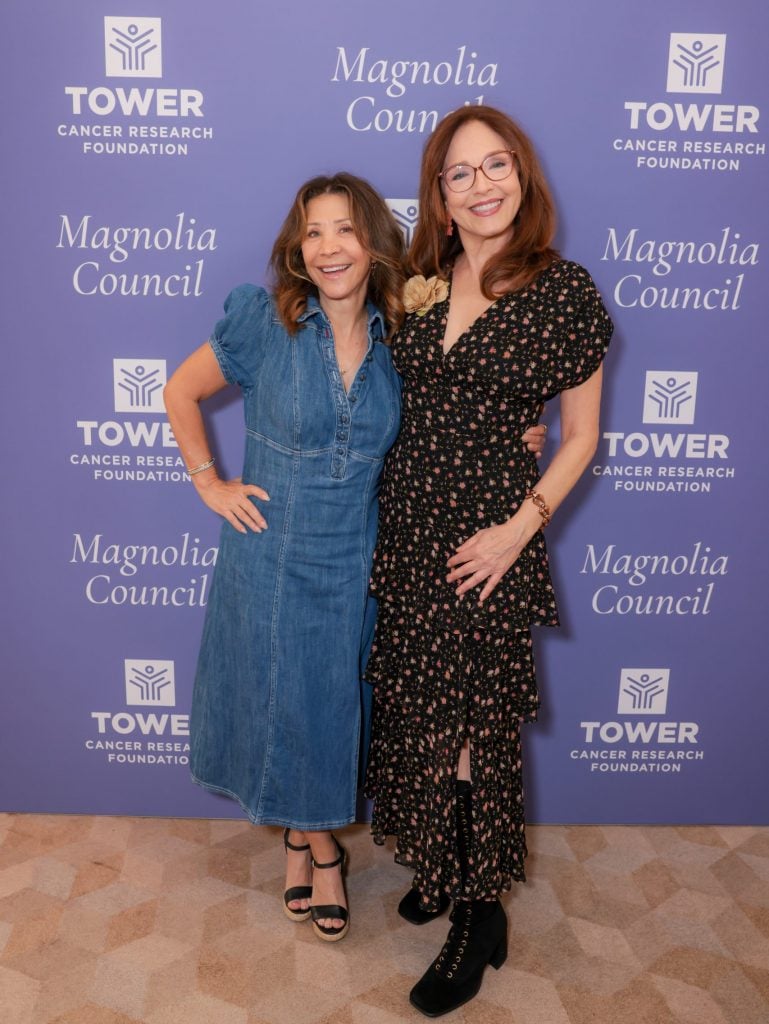
Hosted by Tower’s Magnolia Council, the annual luncheon featured items from brands like Veronica Beard and raised funds for the foundation’s dual mission: investing in promising early-stage cancer research and providing free support services for patients, survivors, and their families.

Celebrating its 30th anniversary, Tower Cancer Research Foundation has invested more than $12 million in cancer research, helping advance scientific discoveries and new treatment possibilities.
Raising Awareness About Genetic Testing
Although Weiss is accustomed to working with some of Hollywood’s biggest stars, she acknowledged that sharing her own family’s experience is a different matter.
“I think, really, the main reason I agreed to do this, because I was very private, is that maybe somebody else … doesn’t know about the [BRCA] test,” Weiss said, explaining why she chose to speak publicly about her family’s experience.
Her comments underscored how sharing personal stories can encourage others to ask questions about their family history, seek genetic counseling, and learn whether testing may be appropriate for them.
But as cancer treatments continue to improve and more people survive the disease, another important question is emerging: What happens after treatment ends?
Supporting Cancer Survivors Beyond Treatment
Through its flagship Magnolia House program, Tower offers free fitness classes, mental health counseling, nutritional guidance, wellness programs, and community support to help patients and families navigate cancer’s physical and emotional challenges.
Matt Zarcufsky, Tower’s Executive Director and Chief Philanthropy Officer, spoke with SurvivorNet about the growing need to support people long after their cancer treatment ends.
“The good news is we’re detecting cancer earlier,” Zarcufsky told SurvivorNet. “The bad news is, we don’t know what to do about it once you’ve survived a diagnosis.”
His message highlights an often-overlooked reality of cancer survivorship: Beating the disease doesn’t necessarily mean the physical and emotional challenges disappear.
Breast Cancer Dialogues: Survivorship and How to Reclaim Joy
As more people survive cancer, Zarcufsky emphasized the importance of expanding access to services that help patients regain their strength, manage the emotional impact of cancer, and improve their quality of life.
“The work that we’re doing in Magnolia House, even though we’ve been doing it for 15 years, it’s really uncharted territory,” he said. “We have so much ahead of us.”
Tower hopes to expand Magnolia House’s reach, bring these services to more patients and families throughout Southern California, and inspire similar programs nationwide.
“How do we come together? How do we scale our services at all levels so that we can get there to meet the needs of those folks?” Zarcufsky said, describing the team’s thought process for setting goals.
Life After Cancer: Why Survivorship Support Matters
Finishing cancer treatment is an important milestone, but it doesn’t necessarily mean life immediately returns to normal. Many survivors experience lingering fatigue, changes in physical strength, anxiety about recurrence, or difficulty adjusting to life after treatment. Others may struggle with changes in their appearance, relationships, or sense of identity.
These challenges can persist for months or even years, and they aren’t always visible to others. Someone may look healthy and vibrant on the outside while still dealing with the lasting effects of cancer treatment.

That’s why survivorship care is increasingly recognized as an important part of cancer treatment and recovery.
For some people, that means gradually rebuilding physical strength. For others, it may involve counseling, connecting with fellow survivors, or learning to navigate a new normal.
There is no single timeline for healing, and recovery looks different for everyone.
Finding Strength Through Movement, Connection, and Support
Research continues to demonstrate the benefits of physical activity for many people living with and beyond cancer. When tailored to a person’s health and abilities, exercise can help improve strength, reduce fatigue, support emotional well-being, and enhance overall quality of life.
Zarcufsky pointed to the emerging field of exercise oncology as one area with the potential to improve survivorship care.
“Our goal at Tower is to be at the cutting edge, on the front edge of leading this new phase,” he told SurvivorNet.
But recovery isn’t just physical. The emotional impact of cancer can linger long after the last treatment, making mental health support and meaningful connections particularly valuable.

For survivors navigating life after cancer, several strategies may help:
- Start moving at your own pace. Gentle walking, yoga, stretching, or other activities may help rebuild strength and confidence. Talk with your care team about which activities are safe for you.
- Prioritize emotional well-being. Counseling, mindfulness, and support groups can help with anxiety, uncertainty, and the emotional challenges of survivorship.
- Connect with others who understand. Sharing experiences with fellow survivors can provide reassurance and a sense of community.
- Give yourself time to heal. Recovery isn’t always linear. Some days may feel easier than others, and it’s important to respect your body’s changing needs.
- Stay connected with your healthcare team. Follow-up appointments and survivorship care plans can help address lingering side effects, monitor for recurrence, and support long-term health.
Programs like Magnolia House reflect a growing recognition that caring for cancer patients means supporting the whole person— not just treating the disease. And as research continues to improve cancer survival, the focus is increasingly shifting from how long people live to how well they live.
For Zarcufsky, sharing personal experiences and advocating for others are essential parts of that mission.
“We’ve got to share stories. We’ve got to advocate for each other,” he told SurvivorNet.
Advances in cancer care aren’t just about helping people survive; they’re also about giving them the tools and support to thrive.
What Are the Options if You Have a High Risk of Developing Breast Cancer?
Specific mutations in BRCA genes lead to an increased risk of developing breast cancer. People who have a family history of breast or ovarian cancer may want to consider being tested for mutations, particularly if the relative was diagnosed with cancer before age 50. If you’ve been diagnosed with a BRCA mutation, there are still steps you can take to lower your risk of developing cancer.
“When I meet with women who are at an increased risk for breast cancer because of BRCA mutations, I like to talk about the three options that they have for managing their risk,” Dr. Freya Schnabel, Director of Breast Surgery at NYU Langone Medical Center, shared with SurvivorNet.
Those options, according to Dr. Schnabel, are:
- Intensive surveillance: This means keeping an eye on your health, in an attempt to catch disease early if it does present itself.
- Medication: There are certain drugs available to lower the risk of developing breast cancer. But as with any medical treatment, risks and benefits must be considered.
- Surgery: This is the option that will lower a woman’s chance of getting breast cancer as much as possible. It involves removing as much breast tissue as possible, while attempting to preserve the nipple area, should a woman opt for reconstruction.
Learn more about SurvivorNet's rigorous medical review process.


