
Spreading Awareness About HPV-Related Cancer
- U.K.-based dad Anthony Perriam is using his HPV-related cancer journey to encourage other men to be aware that the human papillomavirus can increase cancer risk. Getting checked soon after finding a lump under his jaw, led doctors to discover his cancer, and a tumor on the base of his tongue.
- He ultimately had 44 lymph nodes from his neck and the tumor on his tongue surgically removed, followed by radiotherapy and chemotherapy.
- The human papillomavirus, or HPV, is a group of more than 200 related viruses, some of which are spread through vaginal, anal, or oral sex, according to the National Cancer Institute. It can cause a handful of cancers, including cervical and throat cancers.
- “The strains of HPV that cause cervical cancer are the same strains of HPV that cause throat cancer,” Dr. Jessica Geiger, a medical oncologist at Cleveland Clinic Cancer Center, tells SurvivorNet. “There average patient with HPV-related throat cancer tends to be males in their 40s or 50s, who were never a smoker or just a very light tobacco user.”
- The HPV vaccine, Gardasil, can help prevent both oral cancers as well as cervical cancer in women.
- There isn’t a routine yearly test for throat cancer the way there is for some other cancers. Most cases are diagnosed after someone visits a doctor because of ongoing symptoms. These can include a persistent cough, voice changes, trouble swallowing, ear pain, a sore throat, or a lump that doesn’t heal—like the one Perriam experienced. If something feels off and your symptoms linger, it’s important to get checked rather than putting it off.
Perriam’s quick decision to get checked after noticing the unusual mass allowed him to receive his diagnosis just weeks later. He told BBC News, “I’d only ever heard of HPV in relation to cervical cancer. I had no idea it could cause cancers like this, especially in men.”
Read More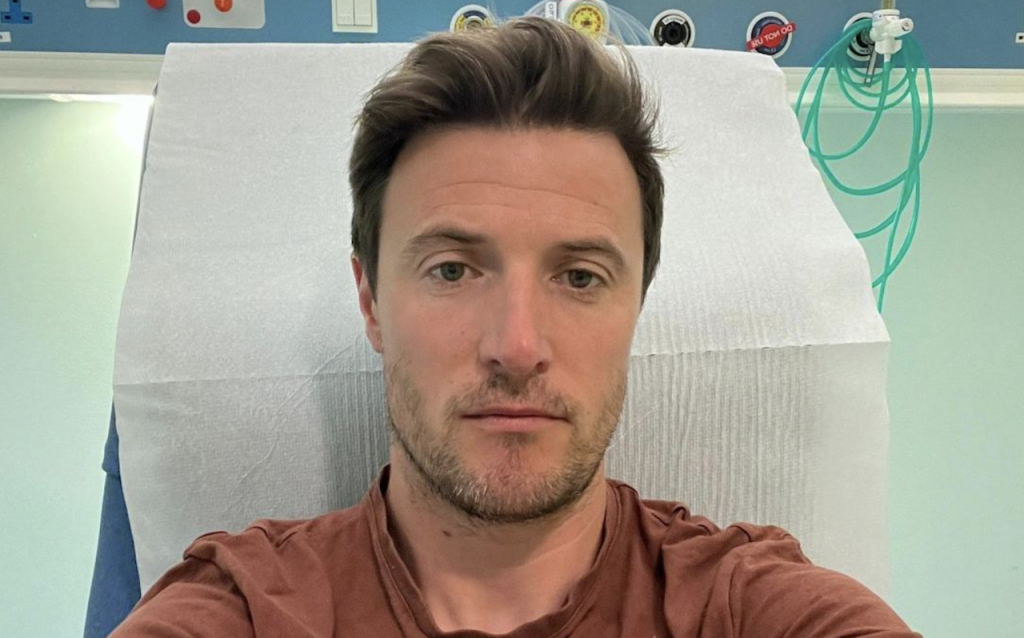
Perriam’s doctors told him that the cancer was found “just in time” because a lymph node in his neck was on the verge of bursting—a development that could have caused the disease to spread throughout his body.
He was able to undergo surgery to get 44 lymph nodes removed from his neck, in addition to the tumor at the base of his tongue, via robotic-assisted surgery.
Perriam, whose children were ages three and six at the time of his diagnosis, also underwent radiotherapy and chemotherapy.
Recounting his arduous journey to BBC News, he explained further, “Even drinking was difficult, as everything turned to powder in my mouth. I was so weak that I eventually needed a wheelchair.
“Being wheeled down the corridor and into radiotherapy was starting to affect my mental health. But my family gave me the motivation to get through it and I wanted to live to see my 40th birthday.
RELATED: HPV and Cancer Risk: The Basics
Perriam hopes his health journey can help encourage others to pay attention to your body, advising, “If you find a lump, even if it doesn’t hurt, get it checked. T
“his kind of cancer isn’t talked about enough, especially among men.”
“Early action really does save lives,” Perriam insisted.
Tongue Cancer: Understanding the Cause of Head & Neck Cancers
According to Cedars-Sinai, several types of cancer develop in the tongue, with the most common being squamous cell carcinoma. The two types of tongue cancer are:
- Cancer of the oral tongue, which consists of the front two-thirds of the tongue that you can stick.
- Cancer of the base of the tongue, the area which is the back one-third of the tongue that extends down the throat.
Although some people may be diagnosed with tongue cancer and have no risk factors, Cedars-Sinai says this type of cancer is most commonly found in adults 40 years old and up. Men are also twice as likely to be diagnosed with tongue cancer.
Other risk factors, as per Cedars-Sinai include:
- Smoking and drinking alcohol [smokers are 5x more likely to develop tongue cancer than nonsmokers]
- Human papillomavirus (HPV)
- African-American men have a greater risk than caucasians
It’s important to understand that symptoms of tongue cancer can include:
- An unusual lump on the side of the tongue
- An ulcer-like lump, of a grayish-pink to red color
- A lump that bleeds easily when touched
Tongue cancer may be hard to spot in its early stages, however, when the cancer develops, patients may experience trouble with swallowing, voice changes, pain in the ear, pain in the throat, or a feeling of fullness in the throat.
HPV and Cancer Risk: The Basics
As for how throat cancer is diagnosed, it’s usually done through X-rays, CT scans, and PET scans. A diagnosis often requires a biopsy.
For tongue cancer treatment, surgery, chemotherapy and radiation therapy are usually done.
More On HPV-Related Cancers
- HPV Vaccine Gardasil Approved For Prevention of Head And Neck Cancers– Could Help Millions Of Men Avoid The Cancers That Struck Val Kilmer & Michael Douglas
- New Evidence Suggests Benefit Of Keytruda Immunotherapy For Some Head And Neck Cancer Patients
- The FDA Approves Immunotherapy Drug Keytruda For Some People With Head and Neck Cancer
- The HPV Vaccine Gardasil Now Approved For Prevention of Head & Neck Cancers– As Cases Rise in Men
- HPV-Related Cancers Are on the Rise And More Than 70 Cancer Centers Call for Urgent Action to Increase Vaccinations; What You Need to Know to Protect Your Child’s Health
- Get the Facts: What Do We Know About HPV-Linked Throat Cancer?
It’s much more common to know someone who has head or neck cancer, like tongue cancer, nowadays than it was several decades ago. And that’s because of its strong connection to the human papillomavirus, also known as HPV, which is the most common sexually transmitted infection in the United States.
“From the 1980s to the 2010s, the rate of HPV-related head and neck cancers has gone up by 300 percent,” Dr. Ted Teknos, a head and neck cancer specialist, and president and scientific director of University Hospitals Seidman Cancer Center in Cleveland, Ohio, told SurvivorNet during a previous interview.
The vast majority of humans in the United States, both men and women, will eventually get infected with HPV, according to Dr. Allen Ho, a head and neck surgeon at Cedars-Sinai.
“The important thing to know about HPV is that there are many different strains, and only a couple of them tend to be more cancer-inducing,” he told SurvivorNet.
“Probably less than 1 percent of the population who get infected happen to have the cancer-causing virus that somehow their immune system fails to clear, and over 15 to 20 years it develops from a viral infection into a tumor, and a cancer.”
It’s unclear whether HPV alone is enough to trigger the changes in your cells that lead to head and neck cancers, or whether this happens in combination with other risk factors like smoking.
The HPV Vaccine
Throat and oral cancers are unique in that they’re usually preventable with the HPV vaccine. And that’s why those eligible should get vaccinated against HPV, SurvivorNet experts say.
The vaccine is typically given to children before they are sexually active, as HPV is transmitted through sexual contact.
Why the HPV Vaccine is so Important in Preventing Cancer
And contrary to some detrimental misinformation circulated online, the HPV vaccine is entirely safe.
There are virtually no side effects with this vaccine, Dr. Jonathan Berek, director of the Women’s Cancer Center at Stanford Medical Center, previously told SurvivorNet.
It is “incredibly safe,” he said. “It’s as safe as any vaccine has ever been. It’s highly-effective. It’s highly-predictive.”
Dr. Berek added, “Some people say they’re concerned about it because they’re — they’ve called it a sex vaccine, that somehow it’s gonna encourage people to be sexually active.
“First of all, that’s not true. It’s, it’s an anti-cancer vaccine. And second of all, there are no data to support that contention.
RELATED: Should Children as Young as 9-Years-Old Get The HPV Vaccine?
“There are absolutely none. So it’s really based on fear, misinformation, disinformation … it’s not based on science or data. The science is very clear. It’s a highly-effective, safe vaccine, and should be promoted. And in those countries now where it has been promoted, we’re starting to see substantial reductions in the precancerous and early cancers of the cervix.”
HPV is responsible for 34,800 cases of cancer in the U.S. each year, but 90% of them can be prevented thanks to the HPV vaccine Gardasil.
Leading Experts Urge Patients to Be Proactive
As we highlight in several areas of SurvivorNet, highly respected doctors sometimes disagree on the right course of treatment for an ailment, and advances in medicine are always creating new options. Also, in some instances the specific course of treatment is not clear cut.
That’s even more reason why understanding the potential approaches to your disease is crucial.
Cancer Research Legend Urges Patients to Get Multiple Opinions
Furthermore, getting another opinion may also help you avoid doctor biases. For example, when seeking care for cancer, some surgeons may have an affiliation with a radiation center.
“So there may be a conflict of interest if you present to a surgeon that is recommending radiation because there is some ownership of that type of facility,” Dr. Jim Hu, director of robotic surgery at Weill Cornell Medical Center, previously told SurvivorNet.
Other reasons to get a second opinion include:
- To see a doctor who has more experience treating your type of disease
- You have a rare disease
- There are several ways to treat your illness
- You feel like your doctor isn’t listening to you, or isn’t giving you good advice
- You have trouble understanding your doctor
- You don’t like the treatment your doctor is recommending, or you’re worried about its possible side effects
- Your insurance company wants you to get another medical opinion
Bottom line, being proactive about your health could be a matter of life or death. Learn as much as you can from as many experts as you can, so that you know that you did your best to take control of your health.
Handling Fear When You Get the Diagnosis
Cancer is said to be one of the most challenging experiences for a human to go through. It would be very out of the ordinary if you weren’t scared. Anxiety and fear are totally normal reactions to the news that you have breast cancer. Acknowledging these emotions can be therapeutic and important to the healing process.
So how do you confront your fears without letting them take over entirely?
1. Let your family and close friends know, and let them help. So many cancer survivors tell us they want and need support but are often too preoccupied to make specific requests. Please urge those close to you to jump in with any practical help they can offer.
2. Keep a journal. It can be extremely cathartic to let those feelings loose on paper. Grab a pen and a nice journal and chronicle your different thoughts throughout the day.
3. Join a cancer support group. There are groups in nearly every community offering opportunities to connect with others going through a similar journey. You’ll gain incredibly helpful insights from others who can tell you what to expect and how to stay strong on tough days.
4. Consider seeing a therapist. Ask your doctor to refer you to a therapist so you can discuss your fears and concerns in a safe space. Often, vocalizing your thoughts and feelings rather than internalizing them can provide relief. Above all, just know that there are countless resources and support here for you to turn to at any time.
Feel the Fear, and Let it Go — Meditation for Cancer Survivors
Contributing: SurvivorNet Staff
Learn more about SurvivorNet's rigorous medical review process.


