French Sailor, 41, Wins His 64-Day Round-the-World Solo Race While Battling Stomach Cancer: ‘I Was Happy at Sea’
'I honestly didn't have much self-doubt,' said the naval architect describing his monumental victory. "I was both relaxed and calm about the stakes, and more motivated than ever to win."
French sailor Charlie Dalin, 41, won the esteemed 2024 Vendée Globe for his solo race around the world in January, but just revealed that he achieved his first place record 64 days, 19 hours, 22 minutes and 49 seconds time while undergoing treatment for a gastrointestinal stromal tumor (GIST).
A GIST is a rare type of cancer that starts in the digestive system. According to Mayo Clinic, gastrointestinal stromal tumors typically form in the stomach or small intestine (as in Dalin’s case). Symptoms from small GISTs are rare, and they do grow slowly; eventually, the tumors can cause belly pain and nausea.
SurvivorNet specializes in covering the lives of people who overcome seemingly insurmountable obstacles. Check out SurvivorNet TV’s incredible stories of resilience HERE.
French offshore sailor Charlie Dalin, 41, won the prestigious 2024/2025 Vendée Globe solo round-the-world race in January, but just recently disclosed that he completed his victorious 64 days, 19 hours, 22 minutes and 49 seconds time while undergoing treatment for a gastrointestinal stromal tumor (GIST), a rare cancer that originates in the digestive tract.
In an exclusive interview with Le Monde, the naval architect — who released his autobiography, La Force du Destin (“The Force of Destiny”), on Thursday — describes his inspiring story at sea, simultaneously battling the waters as he privately fought his disease.
“It was a huge shock to discover I had a gastrointestinal stromal tumor, a GIST attached to the outside of the small intestine,” which had “probably been growing for several years,” recalled Dalin to writer Patricia Jolly of his 2023 health news.
What Is a GIST tumor?
According to Mayo Clinic, gastrointestinal stromal tumors typically form in the stomach or small intestine (as in Dalin’s case). Symptoms from small GISTs are rare, and they do grow slowly; eventually, the tumors can cause belly pain and nausea.
“I didn’t know if it was treatable, or if I would even be able to celebrate my 40th birthday a few months later,” Dalin said.
Roughly one year before starting his race, the “professional navigator” had been “experiencing abdominal pain for a month or two that wouldn’t go away,” Dalin told writer Patricia Jolly, noting that he had also lost around ten lbs. Despite the daunting diagnosis, he trucked on with qualifying for the Vendée Globe, a race he placed second in back in 2020.
“That’s when I learned I would need surgery and would have to begin immunotherapy to shrink the tumor as much as possible.”
‘The Pain Disappeared’
The father and husband said that his oncologist cleared him for the race, and that he would not have done it “if the doctors had advised against it, even slightly.”
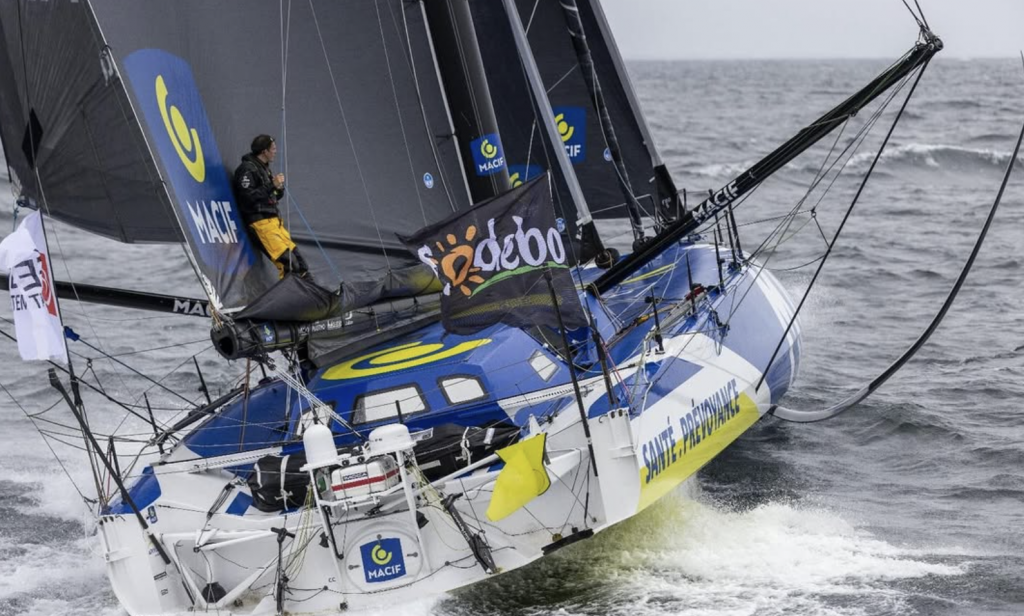
Charlie Dalin on his Imoca MACIF during the 2024 Vendée Globe, courtesy of Instagram/@charliedalin.
Dalin said he “regained weight, endurance and strength” as soon as he started treatment, “and the pain disappeared.”
Ever so optimistic, Dalin said he “never even considered that things might go badly, even though I took three or four months’ worth of medications with me in case something broke down at the other end of the world.”
“I don’t think much about the illness anymore; I was happy at sea and made the most of every minute sailing.”
“I felt like I had my old life back, despite a few bouts of major fatigue,” he continued. “I honestly didn’t have much self-doubt. I was both relaxed and calm about the stakes, and more motivated than ever to win.”
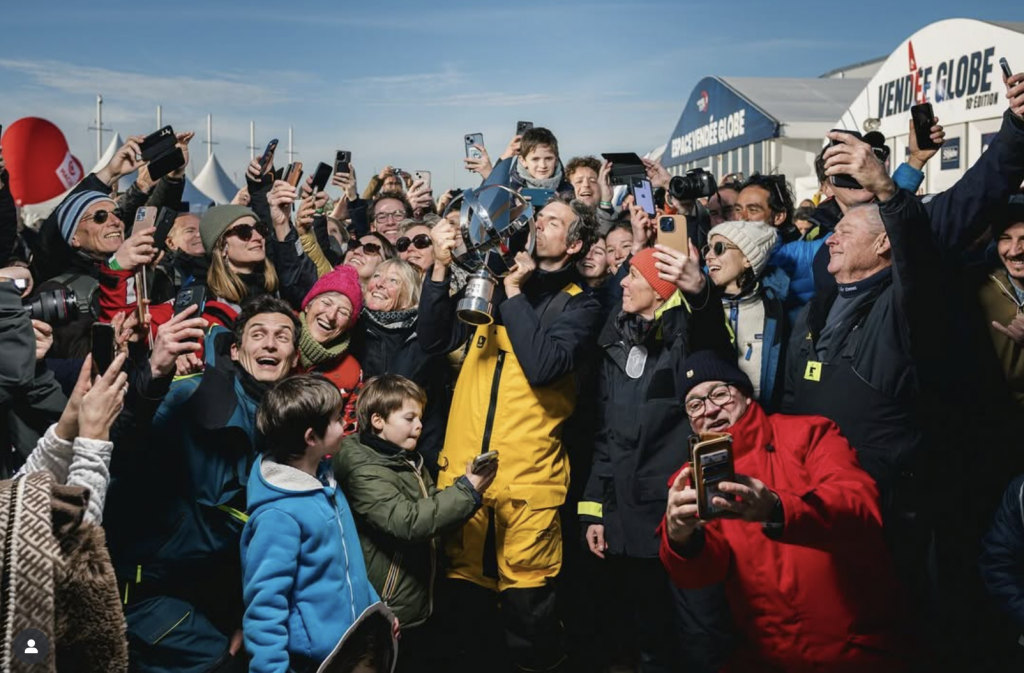
Charlie Dalin celebrating his Vendée Globe win in January 2025. Photo credit: Vincent Curutchet / Jean-Louis Carli / Alea.
Breaking down his day-to-day sleep patterns during the unassisted yacht race, Dalin said he “managed to average six and a half hours of sleep per 24 hours, broken into naps.”
He “even slept twice for 11 hours straight — something many people on land can’t do!”
After his incredible victory however, Dalin unfortunately had a setback and was not able to attend his own prize ceremony on May 10, which also happened to be his 41st birthday, but he didn’t let it affect the magnitude of his win.
“It was a tough period. And it was a great victory, since a year earlier I didn’t even know if I’d still be alive.”
A ‘Period of Uncertainty’
Dalin went on to have another surgery and his medical team discovered that “the illness returned in a slightly different form,” he said, not fully specifying details.
During a “period of uncertainty,” Dalin said his immunotherapy was no longer working, as he tried different treatment. He lost weight again. “Eventually, we found something, and now it’s stabilized, but far from over.”
For now, Dalin is realistic about the fact that he won’t be able to compete in the 2028 Vendée Globe, “because it would be too exhausting, too risky.”
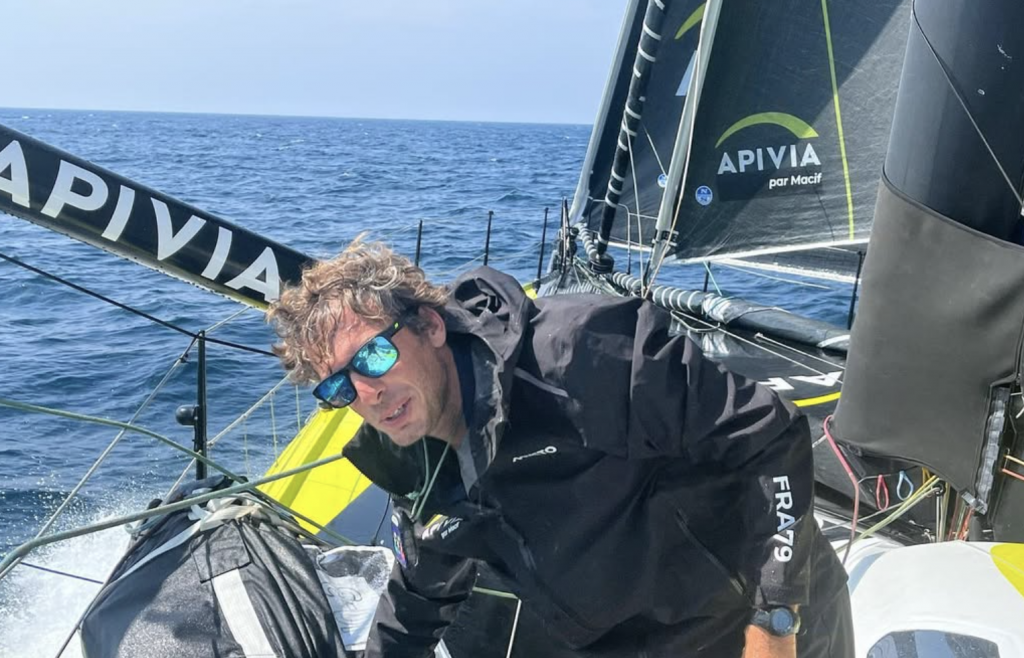
Charlie Dalin, courtesy of Instagram/@charliedalin.
Now using his energy to rally others with his courageous story, he thanks his doctors for helping him “understand that speaking openly could help other patients and their loved ones,” as he was once very private about his health following his diagnosis.
“While it’s good to give hope and the desire to fight, you also have to [be careful],” he said. “This illness really is case by case, and everyone does what they can within their own limits.”
As for what is next for Dalin, the waterman said he is not quite sure. “I hope to return to translatlantic races, but for now, everything is on hold.”
SurvivorNet specializes in covering the lives of people who overcome seemingly insurmountable obstacles. Often, seeing the positive helps them maintain their resilience.
The extraordinary film Resilience follows a trio of adaptive athletes, including Jerad Fischer, who talk about “refusing to live with boundaries.” Their stories, which illustrate an unconquerable human spirit, are inspirational for anyone living with cancer or chronic disease.
Take Jerad Fischer. Despite having had his leg amputated in an accident, Fischer continues to pursue his passion for mountain biking. He straps on a prosthetic leg and regularly speeds over ramps and rough terrain with his friends. His enjoyment of his sport inspires his buddies, who listen to him hoot as he sails over a small hill and see his wide smile when he comes down.
Lindsey Runkel and Dan Soller, who also suffered debilitating injuries, refuse to let their injuries change their lives or stop them from pursuing their passions.
Watch: Resilience on SurvivorNet TV
Dr. Zuri Murrell, a leading colorectal cancer surgeon in Los Angeles, previously spoke with SurvivorNet about the role of a positive outlook on survival rates: “I’m pretty good at telling what kind of patient are going to still have this attitude and probably going to live the longest, even with bad, bad disease. And those are patients who, they have gratitude in life.”
Bouncing Back from Tough Times
Resilience is an important trait, but not the easiest to build. The ultimate goal is not to avoid tough times, but to be able to bounce back from them. And yet, when they are faced with an overwhelming, life-changing situation, how do people shift their view? How do they learn to see the problem as temporary, rather than permanent, and figure out a solution?
It’s complicated, because building resilience is more about your mental and emotional fortitude than anything else. According to the American Psychological Association, “the resources and skills associated with more positive adaptation (i.e., greater resilience) can be cultivated and practiced.” In other words, resilience is not something you’re born with, which should be encouraging. Instead, after every challenge in your life, you build more and more resilience to those hard times.
You can build resilience the way you build muscle – through patience and steady exercise of the skill. Here are some lessons taken from Fischer, Runkel, and Soller:
Be willing to learn. If one way doesn’t work, find a different way. If an obstacle lands in your way, build a path around it or over it. In Resilience, one of the athletes says, “You always have to be learning. Otherwise, life gets stagnant.” The more you learn, the more you grow and growth is a sign of resilience.
Spend time with people who inspire you. Our world is filled with people who overcome challenges, and their success can energize you to overcome your own. Think about famous people who hava faced adversity and did not give up Stephen King actually threw his manuscript, Carrie, in the trash because it had been rejected by publishers so many times. His wife encouraged him to keep sending it out, and he finally sold it in 1974 launching a massively successful career as a novelist.
Take the time to read and learn about the lives of Helen Keller, Jackie Robinson, Bethany Hamilton, Nelson Mandela, and others.
Allow yourself to grieve. Don’t push away or dismiss your frustration and sadness. Ben Fischer says that life can be filled with lots of crying, but “Those cries make us stronger.”
Be flexible. Abandon the idea that there is only one solution or that you must stick to your original plan. The best solution or plan is the one that eventually works. You may need to change your original plan as the circumstances change.
Lean in to your community. Your friends, colleagues, and family are invaluable, and when you’re feeling stressed or overwhelmed by a problem, their support can carry you. The Harvard Study of Adult Development is the longest study of human well-being. Many news outlets have covered its results, which show that maintaining strong, healthy relationships helped people live longer lives. Psychiatrist and author Dr. Samantha Boardman tells SurvivorNet that connecting with and contributing to the lives of other people are two of “the three wellsprings of vitality” (the third is feeling positively challenged).
Stream Resilience and many other stories of courage and determination like Charlie Dalin’s on SurvivorNetTV.