‘I’ll Be Back’: Pro Golfer Brendan Valdes, 22, Says While Preparing for the Korn Ferry Tour, a Medical Exam Discovered a Mass in His Chest and Now He’s Undergoing Chemo for Lymphoma
‘I’ll Be Back’: Pro Golfer Brendan Valdes, 22, Says While Preparing for the Korn Ferry Tour, a Medical Exam Discovered a Mass in His Chest and Now He’s Undergoing Chemo for Lymphoma
Young Golf Pro Diagnosed With Lymphoma Says, "I'll Be Back"
Pro golfer Brendan Valdes, 22, has paused his rookie pro golf season after a routine check revealed primary mediastinal lymphoma, a rare subtype of diffuse large B‑cell non‑Hodgkin lymphoma.
Doctors say this fast‑growing cancer is highly treatable, and Valdes has already completed his first round of chemotherapy with optimism about a full recovery and a return to the golf course by year’s end.
Large B-cell lymphoma (LBCL) is the most common type of Non-Hodgkin Lymphoma, a cancer that starts in white blood cells called lymphocytes. The most frequent subtype is diffuse large B-cell lymphoma (DLBCL). It’s considered aggressive, which means it tends to grow quickly.
Valdes’ treatment included chemotherapy, although he didn’t say which type. However, the chemo drug combination called R-CHOP is a standard treatment for diffuse large B-cell lymphoma. According to research published in the New England Journal of Medicine, while RCHOP helps many patients, only about 60% are cured.
For stage 1 or 2 cancer, the RCHOP treatment should take about three months. “It’s three to four treatments with combination chemotherapy and monoclonal antibody therapy, and then a few weeks of radiation therapy, and you’re done,” Dr. Stephen Schuster, medical oncologist at Penn Medicine, tells SurvivorNet.
Treatment side effects may include fatigue, mouth sores, and hair loss, but Dr. Stephen Schuster, medical oncologist at Penn Medicine, says, “it’s a brief period in your life, and it’s a small price to pay for getting into remission and having this disease behind you.”
Just a year into his professional golf career, 22‑year‑old Brendan Valdes is confronting an unexpected challenge that has forced him to pause his momentum. While gearing up for the upcoming Korn Ferry Tour, a routine health check revealed a mass in his chest.
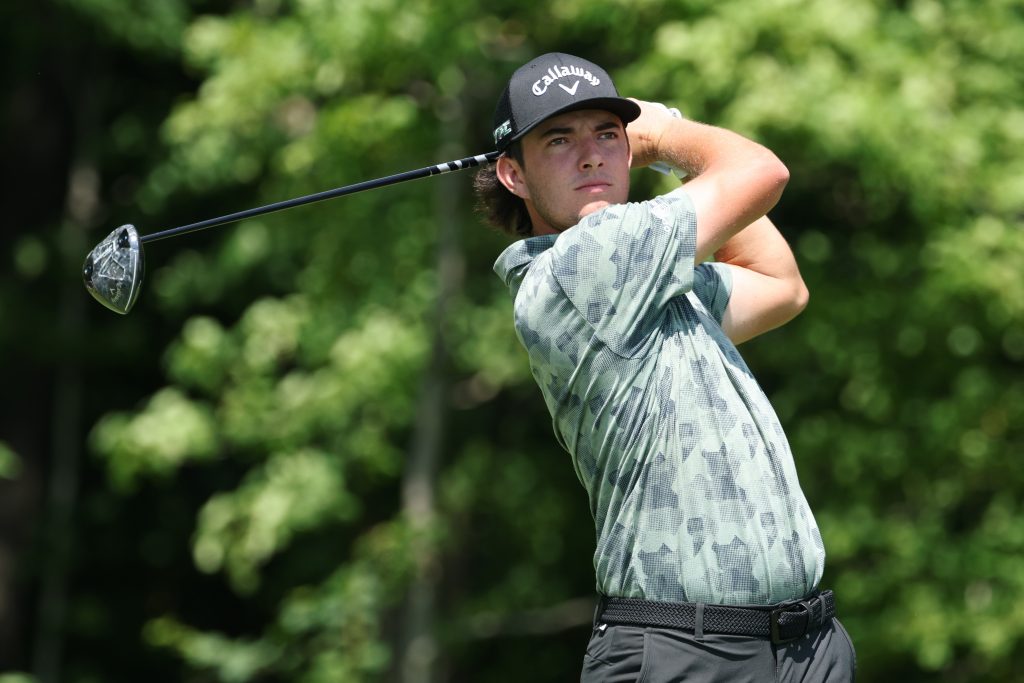
“After further testing, I was diagnosed with primary mediastinal lymphoma, requiring me to step away from the Korn Ferry Tour while I undergo treatment,” Valdes shared in an Instagram post. He added that “life, like golf, is often unpredictable,” a truth now reflected in his own cancer journey.SILVIS, ILLINOIS – JULY 04: Brendan Valdes of the United States plays his shot from the second tee during the second round of the John Deere Classic 2025 at TPC Deere Run on July 04, 2025, in Silvis, Illinois. (Photo by David Berding/Getty Images)
Primary mediastinal lymphoma is a rare form of diffuse large B‑cell non‑Hodgkin lymphoma. As Dr. Julie Vose, chief of hematology/oncology at the University of Nebraska Medical Center, explains, non‑Hodgkin lymphoma encompasses a wide range of cancers that begin in lymphocytes—white blood cells that help power the immune system. These cancers are further classified based on whether they originate in B cells or T cells, a distinction that guides treatment decisions.
WATCH: The Many Types of Non-Hodgkin Lymphoma
Diffuse large B‑cell lymphoma is the most common subtype and, according to the National Cancer Institute, accounts for roughly one-third of lymphoma cases in the United States. It often presents with swollen lymph nodes in areas like the neck, armpit, or abdomen. Although it grows quickly, it is considered highly treatable—and for many patients, curable.
Valdes has already begun treatment.
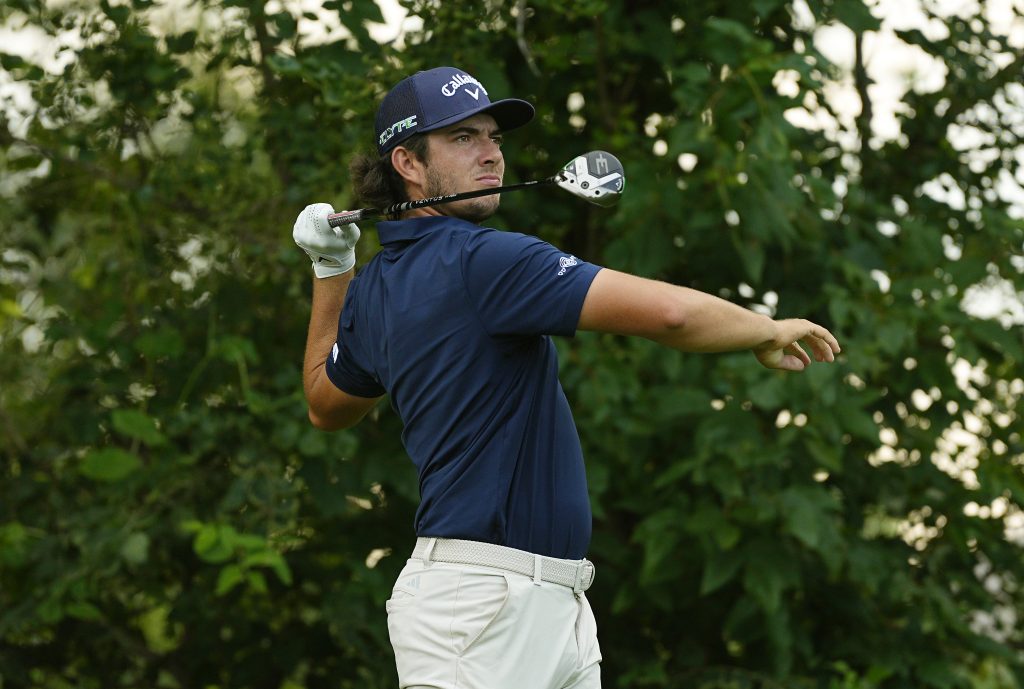
OMAHA, NEBRASKA – AUGUST 07: Brendan Valdes of the United States reacts after hitting his tee shot on the twelfth hole during the first round of the Pinnacle Bank Championship presented by Woodhouse 2025 at The Club at Indian Creek on August 07, 2025, in Omaha, Nebraska. (Photo by Jay Biggerstaff/Getty Images)
“I have recently completed my first round of chemotherapy and, while a long journey lies ahead, my treatments should have me back on the golf course and completely healthy this year,” he said.
Since announcing his cancer diagnosis, Valdes has received an outpouring of support for a speedy recovery.
“I’m grateful for all the words of encouragement, and I look forward to a return to competition,” the young pro golfer said.
The standard treatment for diffuse large B-cell lymphoma is a combination of four drugs that doctors nickname CHOP — the chemotherapy drugs cyclophosphamide, doxorubicin, and vincristine plus the steroid prednisone — which has been around since the 1970s. In addition, the newer monoclonal antibody rituximab (Rituxan) targets a specific protein called CD20 on the surface of cancer cells. This addition is often represented as R-CHOP, an effective treatment for aggressive B-cell lymphoma.
R-CHOP stands for:
R: Rituximab (Rituxan) is a monoclonal antibody that attaches to a specific protein called CD20, which sits on the surface of B cells. It targets cancerous cells and destroys them.
C: Cyclophosphamide is a type of chemotherapy drug
D: Doxorubicin hydrochloride (hydroxydaunomycin) is a type of chemotherapy drug
V: Vincristine sulfate (Oncovin) is a type of chemotherapy drug
P: Prednisone is a steroid that lowers inflammation
WATCH: R-CHOP Explained
“R-CHOP has been a standard treatment regimen for aggressive non-Hodgkin lymphomas of the B-cell subtype for many years,” Dr. Adrienne Phillips, medical oncologist at Weill Cornell Medicine, tells SurvivorNet.
“There are clinical trials looking to improve upon that standard by adding or removing medications to improve outcomes or minimize toxicity, but R-CHOP is still the standard of care for aggressive B-cell lymphomas.”
Dr. Stephen Schuster, medical oncologist at Penn Medicine, tells SurvivorNet that while a 100% success rate in oncology isn’t applicable, he adds, “diffuse large B-cell lymphoma in the early stage is a highly treatable disease.”
In people with stage I or stage II diffuse large B-cell lymphoma, where the areas of cancer are next to one another, doctors can also use radiation, “which is the oldest form of therapy for lymphoma,” he adds. Radiation uses high-energy X-rays to kill cancer cells.
The success rate with this treatment is about 80% in people with stage I or II cancers. “So you’re getting two potentially curative approaches to your disease to get very high success rates,” Dr. Schuster says.
R-CHOP side effects can include:
Tiredness and weakness
Hair loss
Mouth sores
Bruising and bleeding
Increased risk of infection
Appetite loss and weight loss
Changes in bowel movements
Turning to CAR T-Cell Therapy and Bispecific Antibodies to Treat Diffuse Large B-Cell Lymphoma
CAR T‑Cell Therapy uses a patient’s own T cells, which are modified in the lab to recognize and attack lymphoma cells. It is approved for relapsed or refractory DLBCL after at least two prior therapies or if it came back within 12 months.
WATCH: CAR T-Cell Therapy for Diffuse Large B-Cell Lymphoma: Do I Qualify?
The approved products include axi‑cel (Yescarta), liso‑cel (Breyanzi), and tisa‑cel (Kymriah). Across clinical trials, overall response rates range from about 60-80%, with complete response rates of roughly 40-55%, depending on the product and patient population.
“I would recommend anybody who has a relapse or recurrence of their lymphoma to at least request a referral to a CAR T-Cell Therapy center in their region,” explains Dr. Jonathon Cohen, a professor of hematology and medical oncology at Emory University School of Medicine and the Winship Cancer Institute in Atlanta, Georgia.
Overall survival at two years is approximately 40-50%, though individual outcomes vary based on factors such as age, disease characteristics, and prior treatments.
WATCH: A Breakthrough For Non-Hodgkin’s Lymphoma
Dr. Jason Westin is a Professor in the Department of Lymphoma and Myeloma at The University of Texas MD Anderson Cancer Center. His research focuses on developing therapeutic strategies for lymphoma. He is just one of many cancer experts in the Houston metropolitan area who specialize in treating diffuse large B-cell lymphoma. For patients with a relapse of diffuse large B-cell lymphoma, CAR T-Cell Therapy may offer a potential path to a cure.
“The ability to potentially cure people who’ve had aggressive lymphomas that came back time and time again — this is the breakthrough we’ve been waiting for,” says Dr. Westin.
Bispecific Antibodies
For patients who relapse (see their cancer return after treatment) after CAR T‑Cell Therapy or are not candidates for it, bispecific antibodies offer an effective treatment option.
“Often we consider bispecifics as complementary therapies to CAR T-Cell Therapies and not necessarily mutually exclusive therapies,” explains Dr. Sai Pingali, a medical oncologist at Houston Methodist Hospital in Houston, Texas, who specializes in treating non-Hodgkin lymphoma.
According to Dr. Pingali, “[Bispecifics] target the CD20 target on the lymphoma cells and the CAR T-Cell Therapy targets the CD19 on the lymphoma cells.”
Because CAR-T and bispecifics attack cancer cells in different ways (CAR T-Cell Therapy often targets CD19, while bispecifics often use CD20), there is a real opportunity to sequence or combine them. For instance, a physician might use a bispecific antibody first to reduce tumor burden (making the disease smaller and more controllable), then move to CAR-T when ready, or use a bispecific as a “bridge” while waiting for CAR-T to be manufactured.
Approved bispecific drugs, such as epcoritamab (Epkinly) and glofitamab (Columvi), simultaneously bind lymphoma cells and immune system T cells, bringing T cells into proximity with cancer cells to trigger targeted immune-mediated killing.
WATCH: How Do Biospecific Antibodies Work?
In clinical studies of relapsed or refractory DLBCL, overall response rates range from 50-65%, with complete response rates of 35-45%, depending on the specific drug and patient population. Among patients who have previously received CAR T‑Cell Therapy, a group historically with very limited options, bispecific antibodies demonstrate meaningful activity, with overall response rates of approximately 50-60% and complete response rates of 30–40%, though smaller studies in selected patients have reported this.
Better Understanding Non-Hodgkin Lymphoma
“Non-Hodgkin lymphoma is a big category,” Dr. Julie Vose, chief of hematology/oncology at the University of Nebraska Medical Center, previously told SurvivorNet.
All non-Hodgkin lymphomas begin in white blood cells known as lymphocytes, which are part of your body’s immune system. From there, doctors separate these cancers into types depending on the specific kind of lymphocytes they grow from, B-cells or T-cells.
WATCH: The type of lymphoma you have matters.
Knowing which of these you have can help steer you to the most appropriate treatment.
One way doctors divide up these cancers is based on how fast they’re likely to grow and spread. “The two main classifications I think of in terms of non-Hodgkin lymphoma are lymphomas that are more indolent and those that are more aggressive because those are treated very differently,” Dr. Jennifer Crombie, medical oncologist at Dana-Farber Cancer Institute, tells SurvivorNet.
Once you’ve been diagnosed with non-Hodgkin lymphoma, the next question your doctor will want to answer is whether you have B-cell or T-cell lymphoma. That answer is important because it will help determine your treatment.
B-cells and T-cells are two kinds of lymphocytes. They’re both infection-fighting cells, but they work in different ways.
About 85% of non-Hodgkin lymphomas affect B cells. These cells produce antibodies, proteins that react to foreign substances like viruses or bacteria in your body. The antibodies attach to another protein on the surface of the invading cells, called an antigen, to target and destroy them.
Types of B-cell lymphoma include:
Diffuse large B-cell lymphoma
Follicular lymphoma
Small lymphocytic lymphoma (SLL)/chronic lymphocytic leukemia (CLL)
Mantle cell lymphoma
Marginal zone lymphomas
Burkitt lymphoma
T-cell lymphomas make up only 15% of non-Hodgkin lymphomas. Unlike B-cells,
T-cells directly destroy bacteria and other invaders.
Types of T-cell lymphoma include:
T-lymphoblastic lymphoma/leukemia
Peripheral T-cell lymphomas
Cutaneous T-cell lymphoma
In most cases, doctors cannot pinpoint exactly why someone develops lymphoma. However, there are some known risk factors:
Age: It’s more common in older adults, though it can occur at any age.
Immune system problems: People with weakened immune systems — from HIV, autoimmune diseases, or certain medications — have a higher risk.
Family history or previous cancers: These can slightly increase risk, though lymphoma isn’t typically inherited.
Infections: Rarely, chronic infections such as H. pylori or hepatitis C may play a role.
Questions for Your Doctor
If you are dealing with a lymphoma diagnosis, it’s important to ask your doctor a series of questions so you will have an idea of what your next steps will look like. To help you during this difficult time, SurvivorNet has some questions to kickstart your conversation with your physician.
What type of lymphoma do I have?
What does my pathology report say about my diagnosis?
Should I get a second opinion before I explore possible treatment options?
Based on my diagnosis, what do you anticipate my treatment path?
What common side effects should I expect when I begin treatment?
Will I be able to continue working and performing normal daily activities during treatment?
Where can I get help working with the insurance company regarding treatment costs?
Who do you recommend I get mental health help from during my treatment?