‘It Can Be Daunting’: Princess of Wales Kate Middleton, 44, Wraps Arms Around Volunteers Working Tirelessly to Comfort Cancer Patients Coping With Chemo While Sharing Her Own Experience
‘It Can Be Daunting’: Princess of Wales Kate Middleton, 44, Wraps Arms Around Volunteers Working Tirelessly to Comfort Cancer Patients Coping With Chemo While Sharing Her Own Experience
Kate Middleton, Princess of Wales, 44, made an unexpected hospital visit with Prince William, connecting closely with healthcare workers, volunteers, and patients navigating chemotherapy, an experience she knows firsthand.
Middleton emphasized how “daunting” treatment can feel and highlighted the importance of compassionate, holistic support to help patients get through their exhausting chemo days.
Middleton has been in remission for a year after receiving preventative chemotherapy for an undisclosed cancer found in early 2024.
“For cancer patients, losing one’s hair can be unbelievably stressful. To start with, the dread of losing one’s hair can lead to some sleepless nights and feelings of anxiety,” Dr. Samantha Boardman, a New York-based psychiatrist and author, told SurvivorNet. Handy admitted that this was a tough time during her journey since working as a model focuses heavily on her hair and body.
Chemotherapy can cause hair loss. It usually begins about three to four weeks after chemotherapy and continues throughout treatment.
“Neuropathy is probably one of the most challenging side effects,” says Dr. Renata Urban, a gynecologic oncologist at the University of Washington in Seattle.
Neuropathy results from damage to the peripheral nerves. It usually resolves after chemotherapy treatment, but sometimes symptoms can persist.
Kate Middleton, Princess of Wales, 44, recently made an unexpected visit to a hospital, where she connected deeply with cancer patients and the volunteers who support them. She and Prince William were there to thank healthcare workers, but the most moving moments came when Middleton spoke quietly with volunteers who understood firsthand the physical and emotional weight of chemotherapy.
According to HELLO Magazine, when Middleton met a volunteer who works with chemotherapy patients, she acknowledged how long chemo sessions can stretch — “for hours” — and offered a comforting arm around the volunteer.Photo by Jonathan Brady – Pool/Getty Images
The exchange reflected a shared understanding: Middleton revealed last month that she has been in remission for a year following preventative chemotherapy for an undisclosed cancer discovered after abdominal surgery in early 2024.
WATCH: Adjusting to Chemotherapy Treatment
Chemotherapy is a common cancer treatment that works by stopping or slowing the growth of cancer cells. Chemo can also help shrink tumors. However, despite its effectiveness, chemotherapy often comes with side effects.
According to the National Cancer Institute, adjuvant chemotherapy (sometimes called preventative) is given “after the primary (initial) treatment to kill any cancer cells that remain in the body and to lower the risk that the cancer will come back.”
“People hear the word chemotherapy, and they assume it’s going to be the treatment that’s used for someone with more advanced disease or a different kind of cancer where the toxicities of chemotherapy may be significant,” explains Dr. Lynn Parker, a gynecologic oncologist at Norton Cancer Institute in Louisville, Kentucky. But not all chemotherapy treatment is the same.
Today’s chemotherapy regimens are much more tolerable than protocols from decades past, and side effects tend to resolve after treatment has been completed. Doctors also deliver chemotherapy in cycles with built-in rest periods to minimize the side effects.
Though she has kept most details of her diagnosis and cancer journey private, Middleton’s empathy was unmistakable. Speaking with another volunteer, she described how “daunting” chemotherapy can feel and emphasized how much easier treatment days become when surrounded by compassionate people, according to Tatler.
“You need the medical support, but actually being able to have the sort of holistic support alongside it … it must help the days go past,” Middleton said of the importance of having people around to make treatment days easier to get through.
Expert Resources on Managing Chemotherapy Treatment and Side Effects
One cancer patient Middleton met is Katherine Field. Field was wearing her cold-cap device (also called scalp cooling therapy or Cryotherapy), which helps preserve some hair follicles while undergoing chemotherapy.
These FDA-approved devices—initially for breast cancer and now used for other cancers—are worn before, during, and after chemo sessions. The helmet-style caps are filled with gel coolant chilled to between -15°F and -40°F.
“Cold caps work by causing vasoconstriction, or narrowing of the blood vessels that supply blood to the scalp,” explains Dr. Renata Urban, gynecologic oncologist at the University of Washington.
This reduced blood flow limits the amount of chemotherapy that reaches hair follicles, helping protect them from damage. The cold also slows down follicle activity, making them less vulnerable to the effects of treatment.
If hair loss is a concern, know that you have options—from wigs and wraps to hats and scarves—that can help you feel more like yourself during treatment.
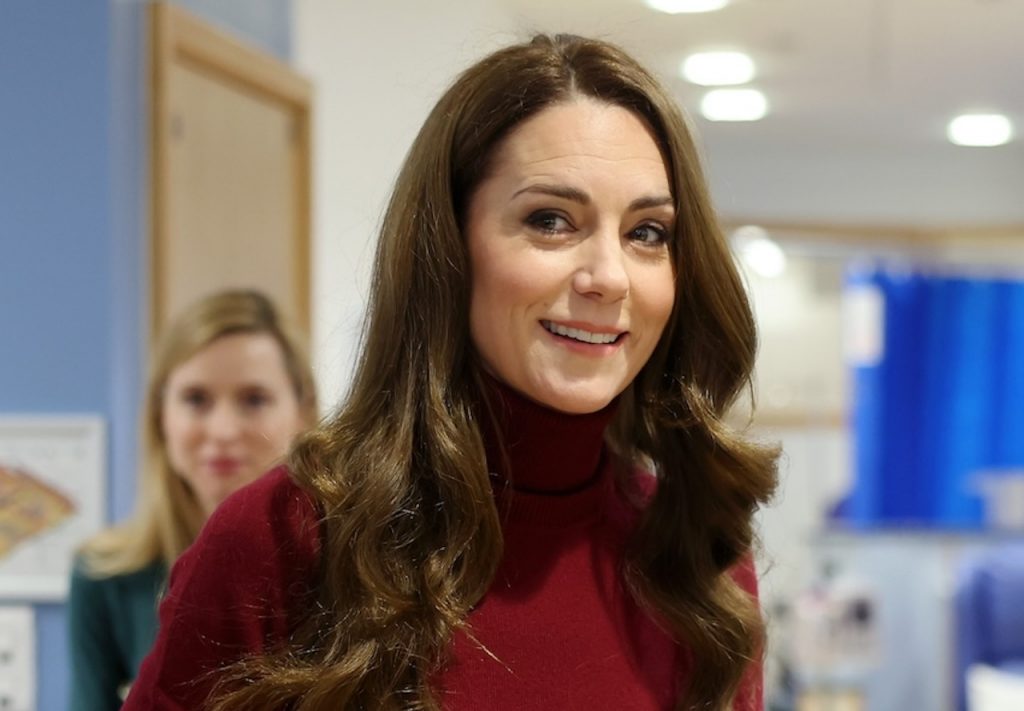
Kate Middleton visits The Royal Marsden Hospital on January 14, 2025 (Photo by Chris Jackson/Getty Images)
Field said, when she asked Middleton if she needed to use a cold-cap, “She just said that she didn’t have to have it. For her to lose her hair, which is so iconic, would have been awful. Everyone loves her hair!” according to People Magazine.
“For cancer patients, losing one’s hair can be unbelievably stressful. To start with, the dread of losing one’s hair can lead to some sleepless nights and feelings of anxiety,” psychiatrist Dr. Samantha Boardman tells SurvivorNet.
WATCH: Coping with hair loss.
“For cancer patients, losing one’s hair can be unbelievably stressful. To start with, the dread of losing one’s hair can lead to some sleepless nights and feelings of anxiety,” Dr. Boardman told SurvivorNet.
Although chemotherapy can cause hair loss. It usually begins about three to four weeks after chemotherapy and continues throughout treatment.
It happens because this treatment targets quickly dividing cells throughout the body. That includes cancer cells but also hair cells.
Most patients can expect regrowth four to six weeks after treatment. However, it is possible that when your hair grows back, you may notice some changes in its color and texture.
WATCH: Maintain a Healthy Diet During Chemo
After receiving chemotherapy, patients almost universally experience fatigue, often alongside gastrointestinal side effects, such as nausea. Doctors have many effective medications to combat chemo-induced nausea. “But mitigating that fatigue often depends on the patient,” says Dr. Renata Urban, a gynecologic oncologist at the University of Washington in Seattle.
“Neuropathy is probably one of the most challenging side effects,” says Dr. Urban.
Neuropathy results from damage to the peripheral nerves. It usually resolves after chemotherapy treatment, but sometimes symptoms can persist. While it’s typically characterized by numbness or a pins-and-needles sensation in the hands and feet, neuropathy can have several different symptoms, including:
Weakness in the hands or feet
Stabbing or burning pain in the hands or feet
Difficulty gripping, such as when holding a fork
Difficulty with fine motor skills, such as writing or buttoning a shirt
Nausea and vomiting are common side effects of chemotherapy. When chemotherapy affects the rapidly dividing cells in the lining of the stomach, the resulting cellular havoc in the gastrointestinal tract can lead to side effects such as nausea and vomiting. However, doctors can help patients mitigate the hit with various medications before, during, and after treatment.
Tips for Navigating Chemo Side Effects
When dealing with fatigue, doctors don’t have an arsenal of weapons to combat fatigue in terms of prescription medications. However, you can do several things to help minimize the hit and restore your energy.
Exercise: While it may be counterintuitive, physical activity can help alleviate side effects, especially fatigue. “Although ovarian cancer is not common, we often draw upon the experience of patients with breast cancer and colon cancer, who have shown that physical activity can not only improve quality of life but may also have beneficial impacts on cancer outcomes,” Dr. Urban says.
Eat well: Even though nausea may interfere with your ability to eat a healthy diet, it’s essential to ensure you’re eating appropriately, getting enough protein, and not losing weight. Not only will nourishing your body support your recovery, but it may also help you feel more energized.
Sleep: Want to mitigate fatigue? Be sure to maintain your regular sleep-wake cycle while on treatment. Sticking to a set sleep schedule helps reduce fatigue by ensuring enough hours for your body to heal and restore itself each night. It may also help you recover more quickly by keeping energy levels high during the daytime.
Treating Neuropathy Symptoms
Doctors have several strategies for helping patients deal with this side effect. Once a patient begins experiencing the symptoms of neuropathy, they’ll be carefully monitored to make sure it doesn’t get worse. Before each chemotherapy infusion, the attending oncologist will assess whether the symptoms have progressed. If the symptoms worsen, they may adjust the dose or delay treatment. They may also try switching to another chemotherapy drug.
How to Get a Handle on Nausea
Most of these anti-nausea medications last for more than eight hours. One of the infusions commonly used reduces the degree of nausea for up to three days.
Complementary approaches may also be helpful. A few favorites:
Ginger: Studies consistently show that ginger helps alleviate chemotherapy-induced nausea. The powerful herb appears to have an anti-spasmodic effect on the gut. Not a fan of raw ginger? Suck on ginger candy, sip ginger ale, or make a steaming cup of ginger tea.
Pressure bracelets: at your local pharmacy, these bracelets provide consistent pressure on a particular acupressure point on the wrist to reduce nausea.
Deep breathing: Moving air in and out of your lungs with a few deep breaths can help relieve nausea, particularly if you pair deep breathing exercises with meditation. It can also help you relax and release stress and anxiety.
After Middleton completed her chemotherapy, she resumed her royal duties.
“Doing what I can to stay cancer-free is now the focus. Although I have finished chemotherapy, my path to healing and full recovery is long, and I must continue to take each day as it comes,” Middleton wrote in an Instagram post.