
Understanding Male Breast Cancer
- Chef Mat Kelly, 42, was diagnosed with an aggressive, incurable form of male breast cancer after months of delays, but he’s now getting chemotherapy every three weeks to prevent the disease from spreading further.
- Kelly is determined to use his cancer journey to inspire other men to get checked.
- Symptoms of male breast cancer can include a lump in the chest or a thickening in the breast tissue, nipple pain, an inverted nipple, discharge from the nipple, which may be clear or bloody, changes to the color or texture of the nipple, and enlarged lymph nodes under the arm.
- Experts say that treating male breast cancer is largely the same as treating female breast cancer. While men have some special considerations, treatment options depend greatly on various factors, including the size of the tumor, how far the cancer cells have spread, and biological and genetic factors that may be powering your cancer.
Kelly, who first noticed the cancerous lump in October 2024, didn’t get diagnosed with the disease until December 23, 2024. Then, a month later, a PET scan revealed the cancer had spread to his lymph nodes, bones, and spine. A follow-up PET scan, which Kelly was advised to get when chemotherapy proved to be ineffective after three months, ultimately revealed his cancer wasn’t curable.
Read More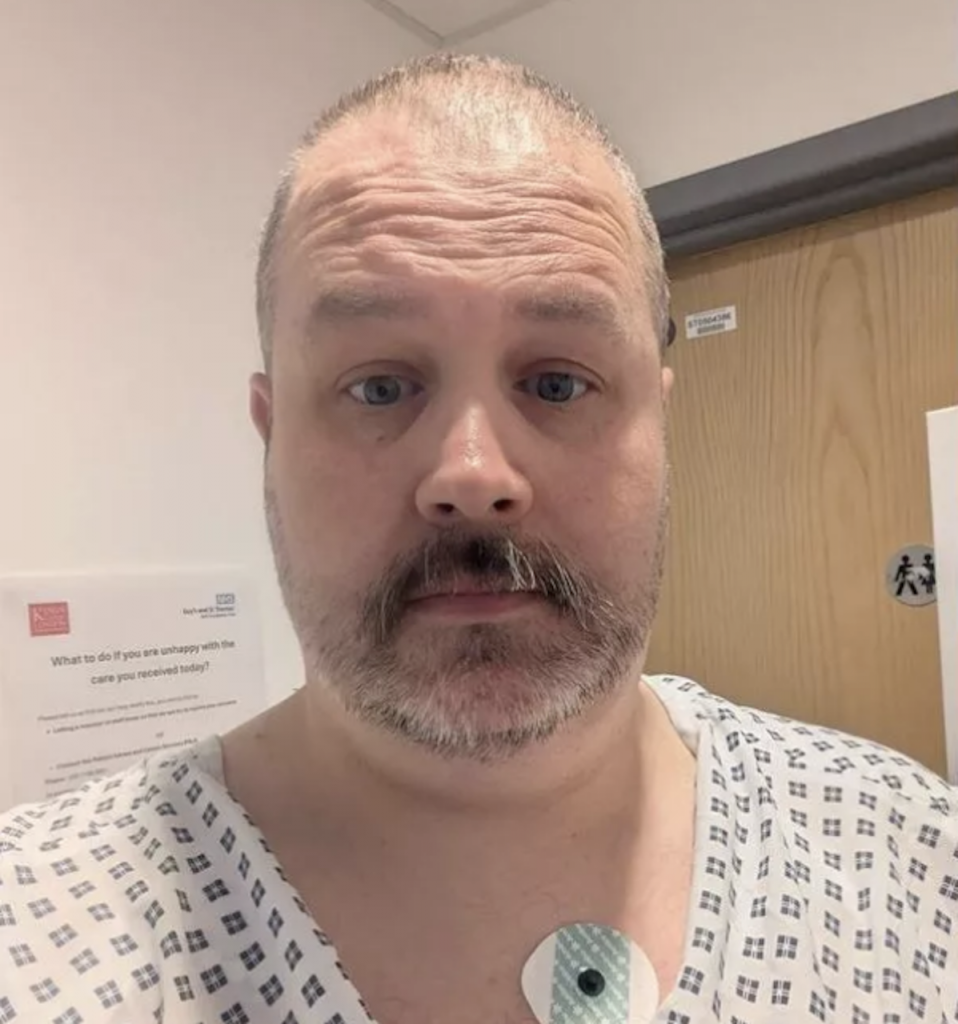
Kelly was told that patients who respond to treatment as he has can live for many years afterward, giving him hope for both his own future and for others facing the disease.
He advised, “I’d just say to men, check your chests and check yourself and, if something’s not right, go to the doctor.”
“For me, it’s just super important that people actually follow through with it and don’t put things off because it can be the difference between life and death.”
He added, “The word ‘breast’ is always seen as a female word, but men have breast tissue. It’s about making people understand that men get breast cancer and demystifying it for people.”
More Stories On Male Breast Cancer
- It’s All About Awareness and Education — Why I Advocate for Male Breast Cancer
- Breast Cancer Drugs Are Rarely Tested in Male Patients — Now The FDA Wants to Fix That
- There’s Not Much Out There About Male Breast Cancer — Let’s Change That
- Beyonce’s Father, Mathew Knowles, 70, Is a MALE Breast Cancer Survivor: He’s Warning That Men CAN Get Breast Cancer Too
- ‘Embarrassed’ Male Breast Cancer Survivor, 67, Gets A ‘Men Too’ Tattoo And License Plate In Push To Spread Awareness: ‘It’s My Billboard!’
Kelly also noted that it wasn’t just the lump he found that prompted him to worry, as he initially “didn’t think much of it.”
What led him to see a doctor was that shortly after noticing the lump, he realized his nipple began to “invert.”
It was an ultrasound and a biopsy, which confirmed he had cancer. Further scans showed he had stage 4 cancer, with additional lumps in his chest, his armpit, and lesions on his spine.
Now, since starting treatments of Enhertu, Kelly says the tumors in his chest have shrunk by almost 40% and he had “no metabolic sign of cancer” after six months.
How Enhertu Works
Enhertu is an antibody-drug conjugate (ADC), a type of targeted cancer therapy designed to deliver cancer-killing medication directly to cancer cells. This drug consists of an antibody linked to a potent chemotherapy agent. The antibody part of Enhertu specifically recognizes and binds to HER2, a protein found in high amounts on some cancer cells.
“It’s actually a type of chemotherapy because the antibody is bringing the drug directly to the cancer cell, that drug can be dumped in directly to the cancer cell and hopefully avoid a lot of the systemic kinds of symptoms that people have as a result of chemotherapy,” Dr. B.J. Rimel, a gynecologic oncologist at Cedar-Sinai Medical Center in Los Angeles, previously told SurvivorNet.
“It’s not only an efficient way of bringing drugs to cancer cells, but it’s also a very effective way. And recently trastuzumab oxen was approved for tumors that express this molecule, HER2, which is present in a proportion of endometrial cancers, not all of them. So a test has to be performed on a biopsy of the tumor to know if that protein is present and if the drug would be effective.”
Dr. Rimel points out that testing for this drug is simple to perform and widely available.
“Most pathology departments where patients have their tumors stored after surgery or after biopsy can perform this test, and any patient can ask for this test of their doctor, and their doctor can submit a request,” she says. “It’s a very commonly done test because it was actually developed for breast cancer, and so it’s available almost everywhere. ”
Understanding Male Breast Cancer
Like women, men have breast tissue and can develop breast cancer. Breast cancer starts when cells in the breast start growing out of control, typically forming a tumor that’s felt as a lump.
RELATED: It’s All About Awareness and Education — Why I Advocate for Male Breast Cancer
A family history of breast cancer can increase a man’s likelihood of developing the disease. In most cases, male breast cancer presents as a lump in the chest region. Additionally, factors such as the individual’s race may influence the overall outlook or prognosis.
Five types of standard treatment are used to treat breast cancer in men:
- Surgery for breast cancer in men mirrors the procedure in women. A modified radical mastectomy removes the whole breast with cancer. The result may involve removing the nipple, according to the National Cancer Institute.
- Chemotherapy involves cancer-killing drugs to prevent the cancer cells from growing. Chemo drugs are usually taken orally or intravenously.
- Hormone therapy removes hormones or blocks their ability to help cancer cells grow.
- In radiation therapy, high-energy beams such as X-rays are aimed at cancer cells to kill them.
- Targeted therapy treatment uses drugs designed to target specific cancer cells.
Meanwhile, there are several risk factors that can increase a man’s chance of developing the disease, just like in the case of female breast cancer. If you’re a man with any, all or some of the following risk factors, vigilance is key.
Possible Risk Factors for Male Breast Cancer:
- Age. Breast cancer risk increases with age, and most cancers are found in patients over 50. The average age of a man diagnosed with breast cancer is 72.
- Family history. Men with close blood relatives who have had breast cancer are at higher risk for the disease.
- Genetic mutations. Patients may inherit gene defects that make them more susceptible to breast cancer. Men with a mutation in the BRCA2 gene have a 6 percent lifetime risk of developing breast cancer, and men with a mutation in the BRCA1 gene have a 1 percent lifetime risk. These gene mutations are most commonly found in families with strong histories of breast or ovarian cancer, but they have also been found in male breast cancer patients without a family history.
- Klinefelter syndrome. Men with Klinefelter syndrome are born with at least one extra X chromosome, which may increase a man’s breast cancer risk by producing high levels of estrogen (a hormone responsible for female sex characteristics) and low levels of androgens (hormones responsible for male sex characteristics). This condition affects about 1 in 1,000 men, and can raise the risk of breast cancer by 20 to 60 times that of the general population.
- Hormone therapy. Men who have been treated with drugs containing estrogen are at a greater risk of breast cancer. These drugs were once used to treat prostate cancer, and they are still used in sex reassignment processes.
- Conditions affecting the testicles. Testicle injuries, swelling, or removal surgery can increase a man’s risk for the disease by disrupting normal hormone levels.
- Liver disease. Diseases that impede the liver (like cirrhosis) may raise men’s estrogen production and lower their androgen levels, therefore, increasing breast cancer risk.
- Alcohol. Heavy drinking is known to raise the risk of breast cancer (which may be related to alcohol’s effect on the liver).
- Radiation therapy. Men who have received radiation therapy to their chests (for conditions like lymphoma) have a higher risk of developing breast cancer.
- Obesity. Fat cells can transform androgens into estrogens, boosting the possibility of an overweight man developing breast cancer.
If any of the above risk factors apply to you, consult your doctor and feel free to ask questions. While it’s true that men can work to lower their breast cancer risk by exercising and maintaining a healthy body weight, the most important element of effective cancer treatment is an early diagnosis.
Symptoms of Male Breast Cancer Can Include:
- A lump developed in the breast (usually painless), or a thickening in the breast tissue
- Nipple pain
- An inverted nipple
- Discharge from the nipple, which may be clear or bloody (this was Mathew Knowles’ first symptom)
- Changes to the color or texture of the nipple and areola
- Changes to the color or texture of skin on the chest
- Enlarged lymph nodes under the arm
If You Feel Something, Say Something Men Ignore Symptoms Too Often
Treatment for male breast cancer is largely the same as that for female breast cancer. A person’s options depend greatly on a variety of factors, including the size of the tumor and how far the cancer cells have spread, but possibilities include surgery, chemotherapy, hormone therapy, radiation therapy, and targeted therapy.
There is Nothing to Be Ashamed of with Male Breast Cancer
Marc Futterweit is a two-time breast cancer survivor, and he knows firsthand that the shame that comes with a diagnosis of male breast cancer can be quite debilitating. The urge to just ignore the symptoms and tell yourself breast cancer is a woman’s disease may sway you from getting screened. But Marc has become an advocate for the disease and is now dedicated to halting that way of thinking.
“Men are basically standing in the shadows,” Futterweit says. “They’re ashamed or embarrassed … this is a woman’s disease. [But] why can’t men get breast cancer?”
A lot of people assume men can’t even get breast cancer because they don’t have breasts, but that’s not the case. The American Cancer Society estimates that about 2,800 men will be diagnosed with invasive breast cancer in 2025, and 510 men will die from it.
It’s much less common in men than it is in women (the lifetime risk of a man getting breast cancer is about 1 in 726), but surveillance and screening is still important.
That’s why Futterweit’s philosophy is “if you feel something, say something.”
He detected his own cancer when he felt an odd lump on his chest during a shower. He admits that he was baffled when his doctor suggested he get a mammogram, but in reality, it probably saved his life. “The problem with men is that they wait, and they think things are going to go away,” Futterweit says.
“Once they’re diagnosed, sometimes it’s too late.”
Questions for Your Doctor
If you are facing a breast cancer diagnosis, whether you’re a man or a woman, here are some questions you can ask your doctor to learn more about it.
- What kind of breast cancer do I have?
- Has the cancer spread to other parts of the body?
- What stage is my cancer in?
- What other tests should I seek to better understand the cancer before deciding on treatment?
- What are your treatment recommendations and their likely side effects?
- What other doctors can give me additional opinions?
Contributing: SurvivorNet Staff
Learn more about SurvivorNet's rigorous medical review process.


