
Battling Colon Cancer
- Zara McCormick was diagnosed with stage 3 colorectal [colon] cancer, which is known as bowel cancer in the United Kingdom, after experiencing fatigue, which she dismissed as a symptom of pregnancy. Now, she’s “cancer-free” after taking part in a clinical trial and hoping to encourage others to stay hopeful while battling a disease.
- Colon cancer is highly treatable and curable when detected early. Routine colorectal cancer screenings are typically recommended beginning at age 45. Those with increased risk, such as a family history of the disease, may require earlier screening. It’s important to discuss personal risk factors and testing options with a medical provider.
- Colonoscopies are the most effective way to screen for colon cancer, according to our experts, and they’re important for both prevention and early detection. The advantage of a colonoscopy is that your doctor can remove any polyps found during the test. Many colon cancers can be caught on colonoscopy before they develop or when the polyps are small enough to be removed without surgery.
- The American Gastrointestinal Association lowered the recommended initial age for a colorectal screening from 50 to 45.
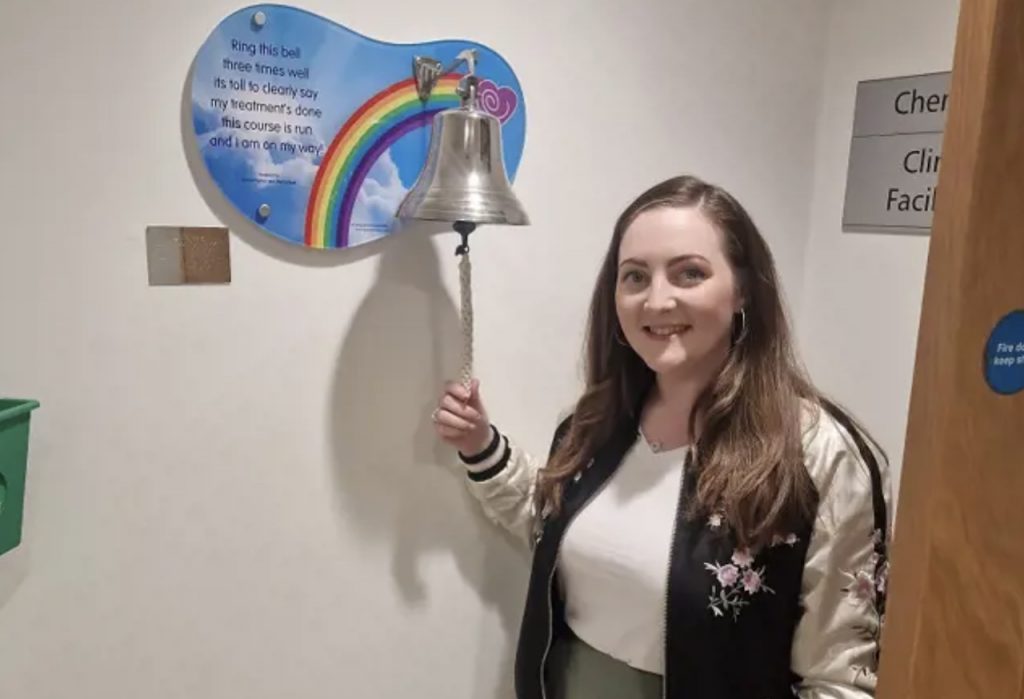
“They took the time to talk me through everything and answer all my questions. They explained that my type of cancer might not respond to chemotherapy – the standard treatment currently available – and gave me all the information I needed to make the right choice for me. By the end of the appointment, I’d decided to go for it.”
Zara began her three rounds of pembrolizumab treatment in June 2023.
Following treatment, a scan revealed a significant reduction in the size of the tumors in her bowel and lymph nodes.She later underwent surgery at The Christie to remove a portion of her bowel and a biopsy taken after the procedure revealed no evidence of cancer.
Since no cancer, only scar tissue was observed, it confirmed she had a complete response to the therapy.
View this post on Instagram
Looking back on her treatment, she admits she “tolerated” it well, but it did leave her feeling “fatigued.”
She said, “I’m really focused on getting my fitness back so I can be as active as my little boy is. I’m back at work and looking forward to the little things, like celebrating my 10th wedding anniversary in a couple of years and seeing Lewis start school. I’m also involved in some bowel cancer support groups, helping others like me.
“I was so well looked after by my team at The Christie, I can’t thank them enough for what they’ve done for me. Anup, my nurse, was particularly brilliant. He was the first person I spoke to at my first appointment and has been there for me every step of the way. Having someone like that there when you’re going through a difficult time makes all the difference.”
Expert Resources On Colorectal Cancer
- Alcohol Intake Has a Big Impact on Colon Cancer Surgery
- Biomarkers in Colon Cancer: Understanding KRAS, BRAF, and HER2
- 5 Possible Signs of Colon Cancer; Don’t Be Afraid to Look in the Toilet!
- Can a Blood Test Screen for Colon Cancer? Guardant Health Chief Medical Officer Shares Promising Update
- ‘You Shouldn’t Die From Embarrassment’: Colon Cancer Can Be Prevented
- Choosing the Right Surgery for Your Colon Cancer While Avoiding Marketing Gimmicks
- Colitis and Some Cases of Crohn’s Raise Colon Cancer Risk
- Staying Active During Treatment — New Research Shows Light Exercise Can Make Chemo Much More Tolerable for Patients with Advanced Colorectal Cancer
As for why she’s choosing to speak out about her cancer journey, McCormick explained, “One of the reasons I wanted to share my story is to change the perception that clinical trials are a last resort. For me, this was the first treatment I had, and I’m so glad I said yes.
“I would encourage other people with cancer to be open-minded about taking part. New treatments wouldn’t be possible without trials, so you’re also helping make things better for other people in the future. There’s something very special about that.”
View this post on Instagram
In an effort to inspire others to push for answers and a treatment that works, McCormick said in a recent Instagram post, “Clinical trials are not a last resort. I feel like that is a common misconception. For me it was my first line treatment.
“The standard treatment for colon cancer is to have a bowel resection surgery followed by chemotherapy. When I was diagnosed, there were indicators in the biopsy results that showed I might respond better to immunotherapy than chemo, but that was only available to me on a trial basis.”
She continued, “I was extremely lucky to have a complete response to the immunotherapy. It got rid of both my tumour and the cancer from the lymph nodes. I will open up immunotherapy as a first line NHS treatment and possibly eliminate the need for surgery in some patients. I believe the trial has now been extended due to having great results.
“I have since joined 2x other trials looking at cancer detection, simply involving health surveys and urine samples. Their aim is to improve cancer diagnosis and predict recurrence at an early stage.”
Colon Cancer In Younger Adults
The average age people are diagnosed with colon cancer is 68 for men and 72 for women, according to the American Cancer Society — but the rate at which younger adults are diagnosed has been on the rise. The U.S. Preventive Services Task Force now recommends that adults aged 45 to 75 be screened regularly for colorectal cancer.
The National Cancer Institute reports that since the 1990s, colorectal cancer cases have been rising among adults younger than 50. Research published in CA: A Cancer Journal for Clinicians found that the proportion of cases in people younger than 55 “increased from 11% in 1995 to 20% in 2019.”
Researchers are still trying to determine why younger people are being diagnosed in more significant numbers. Some experts point to risk factors, which include obesity, physical inactivity, and smoking, as a possible explanation for the increase.
“We don’t know for sure why we are seeing earlier onset and death from colon cancer,” Dr. Heather Yeo, a surgical oncologist who specializes in colorectal cancers at Weill Cornell Medicine, told SurvivorNet. “It is likely a combination of factors, including diet and genetics as well as access to care and some environmental factors.”
Understanding Colon Cancer
Colon or colorectal cancer affects your large intestine (colon) or the end of your intestine (rectum).
The cancer starts when abnormal lumps called polyps grow in the colon or rectum. If you don’t have these polyps removed, they can sometimes change into cancer. It takes up to 10 years for a colon polyp to become full-blown cancer, according to SurvivorNet experts.
Looking for Polyps During Colonoscopy
Most colon cancers can be prevented by regular screening. The screening usually involves a colonoscopy, in which a long, thin tube attached to a camera examines the colon and rectum. If no polyps are discovered, the next screening will not be needed for about 10 years.
“We know that colon cancers can be prevented when polyps are found early,” Dr. Yeo explained. “Lowering the screening age helps somewhat with this, but access to care is a real problem.” This is why it’s so important for adults to understand the value in seeking out screening.
A Colonoscopy Explained
A colonoscopy is a procedure doctors use to screen for colon cancer by looking inside your colon.
This procedure requires your colon to be “cleaned out.” To clear out your colon, your doctor will prescribe a “bowel prep,” a liquid you drink the night before the procedure. The prep acts as a laxative that causes you to have multiple loose stools before your procedure.
Once your colon is cleared, the gastroenterologist performing the procedure can have a clear look to evaluate if any polyps or masses are present. Depending on the size and number of polyps found, it may be recommended that patients undergo a repeat colonoscopy within three to five years.
Dr. Zuri Murrell, a colorectal cancer surgeon and Director of the Cedars-Sinai Colorectal Cancer Center, previously explained the colonoscopy procedure to SurvivorNet.
“When we see a polyp, we actually physically take the polyp out through the colonoscope,” he explained. “What does that mean? That means we basically put a wire through with a little bit of a flange at the end, and we pull the polyp out. Now, note there is no pain with that. Inside the colon, there are no pain fibers.”
The advantage of a colonoscopy is that your doctor can remove any polyps found during the test. Many colon cancers can be caught on colonoscopy before they develop or when the polyps are small enough to be removed without surgery.
What Increases Your Risk For Colon Cancer?
Certain factors can increase the changes that someone will develop colon cancer.
For example, risk increases with age. About 90% of cases are in people aged 50 or older, according to the U.S. Centers for Disease Control & Prevention (CDC).
Other risk factors include:
- History of inflammatory bowel disease
- Family history of colorectal cancer
- Genetic mutations
- Lack of exercise
- Diet high in meat
- Being overweight or obese
- Alcohol use
- Tobacco use
How Is Colon Cancer Treated?
There are several treatment paths available for patients with colon cancer. Here, we break down the most common approaches.
Surgery
Surgery is the main treatment for most early-stage colon cancers. The surgeon will remove the part of the colon or rectum where there is cancer, along with a small area of healthy tissue around it. Taking out as much of the cancer as possible is important for improving your outcome.
The surgery may be performed through small incisions (laparoscopy), or through a larger incision. Some people may need to wear a special bag (ostomy) to collect waste after surgery.
Radiation Therapy
This treatment aims high-energy X-rays at the cancer to destroy the abnormal cells. The radiation can come from a machine outside your body, or be placed directly inside your body. Sometimes people get radiation before surgery, to shrink the tumor and make it easier for the surgeon to remove. This is called neoadjuvant radiation.
Chemotherapy
This treatment uses strong medicine to stop cancer cells from dividing, no matter where they are in your body. You may get a combination of chemotherapy drugs as your first treatment. Chemotherapy has been very well studied for colorectal cancer, and it is known to improve survival.
The most common therapy is a combination of chemo drugs called FOLFOX, which includes:
- FOL = leucovorin calcium (folinic acid)
- F = fluorouracil
- OX = oxaliplatin
Your doctor may add medications like irinotecan (FOLFIRI) or cetuximab, depending on how well your tumor shrinks with treatment and other specifics about your particular cancer. For FOLFOX, the medications are given through the vein and require regular doctor visits.
To determine exactly which chemotherapy regimen you get, your doctor will consider your age and how well you might tolerate the side effects of chemotherapy. Gene mutations (for example, BRAF and KRAS) and the location of the primary colon tumor also factor into the decision.
You can also get chemotherapy before colon cancer surgery, which is called neoadjuvant chemotherapy. Getting chemo first helps to shrink the tumor, which can make both the surgery and recovery easier, according to SurvivorNet’s experts. Chemo is also a treatment for cancer that returns after therapy.
Targeted Therapy
This treatment targets substances like proteins or genes that the cancer needs to grow. This makes targeted therapy more precise than chemotherapy, and less likely to damage healthy cells. One example of targeted therapy is bevacizumab (Avastin), which stops the growth of new blood vessels that feed tumors. Another group of targeted therapies are called epidermal growth factor receptor (EGFR) inhibitors, which block the cancer from growing.
Immunotherapy
This treatment makes your own immune system a more efficient cancer fighter. A group of drugs called checkpoint inhibitors, which includes pembrolizumab (Keytruda) and nivolumab (Opdivo), work by preventing cancer cells from hiding from your immune system. Checkpoint inhibitors may extend the amount of time before the cancer spreads.
Dr. Paul Oberstein, on which treatments doctors use to turn stage 4 colon cancer into a chronic but manageable disease
Questions To Ask Your Doctor
If you are facing a colon cancer diagnosis, here are some questions you may ask your doctor.
- What are my treatment options based on my diagnosis?
- If I’m worried about managing the costs of cancer care, who can help me?
- What support services are available to me? To my family?
Contributing: SurvivorNet Staff
Learn more about SurvivorNet's rigorous medical review process.


