
Nearly a Decade's Long Multiple Myeloma Battle
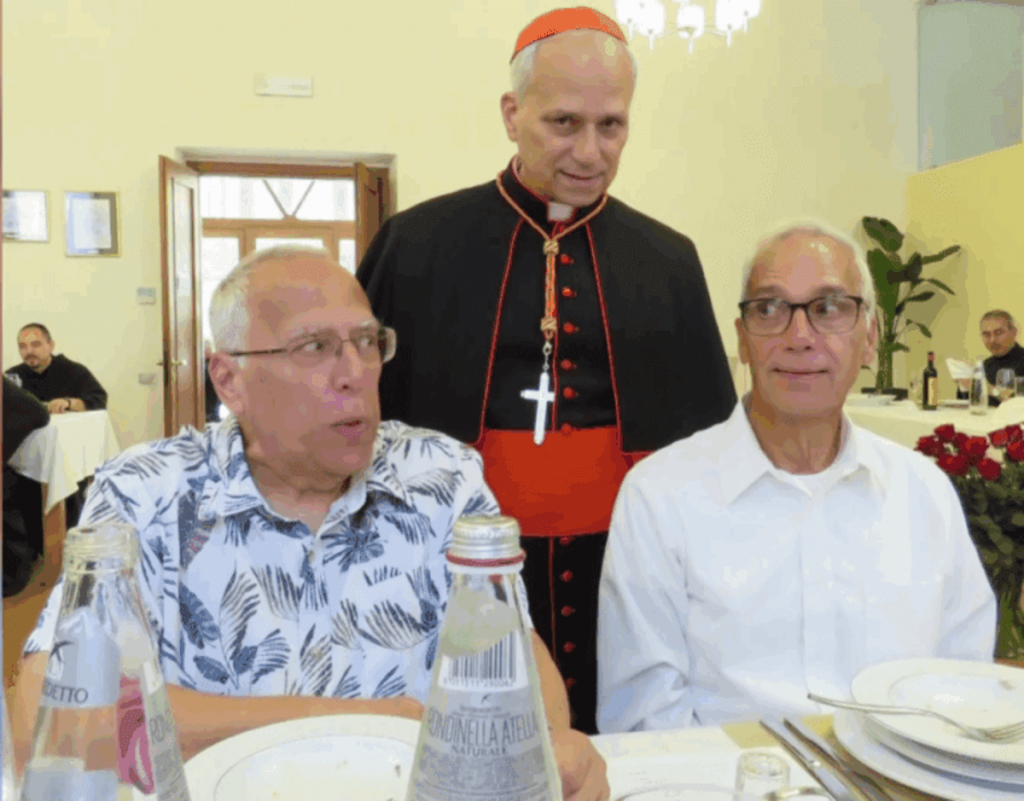
- Pope Leo XIV, 71, is recovering from lung cancer surgery as his family leans on faith while his brother Louis Prevost, 77, continues treatment for multiple myeloma, a disease he’s lived with since 2017.
- Louis previously reached remission after stem cell treatment but relapsed and is now enrolled in a clinical trial — a journey his wife says they face together: “We keep praying, keeping spirits up for both of them.”
- Multiple myeloma is treatable but not curable, and risk level depends on specific genetic changes; as Dr. Nina Shah explains, it’s a cancer where plasma cells “grow out of proportion,” causing symptoms like bone pain and fatigue.
- New therapies are expanding options for patients, including a faster subcutaneous form of isatuximab and the newly approved CELMoD iberdomide—an advance Dr. Paul Richardson calls “very, very important” for community‑based care.
“We keep praying, keeping spirits up for both of them,” Deborah Prevost said.
Risk level in multiple myeloma is determined by specific genetic changes:
Standard‑risk disease often involves extra copies of certain chromosomes.
High‑risk disease is typically associated with the loss of part of chromosome 17.
WATCH: Standard Risk vs. High Risk Multiple Myeloma
These genetic differences influence how aggressive the cancer is. While induction therapy and stem cell transplant approaches are similar across risk groups, maintenance therapy is tailored based on a patient’s risk profile.
The Multiple Myeloma Research Foundation says, “Though certain mutations have been identified as risk factors for myeloma, multiple myeloma is not thought to be a hereditary disease.”

According to Deborah, Louis received stem cell treatment that helped him reach remission. However, after recently experiencing a relapse, he’s now turned to a clinical trial to hopefully help him reach remission again.
Expert Resources for Multiple Myeloma Patients
- A Simpler Delivery System: FDA Approves a Wearable Device for Subcutaneous Injection of Powerful Targeted Drug Isatuximab for Multiple Myeloma
- Adding Daratumumab to Front-line Therapy in Multiple Myeloma
- Adding Sarclisa to Treatment– A Promising New Option for Relapsed Multiple Myeloma
- Advocating for Yourself is the Most Important Thing: Multiple Myeloma Survivor Ann Bogle's Story
- Anito-cel: A New CAR T-Cell Therapy Option Shows Promise For Hard-to-Treat Multiple Myeloma in Early Data
- Approach to Relapse in Multiple Myeloma
- Antibody as Part of Initial Treatment For Multiple Myeloma?
Understanding Multiple Myeloma
Multiple myeloma is a rare and incurable type of blood cancer. When you have this cancer, white blood cells called plasma cells (the cells that make antibodies to fight infections) in your bone marrow grow out of proportion to healthy cells.
Those abnormal cells leave less room for your body’s healthy blood cells to fight infections. They can also spread to other parts of your body and cause problems with organs like your kidneys.
“In general, having blood cancer means that your bone marrow is not functioning correctly,” Dr. Shah explained to SurvivorNet.
Known risk factors for multiple myeloma include your age, family history of cancer, and whether you have monoclonal gammopathy of undetermined significance (MGUS). MGUS is a condition that occurs when you have too much monoclonal protein in your blood and bone marrow.
Most people diagnosed are in their 60s. However, people younger than 60 can also get this type of cancer, and if you have a close relative with multiple myeloma, that can increase your risk.
WATCH: Recognizing multiple myeloma symptoms.
Multiple myeloma can cause symptoms such as weakness, dizziness, bone pain, and confusion, among other symptoms.
Doctors use blood and urine tests and imaging tests such as X-rays or MRIs to help diagnose multiple myeloma and to guide treatment options. Ultimately, a bone marrow biopsy will confirm the diagnosis.
Treatment Options for Multiple Myeloma
Treatment for multiple myeloma depends on your risk level. Some patients are considered standard risk, while others are high-risk. Your risk depends on irregularities in the chromosomes of your cancer cells.
The standard treatment approach for multiple myeloma goes from the induction phase, the stem-cell transplant phase, and then the maintenance phase.
- Induction Phase: This phase is the same regardless of risk. It consists of triplet drug therapy, which includes an immunomodulatory drug (Revlimid or Pomalyst), a proteasome inhibitor (Kyprolis, Velcade, or Ninlaro), and a steroid (dexamethasone or prednisone).
- Stem-Cell Transplant Phase: This phase is the same regardless of risk. It consists of chemotherapy coupled with a stem-cell transplant.
- Maintenance Phase: This phase will differ based on the risk profile.
Maintenance treatment is essential because it keeps the cancer at bay. Since multiple myeloma patients face the risk of relapse even if the cancer is put into remission, maintenance treatment helps keep the cancer in remission for longer periods.
This drug activates immune cells that kill bacteria, viruses, and cancers. It also reduces vital blood flow to cancerous tumors, helping kill them. However, some patients don’t tolerate lenalidomide well because of some of its potential side effects, including nausea, vomiting, swelling of the limbs and skin, and liver problems.
When Multiple Myeloma Relapses, You Still Have Options
When your multiple myeloma comes back within about a year, your disease is generally classified as ‘high risk.’
When multiple myeloma returns after treatment, “It usually means that there were residual cells, even in very small numbers. They were either resistant to the treatment from the start, or they acquired resistance as the treatment was growing,” Dr. Anderson explains to SurvivorNet.
In other words, not every myeloma cell in your body is precisely the same. Some start with a set of mutations that can give them resistance to treatments and make them more likely to relapse, whereas others develop mutations as a result of treatment.
WATCH: What Is the Standard of Care for the First Relapse?
The Signs of a Multiple Myeloma Relapse
- Increased levels of monoclonal antibodies: myeloma cells are cancerous plasma cells in the bone marrow that overgrow and produce abnormal proteins. These abnormal proteins are released in the blood and can be detected by physicians. When the levels of these increase substantially, that can be a sign that multiple myeloma has relapsed.
- Increase in plasma cells in the bone marrow: Oncologists can use magnetic imaging, like MRI or PET scans, to see if there is a greater than normal level of plasma cells in the bone marrow, which is typical of overly dividing myeloma cells.
- Bone fractures and lesions: Myeloma cells activate the cells that break down bones and deactivate the cells that build up bones, which can result in fractures or small holes in bones. Oncologists can use X-rays or CT scans to detect bone damage indicative of relapse.
When or if multiple myeloma returns, remember that many treatment options exist. Oncologists may turn to therapies approved only for clinical trials, namely CAR T-cell therapy
Treatment Option for When Multiple Myeloma Returns
In March 2026, the FDA approved the combination of teclistamab and daratumumab — often referred to as Tec Dara — for certain patients with multiple myeloma.
Teclistamab is part of a newer class of treatments called bispecific antibodies, which help the immune system better recognize and attack myeloma cells. By directing immune cells toward the cancer, these therapies can lower disease levels and keep the cancer controlled for longer, giving patients more time before needing another treatment.
WATCH: An Option When Multiple Myeloma Returns
Dr. Sagar Lonial, chief medical officer at Emory Winship Cancer Institute, tells SurvivorNet that the two drugs appear to work especially well together.
“It’s thought that the combination of teclistamab and daratumumab has synergy. Daratumumab eliminates some of the cells that may limit the activity of the bispecific antibody, releasing more effective T cell activity,” he explains.
“It’s immune therapy on steroids, if you will.”
For patients, the combination may offer:
- Longer periods of disease control
- Deeper treatment responses
- Another option if the cancer returns after earlier therapy
The FDA granted approval through its National Priority Voucher program, which accelerates review for promising treatments targeting serious illnesses.
As with most cancer therapies, side effects are possible. Tec Dara can cause cytokine release syndrome (CRS), an immune reaction that may lead to symptoms such as fever or low blood pressure. Signs of CRS can include:
- Fever
- Low oxygen levels
- Chills
- Low blood pressure
- Increased heart rate
- Headache
- Elevated liver enzymes
Questions for Your Doctor
If you are facing a multiple myeloma diagnosis, you may be interested in the treatment Tom Brokaw has had success with. Here are some questions to help you begin the conversation with your doctor:
- What stage is my multiple myeloma?
- What are my treatment options?
- Am I a good candidate for Revlimid?
- What are the possible side effects of your recommended treatment?
- Who will be part of my healthcare team, and what does each member do?
- Can you refer me to a social worker or psychologist who can help me cope with my diagnosis?
Learn more about SurvivorNet's rigorous medical review process.


