
Staying Positive Through Cancer
- Michelle Hillard, a 42-year-old mom of two, continues to exude positivity despite the struggles she’s been dealt battling stage 4 (metastatic) breast cancer.
- While metastatic breast cancer is not curable, there are several treatment options that can extend your life. With metastatic breast cancer, the primary goal of treatment is to control its spread.
- Clinical trials, studies of new medications, treatments, and other therapies, can also offer women hope for better outcomes. SurvivorNet offers an easy-to-use Clinical Trial Finder for help looking for a study that may be right for you.
- As Hillard indicated, cancer treatment can be incredibly expensive. But it’s important for people to know there are resources available to help make sure you get the care you need.
- For example, the Cancer Financial Assistance Coalition can direct patients and their families to available local services, and many treatment centers offer extended payment plans and some may even offer temporary payment delays.
Her cancer was discovered after she noticed something “odd” in her breast and had symptoms like that of menopause (the time when a woman’s period stops). Then, in June 2018, about one year after she first visited her doctor about the abnormality in her breast, a biopsy confirmed the cancer had spread to her lymph nodes. She was just 37 years old at the time of her diagnosis.
Read More
At first, doctors believed the lump in Hillard’s breast could be removed and the cancer could be cured, but a full mastectomy needed to be done instead. And just one month later, she underwent a CT scan, which revealed a tumor in her liver.
She then went through chemotherapy and radiotherapy, which shrunk the tumor. However, she later needed her ovaries removed and ended up having a liver resection (also known as a hepatectomy, a surgical procedure to remove part of the liver.)
Expert Metastatic Breast Cancer Information
- Are You A Metastatic Breast Cancer Patient Curious About The Drug Enhertu? Here’s What You Need To Know
- Advances in Metastatic Breast Cancer Treatments Over the Last Year Offer New Hope for Those Fighting
- CD4/CD6 Inhibitors For Metastatic Breast Cancer — What Are The Side Effects?
- Chemo Plus Immunotherapy for Metastatic Triple-Negative Breast Cancer
- How To Treat Metastatic Breast Cancer: The Drug Trodelvy Shows A Promising Boost In Survival Rates
Despite her scans being clear for cancer three months later, the tumor returned, prompting Hillard to return to chemo treatments. However, the treatments stopped working, and she began weighing her remaining options.
Regardless of the tough battles being thrown her way, the mom of two continues to stay positive and look forward to the future.
“My breast surgeon said to me that I need to think positively and I thought there's got to be something in that,” Hillard said.
“You have to take a positive look on it. Yes I've had plenty of knock-backs and bad news, but I keep saying I must keep going and I make sure I walk 5km (3.1 miles) with the dog every day and it really does wonders for your mental health.”
Hillard added, “That is my outlook, to keep smiling, there's no point in it getting you down as it does me no good to be negative.”
Noting how open she is with her children, even letting one of them shave her head, she explained, “I told them when I was having treatment that I'm going into hospital and that I won't have as long to live as others, but we're looking at more treatments to see how much longer I have.”
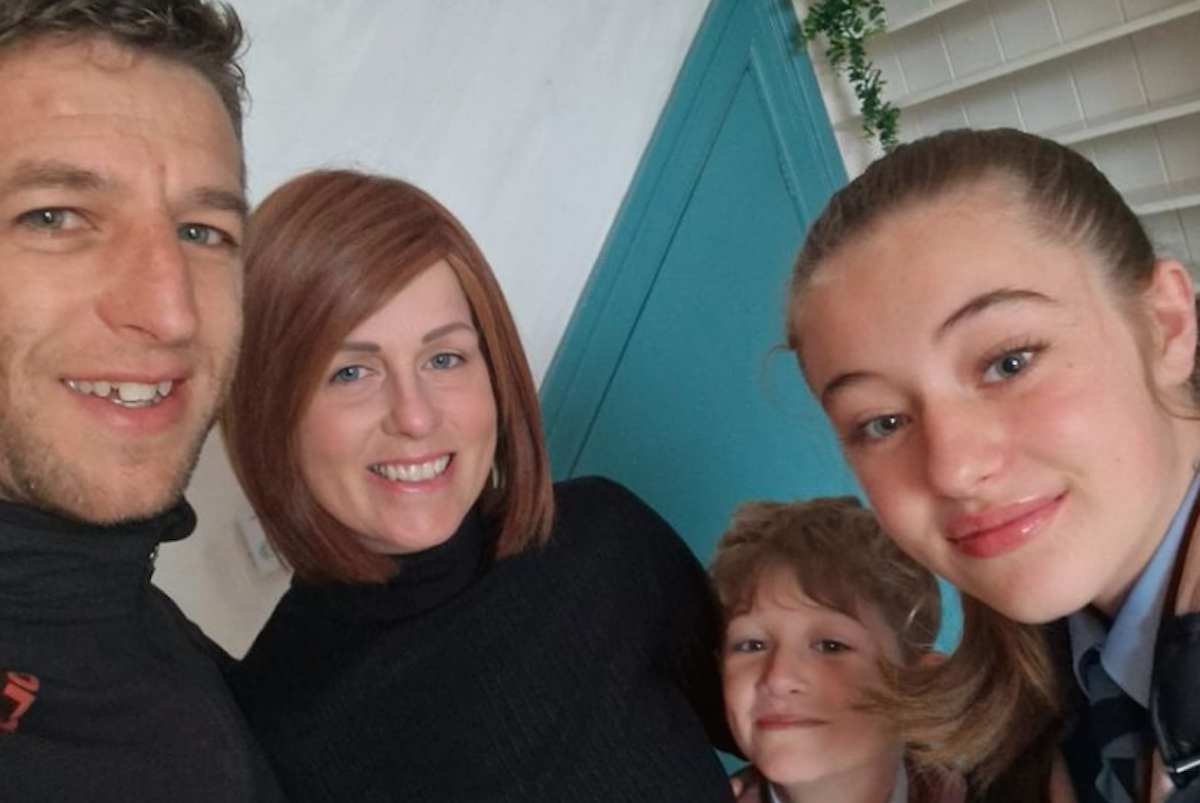
A GoFundMe, created by Hillard’s friend Lisa Walden, has since raised nearly $26,000 in an effort to help with the pricey treatments.
“I am setting this page up as I would love for Michelle and Chris to have options and not have to worry about funding them alone, I would also love for them to get out there and make as many memories as they possibly can as a family,” Walden said on the page.
Treating Metastatic Breast Cancer
There is no cure for stage 4, or metastatic, breast cancer. But these days, it is possible for women to do very well for long periods of time. This is due to there being so many options, both new and old, to treat metastatic breast cancer.
Metastatic means the disease has spread beyond the breast to other parts of the body. It may affect the bones, liver, lungs, or brain.
Metastasis simply refers to the spreading of a disease from one part of the body to another part. It can occur in any form of cancer, although some types are more likely to metastasize. This includes HER2-positive and triple-negative breast cancers, which tend to be more aggressive.
While it's not curable, there are several treatment options that can extend your life. With metastatic breast cancer, the primary goal of treatment is to control its spread.
SurvivorNet offers information about what those options are from targeted therapies to chemotherapy and when these various treatment options can be used. We also provide information on new, exciting research that is currently being tested in clinical trials and information about when recently approved drugs, like immunotherapies, can be used.
For help finding a clinical trial that may be right for you or a loved one, try our easy-to-use Clinical Trial Finder.
While there have been many developments in recent years when it comes to treating late-stage breast cancer, which therapies can be used will depend on the characteristics of the patient's cancer.
What are the Treatment Options for Late-Stage Breast Cancer?
Late-stage breast cancer is not one disease, but many different diseases so the options available to different patients vary a great deal. Which treatment doctors recommend will depend on several factors like a woman's overall health, genetics, the biology of the tumor, and more.
Treatment for late-stage breast cancer can include a combination of:
- Chemotherapy: Oral or IV medications that are toxic to tumor cells
- Hormonal therapies: Drugs that lower estrogen levels or block estrogen receptors from allowing the cancer cells to grow
- Targeted therapies: Drugs that target your tumor's specific gene mutations
- Immunotherapy: Medications that stimulate your immune system to recognize and attack cancer cells
- Radiation: The use of high-energy rays to kill tumor cells and shrink tumors
- Surgery: To remove a cancerous tumor or lymph nodes (uncommon with stage IV; more common in stages I, II, and III)
- Clinical trials: Studies of new medications, treatments, and other therapies offer hope for better outcomes
“Metastatic breast cancer is a treatable disease. Fortunately, we have so many new treatments for women with recurrent breast cancer and for many women who look at this as a chronic disease that they can live withoften for many years,” Dr. Kenneth D. Miller, a medical oncologist at the Alvin & Lois Lapidus Cancer Institute at Sinai Hospital of Baltimore, previously explained to SurvivorNet.
I Have Breast Cancer: Is A Clinical Trial Right For Me?
“Quality of life typically involves many things including treating symptoms effectively and modifying lifestyle to allow time for treatment and to accommodate to living with a chronic disease,” he added.
“A positive attitude doesn't cure cancer but also contributes to living well with cancer. Faith, spirituality, intimate relationships, friends, and families help as well.”
Metastatic Breast Cancer: You Are Not a Statistic
In some cases, you may need more aggressive therapies. Finding the right combination of treatments for your breast cancer and your body may take some time. Be patient and work with your doctor to arrive at the right treatment plan.
Coping With a Diagnosis
Coping with a diagnosis involves a range of emotions from anger to sadness and everything in between.
Sarah Stapleton, a licensed clinical social worker at Montefiore Medical Center in New York, encourages cancer survivors and their families to be “patient with your emotions.”
"It's also important that you understand how you communicate with your providers, but also with your loved ones," Stapleton said.
“We can't always assume that people know what we need at a given time, and there are going to be times when you don't want to speak about your diagnosis and you don't want to speak about cancer.”
New York-based psychiatrist Dr. Lori Plutchik previously explained to SurvivorNet some tips for cancer survivors and their caregivers for managing emotions after a diagnosis. She emphasized getting extra support from loved ones.
“Some people don't need to go outside of their family and friend circle. They feel like they have enough support there,” Dr. Plutchik said. “But for people who feel like they need a little bit more, it is important to reach out to a mental health professional.
“Patients who have just been diagnosed with cancer sometimes wonder how they are going to handle the diagnosis of the cancer in social situations. How much information they should share and with whom they should share the information…everybody is different," Dr. Plutchik continued.”
Ultimately it comes down to what feels right. Loved ones supporting a cancer warrior are encouraged to respect the wishes of the cancer patient when it comes to disclosing their diagnosis.
Dealing With The Cost of Treatment
Some people say that paying for cancer treatment ends up being more challenging than the treatment itself and it’s unusual for health insurance to pay for 100 percent of your cancer treatment.
Medical bills are something most people struggle with. However, it’s important to know that there are resources available to help make sure you get the care you need.
Getting Help With Medical Bills
Here are some examples of programs and organizations that may be able to help with bills associated with cancer treatment:
- The Cancer Financial Assistance Coalition can direct patients and their families to available local services.
- Many treatment centers offer extended payment plans and some may offer temporary payment delays, according to the American Cancer Society.
- CancerCare, which connects patients with oncology social workers, may be able to assist with co-pays, transportation, and other costs associated with care.
- The HealthWell Foundation may be able to help uninsured patients pay for treatment.
- The American Cancer Society may be able to link patients and their families up with local resources (they offer a 24/7 helpline).
- The Patient Advocate Foundation (PAF) works with patients and their insurance companies to resolve issues and may provide direct financial support to some patients.
- The Patient Access Network Foundation may be able to help with out-of-pocket costs associated with cancer treatment.
Contributing: SurvivorNet Staff
Learn more about SurvivorNet's rigorous medical review process.


