
How Your Lifestyle Factors Into Cancer Treatment Decisions
- Actress Olivia Munn, 46, says her hormone‑receptor–positive breast cancer forced her into a series of complex, deeply personal treatment decisions — from shutting down hormone production to confronting fertility loss — explaining, “When you have hormonal breast cancer… we need to starve it out.”
- The hormonal therapy Lupron left her “extremely debilitating,” with exhaustion so severe she “couldn’t get out of bed,” ultimately leading her to advocate for herself and choose an ovariectomy instead of continuing medication.
- Munn was diagnosed with breast cancer despite a “normal” mammogram and testing negative for the BRCA gene mutation, which elevates the risk for breast and ovarian cancer. At the request of her OBGYN, Munn underwent a Breast Cancer Risk Assessment, which led to the discovery of her cancer after additional screening.
- After undergoing a double mastectomy for luminal B breast cancer, Munn continues to speak openly about the complexities of reconstruction, survivorship, and maintaining a sense of normalcy.
- Dr. Elizabeth Comen, medical oncologist, explains to SurvivorNet, “For women who have hormone-positive breast cancer, it means that they have a cancer that needs estrogen to grow.” Hormone therapy is designed to block or lower the hormones that help cancer cells grow.
Her experience shows how deeply personal and medically complex these treatment choices can be, especially for women whose cancer feeds on estrogen.

For many women, this approach is lifesaving, but for Munn, it came with consequences she describes as “extremely debilitating.”
Lupron and the Reality of Medically Induced Menopause
Munn was prescribed Lupron (leuprorelin), a type of hormone therapy for breast cancer. It acts as an ovarian suppression drug that stops the ovaries from making the hormone estrogen.
Munn says the side effects were overwhelming.
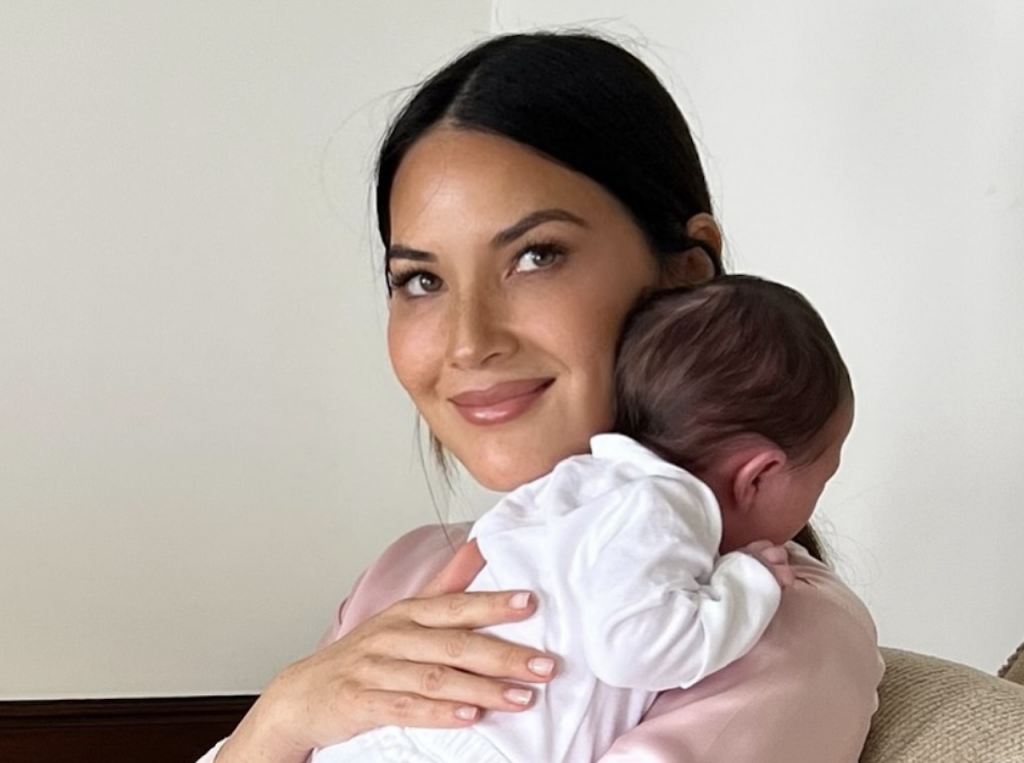
Some known side effects of Lupron may include tiredness or fatigue, hot flashes, spotting, and muscle or joint pain.
“I couldn’t get out of bed, and if I did get out of bed, I’d get something to drink and get right back in it, and I had a small baby, and it was extremely difficult.”
She calls Lupron “extremely debilitating,” describing a level of exhaustion that made daily life nearly impossible — especially while caring for her young child.
Advocating for Herself and Choosing Surgery Over Medication
Munn says her doctors were excellent, but she learned quickly that she had to ask hard questions and push for clarity.
“I had tremendous doctors, and it’s all about asking the right questions and advocating for yourself.”
After her double mastectomy (removal of both breasts), she had already frozen her eggs — a step she took in case she experienced future fertility challenges. Her oncologist tried to preserve her fertility for as long as possible, but Munn felt strongly that she could not continue the hormonal medication.

She told her doctor she wanted an ovariectomy — the removal of her ovaries — to avoid the medication that was draining her physically and emotionally.
Her doctor’s response changed everything:
“My doctor replied, ‘You don’t have to take this one,’ which was a big decision.”
That opened the door for Munn to choose surgery instead of continuing Lupron.
Facing Fertility Loss and Making Peace With It
Once she accepted that she could not safely carry another pregnancy due to the hormone surges involved, Munn made another difficult decision.
“I was thinking, since we’re doing the ovariectomy and I can’t carry [a child] again without a ton of risks, with the increase in hormones (which feeds her cancer), I was like, can we just take out my fallopian tubes and uterus as well.”
For Munn, the choice wasn’t just medical — it was emotional. It meant closing the door on future pregnancies and accepting a new reality for her body.

Munn says the psychological weight of cancer never fully eases up.
“Having cancer, talk about a mental load, and every time something happens, I’m thinking, ‘could it be cancer,’ every time.”
Her experience reflects what many breast cancer patients describe: the fear that lingers long after treatment, and the constant vigilance required to monitor symptoms, side effects, and new changes in the body.
Munn’s journey also illuminates how breast cancer treatment is rarely straightforward. It’s a series of decisions shaped by:
- The biology of the cancer
- The side effects of treatment
- Fertility hopes and limitations
- The demands of motherhood
- The need to preserve quality of life
Expert Resources for Breast Cancer Patients
Olivia’s Breast Cancer Diagnosis Despite a ‘Clear’ Mammogram
Munn learned she had an aggressive form of cancer in both of her breasts after receiving a breast cancer risk assessment. She credits the cancer risk assessment for saving her life. The diagnosis was stunning because she had recently received a clear mammogram.
The Breast Cancer Risk Assessment Tool, also called the Gail Model, allows doctors to estimate a woman’s risk of developing invasive breast cancer over the next five years.

Munn says that since going public with her cancer journey, she continues to be approached by other women who are now asking their doctors about the cancer risk assessment since learning of Munn’s, including a young mother of three.
“Every time I go out, there’s at least one person…there was this woman who’s young. She has three kids, and she says because of my story, she went out and took the test and learned she has stage 0 breast cancer,” Munn explained in an Instagram story.
“We both had this moment, I know what you’re going through, but we’re so excited that you found it early,” Munn continued.
“It’s hard to explain knowing that this diagnosis that put so much fear into me has been able to be turned into something that’s saving people’s lives,” Munn told “Meet the Press” host Kristen Welker.
Since Munn shared her story publicly, the National Cancer Institute attributes an uptick in women inquiring about a cancer risk assessment to the “X-Men” actress.
How Munn Was Introduced to the Breast Cancer Risk Assessment
“I wouldn’t have found my cancer for another year – at my next scheduled mammogram – except that my OBGYN…decided to calculate my Breast Cancer Risk Assessment Score. The fact that she did save my life,” Munn said in an Instagram post.
The Breast Cancer Risk Assessment she credits for catching her breast cancer is a “statistical model that allows healthcare professionals to calculate the probability of a woman developing breast cancer over the course of their lifetime,” Dr. Ruth Oratz, breast medical oncologist, NYU Langone Health’s Perlmutter Cancer Center; clinical professor of medicine, NYU Grossman School of Medicine, tells SurvivorNet.

In 2024, she wanted to be proactive about her health and underwent genetic testing.
Genetic tests can be as simple as a saliva swab or a blood sample. The results help your care team determine if you have a specific mutation that puts you at higher risk for cancer. The results help doctors tailor treatment and are helpful for breast cancer patients.
“I tested negative for all (different cancer genes), including BRCA,” Munn said.
The BRCA1 and BRCA2 gene mutations are among the most important genes to look for in breast cancer. Together, they are responsible for about half of all hereditary breast cancers. These genes prevent cells from dividing haphazardly and uncontrollably in a person without mutations. Mutations prevent these genes from doing their job and can allow unchecked growth of breast, ovarian, and other tissues.
However, two months after undergoing genetic testing, Munn was diagnosed with Luminal B breast cancer in both of her breasts.
According to research in “Breast Cancer,” luminal B tumors are of a “higher grade” and tend to have a worse prognosis. This type of breast cancer is estrogen-positive (ER), meaning the hormone estrogen fuels it. It can also be progestogen (PR) negative, meaning it is not fueled by progestogen. This type of breast also tends to have a higher expression of the Ki67 protein, making it grow quickly. Hormonal therapy and chemotherapy are often used to treat this type of cancer.
Luminal is one of several types and is distinguished by its molecular makeup. Other types of breast cancer include:
- Luminal A breast cancer
- Luminal B breast cancer
- Luminal B-like breast cancer
- HER2-enriched breast cancer
- Triple-negative or basal-like breast cancer
Each type has a specific, individualized molecular structure. The different types of molecular structure of breast cancer may inform the treatment path.
Munn’s Hormone Therapy
For many women diagnosed with breast cancer, the disease is fueled by hormones—specifically estrogen or progesterone. These are known as hormone receptor-positive cancers, and they represent the most common subtype of breast cancer.
“For women who have hormone-positive breast cancer, it means that they have a cancer that needs estrogen to grow,” Dr. Elizabeth Comen, medical oncologist at Memorial Sloan Kettering Cancer Center, explained to SurvivorNet.
WATCH: Understanding Hormone Therapy
Hormone therapy is designed to block or lower the hormones that help cancer cells grow. It’s a cornerstone of treatment for hormone receptor-positive breast cancer, and it plays a vital role in both treatment and prevention.
“Endocrine therapy has significant benefits in reducing the risk of breast cancer recurrence and improving breast cancer survival,” says Dr. Eleonora Teplinsky, head of Breast Medical Oncology at Valley Health System.
These therapies work in two main ways:
- Lowering estrogen levels in the body
- Blocking estrogen receptors on cancer cells so the hormone can’t fuel tumor growth
WATCH: Hormone Therapies for Breast Cancer: Aromatase Inhibitor
Types of Hormone Therapy
One widely used drug is Tamoxifen, which blocks estrogen’s ability to bind to cancer cells. It’s used not only to treat breast cancer but also to help prevent it in women with a strong family history or other risk factors.
Another class of drugs, called aromatase inhibitors, works by stopping the body from producing estrogen altogether. These are typically prescribed to postmenopausal women and include:
- Anastrozole (Arimidex)
- Letrozole (Femara)
- Exemestane (Aromasin)
All are taken as daily pills and have been shown to slow or stop the growth of estrogen-sensitive tumors.
Hormone Therapy Side Effects Can Mimic Menopause
As Munn hinted at, hormone therapy comes with side effects, and one of them can mimic menopause.
Depending on the endocrine or hormone medication, each one may have its own side effects. Typical side effects for certain types of hormone therapy drugs may include:
- Bone pain
- Joint pain
- Loss of appetite
- Nausea and/or vomiting
- Fatigue
- Constipation
What To Ask Your Doctor
If you have been diagnosed with breast cancer, you may have questions about keeping your strength through treatment. Here are a few questions to help you begin the conversation with your doctor:
- What treatment will I be receiving?
- What side effects are associated with this treatment?
- Are there steps I can take daily to help minimize these side effects?
- What physical activity routine do you recommend for me during treatment?
- Do you have recommendations for someone who doesn’t particularly enjoy exercise?
- Can you recommend a dietitian who can help me with healthy eating tips and weight maintenance?
- I’ve been having trouble sleeping. Do you have any treatment recommendations
Learn more about SurvivorNet's rigorous medical review process.
