Screening for Breast Cancer In Older Women
- A 101-year-old grandmother was stunned to discover a lump on her breast while preparing for bed one evening. A mammogram confirmed she had stage 1 breast cancer. She was treated with a lumpectomy—removing the tumor plus a small margin of healthy tissue—to achieve remission. She wanted to avoid hormone therapy, which could have brought on hair loss.
- Routine breast cancer screening is typically recommended for women aged 40–74, but guidance for those over 74 is less defined.
- The U.S. Preventive Services Task Force advises mammograms every two years for women 40–74.
- The American Cancer Society recommends annual mammograms for women 45–54.
- According to research published in the peer-reviewed Journal of the American Board of Family Medicine, mammography reduces mortality in women aged 50–74; however, there is insufficient trial data for those over 74, making older-age screening guidelines unclear and debated.
- Although mammography’s accuracy improves with age, continued screening can raise the risk of false positives and overdiagnosis.
“I know for younger women to hear that they have breast cancer is devastating,” Horwich told Today.com.
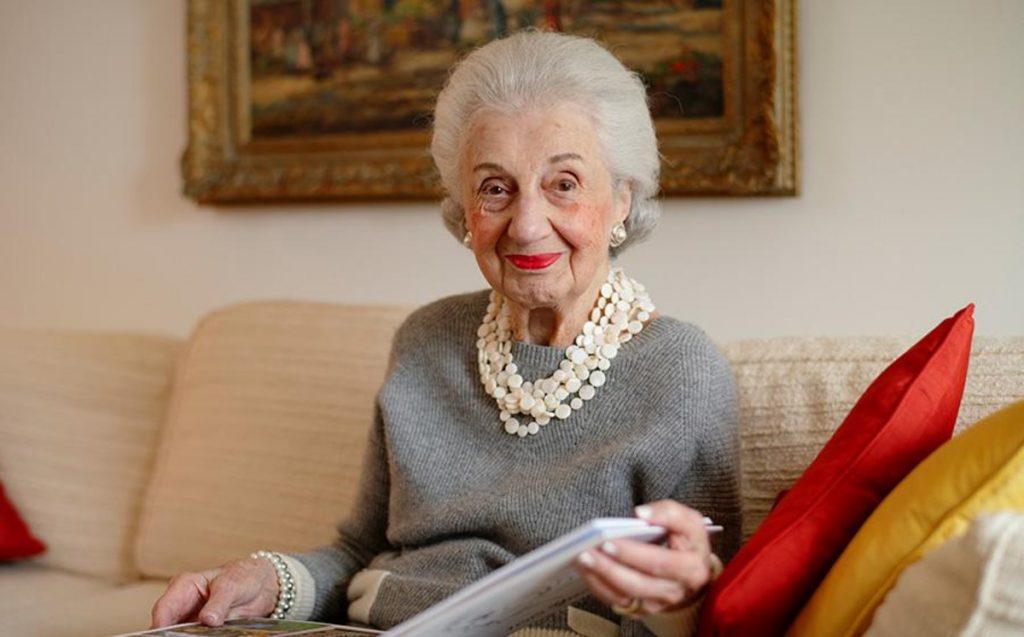
Photo: Endeavor Health
She returned for a mammogram—a test she hadn’t had on a regular basis in years—which confirmed stage 1 breast cancer. Determined to remove the threat quickly and preserve her quality of life, Horwich opted for a lumpectomy.
“I just wanted it out of me. I didn’t want it to stay there,” she explained, adding that she chose to forgo hormone therapy to avoid losing her treasured hair.
“I opted to have surgery because I felt it was a prudent decision for my health. I know this is not the same for a 30-year-old woman, and that breast cancer can alter the rest of her life with complications or reoccurrences and related uncertainty. But at almost 101, a heart attack or a stroke would have been more devastating and could possibly leave me incapacitated,” Horwich told Endeavor Health.
WATCH: When to consider a mastectomy?
“I’m just lucky I still have a good head of hair. I don’t want to lose that,” she said.
Horwich’s lumpectomy, also known as breast-conserving surgery, removed the tumor along with a small margin of surrounding tissue.
Today, she’s cancer-free and ready to return to her favorite weekly rituals.
“I’m now cancer-free, and I just go on with my life,” Horwich said with gratitude.
Expert Resources on Early-Stage Breast Cancer Treatment
On the Lookout for Signs of Breast Cancer In Older Women
According to research published in the peer-reviewed Journal of the American Board of Family Medicine, “Incidence of breast cancer increases with age up until age 80.”
Although mammography is proven to lower breast cancer deaths in women aged 50–74, there is insufficient trial evidence for those over 74, making screening guidelines for older women unclear and debated.
The U.S. Preventive Services Task Force recommends that women aged 40 to 74 years receive a screening once every two years. It adds that for women 75 and older, the “current evidence is insufficient to assess the balance of benefits and harms of screening.”
The American Cancer Society encourages women aged 45 to 54 to receive a mammogram breast cancer screening once a year. Women older than 55 are encouraged to receive a mammogram every other year.
Women with a family history of cancer or who have the BRCA gene mutation, which enhances their cancer risk, are encouraged to speak with their doctor to determine the most effective screening option.
Researchers who studied breast cancer screening in older women noted one key benefit of continued mammograms in older women.
Mammography becomes more accurate with age: in women over 80, it achieves 86% sensitivity and 94% specificity, compared to 73% sensitivity and 92% specificity in 50-year-old women.
However, those same researchers noted that breast cancer screening in older women may increase the risk of false-positive results and overdiagnosis.
Treating Early-Stage Breast Cancer
Treating cancer in this early stage usually involves removing the cancer through surgery, with the possibility of radiation. The type of surgery may include a lumpectomy or a mastectomy.
A lumpectomy is a surgery to remove cancerous or abnormal tissue from the breast. It’s also known as breast-conserving surgery because, unlike mastectomy, only the tumor and some of the surrounding tissue are removed.
The lumpectomy surgery typically takes about an hour and is an outpatient procedure, meaning a patient will be able to go home the same day. “It’s abnormal to have a lot of pain after a lumpectomy,” Dr. Sarah Cate, Chief of Breast Surgery, Stamford Hospital, explained to SurvivorNet.
WATCH: Recovering from a Lumpectomy
During a mastectomy, the breast is removed. In a double mastectomy, both breasts are removed. In many cases, women choose to undergo breast reconstruction.
Reconstruction gives women the chance to have implants put in right after the mastectomy procedure. However, some women choose not to have reconstruction at all.
Dr. Elisa Port, Chief of Breast Surgery at the Mount Sinai Health System, told SurvivorNet that most women opt to have some form of reconstruction. Depending on the type of surgery a woman chooses, the time spent in surgery can vary significantly.
There are many different options and techniques available for reconstruction — from implants to using a woman’s own tissue — and choices about when to get the reconstruction, meaning immediate (at the time of mastectomy) or delayed (which could be months or even years later).
WATCH: Deciding to get saline or silicone implants during a breast reconstruction.
Immediate reconstruction can yield better results than delayed reconstruction, leading to fewer surgeries. However, it may require an extended initial hospitalization and recovery time. This lengthy surgery may also carry a higher risk of complications, such as infections, compared to two separate surgeries.
It may be worth noting that “Delayed reconstruction has fewer complications than immediate reconstruction,” Dr. Terry Myckatyn, a plastic surgeon specializing in breast reconstruction, told SurvivorNet.
When implants are used, the procedure can take two to three hours (so the total surgery time would be around five hours). During reconstruction, one can also use one’s own tissue (usually from the abdominal area) and transfer it to the breast area.
After breast cancer surgery, women diagnosed with early-stage breast cancer may also need chemotherapy, radiation, or hormone therapy.
Questions to Ask Your Doctor
If you have been diagnosed with breast cancer, you may have questions about how to keep your strength through treatment. Here are a few questions to help you begin the conversation:
- What treatment will I be receiving?
- What side effects are associated with this treatment?
- Are there steps I can take daily to help minimize these side effects?
- What physical activity routine do you recommend for me during treatment?
- Do you have recommendations for someone who doesn’t particularly enjoy exercise?
Learn more about SurvivorNet's rigorous medical review process.