
Understanding Glioblastoma Treatment
- Ben Trotman, a 43-year-old dad of one and loving husband, took the drug ipilimumab (a type of immunotherapy) before undergoing standard glioblastoma treatment. Now he’s “cancer-free,” and his story is offering hope to others battling the same disease.
- Glioblastoma (GBM), a grade 4 glioma, presents significant challenges for treatment due to its highly invasive nature, rapid growth, and resistance to most conventional therapies.
- While new treatment approaches are continually being explored through clinical trials, the standard of care for glioblastoma has remained largely consistent since 2005. It combines maximal safe surgical resection (surgery to remove as much of the cancer as possible) followed by chemotherapy and radiation.
- The typical course after surgery is chemotherapy and radiation therapy together, followed by additional chemotherapy.
- Clinical trials, like the one Trotman took part in, give patients a chance to try a treatment before it’s approved by the U.S. Food and Drug Administration (FDA), and that can potentially be life-changing for patients. Despite the great benefits that come from clinical trials, they also come with risks (like potential side effects that are not fully understood yet).
- People interested in participating in clinical trials must first talk with their doctor to see if they would be a good fit. For help finding a clinical trial that’s right for you, try our easy-to use Clinical Trial Finder.
Trotman, who is now 43, took part in a clinical trial for ipilimumab (a monoclonal antibody that assists the body by offering the immune system a boost to fight cancer cells) before undergoing radiotherapy and chemotherapy. He has since been receiving “clear” scans at his checkups every three months and it’s been two years and eight months since his diagnosis.
Read More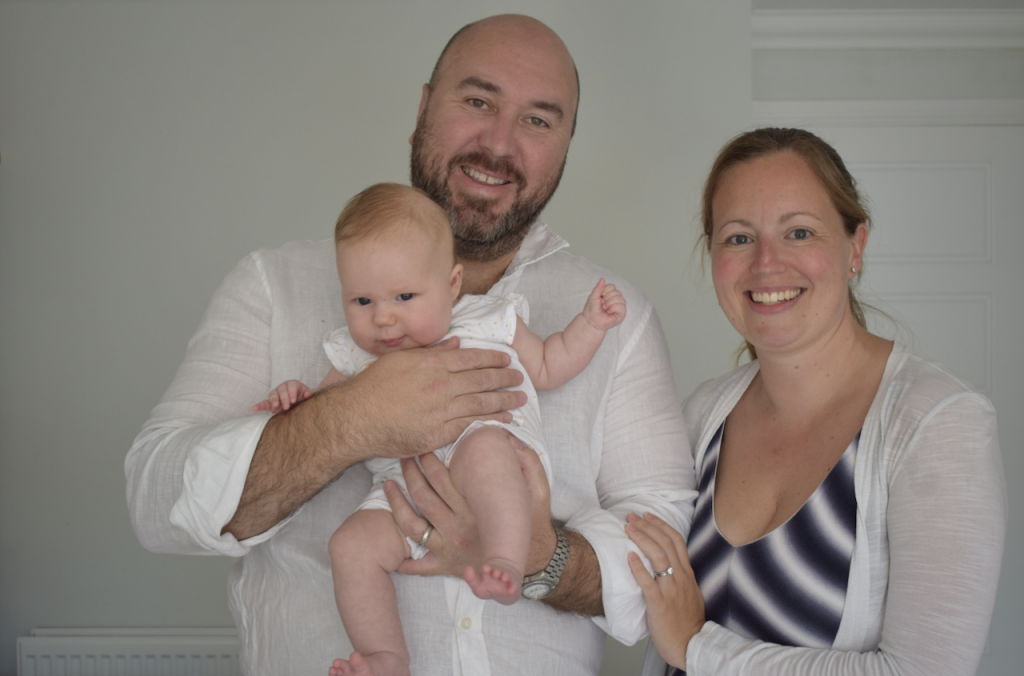
Trotman, who married his wife in January 2023 [two months after he began taking ipilimumab] and welcomed his daughter Mabel in April 2025, also said, “We obviously don’t know what the future holds but having had the immunotherapy treatment and getting these encouraging scan results has given Emily and I a bit of hope.”
Expert Glioblastoma Resources
- An Innovative Treatment Option For Glioblastoma: The Pros And Cons of Tumor Treating Fields
- Managing Glioblastoma Expectations and Exploring Treatment Options
- Treating Glioblastoma: How Radiation And Chemotherapy Work Together
- Standard of Care for Glioblastoma: Combining Radiation, Chemotherapy, and Emerging Technologies
He explained further, “I was in a clinical trial of one which is why we don’t know what the future holds. I am delighted that this new trial, with the same immunotherapy drug I received, is going ahead and others will have the opportunity to take part.
“It will give people newly diagnosed with glioblastoma some hope.”
Trotman’s wife has since shared that they’re “trying to live as normal a life as possible,” adding, “We are in a unique position of which there is no precedent and which comes with a great deal of uncertainty. We want to live each day as if it were our last but we also want to plan for the future which we hope to have.”
Meanwhile, Dr Paul Mulholland told UCLH, “The crucial element of this trial is that patients will have their immune system boosted by the drug before they have any other treatment, when they are fit and well enough to tolerate the immunotherapy.
“We saw with Ben, the one patient recruited to the immunotherapy study, NeAT-GLIO, that he has had clear scans since having the treatment and the tumour hasn’t returned more than two and a half years later.”
Dr. Mulholland continued, “We’re taking everything we have learned from previous trials into this new study and we are already planning follow on trials. My aim is to find a cure for glioblastoma.”
A glioma is a tumor originating in the central nervous system (CNS), specifically in the brain or spinal cord. A glioma originates in glial cells. Glial cells are supportive cells in the brain that protect and maintain the neurons. These types of tumors can either be benign (non-cancerous) or malignant (cancerous).
“Glioma is a broad term that refers to a whole range of different types of primary brain tumors,” Dr. Alexandra Miller, Director of the Neuro-Oncologist Division at NYU Langone Health, previously SurvivorNet.
“They’re tumors that originate in the brain and very rarely spread outside the brain to other parts of the body.”
WATCH: Understanding Gliomas
Glioblastoma (GBM) is the most aggressive and lethal form of primary brain tumor. Classified as a Grade 4 glioma by the World Health Organization (WHO), glioblastoma presents significant challenges for treatment due to its highly invasive nature, rapid growth, and resistance to most conventional therapies.
As per the National Cancer Institute, the average survival rate is 15 months with treatment and less than six if left untreated. While there is a five-year survival rate of averaging 6 percent, those individuals will never be cancer-free. They must continue receiving radiation and chemotherapy for the rest of their lives.
Clinical trials help doctors better understand cancer and discover more effective treatment methods. They also allow patients to try a treatment before it’s approved by the U.S. Food and Drug Administration (FDA), which can potentially be life-changing.
WATCH: Clinical Trials can be Life-Saving
Understanding Glioblastoma & The Standard Of Care
Glioblastoma multiforme (GBM) is the most aggressive form of brain cancer. It grows rapidly and infiltrates surrounding brain tissue, making it challenging to treat. A diagnosis of glioblastoma is indeed overwhelming, but understanding your treatment options can empower you to make informed decisions about your care.
After you’ve had a full work-up, experts say getting a consultation at a treatment center that sees a lot of patients with brain cancer can be an extremely valuable step.
Dr. Randy Jensen, a neurosurgeon at Huntsman Cancer Institute in Salt Lake City, tells SurvivorNet that the standard of care for glioblastoma is typically to start with surgery.
“The standard of care for glioblastoma is to start off with a maximal safe resection, and that means having your surgeon pull out all the stops of anything they can do to maximize resection [removal],” Dr. Jensen explains.
While surgery is often where treatment starts, the treatment path for glioblastoma requires a comprehensive approach involving multiple medical specialties. Your care team may include neurosurgeons, medical oncologists, radiation oncologists, neuro-oncologists, and supportive care specialists.
The treatment approach for glioblastoma may consist of the following steps.
- Surgery: The first step in treatment is often surgical removal of the tumor, also known as resection. The goal of surgery is to remove as much of the tumor as possible while preserving neurological function. Complete removal is often difficult due to the tumor’s infiltrative nature, but reducing the tumor size can improve the effectiveness of subsequent treatments. In cases where surgery is not possible due to the tumor’s location, a biopsy may be performed to confirm the diagnosis.
- Radiation Therapy: Following surgery, most patients undergo radiation therapy to target any remaining cancer cells. Radiation uses high-energy X-rays or protons to damage the DNA of tumor cells, preventing them from growing and dividing. It is typically administered five days a week over a period of six weeks. Radiation therapy is a crucial component in slowing tumor progression and improving survival rates.
- Chemotherapy: Temozolomide (TMZ) is the standard chemotherapy drug used in glioblastoma treatment. It is taken orally and works by interfering with the tumor cells’ ability to replicate. TMZ is often used in combination with radiation therapy (concurrent chemoradiation) and then continued as maintenance therapy for several months.
- Tumor Treating Fields (TTFs): TTFs are a newer, non-invasive treatment option that uses alternating electrical fields to disrupt cancer cell division.
Dr. Jensen explains that after surgery for brain cancer, a tumor board meeting often occurs, where doctors with different specialties meet to assess the case together and decide the best way to proceed with treatment.
The purpose of the tumor board is to give brain cancer experts with different specialties the opportunity to discuss and decide on the best possible treatment approach.
Side Effects of Glioblastoma Treatment
Each glioblastoma treatment comes with potential side effects. Your medical team will work with you to manage these effects and improve your quality of life.
Surgery side effects can include:
- Swelling in the brain (edema), which may require steroids to reduce inflammation
- Neurological deficits, such as difficulty speaking, memory problems, or muscle weakness, depending on the tumor’s location
- Infection or bleeding at the surgical site
Radiation side effects can include:
- Fatigue, which can persist for weeks after treatment ends
- Hair loss in the treated area
- Skin irritation or redness
- Cognitive effects, such as difficulty concentrating or memory problems
Chemotherapy side effects can include:
- Nausea and vomiting
- Increased risk of infections due to lower white blood cell counts
- Fatigue
- Low blood platelet levels, which can increase the risk of bleeding or bruising
Tumor Treating Fields (TTFs) side effects can include:
- Skin irritation from the transducer arrays
- Mild to moderate headaches
- Scalp sensitivity
- Psychological adjustment to wearing the device for extended periods
When Are Tumor Treating Fields Used?
Tumor Treating Fields (TTFs) represent an exciting advancement in glioblastoma treatment. This therapy is designed to slow tumor growth without affecting healthy brain tissue.
TTFs use low-intensity, alternating electric fields to disrupt cancer cell division. This is achieved through a wearable device that delivers continuous therapy on the scalp. These fields interfere with the tumor cells’ ability to multiply, ultimately slowing or stopping tumor progression.
Two major clinical trials, EF-11 and EF-14, demonstrated that TTFs provide a survival benefit for glioblastoma patients:
- EF-11 Trial: This trial focused on recurrent glioblastoma and found that patients receiving TTF therapy had comparable survival rates to those receiving chemotherapy, but with fewer side effects
- EF-14 Trial: This trial demonstrated that newly diagnosed glioblastoma patients who used TTFs alongside standard chemotherapy had significantly improved survival compared to those who received chemotherapy alone
TTFs may be recommended in the following scenarios:
- Newly Diagnosed Glioblastoma: After surgery, radiation, and chemotherapy, TTFs can be integrated into the treatment plan to enhance survival rates. The device is typically used continuously for at least 18 hours per day to maximize its effectiveness.
- Recurrent Glioblastoma: For patients whose tumors have returned, TTFs may be an option to extend survival and manage disease progression.
Your healthcare team will assess your overall health, tumor characteristics, and previous treatments to determine if TTFs are suitable for you. Factors such as your ability to wear the device consistently and your comfort with its use will also be considered.
The Future of Glioblastoma Treatment
Research into new glioblastoma treatments is ongoing.
Some promising areas of focus include include immunotherapy and targeted therapies.
Clinical trials also offer access to experimental therapies that may improve outcomes. Patients interested in participating in clinical trials should discuss options with their oncologists.
Whether you sign the a clinical trial consent form or decline, remember why trials exist: to turn today’s maybe into tomorrow’s standard of care. If you join, you stand on the frontier where possibility becomes proof.
Questions for Your Doctor
If you have been diagnosed with glioblastoma, here are some questions you may consider asking your doctor:
- What stage is my brain cancer?
- What are the treatment options for my brain cancer?
- What are the risks and benefits of the recommended treatment?
- What are the side effects of the recommended treatment?
- How long will it take to recover from treatment, and will I be able to return to work and normal activities?
- What’s the likelihood that insurance will cover the recommended treatment
Contributing: SurvivorNet Staff
Learn more about SurvivorNet's rigorous medical review process.


