
Understanding Prostate Cancer
- Stuart Rainey, a 46-year-old father with no prostate cancer symptoms but a family history of the disease, was diagnosed at an early stage after hip pain led him to get tested.
- Rainey is now cancer-free after undergoing surgery to remove his prostate. He hopes his story will raise awareness about the importance of pushing for answers when something feels off.
- Prostate cancer screening may often involve a digital rectal exam and prostate-specific antigen test. This test measures the level of PSA in the blood, and higher levels can indicate cancer. Most cancer diagnoses are caught with screening.
- The prostate cancer treatment plan is based on whether the cancer is considered low, intermediate, or high risk. The risk level is assessed after your doctor evaluates test results.
- Prostate cancer treatment may include surgery, radiation, and/or hormonal therapy. Each treatment method comes with potential side effects such as sexual dysfunction and urinary incontinence.
- Surgery is not needed for all men diagnosed with prostate cancer. In some cases, active surveillance is a preferred treatment option for older men or those with a low risk of the disease spreading.
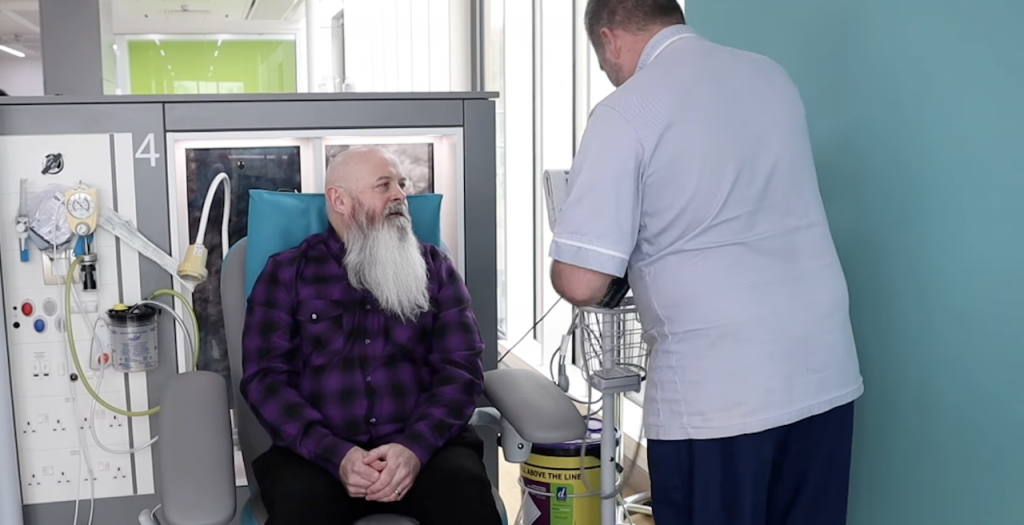
Speaking with the South Eastern Health and Social Care Trust, Rainey said his awareness of his family history—combined with the unusual hip discomfort he was experiencing—ultimately led him to get checked by his general practitioner.
Read MoreView this post on Instagram
Rainey, who had no symptoms of prostate cancer leading up to his diagnosis and has since been “all-clear” of the disease for five years, further said, “Because my cancer was caught so early it had not spread. I was given a choice of treatment options and decided to have my prostate removed.”
Since it’s been six years since his diagnosis, he is incredibly grateful for the hospital staff and team that helped him beat the disease.
“My care both before and after surgery was first class. I tend to worry and always had lots of questions, but the Nursing staff were always there, they always had the answers and nothing was too much trouble. It felt like I was talking to someone I knew,” he added.
Rainey, who considers himself “healthy and fit” continued, “I feel incredibly lucky that I had the initial blood test which led to my diagnosis and the support of the team at the Ulster Hospital.”
Expert Resources for Prostate Cancer Awareness
- ‘A Relationship Disease’ — SurvivorNetTV Presents: The Power of Emotional Support For Men Handling Prostate Cancer
- ‘Men Beating The Odds’: A Groundbreaking Film Series That Celebrates Resilience After Prostate Cancer
- Balancing Treatment and Quality of Life: What Men Should Know About Prostate Cancer Care
- How Doctors Use Risk Assessing System To Determine Best Prostate Cancer Treatment Approach
- ‘Early Detection Can Be the Key’: National Guard Vet & Prostate Cancer Survivor Urges Others to Get Screened
- PSA Test Is Not Perfect, But It Is Helpful
- Early Detection, Better Outcomes: What To Know About PSA Screening For Prostate Cancer
- The PSA Blood Test and a Rectal Exam are Vital for Prostate Cancer Screening
If You Have a Family History of Prostate Cancer, Get Screened Early
Now he’s urging other men not to be “embarrassed” about getting checked for prostate cancer.
“The earlier Prostate Cancer is diagnosed, the easier it is to treat and the less chance there is of it spreading,” he warns.
RELATED: What Happens if My PSA Test is Elevated?
Rainey ultimately chose to have his prostate surgically removed. It’s important to note that not everyone with prostate cancer needs surgery. For those who do, typically men with localized disease, robotic surgery is often preferred over traditional open surgery.
You might be eligible if:
- Your cancer is confined to the prostate (stages I and II)
- You are healthy enough to undergo surgery (e.g., you don’t have severe heart failure or recent stroke)
- You want a definitive treatment with curative intent
What Are the Current Prostate Cancer Screening Guidelines?
The Centers for Disease Control and Prevention (CDC) and the U.S. Preventive Services Task Force (USPSTF) both recommend that men at average risk between the ages of 55 and 69 years talk with their doctor about the pros and cons of prostate cancer screening.
The American Cancer Society recommends that men at age 50 who are at average risk should begin screening. Men who are at high risk of prostate cancer should begin screening at age 45. Men with a close relative diagnosed with prostate cancer should consider annual screening at 40.
For men 70 years and older, the USPSTF and the CDC say potential benefits do not outweigh the expected harms and recommend that men 70 and older should not be routinely screened for prostate cancer.
How Is Prostate Cancer Staged?
The National Comprehensive Cancer Network (NCCN) guidelines divides prostate cancer into one of six risk categories based on how aggressive the cancer looks under the microscope and the chance of it coming back after treatment. These risk categories help guide treatment for the different subtypes of prostate cancers.
The main risk categories for prostate cancer are:
- Very-Low-Risk (VLR) and Low-Risk (LR)
- Favorable- (FIR) and Unfavorable-Intermediate-Risk (UFIR)
- High-Risk (HR) and Very-High-Risk (VHR)
Very-Low-Risk and Low-Risk Prostate Cancers
Prostate cancers classified as VLR or LR represent the least aggressive forms of cancer. This categorization will be diagnosed depending on number of factors, including:
- Your doctor can’t feel the cancer on a physical exam, or it occupies one-half or less of one side of the prostate
- Your PSA is less than 10
- Your total Gleason score is 6
If your cancer is categorized as VLR or LR, your doctor may recommend active surveillance, another name for “watch-and- wait.”
What is Active Surveillance?
Why consider active surveillance? The most common and effective treatments for prostate cancer are radiation therapy and surgery.
Despite their effectiveness, these treatments are associated with side effects. Specifically, radiation can cause erectile dysfunction, urinary frequency and urgency, and changes in bowel habits. Surgery also causes erectile dysfunction but also can cause urinary incontinence and urinary leakage.
Given that these side effects can significantly impact the quality of life it is important to only treat prostate cancer when it is necessary to avoid these potential complications.
How Is Prostate Cancer Surgery Performed?
The goal of prostate cancer surgery is to remove the prostate gland and surrounding tissues (such as seminal vesicles) to eliminate cancer. This procedure is called a radical prostatectomy.
It can be performed using two primary approaches:
- Open radical prostatectomy, where the surgeon makes one large incision to access the prostate
- Minimally invasive (robot-assisted laparoscopic) prostatectomy, where small incisions and robotic instruments are used for the same purpose
Regardless of the technique, the surgery also involves cutting and rejoining the urethra and bladder neck. In some cases, nearby lymph nodes are removed for cancer staging. Nerve-sparing techniques may be used if possible, to preserve erectile function.
What Is A Robotic Prostatectomy?
A robotic-assisted laparoscopic prostatectomy (RALP) is a minimally invasive procedure that uses a robotic surgical system, such as the da Vinci® Surgical System. The surgeon operates from a console, controlling robotic arms that hold surgical instruments and a high-definition 3D camera.
Tiny incisions (usually 5-6) are made in the lower abdomen to insert the instruments. The robotic system translates the surgeon’s hand movements into precise actions inside the patient’s body. The camera provides magnified views that help in identifying nerves and structures crucial to continence (bladder and bowel control) and sexual function.
This technique has become the most common method for prostate removal in the United States and other parts of the world, primarily due to its precision and potentially quicker recovery times.
Who is a Candidate for Active Surveillance?
Not all men with prostate cancer are potential candidates for active surveillance. Active surveillance is only recommended for men with low-risk prostate cancer who are capable and willing to follow a very close and active follow-up schedule. Low-risk prostate cancer is slow growing and is biologically less aggressive compared with higher-risk prostate cancer.
“With low-risk prostate cancer, your risk of cancer getting out of the prostate and spreading to other parts of the body is really, really low,” Dr. Stephen Freedland, a urologist at Cedars-Sinai Medical Center, previously told SurvivorNet when discussing the topic.
RELATED: People With Low-Risk Prostate Cancer Can Rely on Monitoring the Disease
Men who have low-risk cancer can choose this approach and avoid the potential complications that come with treatment with surgery and radiation. Because the risk of the cancer spreading outside of the prostate is extremely low in men with low-risk disease, this approach is an effective option for men.
Active surveillance includes a PSA test, rectal exam and high-quality imaging tests, which can identify minuscule yet important changes.
When Is Active Surveillance Not Enough?
If you have been diagnosed with moderate-risk cancer, it can be a slippery slope. Something about the cancer isn’t low grade enough to be considered low risk, and many men choose to begin active treatment at this point. Active treatment involves removing the entire prostate, radiation or cryotherapy.
Bottom line, active surveillance is only a great option for men with low-risk prostate cancer who can follow a very active follow-up protocol. Active surveillance allows about 50 percent of men to avoid over-treatment and side effects.
The protocol is designed to identify early signs of cancer growth or an increase in aggressiveness and these factors will indicate treatment is necessary.
Prostate Cancer Screening and Warning Signs
When you do get screened for prostate cancer, your doctor will run a few tests.
One of the tests is the PSA test, a simple blood test that screens for prostate cancer. It looks for more significant amounts of protein-specific antigen (PSA) in the blood. An elevated PSA test does not always mean you have prostate cancer. It could also reflect that your prostate is enlarged, which is common, or it could signal an infection or inflammation.
Your doctor may also conduct a digital rectal exam (DRE) to check your prostate for lumps.
Depending on the results of these tests, imaging scans and a biopsy may be ordered.
WATCH: How Gleason Grade Determines Treatment
Prostate cancer does not always behave the same in every man it impacts. The cancer can be considered “low-risk” and can be slow-growing, and treatment might not be necessary. In other men, the cancer may grow faster or more aggressively, requiring more immediate treatment. Because of this, there is some debate about screening.
The United States Preventive Services Task Force recommends that men at average risk between the ages of 55 and 69 years talk with their doctor about the pros and cons of prostate cancer screening.
The American Cancer Society recommends that men at age 50 who are at average risk should begin screening. Men who are at high risk of prostate cancer should begin screening at age 40. Men with a close relative diagnosed with prostate cancer should consider annual screenings in their 30s.
SurvivorNet experts suggested that men consider factors like their family history, genes, and age when deciding whether and when to screen.
Symptoms of prostate cancer may include:
- Urinating more often
- Waking up in the middle of the night to pee
- Blood in your urine
- Trouble getting an erection
- Pain or burning when you urinate
- Pain in your back, hips, thighs, or other bones
- Unexplained weight loss
- Fatigue
Questions for Your Doctor
If you have experienced symptoms associated with prostate cancer or have a screening coming up, here are some questions you may ask your doctor:
- If I have elevated PSA levels, what could be causing that besides cancer?
- How long will it take to learn if my PSA levels warrant further testing?
- What are the treatment options that are best suited for me based on my risk level?
- What financial resources exist to help me with the costs associated with treatment?
- How long will my potential treatment prevent me from working or continuing normal activities?
Contributing: SurvivorNet Staff
Learn more about SurvivorNet's rigorous medical review process.


