
Prostate Cancer Screening Guidelines
- Former TV host John Tesh, 73, credits his treatment, beloved wife Connie Sellecca, and his faith in helping him battle metastatic prostate cancer, a disease he was diagnosed with back in 2015.
- Tesh said his cancer remains “stable,” with doctors at MD Anderson Cancer Center using a “pulsing” treatment approach to manage it.
- Deciding on prostate cancer screening is personal and should follow a discussion with your doctor. Men aged 55 to 69 are generally considered most likely to benefit from regular PSA tests, which can help detect elevated levels that may signal cancer.
- Men younger than 50 who have a higher risk of prostate cancer—such as those with a family history or Black men—may benefit from starting screening sooner.
- Men over 70 should talk with their doctor about whether further screening is necessary, as the risks of testing and possible overtreatment can become greater than the potential benefits with age.
- There are many different treatment options for both early and later-stage prostate cancer including active surveillance, watchful waiting, surgery, radiation, cryotherapy, hormone therapy, chemotherapy, immunotherapy and targeted therapy. The disease is one where doctors may have differing opinions on the best treatment path to take.
Sharing his health update exclusively to Page Six, Tesh said he was diagnosed with “a rare form of prostate cancer” back in 2015—where he was given a prognosis of only “18 months to live.”
Read MoreView this post on Instagram
“It’s still under treatment, on and off,” he told Page Six, confirming the disease has transitioned to metastatic [spread to other parts of the body].
Tesh, who confessed to the “frightening” aspect of him not being in remission, further explained how his cancer has remained “stable.”
He explained to Page Six, “They will let it grow for a little bit and then get me back on treatment. Back and forth.
“It’s called pulsing, and it’s scary until you get used to it.”
As for the constant support he’s been receiving from his wife, Tesh insisted he “wouldn’t be talking” if she wasn’t by his side.
“I’d be dead. I would have been dead in 2015,” he said.

As for his faith, Tesh told Page Six, “We discovered in 2015 several scriptures in the Bible which were related directly to healing.
“One of them was Mark 11:23, which was incredibly powerful and I have it tattooed on my arm.”
Expert Resources On Metastatic Prostate Cancer
- Metastatic Prostate Cancer Basics: What Is It & How Is It Treated?
- Metastatic Prostate Cancer Treatment is Improving
- Metastatic Prostate Cancer: Costs and Benefits of Molecular Testing
- How Is Radiation Used For Metastatic Prostate Cancer?
- Advanced Prostate Cancer: Treatment For Metastatic Lesions To The Bone
- When Treatment Stops Working: Managing Metastatic Castration-Resistant Prostate Cancer
Tesh, a dad of one and grandfather of three, also praised his wife for helping him through his cancer journey in an interview with “Good Morning America.”
Looking back on when he received his diagnosis, Tesh said, “And my wife, who is a faith-filled Italian girl from the Bronx, just rose up, and she [said] that ‘this is not us,'” adding, “It breaks couples apart, prostate cancer, and it almost did us. ”
Tesh—who married Sellecca, known for her starring role as Pam Davidson in the TV series “The Greatest American Hero”—said his wife ultimately “snapped” him out of a “pity party.”
John Tesh’s Prostate Cancer Fight
When Tesh was 63—about about a decade ago—he learned he had a rare and aggressive stage 3 form of prostate cancer, with doctors warning he might have only about 18 months to live.
Now, the disease as progressive to metastatic, but Tesh remains hopeful with his strong support system of doctors, loved ones, and his faith.
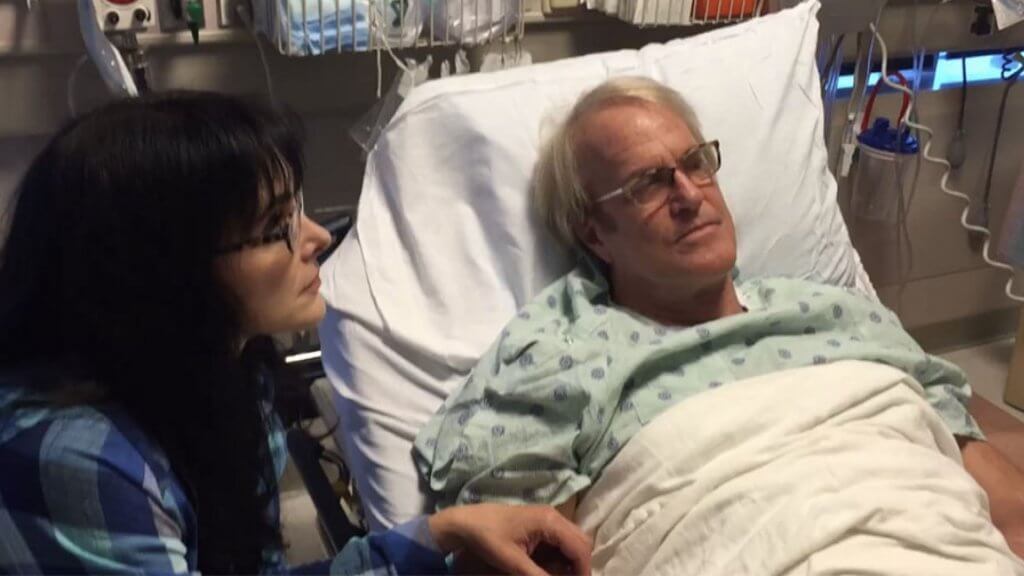
Following several surgeries, chemotherapy, and a prostatectomy, Tesh was told in 2017 that the disease had spread to lymph nodes in his pelvis.
He was later declared in remission in 2021, though People previously reported that doctors at MD Anderson have continued to closely monitor him for any signs the cancer could return or worsen.
In a previous interview with People, Tesh recalled that the cancer resurfaced during the height of the COVID-19 pandemic.
“I woke up with an enormous amount of pain one morning in October 2020 I had pain in both my legs,” Tesh explained.
“It turned out there were two tumors around either side of my pelvis and wrapped around my organs.”
Tesh said he immediately prepared to fight the disease again.
“I went back into the trenches I was battle-ready. I felt less like a guy who was sick trying to get well and more like somebody who was healed well resisting sickness.”
Understanding Metastatic Prostate Cancer & How It’s Diagnosed
Prostate cancer is considered metastatic when it has spread beyond the prostate gland to other parts of the body. The most common places it travels are the bones and lymph nodes outside the pelvis, but it can also affect other organs, such as the lungs or liver.
At this stage, prostate cancer is generally not considered curable, but that doesn’t mean there’s no hope. In recent years, medical research has brought forward a range of new treatments that can slow down cancer growth, relieve symptoms, and extend survival — in some cases, for many years. For most men, hormonal therapy (androgen deprivation therapy) is the starting point.
“For a man newly diagnosed with advanced prostate cancer, the number one treatment is going to be some type of systemic therapy, and in 2025, that is still almost certainly some type of hormonal therapy or drugs that block testosterone,” Dr. Daniel Hamstra, chair of radiation oncology at Baylor College of Medicine in Houston, previously told SurvivorNet.
Metastatic Prostate Cancer Basics: What Is It & How Is It Treated?
How Metastatic Cancer Is Diagnosed
Cancer cells can break away from the original tumor in the prostate and travel to other areas of the body.
This spread typically happens in three main ways: through the lymphatic system, through the bloodstream, or direct extension (where the cancer grows directly into nearby tissue such as the bladder or seminal vesicles).
The reason prostate cancer so often spreads to bone is that bone tissue contains factors that encourage prostate cancer cells to settle and grow. These metastases can appear in the spine, hips, ribs, or other areas.
Your doctor will use a combination of your medical history, physical exams, lab tests, and imaging studies to look for signs of metastasis.
Common steps include:
- PSA (prostate-specific antigen) blood test
- Bone scan
- CT scan
- MRI scan
- PSMA (prostate-specific membrane antigen) PET scan
- Biopsy of metastatic site
Your healthcare team will use these results to assign a stage to your cancer, which helps guide treatment decisions.
Symptoms When Cancer Has Spread
Not everyone with metastatic prostate cancer has symptoms right away — some men feel completely well, and the spread is only detected through routine tests. However, symptoms may develop over time.
Common symptoms include:
- Bone pain (often felt in the back, hips, or ribs)
- Fractures
- Leg swelling
- Fatigue
- Urinary changes
- Unexplained weight loss
- Decreased appetite
Any new or worsening symptom should be discussed with your healthcare provider promptly. Early intervention can prevent complications and improve comfort.
Understanding Treatment Options
While metastatic prostate cancer is not usually curable, it can often be controlled for years.
Treatment aims to:
- Slow or stop the growth of cancer
- Relieve symptoms
- Maintain your quality of life
- Improve the length of survival
Your treatment plan will be personalized and may include one or more of the following approaches.
Hormone Therapy (Androgen Deprivation Therapy or ADT)
Prostate cancer cells grow in response to male hormones called androgens (mainly testosterone). ADT lowers androgen levels or blocks their effect, effectively starving the cancer.
Hormone levels may be lowered through:
- Injections or implants that stop testosterone production
- Pills that block testosterone from attaching to cancer cells
- Surgical removal of the testicles (this is less common today)
ADT often works well for years, but cancer can eventually adapt, leading to castration-resistant prostate cancer (CRPC). When that happens, additional treatments are used.
Androgen Receptor Pathway Inhibitor (ARPI) Hormonal Agents
Drugs like abiraterone, enzalutamide, apalutamide, and darolutamide can further block androgen production or signaling, even after standard hormone therapy stops working.
“There are new, advanced hormonal therapies which are often combined with the traditional hormonal therapies,” Dr. Hamstra explains.
“These are called androgen receptor blockers or ARPIs, and these can provide a more effective treatment, either in the castrate resistant setting or, frankly, in the castrate sensitive setting as well.”
Indeed, in current practice, androgen receptor pathway inhibitors are commonly used in combination with traditional testosterone-lowering ADT for the majority of patients upon initial diagnosis of a metastatic prostate cancer.
Chemotherapy
Medications like docetaxel or cabazitaxel target fast-growing cancer cells throughout the body. For some patients with advanced prostate cancer, chemotherapy can shrink tumors, ease symptoms, and improve survival.
Targeted Therapy
If genetic testing of your cancer reveals certain mutations (for example, BRCA1/2), drugs like PARP inhibitors (olaparib, talazoparib, niraparib, rucaparib) may be effective.
Immunotherapy
Some men with specific tumor markers (such as mismatch repair deficiency) may benefit from immune checkpoint inhibitors, which help the body’s immune system attack cancer, though Dr. Hamstra notes that the role of immunotherapy in prostate cancer treatment is not yet well-established.
“Immune therapy has not played a huge role in prostate cancer at this point in time, but is potentially something that may become more relevant,” he explains.
Radiopharmaceuticals
These are radioactive medicines injected into the bloodstream that travel to metastatic sites and deliver targeted radiation, such as radium-223 or lutetium-177 PSMA therapy.
Radiation Therapy for Symptom Control
External beam radiation can be directed at bone metastases or other symptomatic sites to relieve pain or prevent fractures.
Clinical Trials
Participating in a research study can give access to cutting-edge treatments not yet widely available.
Clinical Trials and What Statistics Really Mean
Using Faith as a Tool for Healing
A study published in Cancer highlights the powerful role of faith in the lives of cancer patients, revealing that 69% of those diagnosed with cancer reported praying for their health, compared to 45% of the general U.S. population.
Cancer psychologist Dr. Andrew Kneier helped co-author “Coping with Cancer: Ten Steps toward Emotional Well-Being.” He also co-authored a column published by Stanford Medicine with Rabbi Jeffery M. Silberman, director of spiritual care at Danbury Hospital in Connecticut.
Together, they emphasize the deep emotional and psychological support that faith provides to those battling illness.
According to Kneier and Silberman, spirituality offers a powerful coping mechanism, helping individuals navigate the uncertainty that comes with a cancer diagnosis.
“A person’s faith or spirituality provides a means for coping with illness and reaching a deeper kind of inner healing,” they explain.
Faith helps patients in multiple ways, including:
- Seeking answers to the difficult questions illness presents.
- Finding comfort in the midst of fear and pain.
- Gaining a sense of direction during an overwhelming and uncertain time.
Religious teachings, they argue, can serve as a guidepost, offering strength and resilience when navigating the emotional and physical challenges of cancer.
WATCH: Three-time cancer survivor shares how her faith helped her during cancer.
New York City Presbyterian Pastor Tom Evans tells SurvivorNet about the importance of finding ways to cope with the complex web of feelings you may be experiencing after a challenging health diagnosis, such as cancer.
“It’s important to reach out in a simple prayer to God, even if you’ve never prayed before, you don’t know what to say, a heartfelt plea, ‘God, help me, be with me,’” Pastor Evans told SurvivorNet.
“You can reach out to God, and you can reach out to people, your friends and family, and say, ‘I can’t do this on my own. I need you.’ “It’s in that willingness to be open and to receive that we can find something deeper that we never would’ve encountered without this hardship,” Evans continued.
Supporting a Loved One Facing a Health Challenge
Research published in The Journal of the Royal Society of Medicine studied the impact of disease on family members. It found, “Most chronic diseases have similar effects on family members, including psychological and emotional functioning, disruption of leisure activities, effect on interpersonal relationships, and financial resources.”
If you have a loved one fighting a disease or cancer, SurvivorNet has some ideas to help you better support your loved one. Simple tasks like helping with household chores or running errands can do wonders for your loved one who’s diagnosed.
These tasks can make all the difference in relieving stress when the effect of chemotherapy brings on fatigue, for example. Other ideas to help your loved one battling cancer include cooking, bringing prepared meals, or doing an activity you enjoy together.
The support helps put your loved one battling a disease or cancer more at ease, as they may be overwhelmed with anxiety after a diagnosis or during intense treatment.
“There are a number of common things cancer patients can experience,” Dr. Shelly Tworoger, a researcher at Moffitt Cancer Center, told SurvivorNet.
“Anxiety, depression, financial toxicity, social isolation, and PTSD,” Dr. Tworoger said, are all emotions cancer warriors may experience and can be eased by loved ones.
If you are a caregiver of your loved one facing a diagnosis, it is important to maintain your mental and physical health.
“Caregiving is the most important job in the universe because you are there through the highs and lows,” Julie Bulger, manager of patient and family-centered care at Vanderbilt-Ingram Cancer Center, told SurvivorNet.
Caregivers must also watch out for “caregiver burnout,” where stress, anger, fatigue, and illness emerge from putting another person’s needs ahead of their own.
Caregivers who struggle to care for a cancer warrior should seek out a therapist or a support group, either online or in person.
Contributing: SurvivorNet Staff
Learn more about SurvivorNet's rigorous medical review process.


