
Coping With The Loss Of a Parent
- GMA’s Lara Spencer, creator of HGTV’s Flea Market Flip, honored her late mother Carolyn von Seelen with a heartfelt Instagram post after her recent passing.
- Her mom died on February 13 at 85 years old. She previously battled glioblastoma.
- Glioblastoma multiforme (GBM) is the most aggressive form of brain cancer. It grows rapidly, infiltrates surrounding brain tissue, and can be challenging to treat. The standard approach to glioblastoma typically involves surgery first, if possible. Additional treatments may include chemotherapy, radiation, or a new approach called tumor treating fields (Optune).
- Remember, it’s completely natural to experience sadness when facing major life changes, such as the loss of a loved one or a cancer diagnosis. Some days may feel especially difficult, and emotions can come in waves.
- Speaking with a counselor or participating in therapy can make a meaningful difference. If you’re having a hard time coping, consider contacting your doctor, a licensed therapist, or a local support group for guidance and support.
Spencer recently took to Instagram to announce the death of her mom Carolyn von Seelen, sharing a carousel of photos of treasured remembrances.
Read More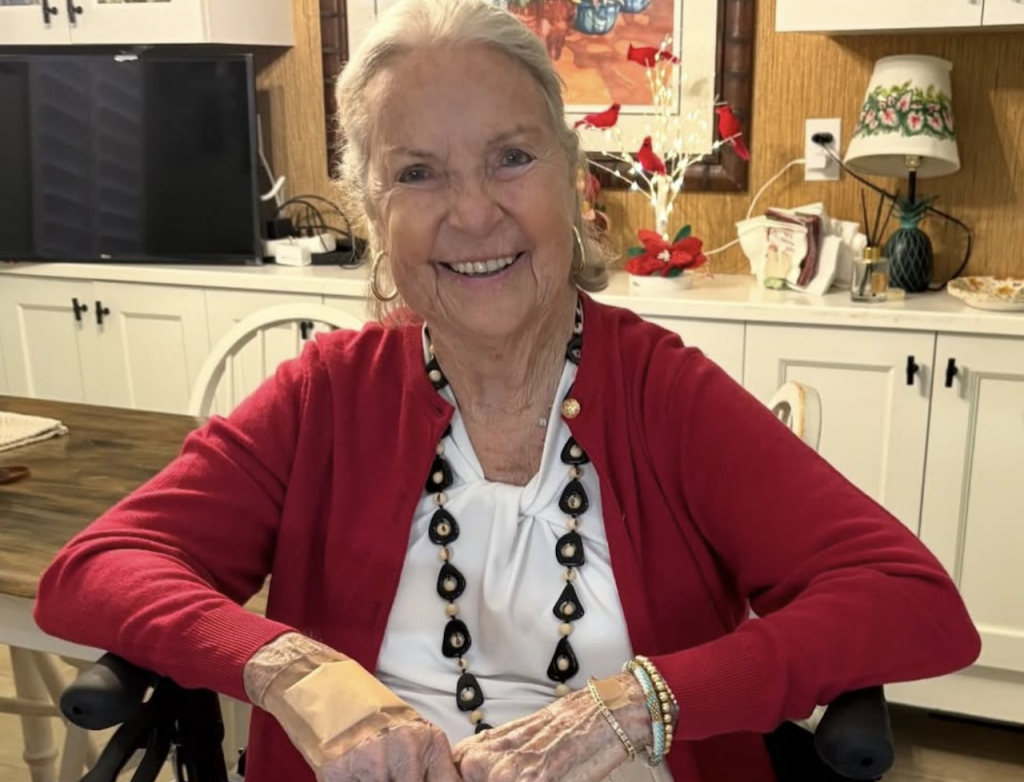
“One of her favorites was ‘don’t be sad it’s over honey—be grateful it happened.’ Sorry mama but there’s no way to not feel the pain of overwhelming sadness at the thought of not having you to share life with each day, but we sure are grateful YOU happened and showered us with your loving warmth and humor.
Spencer said her mom, a loving “grandmother to 12 and great-grandmother to 4” passed away on February 13, 3036.
She died surrounded by her children and rescue dog.
“We love you always and forever mom,” Spencer concluded.
View this post on Instagram
Spencer received an outpouring of heartfelt messages, with her fellow TV broadcaster Robin Roberts writing, “Knowing your mother was knowing pure joy. Just thinking of her right now brings a smile to my face.
“Oh how she loved her family…undoubtedly the loves of her life. May in time all your sweet memories of her be a source of comfort.”
Expert Resources On Coping With Loss
- How to Be Realistically Optimistic: Coping With Mental Health Long-Term
- Mental Health: Understanding the Three Wellsprings of Vitality
- Mental Health: Coping With Feelings of Anger
- Cancer Support Groups Aren’t for Everyone — We All Have Our Own Way of Coping
- SN & You Presents Mental Health: Coping With Emotions
- Dealing With Grief Related to Health Problems
Broadcast journalist Will Ganss also commented, “You two were always cracking up every time she came into GMA with you. Those are memories that I hope bring you lots of comfort.
“I am so sorry for your loss, and so moved by these words and photos you’ve shared here. Lucky her and lucky you.”
Journalist Rebecca Jarvis also chimed in with support, writing, “Sending you and your family so much love, Lara.
“I feel so fortunate to have met her at GMA – a truly special woman with a transcendent spark. May her memory be a blessing.”
Her Mom’s Brain Cancer Battle
On February 21, 2024, Spencer shared a celebratory post, featured a photo of her standing next to her mom and doctors, writing, “I am so happy to share that my mom has just finished treatment for a brain tumor and she is doing GREAT.
“Six weeks. 5 days a week. Both chemo and radiation–and not surprising at all, if you know my mom, she is still smiling. My friend Susan gave her a pair of socks that say it all—‘you picked the wrong bit*#, cancer!’”
The New York Times best-selling author added, “Thank you to the amazing and compassionate team at Florida Cancer Specialists in Sarasota starting with Dr. Scott Lunin, and endless thanks to Dr. John Boockvar and the Brain Tumor team at Lenox Hospital in New York for your groundbreaking trial to get chemo past the blood brain barrier.
“My mom is proof positive your work is a game changer. Mom-your spirituality and belief that anything is possible are a masterclass in how to live. You are a fierce and fabulous warrior and I can’t wait to celebrate with you!!!!!”
Spencer previously shared in a 2023 Thanksgiving post, that her family had faced a “scary couple of months for her (and all of us).'”
According to Northwell Health, Spencer commended her mom’s doctor’s for their “incredible work, and their kindness and compassion,” during Lenox Hill Hospital Brain Tumor Center’s 10th Anniversary Gala in 2024.
At the time, Spencer shared that her mom was “doing really well” following her treatment.
She also explained that her mom’s diagnosis was glioblastoma, emphasizing that this form of brain cancer “does not have to be a death sentence,” and adding, “Knowing that my mom has not months, but years, is something. I don’t know how I’ll ever be able to say thank you.”
Understanding Glioblastoma
Glioblastoma multiforme (GBM) is the most aggressive form of brain cancer. It grows rapidly and infiltrates surrounding brain tissue, making it challenging to treat. A diagnosis of glioblastoma is indeed overwhelming, but understanding your treatment options can empower you to make informed decisions about your care.
After you’ve had a full work-up, experts say getting a consultation at a treatment center that sees a lot of patients with brain cancer can be an extremely valuable step.
Dr. Randy Jensen, a neurosurgeon at Huntsman Cancer Institute in Salt Lake City, tells SurvivorNet that the standard of care for glioblastoma is typically to start with surgery.
“The standard of care for glioblastoma is to start off with a maximal safe resection, and that means having your surgeon pull out all the stops of anything they can do to maximize resection [removal],” Dr. Jensen explains.
The Standard of Care for Glioblastoma
While surgery is often where treatment starts, the treatment path for glioblastoma requires a comprehensive approach involving multiple medical specialties. Your care team may include neurosurgeons, medical oncologists, radiation oncologists, neuro-oncologists, and supportive care specialists.
The treatment approach for glioblastoma may consist of the following steps.
- Surgery: The first step in treatment is often surgical removal of the tumor, also known as resection. The goal of surgery is to remove as much of the tumor as possible while preserving neurological function. Complete removal is often difficult due to the tumor’s infiltrative nature, but reducing the tumor size can improve the effectiveness of subsequent treatments. In cases where surgery is not possible due to the tumor’s location, a biopsy may be performed to confirm the diagnosis.
- Radiation Therapy: Following surgery, most patients undergo radiation therapy to target any remaining cancer cells. Radiation uses high-energy X-rays or protons to damage the DNA of tumor cells, preventing them from growing and dividing. It is typically administered five days a week over a period of six weeks. Radiation therapy is a crucial component in slowing tumor progression and improving survival rates.
- Chemotherapy: Temozolomide (TMZ) is the standard chemotherapy drug used in glioblastoma treatment. It is taken orally and works by interfering with the tumor cells’ ability to replicate. TMZ is often used in combination with radiation therapy (concurrent chemoradiation) and then continued as maintenance therapy for several months.
- Tumor Treating Fields (TTFs): TTFs are a newer, non-invasive treatment option that uses alternating electrical fields to disrupt cancer cell division.
Dr. Jensen explains that after surgery for brain cancer, a tumor board meeting often occurs, where doctors with different specialties meet to assess the case together and decide the best way to proceed with treatment.
The purpose of the tumor board is to give brain cancer experts with different specialties the opportunity to discuss and decide on the best possible treatment approach.
Finding Support Through a Health Battle, or Loss of a Loved One
Feeling support from a friends, loved ones, or coworkers can help you express your feelings and maintain a positive attitude during a your own, or a loved one’s health battle or the aftermath of losing someone.
Licensed clinical psychologist Dr. Marianna Strongin previously wrote for SurvivorNet, that it’s “important that you surround yourself with individuals who care and support you throughout your treatment,” which she said can be an “arduous chapter.”
That being said, it’s very important to know your limits on what you can handle during treatment.
“Going through treatment is a very vulnerable and emotionally exhausting experience,” she wrote.
“Noticing what you have strength for and what is feeling like too much extremely important to pay attention to as you navigate treatment.”
It is important cancer warriors in the midst of their fight to have a strong support system. So how can you support a loved on in your life who is fighting cancer? SurvivorNet suggests multiple ways you can do so.
Your Support System Matters Jill Kargman on Getting Through Cancer With Support from Friends
Dr. Shelly Tworoger, a researcher at Moffitt Cancer Center told SurvivorNet that “there’s a number of common things cancer patients can experience, such as anxiety, depression, financial toxicity, social isolation and sometimes even PTSD.” So helping to ease those feelings is a great way to support your loved one.
You can help complete household chores or running errands during the day, which your loved one may not have the time or energy to do. Or, you can simply lend an ear so patients can talk through their feelings, which can help them cope with what they are experiencing during this difficult time.
Meanwhile, there are some practical tips to help you interact with your loved one in a meaningful way. Our experts suggest to avoid asking how you can help. Instead, be proactive and offer tangible things you can do for them to make their lives easier. That could include bringing them food, cooking them dinner or playing a board game with them, anything that will bring them joy.
It’s important to understand that a support system can be made up of loved ones like family and friends. It can also be comprised of strangers who have come together because of a shared cancer experience. Mental health professionals can also be critical parts of a support system.
WATCH: Sharing details about your cancer diagnosis.
“Some people don’t need to go outside of their family and friend’s circle. They feel like they have enough support there,” psychiatrist Dr. Lori Plutchik told SurvivorNet.
“But for people who feel like they need a little bit more, it’s important to reach out to a mental health professional,” Dr. Plutchik added.
Dr. Plutchik also stressed it is important for people supporting cancer warriors to understand their emotions can vary day-to-day.
“People can have a range of emotions, they can include fear, anger, and these emotions tend to be fluid. They can recede and return based on where someone is in the process,” Dr. Plutchik said.
Questions to Ask Your Doctor
- What can I do if my emotions begin to feel overwhelming?
- Are there approaches that don’t involve traditional therapy?
- Should I consider medication such as antidepressants?
- What are the potential side effects should I decide to begin medication?
Contributing: SurvivorNet Staff
Learn more about SurvivorNet's rigorous medical review process.


