
Support From Loved Ones During a Cancer Journey
- Two years after entering remission from medulloblastoma, a form of brain cancer, Isabella Strahan, 21, is back to her life as she knew it before cancer, while her father, “Good Morning America” host Michael Strahan, 54, reflects on the fear and helplessness he felt during her diagnosis and treatment.
- Medulloblastoma is a rare, fast‑growing grade IV brain tumor, according to the National Cancer Institute, and Isabella underwent three brain surgeries, radiation, and multiple rounds of chemotherapy to treat it.
- Strahan says faith and trust in her medical team helped him cope, and Isabella recently marked her “cancerversary” on TikTok, celebrating being cancer‑free and back to living her 21‑year‑old life.
- Experts note that some brain tumors respond especially well to radiation and chemotherapy; as Dr. Ganesh Shankar explains, certain tumors are so interwoven with healthy tissue that aggressive surgery could cause “pretty significant neurologic deficits,” making these therapies essential.
- Chemotherapy options vary by tumor type, and genetics explains that neuro‑oncologist Dr. Howard Colman prefers temozolomide, often for its tolerability, though side effects like fatigue, nausea, low blood counts, and hair thinning remain common and closely monitored.
- To further help you on your cancer journey, explore SurvivorNet’s proprietary AI tool, “My Health Questions.” This powerful resource, embedded across the SurvivorNet website, was built to bridge that gap by offering on-demand explanations of treatment options, clinical trials, side effects, insurance concerns, and more.
“The worst part, feeling helpless,” Michael Strahan, 54, told actress and podcast host Keke Palmer on the “Baby, This Is Keke Palmer” show.
Read More@pagesixMichael Strahan gave an update how his daughter Isabella is doing in remission after she was diagnosed with brain cancer at age 18 ❤️ 🎥: “Baby, This is Keke Palmer”♬ original sound – Page Six
Symptoms often include difficulty walking, headaches, nausea, vomiting, vision problems, and seizures.
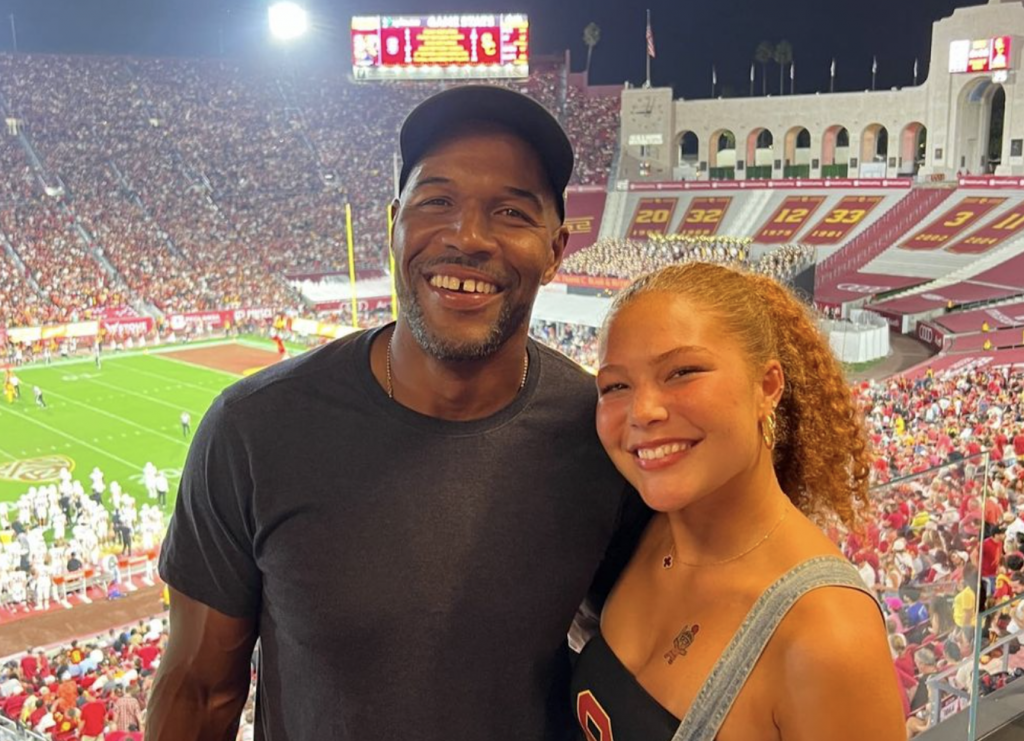
“You wake up in the morning. When it first happened for the first month or so, I’d wake up and go, ‘Oh boy, that dream sucked.’ Then you realize, ‘Oh, this is not a dream. This is real.’ And it was devastating. Very devastating and very scary because you don’t know the outcome, if it’s going to be positive or not,” Strahan said.
Isabella’s treatment was intense. She underwent three brain surgeries to remove the tumor, followed by weeks of radiation and multiple rounds of chemotherapy aimed at eliminating remaining cancer cells and preventing recurrence.
WATCH: What You Think You Know About Chemotherapy Side Effects May Be Wrong
Chemotherapy, while effective, brings its own challenges.
“Patients almost universally experience fatigue,” explains Dr. Renata Urban, a gynecologic oncologist at the University of Washington. “But mitigating that fatigue often depends on the patient.”
Strahan says the emotional toll extended far beyond the medical procedures. Leaning on his faith became essential.
“I learned that in life, sometimes you’ve got to let go. You’ve got to pray. You’ve got to depend on prayers. You’ve got to trust in doctors or whoever can handle the situation because that’s one of those things completely out of your hands,” he said.
@isabellastrahan Living the life I fought for ❤️🩹 #recovery #cancer #fyp ♬ The Journey – H.E.R.
Earlier this year, Isabella marked her “cancerversary” with a TikTok video — a montage of her journey from shaving her head and relearning how to walk to embracing the outdoors and smiling with the resilience that has inspired thousands. Her caption captured the moment: “Living the life I fought for.”
“Even now, she’s, thank God, cancer-free, back at school, crushing it, doing well, loving back to her 21-year-old life,” Strahan said of his daughter.
Expert Resources for Brain Cancer Patients
- A Message For Glioma Caregivers: How To Support Your Loved One Through A Diagnosis
- A Neuro-Oncologist’s Three Tips For Newly Diagnosed Glioma Patients
- After Glioma Surgery: Decision Making and the Tumor Board
- Access Issues in Treating Gliomas: Solutions for Patients Around the Mountain Region
- After Treatment, The Importance of Monitoring For Glioma Recurrence
Why Faith Offers Cancer Patients Hope
A study published in “Cancer” includes data that found “69% of cancer patients reported praying for their health” compared to “only 45% of the general U.S. population.”
Cancer psychologist Dr. Andrew Kneier helped co-author “Coping with Cancer: Ten Steps toward Emotional Well-Being.” He also co-authored a column published by Stanford Medicine with Rabbi Jeffrey M. Silberman, director of spiritual care at Danbury Hospital in Connecticut.
The two add more context to the impact faith has on cancer patients.
“A person’s faith or spirituality provides a means for coping with illness and reaching a deeper kind of inner healing,” Kneier and Silberman said.
“Coping means different things to different people: it can involve finding answers to the questions that illness raises, it can mean seeking comfort for the fears and pain that illness brings, and it can mean learning how to find a sense of direction at a time of illness. Religious teachings can help a person cope in all of these dimensions,” Kneier and Silberman continued.
WATCH: Three-time cancer survivor shares how her faith helped her during cancer.
New York City Presbyterian Pastor Tom Evans tells SurvivorNet about the importance of finding ways to cope with the complex web of feelings you may be experiencing after a challenging health diagnosis, such as cancer.
“It’s important to reach out in a simple prayer to God, even if you’ve never prayed before, you don’t know what to say, a heartfelt plea, ‘God, help me, be with me,’” Pastor Evans told SurvivorNet.
“You can reach out to God, and you can reach out to people, your friends and family, and say, ‘I can’t do this on my own. I need you.’ “It’s in that willingness to be open and to receive that we can find something deeper that we never would’ve encountered without this hardship,” Evans continued.
How Dr. Drakaki Helps Patients Reframe Their Diagnosis
A cancer diagnosis can feel like the ground shifting beneath your feet — sudden, disorienting, and overwhelming. But according to Dr. Alexandra Drakaki, medical director of the Genitourinary Oncology Program at UCLA, the first step toward regaining control is understanding what cancer actually is.
“Cancer is normal. From the moment we are born, cancer cells are being developed, and our immune system is constantly trying to attack them,” she explains.

It’s a different way to reframe a diagnosis. Understanding that cancer isn’t an outside invader, but a biological process that can emerge as we age.
“Cancer is inevitable, and the longer we live, the more likely we are to develop more than one cancer. So, it’s important to accept it and deal with it,” Dr. Drakaki explains.
That acceptance, she emphasizes, is not about resignation; instead, it’s about grounding yourself so you can make clear, empowered decisions.
A new diagnosis often triggers fear and confusion, but many oncologists and numerous cancer survivors encourage patients not to let that fear silence them.
Psychiatrist Dr. Lori Plutchik says emotions are often fluid when coping with a diagnosis.
“The patient or person going through the stressful event should accept that emotions will be fluid. You may feel fine one day and then feel a massive wave of stress the next. It’s also important for those you look to for support, whether that’s a therapist, friends, family, or both, to understand the fluidity of stress-related emotions,” Dr. Plutchik said.
WATCH: How to cope with complex and changing emotions.
“Look for an opinion. Don’t get overwhelmed. Don’t give up. It’s normal,” Dr. Drakaki says.
She encourages patients to ask questions, seek clarity, and, importantly, pursue second, third, or even fourth opinions.
“There is always hope. They really need to be advocates. It’s okay to go for a second, third, or fourth opinion. Sometimes that last opinion will get you there.”
Better Understanding of Isabella’s Brain Cancer Treatments
To treat the four‑centimeter medulloblastoma discovered at the back of her brain—a tumor larger than a golf ball—Isabella underwent emergency surgery just one day before her 19th birthday. As is common with this type of cancer, she then received proton therapy and chemotherapy to target any remaining cells that surgery couldn’t safely remove.
Proton therapy is often recommended when the cancer hasn’t spread because it delivers radiation with remarkable precision.
Unlike traditional X‑rays, protons stop at the tumor instead of passing through the body, helping protect healthy tissue.
WATCH: Radiation Therapy in the Treatment of Glioma
As neurosurgeon Dr. Randy Jensen explains, “The radiation we use for gliomas tends to be something that’s a little bit smaller dose spread out over a longer period of time… so that the normal brain can be spared and not be injured by the treatment, but at the same time, killing the tumor cells.”
Radiation is typically delivered in small daily doses—called fractions—five days a week over about six weeks. This schedule allows healthy cells time to repair while cancer cells, which divide more quickly, struggle to recover. Each session lasts only a few minutes and is painless.
Some brain tumors respond especially well to radiation and chemotherapy.
“Some tumors and growths that occur in the brain are very sensitive to chemotherapy and radiation,” says Dr. Ganesh Shankar of Massachusetts General Hospital.
He notes that when tumors are deeply interwoven with normal brain tissue, doctors may rely more heavily on these treatments because “pretty significant neurologic deficits” could occur if surgeons attempt a more aggressive resection.
Chemotherapy remains a key part of treatment, and options vary depending on the tumor’s type, grade, and genetic features.
WATCH: Exploring Chemotherapy Options and New Therapies For Glioma
“Chemotherapy options depend a lot on the specific type and grade of tumor,” explains neuro‑oncologist Dr. Howard Colman, adding that newer targeted therapies are emerging for tumors with certain DNA‑level mutations.
For many patients with high‑grade gliomas, the most commonly used drug is temozolomide (TMZ), an oral chemotherapy that can cross the blood‑brain barrier. Other options include lomustine (CCNU) and the PCV regimen—procarbazine, lomustine, and vincristine—often used for tumors with specific genetic markers.
“In my practice, I tell patients that temozolomide is my preference… ” It’s much better tolerated,” says Dr. Herbert Newton of UH Seidman Cancer Center. “Most patients are interested in trying the temozolomide first and seeing how it goes, knowing that the PCV is there… if they need to ramp it up and be a little more aggressive.”
While radiation and chemotherapy are effective, they can bring side effects such as fatigue, nausea, low blood counts, appetite loss, headaches, and hair thinning. Doctors monitor patients closely and adjust treatment plans to help manage these challenges.
Better Understanding of Brain Tumors
Brain tumors can impact a person’s cognitive function and overall well-being, depending largely on the tumor’s size, type, and specific location within the brain. When large enough, tumors may interfere with the central nervous system, pressing on nearby nerves, blood vessels, or tissues. This disruption may result in difficulties with coordination, balance, or mobility.
According to the American Society of Clinical Oncology (ASCO), brain tumors make up 85–90% of all primary central nervous system (CNS) tumors. They can be benign or malignant, with treatment and symptoms varying based on tumor type and location.
“The goal is to remove as much of the tumor as we can while keeping the patient well neurologically,” Dr. Reid Thompson, Chair of Neurosurgery at Vanderbilt University Medical Center, tells SurvivorNet. In other words, to remove as much of the tumor as possible without causing harm to the patient.
Even though surgery can remove a large part of the tumor, any remaining cancer cells can continue to grow over time, leading to the tumor’s return. For this reason, surgery is often followed by other treatments, like radiation or chemotherapy, to try to eliminate any remaining cells.
WATCH: Hope for Glioblastoma Research
While some brain tumors cause noticeable symptoms, others can go unnoticed for long periods. When symptoms do occur, they might include:
- Persistent headaches
- Difficulty speaking or processing thoughts
- Muscle weakness
- Behavioral or personality changes
- Vision disturbances
- Seizures
- Hearing loss
- Confusion
- Memory issues
Treatment Options for Brain Tumors
Treatment strategies for brain cancer depend on several variables, including the tumor’s size, type, grade, and location. Doctors may recommend:
- Surgery
- Radiation therapy
- Chemotherapy
Your medical team will help guide you based on your individual diagnosis. The prognosis—or outlook—depends on:
- Tumor type and growth rate
- Tumor location in the brain
- Presence of genetic mutations or abnormalities
- Whether the entire tumor can be removed
- The patient’s overall health
Types of Brain Tumors: Cancerous and Non-Cancerous
According to the National Cancer Institute, brain tumors can vary greatly in behavior. Some common non-cancerous (benign) types include:
- Chordomas: Slow-growing, often found near the spine’s base or where it meets the skull
- Craniopharyngiomas: Develop near the pituitary gland; rare and slow-growing
- Gangliocytomas: Form in the temporal lobe and affect the central nervous system
- Glomus jugulare: Rare and slow-growing
- Meningiomas: Typically grow on the brain’s outer protective layer (dura mater)
- Pineocytomas: Arise from the pineal gland near the brain’s center
- Pituitary adenomas: Located in the pituitary gland; generally slow-growing
- Schwannomas: Originate in Schwann cells, which insulate nerve fibers
- Acoustic neuromas (vestibular schwannomas): Impact on hearing and balance nerves
Common malignant (cancerous) brain tumors include:
- Gliomas: The most frequent and aggressive form of primary brain cancer
- Astrocytomas: Derived from star-shaped brain cells, with four growth grades
- Ependymomas: Graded based on aggressiveness
- Oligodendrogliomas: Can grow slowly (Grade 2) or aggressively (Grade 3)
- Medulloblastomas: Fast-growing and often found in children
- Glioblastomas: The most common and aggressive brain tumor in adults
Questions to Ask Your Doctor
If you or a loved one has been diagnosed with a glioma, be sure to discuss molecular testing with your treating team. Here are some questions to ask:
- Do you need both the tissue sample and blood samples for molecular testing?
- What specific mutations will you be testing for in my tumor?
- Do I have any genetic mutation that would change the course of my treatment?
- Am I eligible to receive targeted therapy? What about immunotherapy?
- Is there a clinical trial that would be relevant for me?
Learn more about SurvivorNet's rigorous medical review process.


