
Knowledge Is Power: Fight Breast Cancer with Awareness
- Hospital president Megan Johnson, 46, received a “negative” mammogram and learned she was at high-risk of getting breast cancer—without any symptoms. Following a double mastectomy, she is now championing the importance of early detection and preventive screenings.
- The medical community has a consensus that women between 45 and 54 have annual mammograms. However, an independent panel of experts called the U.S. Preventive Services Task Force (USPSTF) says that women should start getting mammograms every other year at the age of 40, suggesting that this lowered the age for breast cancer screening could save 19% more lives.
- For women aged 55 and older, the American Cancer Society recommends getting a mammogram every other year. However, women in this age group who want added reassurance can still get annual mammograms.
- Women who have a strong family history of breast cancer, have dense breasts, have a genetic mutation known to increase the risk of breast cancer, such as a BRCA gene mutation, or a medical history, including chest radiation therapy before age 30, are considered at higher risk for breast cancer.
- Breast Cancer Risk Assessment is a “statistical model that allows healthcare professionals to calculate the probability of a woman developing breast cancer throughout their lifetime,” Dr. Ruth Oratz, breast medical oncologist at NYU Langone, tells SurvivorNet. It assesses a woman’s age, family history with breast cancer when she first had a menstrual period, and her reproductive history to determine her risk of breast cancer.
Speaking to KSL TV Channel 5, Johnson expressed how shocked she was to receive a diagnosis this summer after receiving “normal” results from her mammogram just last year.
Read More
Luckily, the cancer didn’t spread and she didn’t need to undergo chemotherapy or radiation. She’s now waiting for a second surgery.
Johnson also admitted her cancer journey prompted “mental struggles,” despite catching her diagnosis early. She told KSL TV, “Could I really call myself a breast cancer survivor? Because I didn’t have to do the hard things. I didn’t have to do the really hard things.”
Having previously worked as a registered nurse and chief nursing officer, Johnson certainly has an in-depth understanding of hospital operations, and we’re thrilled to see her continuing to make a positive impact and raise awareness.
Johnson, who had been working for the same organization for 23 years, told KSL TV, “Early detection really is what saved me. This whole journey was based on a negative mammogram but a high lifetime risk assessment.”
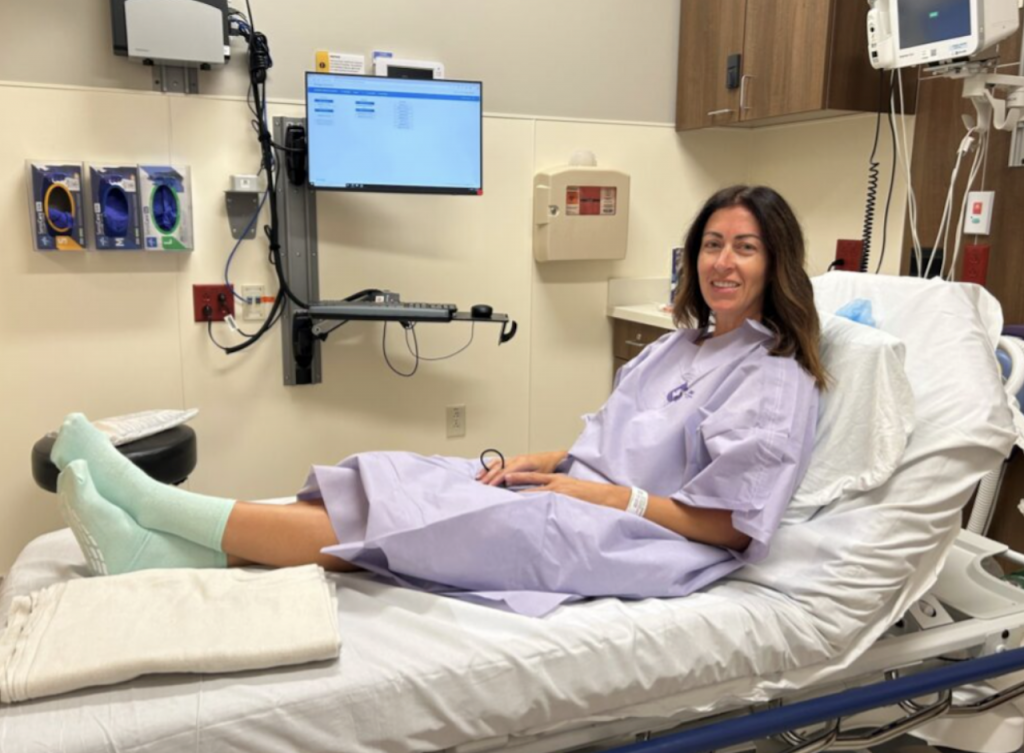
She added, “Surrounding yourself with good people, you can do anything. If you don’t have that, I can be that for you. Reach out, I would love to be that support. Don’t feel like you have to fight this alone.”
Expert Resources on Breast Cancer Screening
- Black Women May Need To Start Breast Cancer Screening At 42, According To A New Study
- Bi-Annual Mammograms At Age 40 Now Recommended For Most Women, What The New Breast Cancer Screening Guidelines Mean For You
- Breast Cancer: Introduction to Prevention & Screening
- Tattoo Ink Can Complicate Breast Cancer Screenings; Here’s What You Need to Know About Detection and Screening
- The Mammogram Debate: Should Women Start Breast Cancer Screening at 30?
Learning More About Breast Risk Assessment & Genetic Testing
The Breast Cancer Risk Assessment Johnson credits for helping her get a diagnosis is “statistical model that allows healthcare professionals to calculate the probability of a woman developing breast cancer over the course of their lifetime,” Dr. Ruth Oratz, breast medical oncologist, NYU Langone Health’s Perlmutter Cancer Center; clinical professor of medicine, NYU Grossman School of Medicine previously told SurvivorNet.
Genetic testing can help a patient better understand their cancer risk and can be as simple as a simple saliva swab or blood sample. The results help your care team determine if you have a specific mutation that puts you at higher risk for cancer. The results help doctors tailor your treatment and are helpful for breast cancer patients.
BRCA Gene Mutations
The BRCA1 and BRCA2 gene mutations are among the most important genes to look for in breast cancer. Together, they are responsible for about half of all hereditary breast cancers. These genes prevent cells from dividing haphazardly and uncontrollably in a person without mutations. Mutations prevent these genes from doing their job and can allow unchecked growth of breast, ovarian, and other tissues.
Genetic Testing for Breast Cancer: What is This Type of Test? And What Do My Results Mean?
Together, they are responsible for about half of all hereditary breast cancers. These genes prevent cells from dividing haphazardly and uncontrollably in a person without mutations. Mutations prevent these genes from doing their job and can allow unchecked growth of breast, ovarian, and other tissues.
Dr. Oratz says if the Breast Cancer Risk Assessment finds that a woman is at higher risk of getting breast cancer, she should expect further testing and screening. However, if a woman is positive for the BRCA gene mutation, a Breast Cancer Risk Assessment “is not really accurate.”
“Having information empowers patients,” Dr. Oratz added. “It is very important for people to be aware of the health risks, their family history, and their own personal medical conditions. All of these things can affect the risk of developing cancer.”
According to the National Cancer Institute, about “13% of women” in the general population will develop breast cancer sometime during their lives. By contrast, 55% to 72% of women who inherit a harmful BRCA1 or BRACA2 variant will develop breast cancer by 70 to 80 years of age.
Between 5% and 10% of breast cancer cases are thought to be hereditary. And about 10% of patients who undergo genetic testing will test positive for the BRCA1 or BRCA2 gene, Dr. Julie Rani Nangia, an assistant professor at Baylor College of Medicine, previously told SurvivorNet.
“The genetic BRCA1 and (BRCA)2 mutations, if a woman has one of these mutations … it puts her at basically the highest quantifiable risk for getting breast cancer,” Dr. Elisa Port, a surgical oncologist at Mount Sinai, also told SurvivorNet in an earlier interview.
“We typically say between the 60 (percent) and 80 percent range. Having a BRCA1 and (BRCA)2 mutation also means that that person is at higher risk of getting breast cancer at an earlier age, and also maybe at risk for other cancers like ovarian cancer, like pancreatic cancer for men, prostate cancer and male breast cancer may be a concern.”
Since the discovery of the BRCA mutations in the 1990s, doctors have gone on to identify many other gene mutations that put people at a higher risk of developing breast cancer.
“There’s actually eight to 10 genes that also can put someone at a higher risk for breast cancer,” Dr. Port says, adding that usually that risk isn’t as high as the BRCA mutations. These additional gene mutations include PALB2, ATM, TP53, CHEK2, PTEN, CDH1 and STK11.
Should I Get Genetic Testing to Assess My Risk for Breast Cancer?
“We call them more moderate penetrance genes and those genes, the risk of breast cancer associated with them can be anywhere from say 20 percent to 50 percent. … so still very high, but lower than the BRCA genes that were the ones we originally described.”
The PALB2 gene is a “moderate penetrance gene, and the risk of getting breast cancer with PALB2 can be a pretty broad range,” Dr. Port says. “And unlike the BRCA genes where we don’t really use the family history of who got breast cancer to affect the risk estimates, with PALB2, you really can dial up risk or dial down risk depending on how many relatives and the age of the relatives in the family got breast cancer.”
Limitations of Genetic Testing
Like anything in life, there are limitations to genetic testing for breast cancer, specifically the commercially available tests women can take. One of the most common types of commercially available tests is from 23andMe, a genomics and biotechnology company, as well as tellmeGen and MyHeritage genetic tests.
“There’s only a cadre of them that are approved and accurate and there can be both false positives and false negatives, so it really depends,” Dr. Port says. “If someone is suspicious of having one of these genes (mutations) and gets tested through one of what we call the direct to consumer type tests, it is important that those testing results may need to be verified before doing something irreversible based on those results.”
In other words, if you take one of these tests without your doctor’s knowledge, and you receive some concerning results, make sure you discuss those results with your doctor before taking your next steps.
The other limitation to genetic testing is genetic counseling. Dr. Port says this is the most critical part of genetic testing. What does genetic counseling mean? Well, if you get a positive result back, how are you going to cope with that news?
“If someone gets a genetic test result back, it’s really important for them to know what is this? (What does this) mean for them? Put it into context.”
“What does it mean for their family members? For their relatives? Genetic counseling to follow up genetic testing is a really, really important part of the whole process and is not always available in the direct to consumer type avenue.”
Based on your personal and family health history, your doctor can refer you for genetic counseling, according to the U.S. Centers for Disease Control and Prevention.
All About Breast Cancer Screenings
The medical community has a consensus that women between 45 and 54 have annual mammograms. However, an independent panel of experts called the U.S. Preventive Services Task Force (USPSTF) is saying that women should start getting mammograms every other year at the age of 40, suggesting that this lowered the age for breast cancer screening could save 19% more lives.
WATCH: Screening for Breast Cancer
For women aged 55 and older, the American Cancer Society recommends getting a mammogram every other year. However, women in this age group who want added reassurance can still get annual mammograms.
Women who have a strong family history of breast cancer, have dense breasts, have a genetic mutation known to increase the risk of breast cancer, such as a BRCA gene mutation, or a medical history, including chest radiation therapy before age 30, are considered at higher risk for breast cancer.
Experiencing menstruation at an early age (before 12) or having dense breasts can also put you into a high-risk category. If you are at a higher risk for developing breast cancer, you should begin screening earlier.
Breast density is determined through mammograms. However, women with dense breasts are at a higher risk for developing breast cancer because dense breast tissue can mask potential cancer during screening. 3D mammograms, breast ultrasound, breast MRI, and molecular breast imaging are options for women with dense breasts for a more precise screening. It is important to ask your doctor about your breast density and cancer risk.
Although breast cancer can happen to anyone, certain factors can increase a person’s risk of getting the disease. The known risk factors for breast cancer include:
- Older age
- Having a gene mutation such as the BRCA1 or BRCA2
- Added exposure to estrogen
- Having children after the age of 30
- Exposure to radiation early in life
- Family history of the disease
About ten percent of breast cancers are hereditary, says Dr. Ophira Ginsburg, Director of the High-Risk Cancer Program at NYU Langone’s Perlmutter Cancer Center.
“We encourage only those who have a family history to really get [genetic testing],” Dr. Ginsburg previously told SurvivorNet.
“I would say that if you have anyone in your family who was diagnosed with a very rare cancer. Or if you have a strong family history of one or two kinds of cancer, particularly breast and ovarian, but also colon, rectal, uterine, and ovarian cancer, that goes together in another cancer syndrome called the Lynch Syndrome,” Dr. Ginsburg adds.
Contributing: SurvivorNet Staff
Learn more about SurvivorNet's rigorous medical review process.


