
Coping With a Child's Cancer Diagnosis
- Singer-songwriter Michael Bublé, 50, has revealed that when his son Noah was diagnosed with liver cancer years ago, it profoundly changed his perspective on his career and the legacy he hopes to leave.
- A child’s cancer diagnosis affects the entire family so when assuming the role of a caregiver, it’s important to remember to be your child’s biggest advocate so they receive the best care possible. This includes making sure any concerning symptoms are fully and expeditiously addressed.
- Caregivers must also be on guard for “caregiver burnout” where stress, anger, fatigue, and illness emerge from putting another person’s needs ahead of their own. Remember, talking to a therapist or your support group is an important tool to help you cope during this difficult period.
- Through interviews with expert oncologists, social workers, patients advocates, and more, SurvivorNet has come up with a checklist of helpful steps cancer caregivers can take throughout the journey.
Recounting how his son’s diagnosis led him to have “the clearest epiphany,” the loving dad of four and wife to Argentine actress Luisana Lopilato, 38, said during a recent interview on the TODAY Show, “I love Christmas music, but there was a time, years ago now, where my manager used to get that. Because the phone would ring, like two months to Valentine’s Day, it was like they wanted me everywhere. And then Mother’s Day. I remember these two, these commercials, where they was, they was, Michael Bublé, make your Mother’s Day. And I was like, God, this is so cheesy.
Read MoreView this post on Instagram
Bublé’s son was diagnosed with hepatoblastoma, a type of liver cancer, in 2016, when he was just three years old.
As per the National Cancer Institute, Hepatoblastoma (liver cancer), is a disease in which cancerous cells form in the tissues of the liver. Blood tests, ultrasounds, CT scans (X-ray images), MRIs (medical imaging), and angiograms generally confirm a liver cancer diagnosis.
The Children’s Hospital of Pittsburgh explains this disease is relatively rare in children and it only affects two to three people in 1 million.
Children suffering from hepatoblastoma may experience:
- A lump in the abdomen that may be painful
- Swelling in the abdomen
- Unexplained weight loss
- Loss of appetite
- Nausea and vomiting
Because children often can’t clearly describe what they’re feeling, parents need to pay close attention to any physical or behavioral changes their kids show.
Bublé’s son Noah’s condition began to improve in 2018, and the Grammy award-winning singer ultimately shared in December 2021, that he’d fortunately entered remission.
Liver Cancer: Risk Factors, Screening, and How it’s Diagnosed
We’re delighted to learn that Noah turned 12 this year and is praised by his dad as “my hero.”
On August 27, the “Sway” singer captioned a heartfelt post for his son’s birthday, “On this special day, we just want you to know how deeply grateful we are for you.
“Every moment we’ve shared has been a gift that makes our life richer and more beautiful. Your kindness, sense of humor, and goodness light up every moment and has made our world a better place.”
View this post on Instagram
He continued, “Mom and I can’t believe our first born baby is 12 years old today and we couldn’t be more proud of you. Happy birthday Noah. We love you so much.”
Meanwhile, in an earlier interview with Red Magazine, Bublé said the cancer diagnosis, “changed me in a big way,” adding, “it changed what mattered to me, it changed how I saw life.”
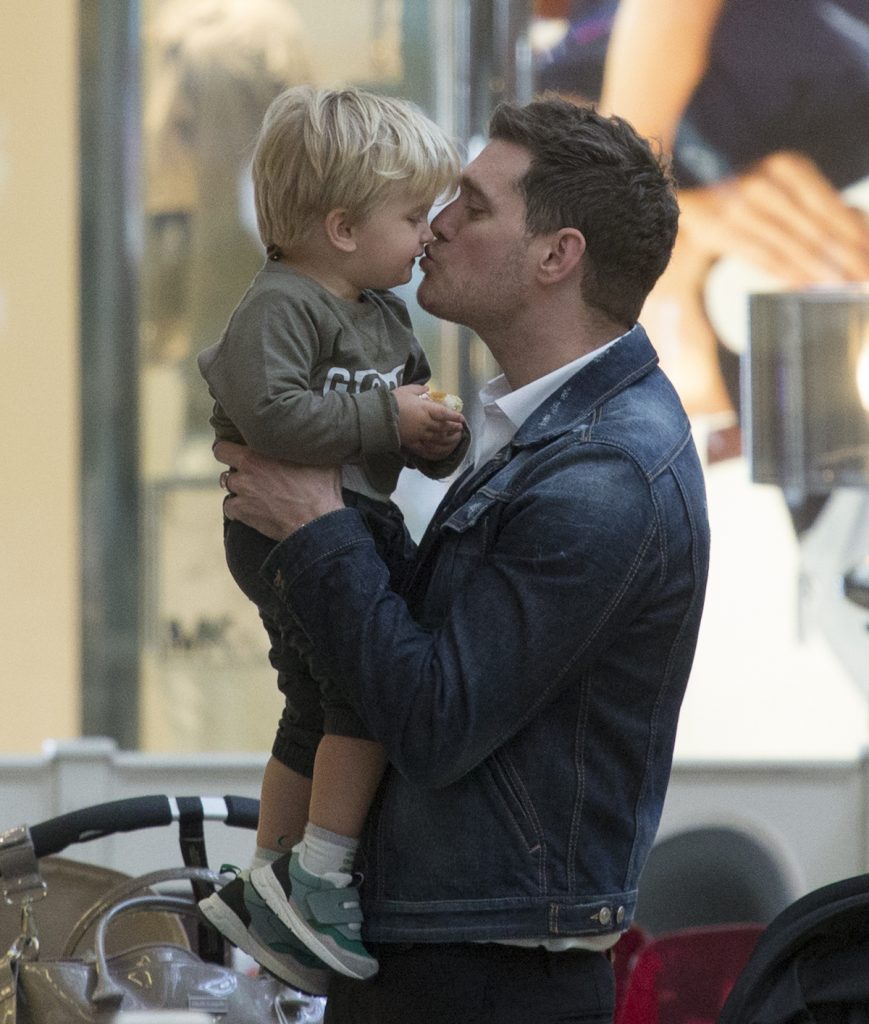
He continued, “For most of my life as an entertainer and, especially on stage, I’d become my alter ego.
“I’d become the superhero I always wanted to be. Then my wife and I went through this unthinkable thing, and I lost that alter ego.”
View this post on Instagram
Health Challenges Can Bring Families Closer
Research published in The Journal of the Royal Society of Medicine studied the impact of disease on family members. It found that most chronic diseases have similar psychological effects on family members, including emotional functioning, disruption of leisure activities, effect on interpersonal relationships, and financial resources.
Feelings of “helplessness, lack of control, anger, embarrassment” are some common emotions parents, siblings, and other relatives within the household of someone battling a health condition may experience, according to researchers.
The Impact of a Childhood Cancer Diagnosis on the Whole Family — Jayne Wexler Shares Her Story
Other ways a disease, for example, may impact the lives of family members include:
- Affecting sleep
- Concerns about medical treatment
- Altered food choices
- Using religion, spiritual, and cultural beliefs to cope
- Concerns about understanding the disease or illness
- Needing support from others
- Limited freedom
- Worrying about the death of a loved one
When a child is battling cancer, parents or adult caregivers often bear the brunt of the diagnosis, according to a study published in Health Expectations, an international journal of public participation in health care and health policy.
“Parents have substantial responsibilities advocating for their child,” researchers in the study said. “[Parents] responsibilities have an enormous impact on the family: going out of the home becomes a challenge, there are constant constraints on time, parents are sleep-deprived, and there are wider impacts on siblings.”
Coping with a Child’s Cancer Diagnosis
As parents navigate their young one’s cancer journey, it’s important to remember that children’s bodies may react differently to treatments because their bodies are still growing.
“They may receive more intense treatments…and they may respond differently to drugs that control symptoms in adults,” the National Cancer Institute informs. Be sure to ask a lot of questions.
Remember, you’re not alone — your child’s oncologist and care team are there to guide you and provide information and answers.
Oncological social workers can also be a vital resource to help you sort out the financial aspects of cancer treatment, as well as other cancer-related issues. Skilled psychologists and counselors can be accessed to help you maintain good mental health through your child’s cancer journey, to the best of your ability.
Additionally, don’t be afraid to reach out to your support system friends, relatives, etc. for help through this process. No one expects you to handle everything on your own.
Meanwhile, if you’re wondering what you can do to ensure your child is getting the best treatment possible, consider the following recommendations from the National Cancer Institute.
- Build strong partnerships: Communicate openly and honestly with your child’s care team. You want to build a solid relationship with the people treating your child so you feel confident asking any questions and discussing your child’s treatment path.
- Take advantage of the many specialists who can help your child: There are many people who can help you and your child after the diagnosis arrives. Don’t hesitate to ask for specialists to help you and your child learn about their disease, understand how it will be treated and cope with difficult emotions.
- If you get information online, make sure the source is credible: Doing your own research is a great way to advocate for your child, but it’s important you’re looking at reliable sources such as (but not limited to) the National Cancer Institute, Mayo Clinic, Cleveland Clinic, National Comprehensive
- Cancer Network and American Society of Clinical Oncology, among others. Talk to doctors about what you’re finding and don’t hesitate to get multiple opinions regarding your child’s treatment path.
- Make sure you understand what your child’s health care team tells you: You need to ask for clarification if something about your child’s diagnosis or treatment is confusing.
- Keep your child’s pediatrician updated: Make sure your child’s cancer care team is sending updates to their regular pediatrician.
Advocating for Your Child
At SurvivorNet, we always encourage people to advocate for themselves when it comes to cancer and, more generally, healthcare. When it comes to a child, the parent must become the advocate.
RELATED: The Top Ten Childhood Cancer Symptoms That Can Be Missed
It’s important to speak up about each and every issue that may concern you, no matter how minor, as even minor signs can sometimes clue doctors in on a potential cancer diagnosis. And catching it as early as possible is always ideal, as early detection may help with treatment and outcomes.
When It Comes to Health, It’s Okay to Be a Little Pushy
Seeking multiple opinions is one way to make sure you or your child is getting the proper care and attention. You should also try to remember that not all doctors are in agreement. Recommendations for further testing or treatment options can vary, and sometimes it’s essential to talk with multiple medical professionals.
“Every appointment you leave as a patient, there should be a plan for what the doc is going to do for you, and if that doesn’t work, what the next plan is,” Dr. Zuri Murell, director of the Cedars-Sinai Colorectal Cancer Center, previously told SurvivorNet. “And I think that that’s totally fair. And me as a health professional that’s what I do for all of my patients.”
Contributing: SurvivorNet Staff
Learn more about SurvivorNet's rigorous medical review process.


