
Coping With a Child's Cancer Diagnosis
- “Blank Page” singer Taylor Swift, 36, has donated generously this holiday season to Vanderbilt’s children’s hospital, its teen cancer program, Operation Breakthrough, and the American Heart Association, providing much-needed help to patients and their families.
- Andrea Swift is a two-time breast cancer survivor following both a 2015 and 2019 diagnosis. She also battled a brain tumor that was found in January 2020 amid chemotherapy treatments.
- Swift’s dad, Scott Kingsley Swift, reportedly underwent a quintuple bypass, a type of coronary artery bypass graft (CABG) surgery that helps improve blood flow by creating new paths around five blocked or narrowed arteries in the heart, this past summer.
- Although childhood cancer research has historically been limited, one of our experts says progress is being made. Targeted therapies and various immunotherapy approaches—first developed and tested in adults—are now entering clinical trials for pediatric patients. As a result, doctors could soon have a wider range of treatment options available for children diagnosed with cancer.
- Caregivers also need to watch for signs of burnout, which can develop when ongoing stress, exhaustion, frustration, or health problems arise from constantly prioritizing someone else’s needs. Seeking support—whether through a therapist or a trusted support group—can be a vital way to manage the emotional challenges during this demanding time.
- Through interviews with expert oncologists, social workers, patients advocates, and more, SurvivorNet has come up with a checklist of helpful steps cancer caregivers can take throughout the journey.
Vanderbilt University Medical Center, which is Middle Tennessee’s only freestanding children’s facility and the region’s exclusive nonprofit comprehensive pediatric provider, announced the news on Tuesday, Dec. 30, alongside a heartfelt statement from Juan C. Salazar, MD, MPH, chair of the Department of Pediatrics at Vanderbilt Health, system pediatrician-in-chief for Monroe Carell, and James C. Overall Professor.
Read MoreView this post on Instagram
Swift, who is engaged to Travis Kelce of the NFL’s Kansas City Chiefs, also supported the Adolescent and Young Adult (AYA) Cancer Program at Monroe Carell, which provides specialized care for patients aged 15 to 29. The program, designed for young people with cancer, combines pediatric and adult oncology knowledge to meet their unique needs.
RELATED: NASCAR Driver Kurt Busch Is Helping Families Of Pediatric Cancer Patients Recover From Financial Crisis Through New Cancer Fund
Debra Friedman, MD, MS, director of the Division of Pediatric Hematology and Oncology at Monroe Carell and holder of the E. Bronson Ingram Chair in Pediatric Oncology stated in the announcement, “The future of adolescent and young adult cancer research and care is full of progress and possibilities because of the generosity of donors like Taylor Swift.
“Her gift enables our teams to personalize cancer care for the unique challenges these patients face, leading to improved outcomes.”
Supporters of Swift are encouraged to contribute alongside her to help patients and families at Give.VanderbiltHealth.org/children.
More On Childhood Cancer
- Childhood Cancer Didn’t Keep Former WWE Wrestler Zack Ryder From Dominating in the Ring
- Childhood Cancer Survivor Gets Real About Life After Chemo — and the New Perspective His Experience Gave Him
- Childhood Cancer & Future Fertility: What One Mother Wishes She’d Known Before She Took Her 15-Year-Old Son to a Sperm Bank
- Empowering and Emotional Viral Video Shows Family Shaving Their Heads in Support of Their Childhood Cancer Warrior, Little Nadine
- Warning Signs! The Top Ten Childhood Cancer Symptoms That Can Be Missed
- Why Do Pediatric Drugs Take So Long to Develop? A Look into the Lag Time on Drug Approvals for Childhood Cancer & Other Illnesses
- Why The Increase in Childhood Cancers? Groundbreaking New Study Invites Families To ‘Stand Up And Be Counted’
- How a Tough Childhood Helped One Young Man Face His Greatest Obstacle: Late-Stage Lymphoma
An additional meaningful donation was made by the Pennsylvania-born musician to a local nonprofit called Operation Breakthrough, which prides itself in helping families since 1971, by creating a safe, caring, and learning-focused environment for children in need, while helping their families with advocacy, urgent support, and educational resources.
In a celebratory post, Operation Breakthrough wrote on Instagram, “Thank you @taylorswift for supporting Operation Breakthrough. We are so grateful for your kindness and for championing creativity, education, and opportunity for our over 750 students!”
Swifts kindness prompted fans to praise her, with one writing, “Taylor Swift stays winning charts, hearts, and real lives. Legacy isn’t just built on hits it’s built on humanity.”
While another commented, ” She is so genuine. I love me some @taylorswift & Travis for all they do & how they care for others. God bless u all & much success to our future leaders.:
View this post on Instagram
A third fan wrote, “You have a big heart. Taylor Swift and Thank you for sharing it with the World.”
RELATED: The Little Gold Pin For Child Cancer On Celebrities at The Emmys — Where Does The Money Go?
Swift’s admirable charitableness, comes shortly after she made a $1 million donation to the American Heart Association in honor of her father Scott Swift, who underwent heart surgery this year.
Nancy Brown, chief executive officer of the American Heart Association, said at the time, “Taylor Swift’s remarkable generosity will create lasting change far beyond its financial value. Her family’s experience with cardiovascular disease is all too common, affecting nearly half of American adults.
“Her commitment to supporting her father will make so many others aware of the need to take their own heart health seriously, strengthen prevention efforts, and improve controllable risk factors—ultimately helping more people live longer, healthier lives.’
View this post on Instagram
Andrea Swift’s Battles with Cancer
Andrea Swift, who became a two-time cancer survivor after her first breast cancer diagnosis in 2015 and then again in 2019. She also dealt with a brain tumor doctors discovered while she was undergoing chemotherapy.
After sharing her mom’s diagnosis on social media with her fans, Taylor noted that her mom “may not be at as many shows” to focus on her cancer treatment, entertainment media outlet Distractify reports.
“The symptoms of what a person goes through when they have a brain tumor is nothing like what we’ve ever been through with her cancer before. So it’s just been a really hard time for us as a family,” Taylor Swift told Variety in an earlier interview.
RELATED: ‘Shake It Off’ Singer Taylor Swift Offers Comfort For Her Dad After Complex Heart Surgery
She also said at the time, “I mean, we don’t know what is going to happen. We don’t know what treatment we’re going to choose. It just was the decision to make at the time, for right now, for what’s going on.”
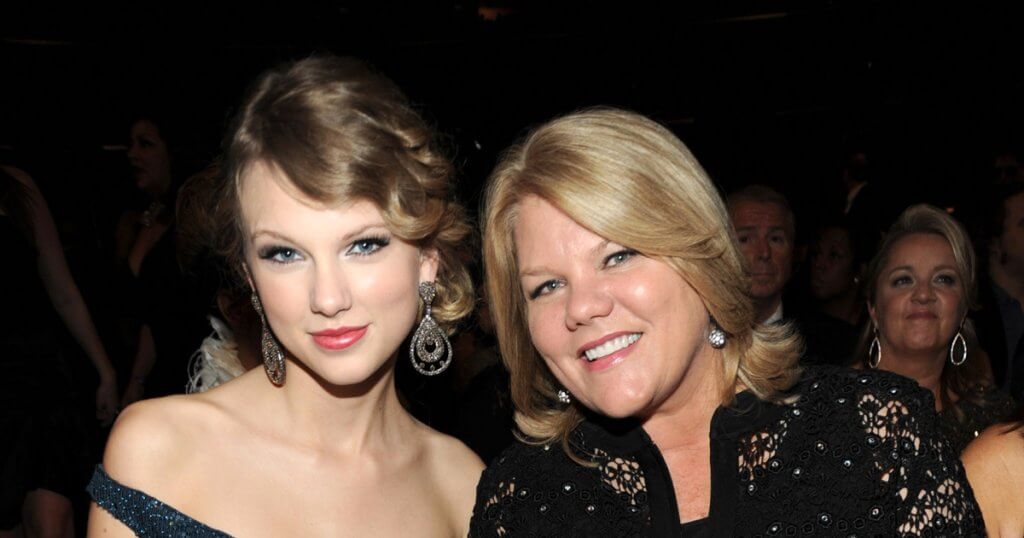
The specifics about Andrea’s breast cancer and the status of her ongoing treatment remain unknown, but one thing is for sure — she’s not letting her previous cancer diagnoses prevent her from taking part in their daughter’s eventful life.
Although the “Anti-Hero” singer hasn’t revealed explicit details about her mom’s diagnosis, it’s important to understand that metastatic breast cancer often presents as a recurrence of a prior early-stage breast cancer, although it can be a new diagnosis.
Back in 2015, the year Andrea was first diagnosed with breast cancer, Taylor’s mom presented her daughter with The Milestone Award at The Academy of Country Music Awards.
“I’ve watched this milestone artist from the time she was a tangled hair little girl growing up on our farm, full of imagination and creativity,” Andrea told the crowd at AT&T Stadium in Arlington, Texas, in what was her first public appearance since her cancer diagnosis. “And ever since then, her favorite thing in the world to do has been to write a song, tell a story, play a guitar, or a piano,” Andrea said. “And I’ve seen those things carry her through every emotion, every experience in her life. Good or bad.”
She continued, “Every once in a while, her dad or I find ourselves to be the subject of those songs. Sometimes we’re merely the inspiration. Like the time she was 17 years old and her dad and I strongly disapproved of a young man, and rightfully so. But she was mad, she was real mad, and she went to her room and she closed the door. She came out about an hour later with a song called ‘Love Story.’”
RELATED: Taylor Swift Honors Her Parents in Amazing Speech as Her Mom Deals with Cancer Recurrence
Taylor’s parents have played a significant role in her journey to success, and she often makes a point to acknowledge her mother’s impact. When her mom was battling breast cancer, Taylor wrote a heartfelt song called “The Best Day” as a tribute. One of the most touching lines from the lyrics is: “…And I love you for giving me your eyes. Staying back and watching me shine…”
Understanding Childhood Cancer
Treatment advances in recent decades have lead to 84 percent of children with cancer now surviving five years or more, according to the American Cancer Society. This is up from 58 percent from the mid-1970s.
But according to the National Pediatric Cancer Foundation, more than 95% of childhood cancer survivors have significant health-related issues because of the current treatment options, and only 4 percent of the billions of dollars spent each year on cancer research and treatments are directed towards treating childhood cancer in the United States. Since 1980, fewer than 10 drugs have been developed for use in children with cancer while hundreds of drugs have been created exclusively for adults.
Dr. Elizabeth Raetz, director of pediatric hematology and oncology at NYU Langone’s Perlmutter Cancer Center, reminded us in a previous interview that there is still reason for hope.
“There are also targeted treatments and different immunotherapies that have been studied in adults and have now moved into clinical trials for children and there has been a great deal of excitement in the community about that,” Dr. Raetz previously told SurvivorNet.
Still, navigating a child’s cancer diagnosis can be tricky something Jayne Wexler knows all too well after watching her son battle acute lymphoblastic leukemia. In a earlier interview with SurvivorNet, Wexler explained that in addition to regular parent worries having a child with cancer means living with a whole new world of anxieties.
The Impact of a Childhood Cancer Diagnosis on the Whole Family — Jayne Wexler Shares Her Story
“My husband and I will always have fear,” she said. “I don’t think we can ever let go of that. Just when he was OK, then he relapsed, and then he had the bone marrow transplant, so there’s always some sort of worry.”
Wexler admits she tries to live for each and every day, but it’s understandable that this does not always come easy.
“And I do try you hear people say this we do have to live each day and be thankful for what we have,” Wexler said.
“And it’s hard to remember that when you’re caught up, it’s very hard to just sort of enjoy the moment, because we just don’t know what’s going to happen in the future.”
Sarah Stapleton, a clinical social worker at Montefiore Medical Center says social workers can connect patients with resources and provide support during the treatment process.
Childhood Survivors Face Heart Risks
According to a 2019 study published in the journal Circulation, even at a young age, childhood cancer survivors are three times more likely to develop any type of heart disease than their peers.
The heightened risk of heart disease among childhood cancer survivors is a result, in part, of the “cardio-toxic” nature of many of the most effective cancer treatments, including chemotherapy and radiation.
These treatments work by killing cancer cells directly, but in the process, they often damage or kill the healthy cells in the heart tissue, too. In children, whose cells are still dividing faster than they would be in adulthood, this damage can keep the heart from developing the way it should, and can ultimately cause long-term side effects.
Dr. Gregory Aune, a pediatric hematologist-oncologist at UT Health, was only 16 years old when he was diagnosed with Hodgkin lymphoma. Nearly two decades after receiving chemo and radiation for his childhood cancer, Dr. Aune underwent emergency open-heart surgery at 35 to replace his aortic valve and bypass three blocked coronary arteries.
The surgery saved Dr. Aune’s life, but left him frustrated about therapies that could cure his pediatric patients, but hurt them in the long run. “I thought, ‘we need to find a better way to do this,” Dr. Aune shared in a blog post. Since then, he has devoted his career to researching ways to protect children’s hearts during and after cancer treatment.
Coping With A Child’s Cancer Diagnosis
Advocating for your health and your child’s health is essential to getting the necessary care before a condition worsens. Some cancers can have subtle symptoms, so don’t delay seeing your doctor. Luckily, the Fraley’s got their sweet girl into the right specialists just in time.
Family members caring for a child diagnosed with cancer can be stressful. Family support not only eases the anxiety of the cancer patient, but the added support also helps their loved ones.
Caregivers supporting individuals with cancer should be mindful of caregiver burnout, a condition that can arise when constant stress and exhaustion—along with feelings of frustration or declining health—result from consistently placing someone else’s needs above their own.
Those who begin to feel overwhelmed are encouraged to reach out for help, whether through a licensed therapist or a caregiver support group, available both online and in person.
s parents navigate the cancer journey with their young cancer warriors, it’s important to remember children’s bodies may react differently to treatments than adults because their bodies are still growing.
“They may receive more intense treatments…and they may respond differently to drugs that control symptoms in adults,” according to the National Cancer Institute so it’s important to ask plenty of questions to doctors throughout the cancer journey.
Remember, you’re not alone in this journey your child’s oncologist and care team are there to guide you and provide information and answers. Oncological social workers are a fantastic resource to help you sort out the financial aspects of cancer treatment, as well as other cancer-related issues. Skilled psychologists and counselors can be accessed to help you maintain good mental health through your child’s cancer journey, to the best of your ability.
And, don’t be afraid to reach out to your support system friends, relatives, etc. for help through this process. No one expects you to handle everything on your own.
Be Pushy, Be Your Own Advocate: Don’t Settle
Meanwhile, if you’re wondering what you can do to ensure your child is getting the best treatment possible, consider the following recommendations from the National Cancer Institute.
- “Build strong partnerships” Communicate openly and honestly with your child’s care team. You want to build a solid relationship with the people treating your child so you feel confident asking any questions and discussing your child’s treatment path.
- “Take advantage of the many specialists who can help your child” There are many people who can help you and your child after the diagnosis arrives. Don’t hesitate to ask for specialists to help you and your child learn about their disease, understand how it will be treated and cope with difficult emotions.
- “If you get information online, make sure the source is credible” Doing your own research is a great way to advocate for your child, but it’s important you’re looking at reliable sources such as (but not limited to) the National Cancer Institute, Mayo Clinic, Cleveland Clinic, National Comprehensive Cancer Network and American Society of Clinical Oncology, among others. Talk to doctors about what you’re finding and don’t hesitate to get multiple opinions regarding your child’s treatment path.
- “Make sure you understand what your child’s health care team tells you” You need to ask for clarification if something about your child’s diagnosis or treatment is confusing.
- “Keep your child’s pediatrician updated” Make sure your child’s cancer care team is sending updates to their regular pediatrician.
Contributing: SurvivorNet Staff
Learn more about SurvivorNet's rigorous medical review process.


