
Pregnancy Associated Breast Cancer
- While confirming her pregnancy, 35-year-old Stephanie Wysaski of Naperville, Illinois, discovered a lump during a self-exam that led to a diagnosis of invasive lobular carcinoma and the premature birth of her fourth child.
- Pregnancy-associated breast Cancer is rare. The American Cancer Society reports that breast cancer is diagnosed in approximately one out of every 3,000 pregnancies. This condition primarily occurs in women in their 30s.
- Detecting breast cancer during pregnancy can be challenging because the breasts undergo natural changes in size, shape, and texture.These changes can easily be masked by the body’s natural response to pregnancy; thus, diagnoses usually come after the cancer has reached advanced stages.
- Surgery is often the first line of treatment for pregnancy-associated breast cancer. Chemotherapy can be administered in most cases during pregnancy. After giving birth, additional treatments may begin, such as radiation or hormone therapy.
It was ultimately a self breast exam which led the 35-year-old mom to feel a lump which she suspected to be hormonal, prompting her to inform her OB-GYN at an appointment to confirm her pregnancy.
Read MoreHowever, an ultrasound showed something abnormal, prompting her to get a mammogram and a biopsy. The biopsy confirmed there was cancer in her left breast.
She was diagnosed with invasive lobular cancer or infiltrating lobular carcinoma (ILC)—which initiates in the small, milk-producing glands within the breast called lobules.
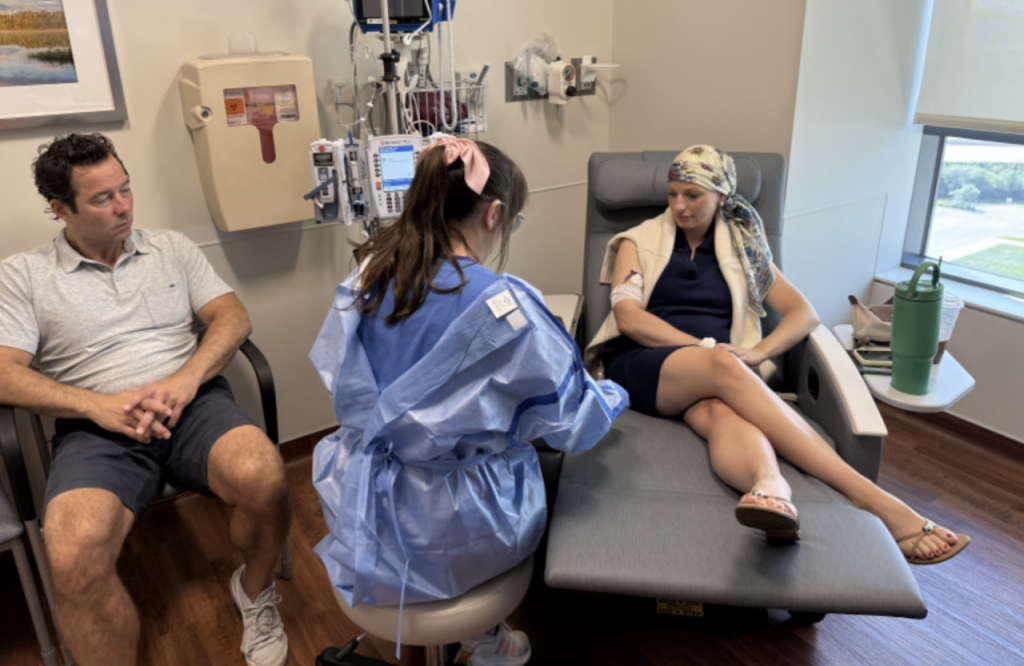
Wysaski, who was treated by at Northwestern Medicine Cancer Center Oak Brook, told the cancer center about how she felt about undergoing treatment while pregnant, “The only way out is through.
“I have great doctors. They’ve been really supportive about the pregnancy and making sure that the baby’s safe, that I’m comfortable, and we’re doing all that we can and managing it as best we can.”
After undergoing a lumpectomy to remove the mass, Wysaski recounted, “The lump, or the mass, was a little bit bigger than we thought, but the imaging hadn’t shown those tendrils that were growing out from it as well.”
She then underwent four rounds of pregnancy-safe chemotherapy, scheduled three weeks apart. The two types of chemo drugs she received was doxorubicin and cyclophosphamide.

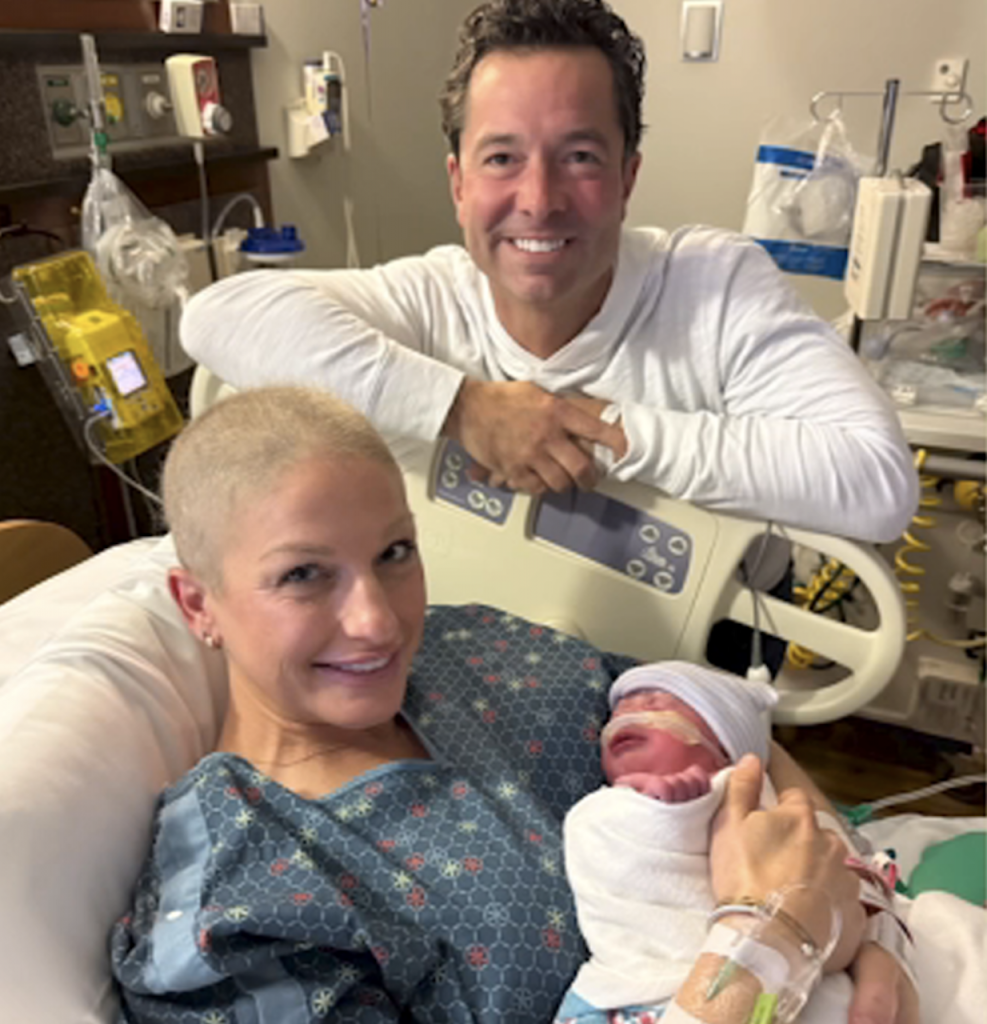
Due to the treatment needing to be continued, Wysaski’s daughter was delivered early at 34 weeks—while already having a six year old daughter, four-year-old son and 14-month old daughter.
Prior to welcoming her youngest child, Wysaski said, “It’s a lot thinking about having a newborn, possibly a preemie in the NICU, and then possibly surgery, probably more chemo and then radiation.”
Speaking to ABC7 Chicago prior to giving birth to her newborn daughter this week, the mom of four offered some insight into how she stayed strong throughout adversity, ” So as much as I’m in my own head thinking, cancer, cancer, cancer and spiraling, my kids still have school pick up and drop off, and they still want cuddle time.
“I just didn’t have time to worry. life doesn’t stop.”
View this post on Instagram
Wysaski is not the first and unfortunately not the last pregnant woman to be diagnosed with breast cancer. In fact, about once in every 3,000 pregnancies breast cancer occurs, Dr. Natalie J. Klar, MD, medical oncologist at NYU Langone Perlmutter Cancer Center, said in an earlier interview with SurvivorNet.
Dr. Klar says the definition of a pregnancy associated breast cancer varies from practitioner to practitioner, but it’s typically defined as a breast cancer diagnosed and discovered during pregnancy, or within the first few years postpartum.
Expert Breast Cancer Resources
“Usually we say within one to two years of delivery, some people say within one to two years of completion of breastfeeding, so that can sometimes even be a little longer depending on how long you breastfeed for,” Dr. Klar explained.
The frequency of these incidents has been increasing recently, adds Dr. Klar. Which she attributes to the rise in women deciding to have children later in life.
Trust Your Body
Dr. Linda Moy, a radiologist that specializes in breast imaging at NYU Langone’s Perlmutter Cancer Center, also previously spoke to SurvivorNet on the topic of pregnancy-associated breast cancer, advising woman to bring a lump or any concern to a doctors attention immediately.
“I would say for any woman that has a lump in a late stage [pregnancy], they should go ahead and see their doctor. But for those in particular who are a late maternal age or any family history of breast cancer, those are the ones that really need to see the doctor and I would recommend additional imaging with a breast ultrasound to begin with,” Dr. Moy told SurvivorNet.
RELATED: What You Need to Know About Breast Cancer
During pregnancy and while you’re breastfeeding your body is changing, so one of the most important things to do is to watch for signs that seem abnormal to you, added Dr. Klar.
Dr. Klar explained further, “I think it’s always important for young women because typically the mammogram screenings start at 40. So young women aren’t used to necessarily screening tests on their breasts, but I think they know their body.
Further adding, it’s important to advocate for yourself and to tell your doctor you’re worried if the doctor doesn’t seem as concerned. Additionally, with the rise in pregnancy associated breast cancer primary care physicians and obstetrician/gynecologists (OBGYNs) should become more educated on this diagnosis.
What Should I Ask My Doctor If I’m Pregnant And Find A Lump?
If you find a lump or an abnormality with your breasts the number one thing to do is to push your doctor for additional testing, such as an ultrasound, according to the experts.
As hormone levels increase during pregnancy, the breasts will get bigger and continue to grow throughout your pregnancy. The breast feel more swollen and sore due to increased blood flow and fluid retention, according to Dr. Moy.
“So it’s easy to assume that a new lump is related to these physiologic (normal changes). Oftentimes we may ignore the lump and say, ‘oh, you know, it’s a lump, it’s normal.’ So these women are diagnosed a little bit later and may present with a more advanced cancer,” she added.
RELATED: How Does Chemotherapy Affect Fertility?
Similarly, Dr. Klar says worst case scenario is an extra test or ultrasound that shows normal results. Women should “get an ultrasound or get get the imaging of their breasts to make sure that it’s nothing more than just normal pregnancy or breastfeeding related changes.”
The main message here is ask your doctor for additional tests and don’t be afraid to stand up for yourself.
Leading Experts Urge Us to Be Proactive
“If I had any advice for you following a cancer diagnosis, it would be, first, to seek out multiple opinions as to the best care,” National Cancer Institute Chief of Surgery Steven Rosenberg told us in a previous interview, “because finding a doctor who is up to the latest of information is important.”
As highlighted in several areas of SurvivorNet, highly respected doctors sometimes disagree on the right course of treatment, and advances in genetics and immunotherapy are creating new options. Also, in some instances the specific course of treatment is not clear cut. That makes it even more important to understand the possible approaches to treating your disease.
At the National Cancer Institute, there is a patient referral service that will “guide patients to the right group depending on their disease state so that they can gain access to these new experimental treatments,” Rosenberg says.
Cancer Research Legend Urges Patients to Get Multiple Opinions
Additionally, seeking a second opinion can help you avoid potential doctor biases. For example, some surgeons own radiation treatment centers. “So there may be a conflict of interest if you present to a surgeon that is recommending radiation because there is some ownership of that type of facility,” Dr. Jim Hu, director of robotic surgery at Weill Cornell Medical Center, tells SurvivorNet.
More reasons to obtain a second opinion include:
- To see a doctor who has more experience treating your type of cancer
- You have a rare type of cancer
- There are several ways to treat your cancer
- You feel like your doctor isn’t listening to you, or isn’t giving you good advice
- You have trouble understanding your doctor
- You don’t like the treatment your doctor is recommending, or you’re worried about its possible side effects
- Your insurance company wants you to get another medical opinion
- Your cancer isn’t improving on your current treatment
RELATED: Be Pushy, Be Your Own Advocate, Says Leading Expert
Ultimately, being proactive about your health can be a matter of life or death. The more you learn—and the more expert perspectives you gather—the more confident you can be that you’ve done everything possible to take control of your health.
Helpful Information About Breast Cancer Screening
The medical community has a consensus that women between 45 and 54 have annual mammograms. However, an independent panel of experts called the U.S. Preventive Services Task Force (USPSTF) is saying that women should start getting mammograms every other year at the age of 40, suggesting that this lowered the age for breast cancer screening could save 19% more lives.
For women aged 55 and older, the American Cancer Society recommends getting a mammogram every other year. However, women in this age group who want added reassurance can still get annual mammograms.
Women with a strong family history of breast cancer, have dense breasts, have a genetic mutation known to increase the risk of breast cancer, such as a BRCA gene mutation, or a medical history, including chest radiation therapy before age 30, are considered at higher risk for breast cancer.
WATCH: Understanding the BRCA gene mutation
Experiencing menstruation at an early age (before 12) or having dense breasts can also put you into a high-risk category. If you are at a higher risk for developing breast cancer, you should begin screening earlier.
Breast density is determined through mammograms. However, women with dense breasts are at a higher risk for developing breast cancer because dense breast tissue can mask potential cancer during screening. 3D mammograms, breast ultrasound, breast MRI, and molecular breast imaging are options for women with dense breasts for a more precise screening. It is important to ask your doctor about your breast density and cancer risk.
RELATED: 3D Mammography Detects 34% More Breast Cancers Than Traditional Mammography
Family History & Breast Cancer Risk
Although breast cancer can happen to anyone, certain factors can increase a person’s risk of getting the disease. The known risk factors for breast cancer include:
- Older age
- Having a gene mutation such as the BRCA1 or BRCA2
- Added exposure to estrogen
- Having children after the age of 30
- Exposure to radiation early in life
- Family history of the disease
RELATED: Is Genetic Testing Right for You?
Contributing: SurvivorNet Staff
Learn more about SurvivorNet's rigorous medical review process.


