
Proud Mom Alert!
- Supermodel and two-time breast cancer survivor is enjoying life after battling disease and celebrating some major milestones as she recently attended her 18-year-old son’s high school graduation and had a party for her 60th birthday.
- Evangelista was first diagnosed with breast cancer in December 2018, prompting her to undergo a double mastectomy. She later had a breast cancer recurrence in her pectoral muscle in July 2022.
- Reaching milestones is huge, especially during or after a cancer battle. These events, like graduating from school, getting engaged, turning another year older, or even wedding anniversaries, may mean even more than they did previously, so it’s important to take them all in and celebrate all you’ve overcome.
- When coping with something as life-changing as cancer, professionals recommend making time to focus on mental health, too. Positive psychology can help — it’s a different approach to mental well-being that focuses on a person’s strengths rather than illness and standard treatment.
- A part of positive psychology involves finding what’s important to a patient, or what keeps them engaged, and harnessing those good feelings.”Positive emotions have unique benefits above and beyond managing negative emotions,” Psychiatrist Dr. Samantha Boardman tells SurvivorNet.
Evangelista’s son graduated from the Dwight-Englewood School in New Jersey on Sunday, June 1, 2025, alongside his stepmom, actress and producer Salma Hayek Pinault, who married his dad in 2009.
Read MoreHayek also took to social media to share some sweet memories from the big day, including a video clip of an emotional Evangelista hugging her son. The post was captioned, “Augie!!! We are so PROUD of you congratulations for becoming the extraordinary young man that you are and managing to still be our lovely boy and congratulations to Linda, Francois and all the parents who got our babies up to this point. Easier said than done.”View this post on Instagram
Evangelista commented, “Love you [heart emoji] and all your support.”
One of the photos shared shows a cake with the letters “USC” on it, suggesting that he’ll soon attend the University of Southern California.
We’re delighted to see Evangelista continuing to be there for her son, who offered her immense support during her health challenges over the years, like her breast cancer battles and terrible experience with a cosmetic procedure called CoolSculpting (also called Cryolipolysis or fat-freezing). This non-invasive procedure applies controlled cold temperatures on the body, targeting fat cells to destroy them. The procedure is often described as an alternative to liposuction. Evangelista claimed the procedure left her “permanently deformed” and “brutally disfigured.”
Back in April, Evangelista attended the NYC Gala for the National Breast Cancer Coalition with her son, as she received the National Breast Cancer Coalition Leadership Award.
View this post on Instagram
It’s great to see Evangelista enjoying life after battling cancer, and even more so because she recently celebrated her 60th birthday while surrounded by loved ones.
Friends commented on her Instagram post honoring her birthday, with one writing, “Congratulations on leveling up to 60!!! You have only started to come into your full power, and I can’t wait to see what else you will accomplish in the years to come!”
Fans also offered kind words, with one commenting, “Happy Happiest ever beautiful! You will forever be my most admired and glorious models and souls! Of all times. Celebrate!!!”
“Beautiful photos and video of your birthday. It was very entertaining, surrounded by family and friends. Happy birthday, Linda,” another wrote.
View this post on Instagram
Evangelista’s Breast Cancer Journey
Linda Evangelista previously opened up about her breast cancer recurrence and how she was diagnosed with the disease twice when she was featured in The Wall Street Journal Magazine’s 2023 Fall Men’s Style issue.
Evangelista, who has been dubbed “the fashion world’s ultimate hair chameleon” by Vogue, talked about how she was first diagnosed with breast cancer in December 2018.
“It was detected in my annual mammogram. The margins were not good, and due to other health factors, without hesitation, because I wanted to put everything behind me and not to have to deal with this, I opted for a bilateral mastectomy,” she told the news outlet. “Thinking I was good and set for life. Breast cancer was not going to kill me.”
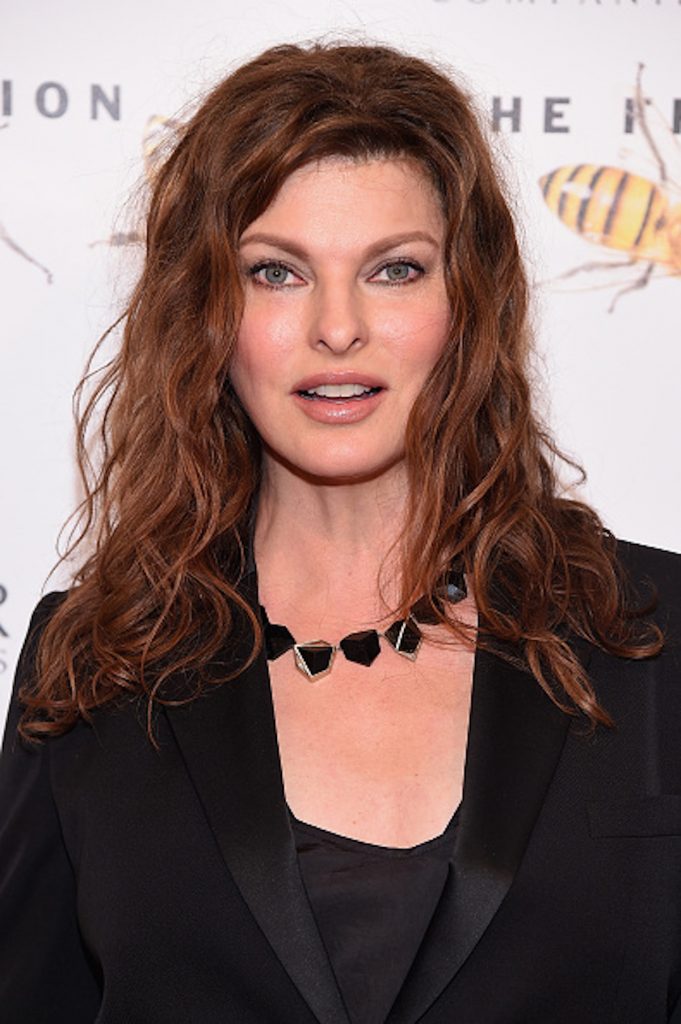
However, in July 2022, the iconic model discovered a lump on her breast and sought immediate medical advice. She ultimately underwent an MRI scan and needed a biopsy done. It revealed she had cancer in her pectoral muscle.
Following the second diagnosis, Evangelista recounted telling her oncologist, “Dig a hole in my chest. I don’t want it to look pretty. I want you to excavate. I want to see a hole in my chest when you’re done. Do you understand me? I’m not dying from this.
“I just went into this mode that I know how to do; just do what you’ve got to do and get through it. And that’s what I did.”
Her oncologist recently disclosed that her prognosis is good, prompting Evangelista to ask, “Why isn’t it great?”—to which he replied, “Well, once it’s come back, there’s a chance.”
Noting that she has a “horrible Oncotype [a test that measures the risk of cancer returning] score” and insists on living life to the fullest, she said, “I know I have one foot in the grave, but I’m totally in celebration mode.”
View this post on Instagram
Referring to her breast cancer diagnosis, she said, “I’ve kept it quiet. Only a handful of people knew. And I’m just not one of those people who has to share everything.
“I thought to myself, I would share this one day, but while I was going through it, I absolutely did not. I don’t want the Daily Mail waiting outside my door like they do every time something happens. ‘Linda seen for the first time since blah blah blah.’”
Tips On Reducing Chance of Breast Cancer Recurrence
As triumphant as breast cancer survivors can feel after learning they are “cancer-free,” many worry about recurrence, meaning the cancer has returned.
While the chance of recurrence varies based on the biology of the tumor, the stage it was when diagnosed, and the treatment received, according to the Susan G. Komen organization, “Most people diagnosed with breast cancer will never have a recurrence.”
Dr. Erica Mayer, a breast cancer medical oncologist at Dana Farber Cancer Institute, previously told SurvivorNet, “Once a patient has finished his or her active therapy for breast cancer, we will often refer to that time as breast cancer survivorship.
RELATED: To Reconstruct or Not: After Mastectomy, Two Women Take Very Different Paths
“This is a time when patients are still being actively monitored by their treatment team, not only to ensure that they remain healthy and cancer-free in the years ahead, but also to make sure that they have recovered from any side effects of their initial treatment, and that they are pursuing healthy behaviors for example, getting regular exercise, eating a healthy diet, and keeping up with all their other routine medical care.”
But recurrence happens, so it’s important to do everything possible to reduce your risk.
Here are some tips:
1. Follow Treatment Guidelines
“The best way to reduce your risk of recurrence with breast cancer is to follow treatment guidelines and complete the course of treatment that’s given,” says Dr. Port, who sat down with SurvivorNet and offered the following advice.
For example, she says many women have breast cancer that’s hormonally driven, and there are treatments that they give, such as pills like Tamoxifen or aromatase inhibitors, to reduce the risk of these hormonally-driven cancers coming back. The issue is that the course of treatment may call for patients to take the pills for 5-10 years. While some have no side effects, others may experience a host of unpleasant side effects, even to the point where they’re severely debilitated and have no quality of life on these medications.
“So the challenge is to work with every individual person to make sure we give her the best chance of getting through these treatments and enjoying the benefits of these treatments, which is the lowest rate of cancer coming back,” Port says.
2. Maintain a Healthy Weight
Maintaining a healthy weight may also reduce the risk.
“We know that obesity or being overweight can increase the risk of cancer recurrence in breast cancer,” Port says. “And so I say, maintaining a healthy body weight, whatever that is for the individual… You know, we talk a lot about healthy body weight, and there’s a very big range of this, but there are certain numbers beyond which it does affect one’s health. So we try to keep people within a range of a healthy body weight.”
3. Limit Alcohol
Port says the other lifestyle factor that may increase one’s risk of breast cancer recurrence is heavy alcohol intake.
“We say alcohol in moderation is probably fine, which is defined as three to five drinks a week,” Port told SurvivorNet. “More than that can also potentially increase the risk of recurrence. So the big lifestyle factors are healthy body weight and moderate alcohol intake.”
4. Eat a Healthy Diet
She says there’s no one dietary element that can give you an edge against breast cancer recurrence. It’s not eating more broccoli, eating more blueberries, or becoming a vegetarian. She says the fact that sugar feeds cancer is a big myth, too. However, everything you eat does contribute to your overall health.
RELATED: Follow That Fire: Life After Cancer Will be Different, That Doesn’t Have to be a Bad Thing
“These things are all really helpful in maintaining an overall healthy, well-balanced diet and a healthy body weight. We know that diets that are heavy in sugar content are also usually unhealthy and can lead to weight issues. So it all really funnels back to maintaining a healthy body weight when it comes to lifestyle factors.”
Dr. Ann Partridge On How Supplements Are Selling Cancer Patients and Survivors False Hope
The Power of Positive Psychology
Positive psychology is an approach to mental well-being that focuses more on a person’s strengths and how they can help themselves rather than just trying to curb individual symptoms and/or diagnose a disorder. It can be a massive help for people dealing with the mental anguish of going through a cancer diagnosis and treatment.
“It is a fundamentally sort of different way of thinking about patients, thinking about their experience,” Dr. Samantha Boardman, a New York-based psychiatrist and author, previously told SurvivorNet.
“It’s not just focusing on what’s the matter. It’s also asking them, what matters to you?”
Dr. Boardman noted that positive psychology is a reimagined approach to dealing with mental struggles. “Making people feel less bad is not the same as making them feel good,” she said, referring to how this new approach encourages people to try to find happiness rather than just stop sadness. This approach can be massively beneficial to people who are dealing with an illness like cancer because it focuses on finding those great parts of life.
Managing Your Mental Health in the Face of a Health Challenge or Major Life Change
It’s only natural for health challenges to have some effect on one’s mental health. Although Evangelista has appeared to cope well with the challenges a breast cancer diagnosis has brought her, it’s important to note that the diagnosis of cancer or disease or some external stressor can offset your mental health in ways you don’t expect.
The National Institute of Mental Health advises people to seek professional help if experiencing severe or distressing symptoms that have lasted two weeks or more, such as:
- Trouble sleeping
- Changes in appetite
- Struggling to leave bed in the morning because of my mood
- Trouble concentrating
- Loss of interest in things you usually enjoy
- Inability to perform normal daily functions and responsibilities
How to Be Realistically Optimistic: Coping With Mental Health Long-Term
Equally as important is recognizing the value of self-care. Some basic tips to take better care of yourself and improve mental health, beyond seeking professional help when necessary, include:
- Regularly exercising
- Eating healthy, regular meals
- Staying hydrated
- Prioritizing sleep
- Exploring relaxation programs or techniques
- Setting goals/priorities
- Staying positive
- Connecting with others
Psychologist Dr. Marianna Strongin also shared some simple tips for maintaining good mental health and reducing stress during adversity.
When it comes to dealing with anxiety, Dr. Strongin says it’s important to have a healthy relationship with your anxiety and get to know it rather than fear it, avoid it, or push it away.
Dr. Strongin explained, “By learning more about your anxious thoughts and tendencies, one can begin to answer their anxious thoughts even in moments when there aren’t any answers. For cancer patients, the worry thoughts tend to be, ‘Will I survive?’
“It’s important to let those thoughts come in and really be able to tolerate them before answering them. This is a very powerful coping skill.”
Dr. Strongin suggests medications to help with anxiety and depression if other approaches are not as effective. She also urges cancer warriors to explore telemedicine.
Contributing: SurvivorNet Staff
Learn more about SurvivorNet's rigorous medical review process.


