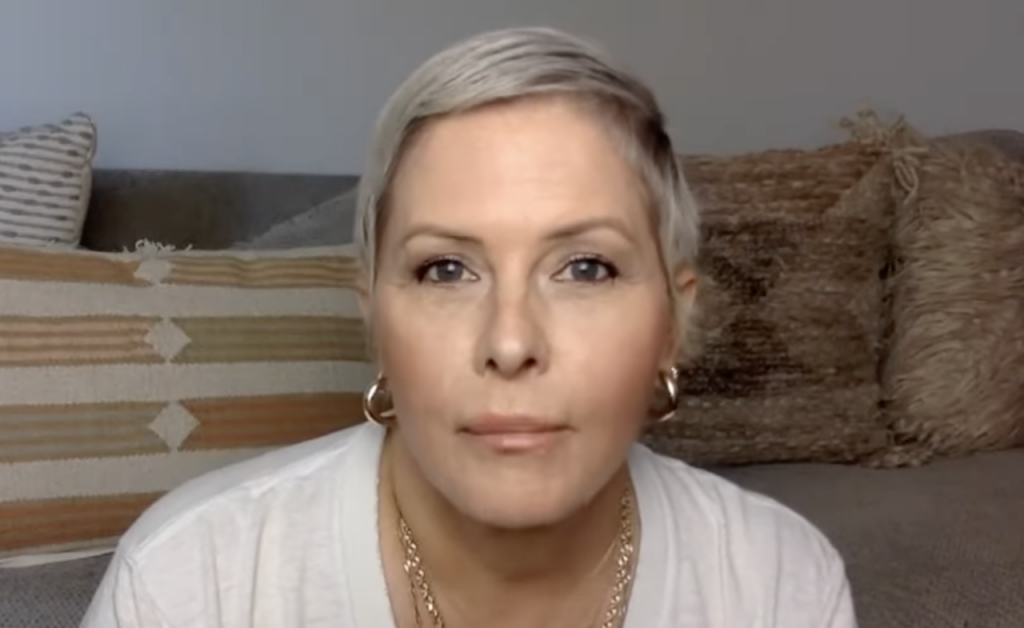
“Baywatch” star Nicole Eggert, 53, received good news as recent cancer scans revealed “clear” test results, meaning her treatment is working. However, awaiting those results sparked a flurry of emotions many patients refer to as “scan-xiety.”
Eggert, 53, was diagnosed with stage 2 breast cancer after she discovered a lump while giving herself a breast self-exam—a crucial tool for early detection of abnormalities.
While her treatment included a mastectomy (the removal of the entire breast during surgery), she also received radiation and chemotherapy. She’s still undergoing treatment with hopes of reaching remission.
“Scanxiety” is a feeling of anxiousness patients tend to experience leading up to or following a cancer scan or test. Psychiatrist Dr. Samantha Boardman suggests exercise, participating in some form of art, listening to music, or doing an activity to take your mind away from potential scan results.
“Baywatch” alum Nicole Eggert, 53, is breathing a cautious sigh of relief after receiving “clear” results from her latest breast cancer scans—an encouraging sign that her treatment is working. But behind the good news lies a deeper emotional reality that many cancer survivors know all too well: the anxiety that builds before every scan, known as “scan-xiety.”
“I was shaking, I kept thinking I was going to faint, it was horrible,” Eggert shared in a raw and emotional Instagram video.
Eggert, who was diagnosed with stage 2 breast cancer in late 2023, undergoes imaging every six months to monitor her progress. While “clear” scans typically mean no visible signs of cancer or that treatment is working, the emotional toll of waiting for those results can be overwhelming.
“I’m crying and weeping with gratitude and happiness and all the emotions. It’s so up and down, it’s so much on us. It’s wild how quickly I can go to such a dark place to get the results,” she explained.
Eggert has been candid about her cancer journey, sharing updates across social media and interviews. But she says one part of the experience is often overlooked: the psychological weight of survivorship.
“To all the people who said to me, in a year or two years from now, you’re going to look back and this will all be over with and you won’t remember this happened. BS, this is a forever thing, and it is overwhelming,” she said.
(@_nicole_eggert/Instagram)
Eggert’s honesty is striking a chord with fellow survivors and advocates who understand that cancer doesn’t end with treatment—it lingers in the form of uncertainty, emotional trauma, and the relentless countdown to the next scan.
Despite the emotional rollercoaster, Eggert remains grateful for the good news. But she knows the cycle will continue.
One of Eggert’s social media followers agreed with Eggert’s sentiments.
“Scanxiety is real and scary! My annual CT scan is next week for colon cancer. So glad to hear your results were good,” Instagram user Heather W said.
Eggert’s story is a powerful reminder that survivorship is not just about beating cancer—it’s about navigating the emotional aftermath with courage, vulnerability, and community.
Helping Patients Manage Their Mental and Emotional Health
Easing “Scan-xiety”: Psychiatrist Shares Tools to Reclaim Calm and Control
Waiting for scan results can feel like holding your breath underwater—uncertain, isolating, and emotionally draining. This intense stress, often called “scan anxiety”, is a common experience for cancer patients and survivors. But according to Dr. Samantha Boardman, assistant professor of psychiatry at Weill Cornell Medicine, there are proven psychological strategies that can help.
“Scan anxiety is unbelievably stressful,” Dr. Boardman told SurvivorNet.
“Probably one of the best antidotes that psychology can offer patients is to experience flow.”
What Is “Flow”—and Why It Works
“Flow” is a mental state where you become fully absorbed in an activity—so much so that time seems to disappear. It’s not just a distraction; it’s a therapeutic shift that quiets the mind and restores emotional balance.
“How can we experience flow in our daily lives? It’s usually in some form of a hobby, something we just do because we love doing it,” Dr. Boardman explained.
“I really encourage patients to find and experience something that gives them flow. It might be baking, gardening, or even doing housework. They’re so immersed in the experience that they’re not thinking about anything else.”
Dr. Boardman recommends engaging in activities that naturally promote flow. These include:
Exercise – even light movement can help regulate stress hormones
Art or creativity – painting, journaling, or crafting can offer emotional release
Music – listening or playing can shift your mental state
Hobbies – anything you enjoy that pulls your focus away from worry
The goal isn’t to ignore your feelings—it’s to give your brain a break from the loop of fear and uncertainty.
For patients feeling overwhelmed, Dr. Boardman suggests a straightforward journaling exercise to help reframe anxious thoughts. Start by drawing four columns on a sheet of paper:
What I don’t know
What I do know
What I can’t control
What I can control
“I’ll ask patients to write down what I don’t know, what I do know, what I can’t control, and what I can control,” she said. Then, “a helpful way to dial down their anxiety” is to “try to move as many items as possible into what they know and can control.”
This visual mapping helps externalize worry and empowers patients to focus on what’s actionable. It’s a small but powerful way to feel less at the mercy of uncertainty.
When anxiety takes hold, it’s easy to feel powerless. But tools like flow and cognitive reframing offer a path back to emotional steadiness. They don’t erase the fear—but they help patients reclaim space for peace, presence, and perspective.
Nicole Eggert’s Cancer Fight: From Self-Exam Discovery to Empowered Healing and Advocacy
Eggert’s cancer journey began after discovering a lump in her breast while performing a self-exam—a crucial tool for early detection of abnormalities. This led to her diagnosis of stage 2 cribriform carcinoma breast cancer.
(Courtesy of Instagram/@_nicole_eggert)
Self-breast exams involve checking for swelling, changes in shape, or nipple irregularities, as well as signs of redness, rashes, or discharge. If any concerns arise, it’s essential to contact a doctor. However, these exams should always be done alongside regular mammograms for comprehensive screening.
Initially, Eggert dismissed her symptoms—terrible pain and rapid weight gain—as signs of menopause. But after discovering the lump, she underwent a mammogram and multiple biopsies, confirming her cancer diagnosis.
WATCH: The process of mastectomy breast cancer surgery.
“I can definitely feel it. It’s there. It needs to be taken out,” Eggert toldPeople Magazine. “So it’s just a matter of, do I have to do treatment before the surgery, or can they perform the surgery and then I do the treatment after?”
To treat her cancer, Eggert underwent a mastectomy, a procedure that requires careful consideration. Women facing this decision often weigh the choice between breast-conserving surgery, like a lumpectomy, and a full mastectomy.
Dr. Elisa Port, Chief of Breast Surgery at Mount Sinai Health System, explains that removing the cancerous tissue in a double mastectomy typically takes about two hours. However, the overall surgery length can vary depending on whether a patient chooses reconstruction.
“The real length, the total length of the surgery, can often depend on what type of reconstruction [a patient] has,” Dr. Port says.
Some women opt for immediate reconstruction using implants, which can extend surgery to five hours, while others choose tissue transfer from the belly area. A few decide to forgo reconstruction altogether.
Photo: Instagram/_nicole_eggert
Eggert also underwent chemotherapy and radiation, which can lead to common side effects such as fatigue, nausea, and hair loss.
Since beginning her cancer journey, Eggert has become more proactive about her health.
“That’s really what’s kept me going and sane because you feel so hopeless … helpless and all of those things, but if you’re being proactive, it can really help,” she toldFox News. “At least for myself, it really helps to keep me motivated and keep me going.”
Her story serves as a testament to the resilience of cancer patients and the importance of self-care and proactive health decisions.
Questions to Ask Your Doctor
If you’re going through cancer treatment and experiencing hair loss, here are some questions you may consider asking your doctor:
Are there any treatments to help manage or minimize my hair loss?
What are scalp-cooling devices, and how do they work?
Do you recommend scalp-cooling devices?
What other options are available to help me cope with hair loss?
Can you recommend a wig maker?
I’m struggling mentally with my hair loss; can you recommend a therapist to talk to?
How can I find a local support group with people going through similar things?