A Mother's Fight, A Daughter's Journey: How Colon Cancer Forged an Unbreakable Bond
- Tatiyana Curry was diagnosed with stage 3 colon cancer at 26, shortly after giving birth, and endured a difficult journey through failed chemotherapy, radiation, and eventual surgery.
- Stage 3 colon cancer is colon cancer that is in the colon and has spread to the local lymph nodes. Treatment usually involves surgery followed by chemotherapy.
- Her mother, Raynette Haile, discovered she too had colon cancer – stage 1 – on the same day Curry completed radiation. Stage 1 colon cancer means that it is localized, and it hasn’t spread deeply. Surgery is usually the standard treatment approach.
- Colon cancer is very treatable and curable if caught early. Colon cancer screening, such as a colonoscopy, is an effective way to not only see signs of cancer but also possibly remove it before it has a chance to develop into full-blown cancer.
- A colonoscopy involves a long, thin tube attached to a camera that examines the colon and rectum for polyps (small growths in the colon that aren’t yet cancerous). If polyps are found, doctors can remove them during the procedure.
- Colorectal screenings are recommended to begin around age 45. However, people at increased risk—such as those with a family history of the disease—may want to screen sooner. Discussing your screening options with your doctor is recommended.
Colon or colorectal cancer affects your large intestine (colon) or the end of your intestine (rectum).
Read More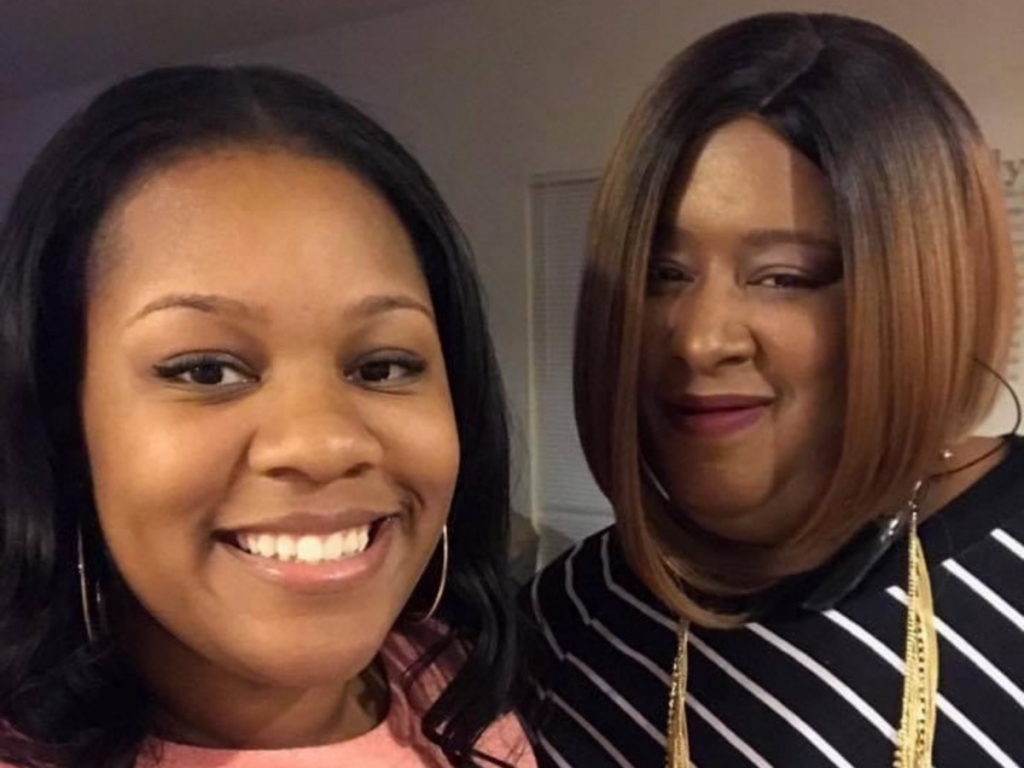
Photo: GoFundMe/tatiyana-moms-cancer-fight-together
Her path through cancer was anything but simple. After initial treatments led to remission in 2021, Curry’s relief was short-lived. In June 2024, the cancer returned—this time more aggressive, and her body struggled under chemotherapy.
“There were horrible reactions from the chemotherapy, so it was stopped,” Haile shared in a GoFundMe post.
Radiation became the next weapon in Curry’s fight.
“Fighting for my life, still trying to be a mom, and just trying to get through the process, it was hard,” Curry admitted.
After months of treatment, hope emerged: radiation had made her once-inoperable tumor removable.
“Believing and trusting that this is it for me and no more chemotherapy, no more pills, no more radiation,” Curry said with gratitude.
WATCH: Deciding when to operate on colon cancer.
But just as Curry completed her final radiation session, cancer returned to the family in an oddly familiar way. Her mother, Haile, underwent a routine colonoscopy—only to discover a mass in the exact same location as Curry’s first diagnosis.
“[On] my baby’s last day of radiation, my colonoscopy scope found a mass in my colon, the same spot as my daughter’s first diagnosis,” Haile recalled.
Fortunately, Haile’s cancer was caught at stage 1 and treated with surgery. The experience has forged a legacy of awareness that both women are determined to share.
“Stage 1 cancer means that it is localized, and it hasn’t spread deep,” Dr. Heather Yeo, Colorectal Surgeon and Surgical Oncologist at Weill Cornell Medicine and NewYork-Presbyterian, explains to SurvivorNet.
WATCH: Understanding stage 1 colon cancer.
“Go get checked. If you feel an inkling, just go and get checked. I don’t care if you’re 25, I don’t care if you’re 20. If you’re having issues, go get checked,” urged Curry.
RELATED: SurvivorNet Guide: Treating Early-Stage Colon Cancer
Expert Resources on Colorectal Cancer
- 5 Possible Signs of Colon Cancer; Don’t Be Afraid to Look in the Toilet!
- A Coffee Enema Will Not Prevent Colon Cancer
- Alcohol Intake Has a Big Impact on Colon Cancer Surgery
- Can The Stuff In My Gut Cause Cancer? There May Be a Link to Increased Rates of Colon CancerHere’s What The Experts Say
- ‘You Shouldn’t Die From Embarrassment’: Colon Cancer Can Be Prevented
Helping You Understand Colon Cancer
Colon cancer is very treatable and curable if caught early. Colon cancer screenings can involve at-home tests such as Cologuard, but a colonoscopy is more effective, according to SurvivorNet experts. A colonoscopy involves a long, thin tube attached to a camera to examine the colon and rectum. If no polyps are discovered, the next screening won’t be needed for ten years. Polyps are small growths in the colon that are not yet cancerous but can potentially develop into cancer.
“When we see a polyp, we actually physically take the polyp out through the colonoscope,” Dr. Zuri Murrell, a colorectal cancer surgeon and Director of the Cedars-Sinai Colorectal Cancer Center, explained.
The cancer starts when abnormal lumps called polyps grow in the colon or rectum. It takes up to 10 years for a colon polyp to become full-blown cancer, according to SurvivorNet experts.
The American Gastrointestinal Association lowered the recommended initial age for colorectal screening from 50 to 45. However, experts recommend screening earlier for some people who may be at an increased risk of developing colon cancer, such as those with a family history of the disease.
WATCH: Colon cancer symptoms.
The most poignant signature of colon cancer is a change in bowel habits. Changes in the size or shape of bowel movements may cause constipation or diarrhea. A change in stool color, particularly black or tarry stools, can indicate bleeding from a tumor deep in the colon.
Other symptoms can be harder to pinpoint, such as abdominal pain and unintentional weight loss. Finally, some tumors bleed a small amount over a long period, resulting in anemia (low red blood cell count) that is picked up on blood work.
Tatiyana’s Stage 3 Colon Cancer Diagnosis
Stage three colon cancer is when the cancer has spread from the colon to the lymph nodes.
“For stage 3, I’d say the traditional standard of care is fairly uniform, which is surgery, followed by chemotherapy,” Dr. Daniel Labow, Chief of the Surgical Oncology Division at Mount Sinai Health System, explained to SurvivorNet.
Patients with stage 3 are often cured with both surgery and chemotherapy. After a few weeks of recovery, patients diagnosed at this stage can return to their regular routines.
“You should be back to 100% by six weeks. The chance of recurrence over a five-year period is probably in the range of 20- 25%,” Dr. Labow said.
WATCH: What it means to be in stage 3 colon cancer.
The goal of chemotherapy after surgery is to kill any cancer cells that have spread outside the colon that were not removed with surgery.
Adjuvant chemotherapy is started after you have recovered from surgery, most commonly within six to eight weeks after surgery.
What’s Chemo Like for Stage 3 Colon Cancer Patients
The most common combination is called FOLFOX, an acronym for three medications administered together: 5-fluorouracil (5-FU), leucovorin, and oxaliplatin. These medications are usually given through an IV, which means you’ll be hooked to an IV pole in the doctor’s office every couple of weeks.
WATCH: Chemotherapy for stage 3 colon cancer.
“Most people who require chemotherapy are recommended to have either one or two chemotherapies for between three to six months,” said Dr. Paul Oberstein, a Medical Oncologist at NYU Perlmutter Cancer Center.
“The good news is that the chemotherapies that are currently used for colon cancer in this setting do not cause any hair loss,” Dr. Oberstein told SurvivorNet.
However, this form of chemotherapy does not come without side effects. Possible side effects of FOLFOX in some individuals include a low white blood cell count, diarrhea, and numbness in the fingers and toes; however, this combination is generally safe for most patients.
Once patients complete chemotherapy, they are done with active treatment and are then watched closely for signs that the cancer has returned.
Raynette’s Stage 1 Colon Cancer Diagnosis
Stage 1 colon cancer is considered an early diagnosis, where tumors are confined to the outermost layers of the colon and have not invaded deeper tissues, lymph nodes, or distant organs.
“So the way colon cancer spreads, instead of the size of the cancer mattering, it’s the depth,” explains Dr. Yeo.
“It’s how deep it goes into the wall of the colon. Early stage 1 cancer has not gone deep and basically hasn’t broken through some of the muscle layer of the colon.”
The primary and often curative treatment for this stage is surgery. During the procedure, the affected portion of the colon is removed, and the remaining ends are reconnected. Because the disease is localized, patients typically do not require chemotherapy.
“Generally, patients who have stage 1 cancer do very well. They have over a 90% five-year survival rate, meaning that the surgery almost always cures them,” notes Dr. Yeo.
This encouraging prognosis highlights the importance of early detection and underscores the life-saving potential of routine screenings and timely intervention.
What to Expect From Colon Cancer Surgery?
“If you have stage one to three cancer, that usually means that you need surgery,” said Dr. Yeo.
For most early to mid-stage colon cancer patients, surgery is the cornerstone of treatment. Traditionally, this meant a large abdominal incision—open surgery. But today, many patients are candidates for minimally invasive techniques such as laparoscopic or robotic-assisted surgery, both involving smaller incisions that reduce pain and speed up recovery.
WATCH: Choosing the right surgery for your colon cancer treatment.
Robotic surgery, though newer than laparoscopy, offers surgeons enhanced visualization and precision, which may help minimize complications.
However, Dr. Yeo points out that while robotic procedures are safe and effective, they come with higher costs and haven’t been proven superior to traditional or laparoscopic approaches.
Patients who undergo minimally invasive surgery tend to benefit from quicker recoveries, shorter hospital stays, and a lower risk of blood transfusion—factors that make these methods increasingly favored.
Managing Chemotherapy and Its Side Effects
Curry struggled to get through chemotherapy, and this common cancer treatment is often more difficult than many think to endure.
Chemotherapy is an effective tool for oncologists to help treat cancer by stopping cancerous cells from growing, dividing, and spreading to other organs. Chemo works by traveling through the bloodstream, killing cancerous cells. However, the process also impacts healthy cells, leading to side effects.
Patients almost universally experience fatigue, often alongside gastrointestinal side effects, such as nausea. Doctors have many effective medications to combat chemo-induced nausea. “But mitigating that fatigue often depends on the patient,” says Dr. Renata Urban, a gynecologic oncologist at the University of Washington in Seattle.
“Neuropathy is probably one of the most challenging side effects,” says Dr. Renata Urban, a gynecologic oncologist at the University of Washington in Seattle. Neuropathy results from damage to the peripheral nerves. It usually resolves after chemotherapy treatment, but sometimes symptoms can persist. While it’s typically characterized by numbness or a pins-and-needles sensation in the hands and feet, neuropathy can have several different symptoms, including:
- Weakness in the hands or feet
- Stabbing or burning pain in the hands or feet
- Difficulty gripping, such as when holding a fork
- Difficulty with fine motor skills, such as writing or buttoning a shirt
Nausea and vomiting are common side effects of chemotherapy. When chemotherapy affects the rapidly dividing cells in the stomach lining, the resulting cellular havoc in the gastrointestinal tract can lead to side effects such as nausea and vomiting. However, doctors can help patients mitigate the hit with various medications before, during, and after treatment.
“Part of the chemotherapy prescription includes a set regimen of anti-nausea medications,” says Dr. Renata Urban, a gynecologic oncologist at the University of Washington in Seattle. “We also ensure that patients have medications at home that they can use should they develop nausea after treatment.”
Hair loss is another side effect of chemotherapy.
WATCH: Coping with hair loss.
“For cancer patients, losing one’s hair can be unbelievably stressful. To start with, the dread of losing one’s hair can lead to some sleepless nights and feelings of anxiety,” Dr. Samantha Boardman, a New York-based psychiatrist and author, told SurvivorNet.
Chemotherapy can cause hair loss. It usually begins about three to four weeks after chemotherapy and continues throughout treatment.
This happens because this treatment targets quickly dividing cells throughout the body, including cancer cells and hair cells.
Most patients can expect regrowth four to six weeks after treatment. However, when your hair grows back, you may notice some changes in its color and texture.
RELATED: How are chemotherapy side effects managed for ovarian cancer treatment?
Tips for Navigating Chemo Side Effects
When dealing with fatigue, doctors don’t have a comprehensive arsenal of prescription medications to combat it. However, you can take several steps to help minimize the impact and restore your energy.
- Exercise: While it may be counterintuitive, physical activity can help alleviate side effects, especially fatigue. “Although ovarian cancer is not common, we often draw upon the experience of patients with breast cancer and colon cancer, which have shown that physical activity can not only improve quality of life but may also have beneficial impacts on cancer outcomes,” Dr. Urban says.
- Eat well: Even though nausea may interfere with your ability to eat a healthy diet, it’s essential to ensure you’re eating appropriately, getting enough protein, and not losing weight. Not only will nourishing your body support your recovery, but it may also help you feel more energized.
- Sleep: Want to mitigate fatigue? Be sure to maintain your regular sleep-wake cycle while on treatment. Sticking to a set sleep schedule helps reduce fatigue by ensuring enough hours for your body to heal and restore itself each night. It may also help you recover more quickly by keeping energy levels high during the daytime.
Learn more about SurvivorNet's rigorous medical review process.