
Understanding Lung Cancer
- After smoking for about 35 years, Barbara Rodriguez quit in December 2022 after finding renewed faith and, despite having no symptoms, felt compelled to get a lung cancer screening seven months later. A scan found a lung nodule, and surgery revealed she had stage 3 lung cancer with an EGFR mutation.
- Rodriguez, who reached out to SurvivorNet to share her story in hopes to encourage others to get screened for cancer, underwent an upper-left lobectomy in September 2023, followed by five months of chemotherapy. She is now taking the targeted therapy Tagrisso (osimertinib), which she expects to finish by the end of 2026.
- “[Quitting smoking] decreases your chance of getting lung cancer. You never return down all the way to the person who never smoked, as far as your risk of lung cancer, but it goes down,” says thoracic surgeon-in-chief at Temple University Health System Dr. Joseph Friedberg.
- The American Cancer Society recommends yearly lung cancer screening for adults ages 50 to 80 who smoke or used to smoke and have a history of at least 20 pack-years.
- If you or someone you love is navigating lung cancer, you don’t have to face every question alone. SurvivorNet’s My Health Questions, an AI-powered tool, can help you find answers to everyday cancer questions, better understand treatment options, and feel more informed along the way.
- Check out SurvivorNet’s overview on lung cancer HERE.
Rodriguez began smoking in her late teens, but a renewed sense of faith in December 2022 inspired her to start making healthier choices. Seven months later, she took that commitment a step further and got screened for lung cancer.
Read MoreOsimertinib (Tagrisso) may be familiar to some lung cancer patients as it first received approval from the Food and Drug Administration (FDA) in 2015. Since then, researchers have continuously tried to find more effective ways to use it to help patients with non-small cell lung cancer, the most common type of lung cancer.
It belongs to a class of drugs called tyrosine kinase inhibitors (TKIs). The drug binds to the mutated EGFR protein [which helps cancer cells proliferate or grow] on the surface of cancer cells, preventing the protein from being activated. This blocks the molecular signals that lead to uncontrolled proliferation, ultimately inhibiting cancer growth and survival.
“If a lung tumor harbors an alteration of the EGFR gene, patients can respond to certain medications that block the function of the EGFR gene,” Dr. Balazs Halmos, director of the Multidisciplinary Thoracic Oncology Program at Montefiore Health Systems, previously told SurvivorNet. “Tagrisso is one of the very effective EGFR targeting agents used widely in cases of advanced/stage IV EGFR-positive lung cancer.”
What To Expect When Taking Groundbreaking Targeted Therapy Osimertinib [Tagrisso] For Lung Cancer
“No symptoms, no shortness of breath, no pain, absolutely nothing,” Rodriguez recounted, admitting she felt “high and divine” at that point in her life.
She continued, “At this point I’m like, ‘This is great. I feel wonderful.’ But something was gnawing at me. Something was like, ‘Just get yourself checked, especially your lungs.”
Although she believed she had no reason to get checked since she wasn’t experiencing any symptoms, Rodriguez went to the Inova Schar Cancer Institute to get screened.
A reminder: you don’t need symptoms to get screened. Lung cancer often shows no warning signs until it has advanced, which is why anyone who meets the screening guidelines should get checked, even if they feel perfectly healthy.

While Rodriguez was taking part in a new job orientation on July 17, 2023, she received a message from her doctor informing her that a nodule had been found on her left lung, prompting her to get a PET scan and a biopsy.
She was initially diagnosed at stage one. But that changed once her surgeon removed her upper lobe. “He was like, ‘Girl, you were stage three,'” Rodriguez recalled.
Had she waited even six to eight months longer to get screened, she says her doctor told her, the cancer would have progressed even further.
Despite the severity of her diagnosis, Rodriguez said she never felt any physical symptoms. “I felt nothing, no pain or anything,” she said. Chemotherapy, however, was a different story. “Chemo kicked my butt,” she added.
Expert Resources for Lung Cancer Patients
- Genetic Testing Can Help Determine Your Lung Cancer Treatment
- A New Treatment Cuts the Risk of Early-Stage Lung Cancer Coming Back by 83% — But Only If Doctors Test for the Right Gene
- A New Wave Of Treatments Is Providing Hope For Small Cell Lung Cancer Patients
- Black Americans Don’t Get Screened or Treated for Lung Cancer at Same Rates as White Americans: Here’s Why, & What We Can Do About It
- Diagnosing Lung Cancer and Determining Treatment
- Lung Cancer Treatment May Become More Adaptive With a Simple Blood Test
- How Does Molecular Testing Help Determine the Best Lung Cancer Treatment Option?
- Treating Stage 3A Lung Cancer: The Gray Zone
- You Never Smoked But Still Got Lung Cancer! Treatment Options May Be Different for You
Today, she is sharing her experience in hopes that other people—particularly those with a history of smoking—will take lung cancer screening seriously.
“I want to strongly just tell people, especially people that I grew up with, and say, “Get your cancer screening. Your insurance will pay for it. It’s painless,” she said.
“Get your cancer screening, because lung cancer, it’s a silent killer. I had no symptoms, none whatsoever, no shortness of breath, nothing at all. And I was a ticking time bomb.”
In an effort to encourage others to get screened, Rodriguez described the scan itself as quick and painless. “It takes just literally like they take an X-ray, but it’s really in depth in your lungs,” she explained, noting the process took about 20 to 25 minutes.
Going in, she said, she felt no fear: “It was just like, ‘Hey, let’s get it done.'”
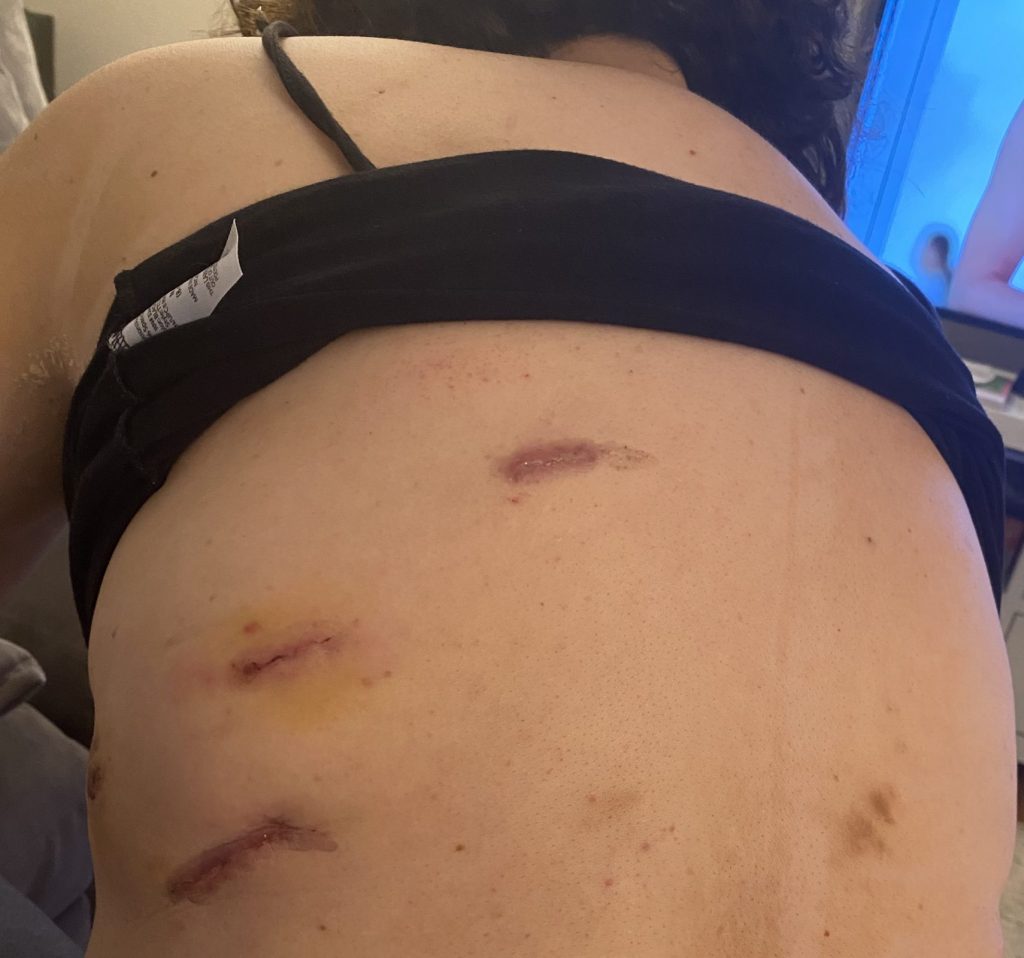
Since her diagnosis, Rodriguez has decided to write about her journey with Christ and cancer, and has also started her podcast where she shares more about her experience.
When asked if she would have changed anything in her past knowing she would ultimately get lung cancer, Rodriguez said she wouldn’t.
“Because of all my trials and tribulations in the past — the anger, the smoking, all that unhealthy behavior I did before — it led me to God. So quite frankly, no,” she explained.
Practice-Changing Research Indicates Tagrisso Osimertinib Significantly Slows Progression for EGFR-Mutated Stage 3 Lung Cancer
As for lung cancer, the reason it can be so deadly is that it’s often caught at a late stage, when it’s more difficult to treat. When doctors catch this cancer early, survival rates improve dramatically. The U.S. Preventive Services Task Force gives lung cancer screening a Grade B recommendation — the same grade it gives mammograms for breast cancer.
Many lung cancers are actually found incidentally, during tests done for unrelated reasons. Right now, screening is recommended for people who meet all of the following criteria:
- You are or were a heavy smoker (with at least a 20 pack-year history)
- You currently smoke or quit within the last 15 years
- You are between 50 and 80 years old
Talk to your doctor about getting a low-dose CT scan (LDCT) if you’re at high risk because of a heavy smoking history and fall within that 50-to-80 age range. Unlike diagnostic CT scans, LDCT scans use a smaller amount of radiation.
You should also get evaluated if you have symptoms like a persistent cough or chest pain.
How Faith Helped Her Navigate Cancer
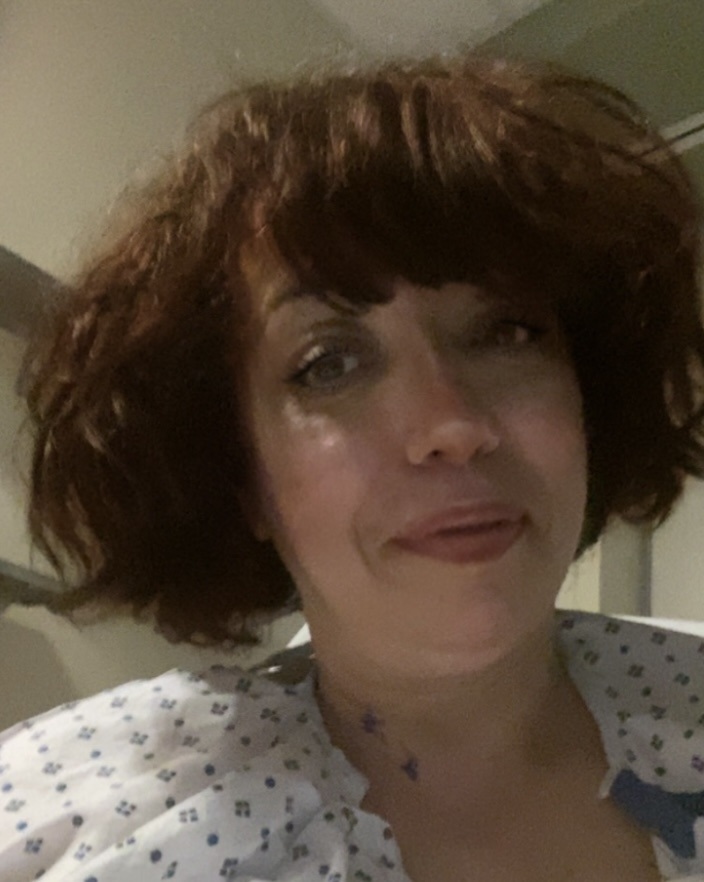
Throughout her journey, Rodriguez relied on God and her care team as her support system. She stressed how “vitally important” it is to have support during a cancer journey, which is why she chose to start her podcast — so others have someone to listen to and know they’re not alone.
“It’s vital … I was blessed also having great nurses. My team is great. They’re like, ‘Hey, call me or text me if you need something.’ And so I was blessed in that way. So I didn’t feel alone, but I don’t want people to feel alone. So this is why it’s important.”
Looking back on when she quit smoking and found a renewed connection with God, Rodriguez described the feeling as falling in love.
“I was on cloud nine, so I felt as though I found the love of my life,” she said. “Because all of a sudden — you go through the ups and downs that I went through in my life and my childhood … so you go through all this trauma, and at the time you don’t realize it, but it does catch up to you when you least expect it.”
That reckoning eventually pushed her toward faith.
RELATED: Can Turning To Faith Help You During A Cancer Journey? Some People, And Studies, Say Yes.
“So now I’m holding all this, and I’m trying to dissect it, going to therapists and such,” she said. “Then when I said, ‘Okay, God, this is it. My heart, I’m all about you, man. It’s me and you’ — it instantly changed. So the first gospel that I read was Matthew. Oh, I fell in love with Matthew, and I kept reading the gospel of Matthew, and it was just in sync. I felt literally invincible.”
That sense of strength carried her through her cancer appointments, which she often attended alone.
“I didn’t have the fear that I’m sure I would’ve had had I would’ve not come to Christ,” she continued. “I talk to him every day. So talking to him in my car, talking to him at work, I’m always ‘blah, blah, blah’ with him, and it just makes me feel really good. And also reading the Bible when I do, and also my podcast, I love it because I’m babbling about stuff.”
She concluded by saying that her connection to God is what continues to drive her forward.
“So being connected to him is what has given me the true inspiration to keep it moving,” Rodriquez said. “I mean, the thing about it is, at the beginning, when I didn’t know I had my EGFR, I was like, ‘Okay, Barbara, you really did yourself a number. You smoked for so many years, you’ve done so many things, so this is it. You got to take accountability. These are the consequences.'”
She added, jokingly, “So then it was confirmed that it was EGFR, I was like, ‘Okay, Barbara, you’re off the hook.'”
Using Faith as a Tool for Healing
Faith plays a significant role in how cancer patients cope with their diagnosis, according to research published in the journal Cancer. The study found that 69% of cancer patients said they turned to prayer for their health, compared with just 45% of the general U.S. population.
That connection between spirituality and healing is something cancer psychologist Dr. Andrew Kneier has studied closely. He co-authored the book “Coping with Cancer: Ten Steps Toward Emotional Well-Being,” and later teamed up with Rabbi Jeffrey M. Silberman, director of spiritual care at Danbury Hospital in Connecticut, to write about the topic for a Stanford Medicine column.
The two describe faith as far more than a source of comfort — it’s a tool patients use to process the emotional weight of illness and work toward a deeper sense of healing.
“A person’s faith or spirituality provides a means for coping with illness and reaching a deeper kind of inner healing,” they wrote.
Kneier and Silberman point to several ways religious belief supports patients through their diagnosis. It gives them a framework for wrestling with hard, existential questions. It offers comfort when fear and physical pain set in. And it provides a sense of direction at a time when everything can feel uncertain.
For many patients, they argue, religious teachings become a kind of anchor — something to hold onto for strength and resilience as they face the physical and emotional toll of cancer.
WATCH: Three-time cancer survivor shares how her faith helped her during cancer.
New York City Presbyterian Pastor Tom Evans previously spoke with SurvivorNet about the importance of finding ways to cope with the complex web of feelings you may be experiencing after a challenging health diagnosis, such as cancer.
“It’s important to reach out in a simple prayer to God, even if you’ve never prayed before, you don’t know what to say, a heartfelt plea, ‘God, help me, be with me,’” Pastor Evans said.
“You can reach out to God, and you can reach out to people, your friends and family, and say, ‘I can’t do this on my own. I need you.’ “It’s in that willingness to be open and to receive that we can find something deeper that we never would’ve encountered without this hardship,” Evans continued.
Understanding Stage 3A Lung Cancer & Treatment
The treatment for stage 3 lung cancer depends on if you have stage 3A or a more advanced stage 3 cancer like stage 3B or stage 3C. The decision to proceed with surgery for stage 3A lung cancer is not always black and white, and it’s an area where doctors can disagree.
In stage 3A, where the cancer has spread to the lymph nodes on the same side of the chest where the cancer started, surgery can play a role depending on where the cancer is, how close it is to other structures, and how many lymph nodes are affected.
Chemotherapy or radiation may also be an option before surgery to shrink the tumor and destroy any errant cancer cells.
In other scenarios, some people with stage 3A cancer will be treated with radiation therapy and chemotherapy followed by immunotherapy without surgery.
Treatment for Stage 3 Lung Cancer: Surgery, Radiation, Chemotherapy, and Immunotherapy
If the cancer is EGFR+ targeted therapies may be added post-surgery as well.
Immunotherapy drug pembrolizumab (Keytruda) may be used alone as your first treatment when your lung cancer has not spread outside your chest (stage III) and you cannot have surgery or chemotherapy with radiation.
Getting Ready For Lung Cancer Surgery
With stage 3B lung cancer, or stage 3C your cancer has spread to the lymph nodes on the opposite side of your chest or has invaded another area such as the veins feeding your heart. For patients with stage 3B and 3C lung cancer, radiation therapy with chemotherapy followed by immunotherapy is the standard of care.
Most patients with stage 3 lung cancer will have radiation therapy with chemotherapy followed by immunotherapy to treat their disease. Surgery is only used for very select patients with stage 3A disease.
Lung Cancer: The Early Detection Issue
Lung cancer forms when cancer cells develop in the tissues of the lung. It is the second most common form of cancer and the leading cause of cancer deaths in both men and women in the U.S., SurvivorNet experts say. It’s “completely asymptomatic,” says thoracic surgeon-in-chief at Temple University Health System Dr. Joseph Friedberg.
“It causes no issues until it has spread somewhere. So, if it spreads to the bones, it may cause pain. If it spreads to the brain, it may cause something not subtle, like a seizure,” Dr. Friedberg adds.
Scans such as X-rays can help doctors determine if a shadow appears, which can prompt further testing for lung cancer.
Some people with lung cancer may experience symptoms such as:
- A cough that doesn’t go away, that gets worse, or that brings up bloody phlegm
- Shortness of breath
- Fatigue
- Chest pain
- Hoarse voice
- Appetite loss
- Weight loss
If you are experiencing these kinds of symptoms consistently, contact your doctor for further tests.
There are two main types of lung cancer, which doctors group together based on how they act and how they’re treated:
- Non-small cell lung cancer (NSCLC) is the most common type and makes up about 85% of cases.
- Small cell lung cancer (SCLC) is less common, but it tends to grow faster than NSCLC and is treated very differently.
How Your Stage Is Determined
After an initial diagnosis of lung cancer all patients will have a staging workup to determine what stage of cancer they have and the best approach for treating their cancer.
For lung cancer, this can be quite extensive and include many tests and imaging studies. Typically, patients will have a combination of imaging studies including CT, MRI, and PET scans.
The goal of all of this imaging is to determine where cancer has spread and also where it has not spread.
Patients with stage 3 lung cancer will typically have imaging of the chest and tumor, a PET scan of the entire body to see if cancer has spread, and an MRI of the brain to see if cancer has spread into the brain.
In addition to imaging studies, patients will also have additional tests performed on the tissue obtained from the biopsy. These tests are conducted by a pathologist and look for aspects of the tumor that can be targeted for treatment. These tests include biomarker and genetic testing. Your doctors may order additional tests from what is covered here and it is important to discuss with your treatment team what is being ordered and why.
Helping Patients Through Lung Cancer Surgery and Recovery
Before getting serious about lung cancer, oncologists take a closer look at the heart health of the patient.
“We’ll look at the carotid arteries, which are the blood vessels that supply blood to your brain,” Dr. Friedberg explained to SurvivorNet.
“In addition to smoking, which is the most common cause of lung cancer causing cancers, it also causes heart disease and other arterial diseases,” Dr. Friedberg added.
“We want to get the things to make sure that if surgery is appropriate, we, as best as we can humanly tell, have eliminated the possibilities or the likelihood that you’re going to have a heart attack or a stroke if we subject you to the surgery,” Dr. Friedberg said.
There are several types of surgery that can remove lung cancer, which include:
- Segmentectomy (removal of a small segment of the lung)
- Lobectomy (removal of a lobe of the lung)
- Pneumonectomy (removal of the entire lung)
The decision is largely based on the size of the tumor and where in your lung it is located.
“If the tumor is on the outer part of the lung and it’s small, you can get something called a wedge resection, which is a pizza pie-shaped resection of that lung,” Dr. Raja Flores, Chairman of the Department of Thoracic Surgery and the Steven and Ann Ames Professor in Thoracic Surgery for the Mount Sinai Health System, said.
“It removes the lung, and it spares a lot of the lung parenchyma, which is the functional part of the lung,” Dr. Flores added.
Although pneumonectomy removes the entire lung, Dr. Flores says not all patients can tolerate the procedure.
“It depends on how good their lung function really is, and many of the patients are smokers, so they have damaged their lungs, so you have to get these breathing tests before you go ahead and do any big lung operation on anybody,” Dr. Flores explained.
WATCH: Pain Management After Lung Cancer Surgery
As effective as lung cancer surgery can be, the recovery often feels like its own challenge. Melissa Culligan, a thoracic surgery nurse at the University of Maryland Medical Center, also spoke with SurvivorNet and said the hardest part usually begins once patients return home and have to manage pain on their own.
“I continue to learn that honesty to your patients and their family members while maintaining a healthy dose of hope is probably the most important thing for patients and their families as they’re going through cancer treatment,” Culligan explains.
That honesty helps people prepare for what recovery really looks like.
Culligan encourages patients to stay closely connected to their care team, especially when something feels off. As healing progresses, pain often shifts in both location and intensity, and she stresses that these changes are usually expected. Reaching out allows the team to either adjust pain management or reassure patients that their experience is normal.
As patients become more active, discomfort often increases. Culligan notes that this doesn’t mean anything is wrong; it’s simply part of the body’s recovery and rebuilding strength. She urges patients to continue taking their pain medication as prescribed while they heal.
“It’s critical after surgery and after any treatment that you do keep active and keep your body in the best possible condition along the way,” Culligan said.
Contributing: SurvivorNet Staff
Learn more about SurvivorNet's rigorous medical review process.
