‘I Have an Army Praying’: Country Blues Artist Nat Myers, 35, Says One Cruel Comment After His Cancer Diagnosis Fueled His Determination to Fight Even Harder
‘I Have an Army Praying’: Country Blues Artist Nat Myers, 35, Says One Cruel Comment After His Cancer Diagnosis Fueled His Determination to Fight Even Harder
Nat Myers Turns His Cancer Battle Into a Testament of Strength
Country blues singer Nat Myers, 35, is living with stage 4 sarcoma. “Soft tissue sarcoma is a broad term for cancers that start in soft tissues… found mostly in the arms, legs, chest, and abdomen,” according to the National Cancer Institute. Myers noted that his tumors had spread to his arms and veins.
Despite his diagnosis, he continues to make music and share his journey openly with fans, even responding to a cruel online comment with defiance, faith, and poetic resilience.
Myers’ cancer journey began with what he thought was a lung infection, later revealed to be a widespread soft‑tissue sarcoma; despite a difficult prognosis, he remains determined and encouraged by signs that his tumors are responding to chemotherapy treatment, which was a grueling experience for the Kentucky singer.
Patients almost universally experience fatigue, often alongside gastrointestinal side effects, such as nausea. Doctors have many effective medications to combat chemo-induced nausea. “But mitigating that fatigue often depends on the patient,” says Dr. Renata Urban, a gynecologic oncologist at the University of Washington in Seattle.
Experts emphasize that when patients share vulnerable moments like Myers’, loved ones can offer meaningful support by acknowledging their experience, staying authentic, and continuing to nurture the relationship in ordinary, grounding ways.
Oncology nurse Deborah K. Mayer notes that people with cancer often feel a heightened awareness of their own mortality, which can be both clarifying and emotionally heavy, describing it as “a very big burden.”
Country‑blues singer Nat Myers, 35, is facing stage 4 sarcoma — a rare, aggressive cancer of the soft tissues — yet his journey has carried him from grueling chemotherapy back to making music again. Since his diagnosis early last year, the “Ramble No More” singer has invited fans into his world through raw social media updates. Most responses have been supportive, but one cruel comment stuck with him.
“I read a comment that said they hope the cancer takes me already, and that I’m the worst thing that happened to blues music since shit gone electric,” Myers shared on Instagram.
His response was pure Nat — defiant, poetic, and infused with his unwavering faith.
“I’m sad to say I won’t be heading anywhere. Every moment, I learn to live again. It’s nice knowing there are people praying for my downfall, because I have an army praying otherwise… We’ll see how my heart weighs against the feather one day, but not today, and not tomorrow.”
Myers broke onto the country‑blues scene in 2023 and even performed for the Recording Academy (the GRAMMY organization) that year. His latest reflection came as he marked a difficult cancer anniversary.
NASHVILLE, TENNESSEE – OCTOBER 09: Nat Myers performs during The Prine Family Presents: You’ve Got Gold Celebrating The Songs Of John Prine at The Basement East on October 09, 2023 in Nashville, Tennessee. (Photo by Mickey Bernal/Getty Images)
“A year ago today, I went into a hospital and nearly never got out,” he wrote.
In his signature lyrical style, he added, “I learned something had been trying to kill me, but it isn’t trying hard enough. I stood at the doorway of death and became a brother of Lazarus… The Lord delivered me, I have no doubt. He made me see both the curses and the blessings. I continue to chase the ungraspable phantom of life and shall for some time.”
Experts say moments like these — when patients open up about their fears, hopes, or turning points — are opportunities for loved ones to offer grounded, compassionate support.
Oncology nurse Deborah K. Mayer notes that people with cancer often feel a heightened awareness of their own mortality, which can be both clarifying and emotionally heavy.
“In some ways, that’s a gift, to make it more poignant or meaningful, but on the other hand, that also can be a very big burden,” Mayer said.
Ovarian cancer survivor Susan Gubar adds that many patients hesitate to bring up their illness, not wanting to dampen the mood.
“Most of us don’t want to be a downer,” Gubar tells SurvivorNet.
Dr. Lucy Kalanithi, who lost her husband to metastatic lung cancer, encourages friends and family of cancer patients to stay present and authentic: acknowledging the reality without overreacting, and continuing to nurture the relationship in ordinary ways.
“Don’t be afraid to just be yourself and keep cultivating the relationship. My late husband’s best friend asked for career advice during the time my husband was sick. It felt like a real relief for him to feel relied upon, to feel like an agent rather than a vulnerable object,” Dr. Kalanithi adds.
Myers’ Cancer Journey and His Defiant Spirit
Last year, Myers began feeling unwell and initially believed he was battling a stubborn infection. But the truth was far more serious.
“What I thought was a prolonged lung infection turned out to be much more sinister, with growths around my heart and pulmonary artery,” he revealed in a GoFundMe post.
“Soft tissue sarcoma is a broad term for cancers that start in soft tissues… found mostly in the arms, legs, chest, and abdomen,” according to the National Cancer Institute. Myers noted that his tumors had spread to his arms and veins.
The diagnosis forced Myers to cancel a string of performances and shift his focus to his health. But even as medical professionals gave him a prognosis of mere weeks to live, Myers refused to surrender.
“Doctors of varying humanity have given me days or weeks to live, but I live by my odds and not theirs,” he wrote defiantly.
His resolve is unwavering.
“I am taking things day by day and conserving and building the energy I need to overcome this affliction. I refuse to speak from the past tense, because there is beauty and life in the struggle I am currently fighting, and I will overcome this,” Myers said.
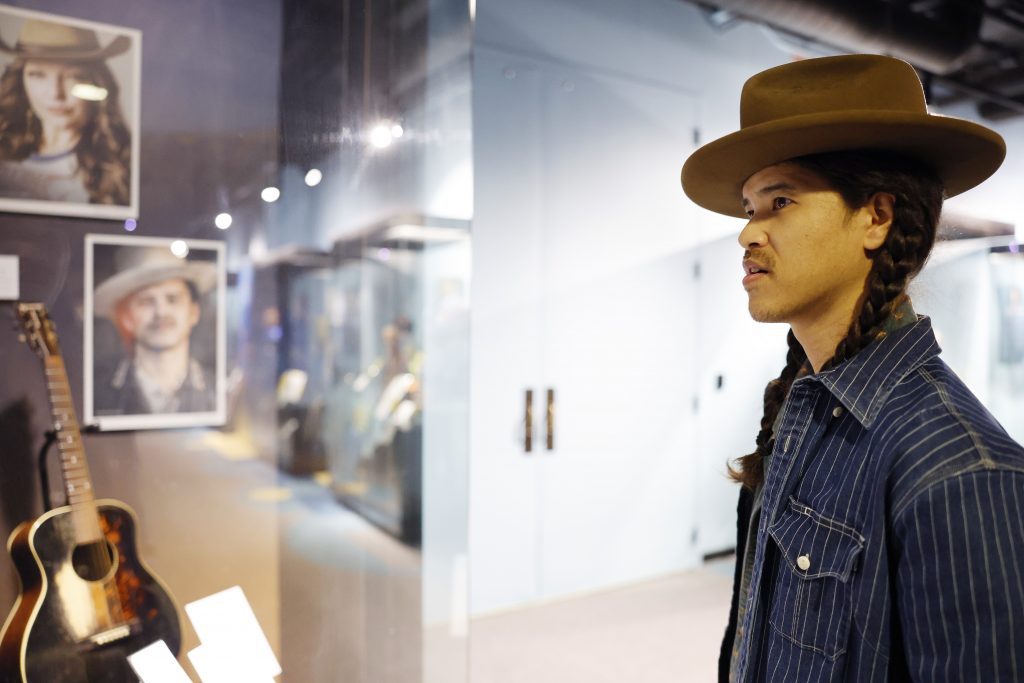
NASHVILLE, TENNESSEE – FEBRUARY 27: Nat Myers attends the opening of “American Currents: State of the Music” at Country Music Hall of Fame and Museum on February 27, 2024, in Nashville, Tennessee. (Photo by Jason Kempin/Getty Images for Country Music Hall of Fame and Museum )
Last September, a glimmer of hope emerged. Myers shared that his tumors were responding to chemotherapy.
“Because my tumors appear to be responding to the chemo, they want me to keep the course as it is with OSU,” he said on Instagram. “But they said that as trials present themselves, & as the tumors shrink, isolated therapies & more options, are already in their pipeline, & part of the plan they are mapping out for me.”
At least for the moment, Myers appears to have received a reprieve from the intensity of treatment, although its emotional effects remain everlasting.
“I barely made it through. I have never been so blue, and never been so grateful,” he admitted.
Myers says, “I was told that chemo does a complete 180 on one’s body chemistry, and I feel the poison and the cure.”
Chemotherapy is a common cancer treatment, and while it can be tremendously effective, getting through it is often easier said than done. It is an effective tool for oncologists to help treat cancer by stopping cancerous cells from growing, dividing, and spreading to other organs. Chemo works by traveling through the bloodstream, killing cancerous cells. However, the process also impacts healthy cells, leading to side effects.
Patients almost universally experience fatigue, often alongside gastrointestinal side effects, such as nausea. Doctors have many effective medications to combat chemo-induced nausea. “But mitigating that fatigue often depends on the patient,” says Dr. Renata Urban, a gynecologic oncologist at the University of Washington in Seattle.
WATCH: What You Think You Know About Chemotherapy Side Effects May Be Wrong
“Neuropathy is probably one of the most challenging side effects,” says Dr. Renata Urban, a gynecologic oncologist at the University of Washington in Seattle. Neuropathy results from damage to the peripheral nerves. It usually resolves after chemotherapy treatment, but sometimes symptoms can persist. While it’s typically characterized by numbness or a pins-and-needles sensation in the hands and feet, neuropathy can have several different symptoms, including:
Weakness in the hands or feet
Stabbing or burning pain in the hands or feet
Difficulty gripping, such as when holding a fork
Difficulty with fine motor skills, such as writing or buttoning a shirt
Nausea and vomiting are common side effects of chemotherapy. When chemotherapy affects the rapidly dividing cells in the stomach lining, the resulting cellular havoc in the gastrointestinal tract can lead to side effects such as nausea and vomiting. However, doctors can help patients mitigate the hit with various medications before, during, and after treatment.
“Part of the chemotherapy prescription includes a set regimen of anti-nausea medications,” says Dr. Renata Urban, a gynecologic oncologist at the University of Washington in Seattle. “We also ensure that patients have medications at home that they can use should they develop nausea after treatment.”
Hair loss is another side effect of chemotherapy.
WATCH: Coping with hair loss.
“For cancer patients, losing one’s hair can be unbelievably stressful. To start with, the dread of losing one’s hair can lead to some sleepless nights and feelings of anxiety,” Dr. Samantha Boardman, a New York-based psychiatrist and author, told SurvivorNet.
Chemotherapy can cause hair loss. It usually begins about three to four weeks after chemotherapy and continues throughout treatment.
It happens because this treatment targets quickly dividing cells throughout the body. That includes cancer cells but also hair cells.
Most patients can expect regrowth four to six weeks after treatment. However, it is possible when your hair grows back, you may notice some changes in its color and texture.
Doctors don’t have an arsenal of prescription medications to combat fatigue. However, you can do several things to help minimize the hit and restore your energy.
Exercise: While it may be counterintuitive, physical activity can help alleviate side effects, especially fatigue. “Although ovarian cancer is not common, we often draw upon the experience of patients with breast cancer and colon cancer, who have shown that physical activity can not only improve quality of life but may also have beneficial impacts on cancer outcomes,” Dr. Urban says.
Eat well: Even though nausea may interfere with your ability to eat a healthy diet, it’s essential to ensure you’re eating appropriately, getting enough protein, and not losing weight. Not only will nourishing your body support your recovery, but it may also help you feel more energized.
Sleep: Want to mitigate fatigue? Be sure to maintain your regular sleep-wake cycle while on treatment. Sticking to a set sleep schedule helps reduce fatigue by ensuring enough hours for your body to heal and restore itself each night. It may also help you recover more quickly by keeping energy levels high during the daytime.
Questions for Your Doctor
If you are undergoing chemotherapy and anticipate doing so in the future, you may want to begin conversations with your doctor about how to manage it best. Here are a few questions to help you kickstart your discussion.
How can I best prepare for chemotherapy to minimize side effects?
Are there any dietary or lifestyle changes I should make during treatment?
What symptoms should I watch out for, and when should I contact you if I experience them?
Are there any medications or supplements that can help manage chemotherapy side effects?
How often will I need to receive chemotherapy, and how long will the treatment last?
How will chemotherapy affect my immune system, and what precautions should I take to avoid infections?
Can you provide resources or referrals to support services, such as counseling or support groups, for coping with the emotional and psychological aspects of chemotherapy?