Powering the Body to Fight Cancer
- For patients with diffuse large B-cell lymphoma, bispecific antibodies and CAR T-Cell Therapy are two of the most promising types of immunotherapy that may be available to fight their cancer.
- Understanding these two immunotherapy approaches — bispecific antibodies and CAR T-Cell Therapy — starts with understanding immunotherapy more generally.
- Bispecific antibodies / bispecific T-Cell engagers are designed to bind two targets at once. For example, one “arm” binds a protein on the cancer cell, the other binds a T-Cell (an immune cell). That physically brings the immune cell close enough to attack.
- CAR T-Cell Therapy (Chimeric Antigen Receptor T-Cells) is one of the most powerful and personalized forms of treatment. It involves harvesting a patient’s T-Cells, genetically engineering them in a lab to recognize a protein on lymphoma cells, expanding them in number, and then infusing them back into the patient to hunt the cancer.
Harnessing the Body’s Power to Fight Lymphoma
Immunotherapy is changing the way doctors treat patients with diffuse large B-cell lymphoma. Rather than attacking cancer cells directly, these innovative approaches are designed to re-train a patient’s own immune system to recognize and destroy cancer.“There has been a real revolution in the management of these disorders,” says Dr. Adan Rios, oncology professor at UTHealth McGovern Medical School, based at Memorial Hermann Hospital in Houston.
WATCH: When the Doctor Becomes the Patient
Expert Resources on Non Hodgkin Lymphoma
- CAR T-Cell Therapy: A Step-By-Step Guide to Having This Breakthrough Treatment
- Bispecific Antibodies Deliver One-Two Punch to Non-Hodgkin Lymphoma
- CAR T-Cell Therapy: How it Works, and Who Can Get It
- Could New Non-Hodgkin Lymphoma Drugs Mean Less Chemo in the Future?
- CAR T-Cell Therapy: Making Your Body a More Efficient Cancer Fighter
- All About Biopsies to Diagnose Non-Hodgkin Lymphoma
What Is Immunotherapy?
Read MoreUnfortunately, in many cancers, the tumor can hide, evade detection, or even send signals to suppress immune attack. Immunotherapy seeks to counter those tricks, as Dr. Rios explains:
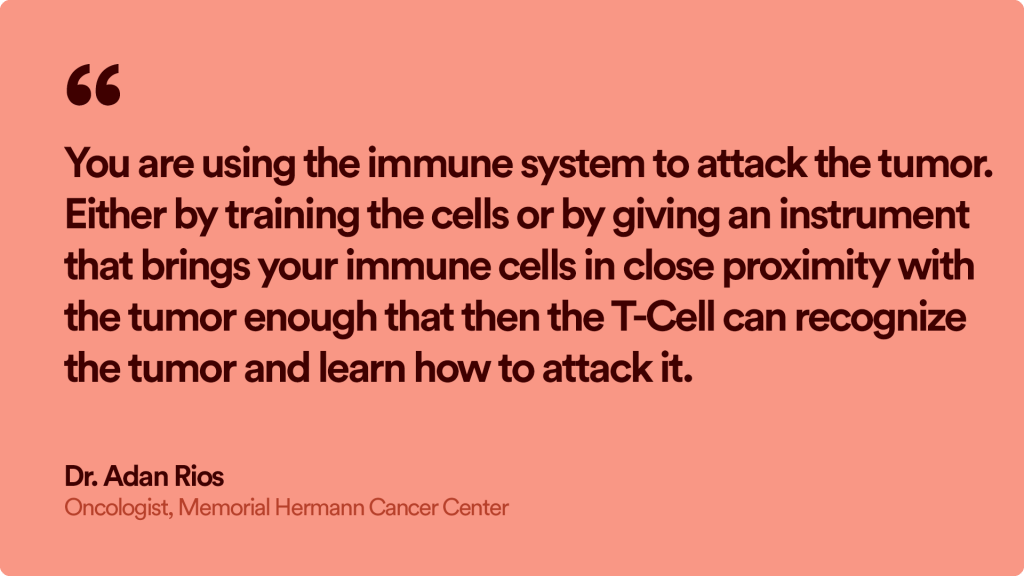
“One of the methods that tumors use for evasion of the immune system is that they keep the immune system at a distance. And we now know from very sophisticated studies that there are actual physical barriers between the cells of the immune system and the tumor cell, and those barriers don’t let the immune cells get close to the tumor.”
Here are a few of the main approaches:
- Monoclonal antibodies: Lab-made proteins that bind to specific markers (proteins) on lymphoma cells. They can flag cancer cells for destruction or block signals they use to survive.
- Antibody-drug conjugates (ADCs): These are antibodies linked to a chemotherapy “payload.” The antibody guides the drug to the cancer cell, and once inside, the toxic agent is unleashed.
- Bispecific antibodies / bispecific T-Cell engagers: These are designed to bind two targets at once. For example, one “arm” binds a protein on the cancer cell, the other binds a T-Cell (an immune cell). That physically brings the immune cell close enough to attack.
- CAR T-Cell Therapy (Chimeric Antigen Receptor T-Cells): This is one of the most powerful and personalized forms of treatment. It involves harvesting a patient’s T-Cells, genetically engineering them in a lab to recognize a protein on lymphoma cells, expanding them in number, and then infusing them back into the patient to hunt the cancer.
- Checkpoint inhibitors / immune-modulating agents: These drugs block the “brakes” that tumors use to turn off immune responses, essentially reawakening the immune cells to attack. While more studied in other cancers, they are under investigation in lymphomas.
Each of these approaches has its own benefits, risks, and suitability depending on the precise subtype of lymphoma, previous treatments, and patient health.
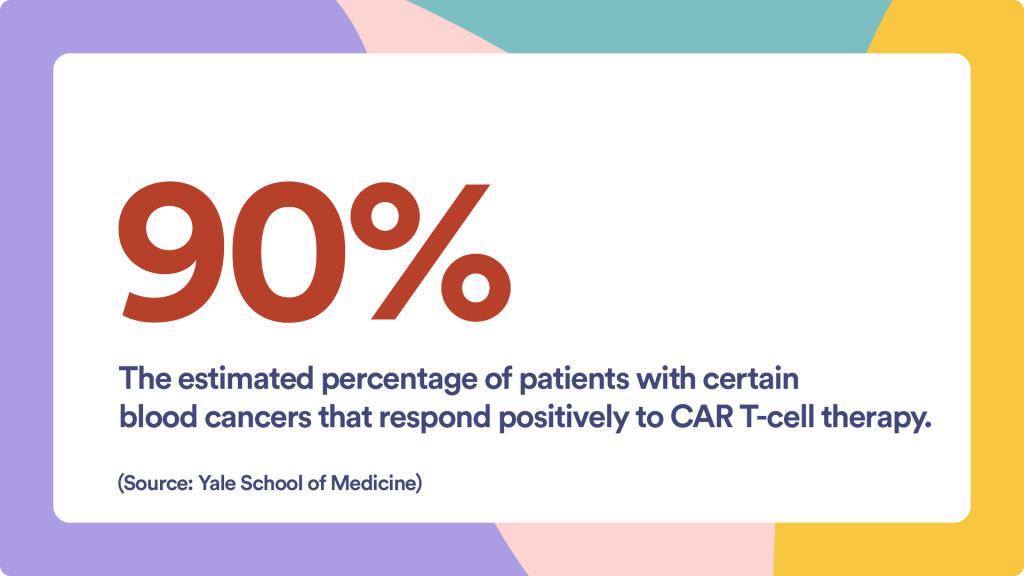
“But what is really striking is that the effectiveness of these treatments is quite dramatic,” Dr. Rios said.
WATCH: CAR T-Cell Therapy Offers Hope to Patients Because Experts Say It’s ‘Treatable’ But It Also Has Its Limits
How Immunotherapy Turns Your Body Into the Best Weapon
At its core, immunotherapy is designed to help the patient’s immune system eliminate cancer cells. Your immune system has two major components that are relevant to fighting lymphoma:
- The Adaptive Immune Response (Specialized T-Cells): These are highly specific soldiers, primarily T-Cells (lymphocytes), which are trained to recognize and attack specific targets.
- The Innate Immune System (First Responders): These include Natural Killer (NK) cells and myeloid cells (like macrophages), which act as general surveillance and clearance forces.
New immunotherapeutic strategies leverage both of these systems to mount a powerful anti-tumor response.
Coping With The Diagnosis
Coping with lymphoma is not just about medical treatment; it’s about treating the whole person. Facing this disease requires immense strength, and here are ways you can manage this challenge:
- Learn as much as you can: By reading articles like this, you are already taking a crucial step in your coping journey: understanding your options. Knowledge empowers you to have informed conversations with your medical team.
- Build your support system: Whether you are the patient or the loved one, leaning on family, friends, and support groups is vital. This journey is often too difficult to navigate alone.
- Hold on to progress: The pace of research outlined in these clinical developments is extraordinary. What was considered untreatable just a few years ago is now yielding durable responses thanks to immunotherapy. Maintain hope by focusing on the rapid transformation occurring in DLBCL management. The therapies discussed here (CAR T-cells, bispecific antibodies, and innate immune modulators) represent the most significant advancements in lymphoma treatment in recent history.
Immunotherapy is transforming how doctors treat DLBCL. By turning the body’s own immune system into a weapon against cancer, medicine is moving toward treatments that are both more effective and less toxic, and, for many patients, that means a renewed sense of hope.
Questions To Ask Your Care Team
- What specific immunotherapy options might be applicable in my (or my loved one’s) situation?
- What is the goal: Cure? Remission? Symptom control? And how likely is that?
- What side effects can occur, and how will they be managed?
- How often are treatments given, and over what period?
- What monitoring is required (e.g., blood tests, imaging, hospital stays)?
- What are the risks of serious complications (CRS, neurologic effects, infection)?
- Are there clinical trials available I should consider?
- What supportive care (nutrition, physical therapy, psychosocial support) is recommended?
- If I (or the patient) is older or has other health problems, how might that change options?
- If the immunotherapy doesn’t work, what other steps remain?
Learn more about SurvivorNet's rigorous medical review process.