Understanding The CAR T-Cell Therapy Treatment Plan
- CAR T-Cell Therapy can be highly effective for certain recurrent lymphomas, especially diffuse large B-cell lymphoma, but treatment doesn’t begin right away.
- Before therapy starts, doctors must run new tests to confirm a patient is eligible — and the CAR T-Cell manufacturing process takes several weeks.
- Because lymphoma can advance quickly, doctors may use “bridging therapy” to help control the disease during this waiting period.
- Understanding the steps from recurrence to infusion can empower patients to stay informed, ask the right questions, and navigate the process promptly.
- Overview of the steps:
- Step 1: Referral to specialist & evaluation ~2–3 weeks
- Step 2: Cell collection & manufacturing at approved facilities ~2–3 weeks
- Step 3: Preparation, scheduling & infusion ~2+ weeks
The Waiting Period Before CAR T-Cell Therapy: What Patients Should Know
Patients with recurring lymphoma may wait up to two months or longer to begin CAR T-Cell Therapy due to referrals, testing, insurance approvals, and the time-consuming manufacturing of personalized cells by collecting a patient’s own T cells and later re-engineering them in a lab to recognize and attack cancer.“There is a delay from the time of the disease coming back, what we call it recurrence, to get referrals to the appropriate specialists who are able to do subsequent therapies for these sicker patients,” Dr. Sai Pingali, a medical oncologist with a focus on lymphoma and cell therapies at Houston Methodist Hospital in Houston, Texas, tells SurvivorNet.
Read MoreWhy The Wait?
These delays occur because doctors need to order new tests, reassess the disease, and determine whether a patient is a candidate for therapy.Lymphoma can progress rapidly, Dr. Pingali says, so it’s important to get patients who may be eligible for CAR T-Cell Therapy into treatment quickly — yet the process, from diagnosis to treatment, requires several steps.
Understanding The Referral Process
The referral step, where a patient is sent to a specialist who can administer CAR T-Cell Therapy, can take several weeks, as CAR T-Cell Therapy can only be performed at specially certified medical centers that have the necessary infrastructure and trained staff to handle this complex treatment, such as large university hospitals and cancer institutes. These centers are equipped to manage the procedure and its potential side effects, and they are often accredited by organizations like the Foundation for the Accreditation of Cellular Therapy (FACT).
Once a referral is made, specialists at these institutions must confirm a patient’s eligibility, which requires a full workup — labs, scans, organ function tests, and disease assessments. The next step begins after this is completed..
“The testing and the insurance approval could take several weeks, followed by getting the dates for the collection of their T-cells, which are the cells that we engineer,” Dr. Pingali explains.
Expert Resources on Non-Hodgkin Lymphoma
- From Discovery to Breakthrough: The Scientific Journey Behind CAR T-Cell Therapy
- All about Biopsies for Non-Hodgkin Lymphoma
- Bispecific Antibodies Deliver One-Two Punch to Non-Hodgkin Lymphoma
- CAR T-Cell Therapy for Non-Hodgkin Lymphoma
- CAR-T Therapy is a Game-Changer for Common Type of Non-Hodgkin Lymphoma
The Car T-Cell Therapy Manufacturing Timeline
Assuming all approvals are in place, the next critical step is harvesting the patient’s T cells. These cells are shipped to specialized manufacturing facilities certified to produce the engineered CAR T-Cells. The manufacturing itself may take two to three weeks or more, depending on logistics and demand.
According to data gathered by researchers at Yale Cancer Center, the time from harvesting a patients T-Cells to CAR T infusion (vein-to-vein time) varies, with real-world cohorts reporting median times between 28 days and 53 days.
“They’re more often sent to the commercially approved facilities, which manufacture CAR T-Cells. And the turnaround time is two to three weeks at least afterwards. And the whole process from the first contact with a specialist to the time patients can get the CAR T-Cell therapy is at least eight weeks, if not longer,” says Dr. Pingali.
Timely Treatment: What To Know
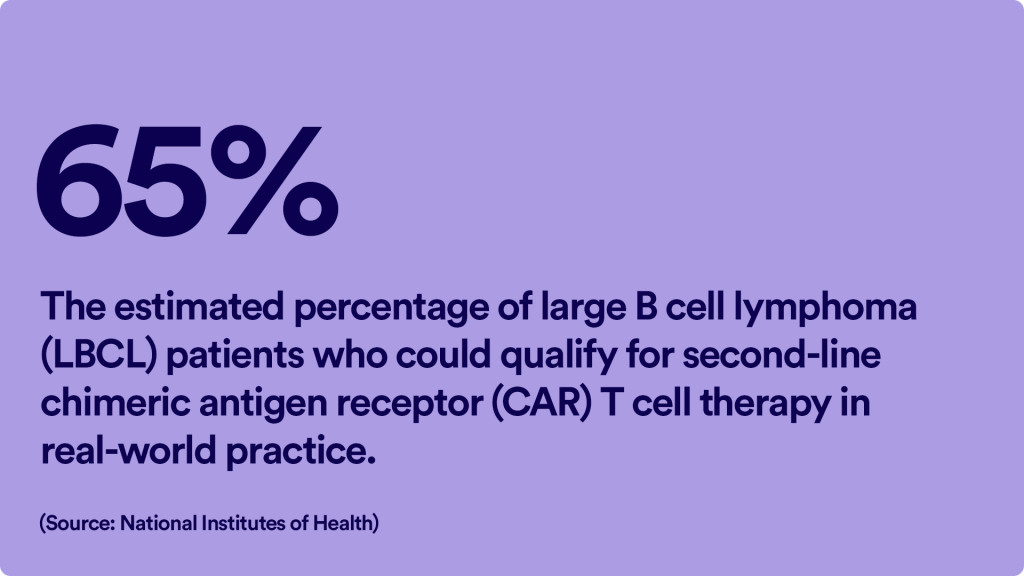
In one analysis, longer wait times before CAR T infusion were linked to a higher risk of worse outcomes over the first year. A study modeling different wait times showed that reducing delays could increase the number of patients able to receive CAR T-cell therapy by over 10%.
“Time is of the essence because some patients, especially if their disease never went into remission, they have quite a lot of symptoms which are persisting and the disease progresses rapidly,” Dr. Pingali explains.
Bridging Therapy
These time gaps also influence how doctors manage patients in the interim. Since waiting is risky — as the disease may progress during the delay— doctors often use “bridging therapy,” which involves temporary treatments to help control the disease until CAR T-Cell Therapy can begin.
Common examples of “bridging therapies” used to help control lymphoma while a patient waits for CAR T-Cell treatment include chemotherapy, immunotherapy, radiation therapy and steroids.
Why Every Week Counts
In a recent study comparing local versus distant CAR T-Cell Therapy treatment centers, patients traveling farther had longer timelines to infusion, illustrating how geography and center access also play a role.
Time is not just an inconvenience. In the setting of advanced or relapsing disease, delays can affect how effective treatment can be. Researchers have found that reducing wait times by 2 months could increase the number of eligible patients for CAR T-Cell Therapy by at least 10.7% and the shorter wait was associated with a 3.3% increase in survival gains per treated patient, leading to a combined efficacy increase of around 14%.
Understanding the roadmap and pushing for clarity on each step empowers patients and their families to advocate for faster, safer access to cutting-edge care.
Questions To Ask Your Doctor
- What is the timeline for my treatment?
- Will I need treatment while I wait?
- Is there anything I can do to accelerate the process?
- In the meantime, how can we control disease progression and symptoms?
Learn more about SurvivorNet's rigorous medical review process.