
Prostate Cancer: Breaking the Silence
- Men are more likely than women to keep health concerns private. A prostate cancer diagnosis — and all the challenging symptoms that can come with it — may make open discussion even more difficult.
- In SurvivorNet’s 12-part film series, Men Beating the Odds, three prostate cancer survivors from different walks of life gathered in New York City to engage in a meaningful roundtable conversation with veteran NBC personality Al Roker, who just celebrated a five-year milestone since his own prostate cancer diagnosis.
- Sharing experiences with others, whether its family, friends, or fellow survivors, can help men navigate these challenging physical and emotional side effects, while in turn increasing awareness and reducing the stigma of the disease. Openness also encourages seeking help and support, which can improve outcomes and strengthen recovery.
- Discover more on “Men Beating The Odds”—an inspiring series that shares the powerful stories of men overcoming prostate cancer and redefining what it means to survive—here.
In SurvivorNet’s 12-part docufilm series, Men Beating the Odds, three prostate cancer survivors from diverse backgrounds traveled to New York City to share a meaningful discussion with beloved NBC personality Al Roker, who just marked a five-year milestone since his own prostate cancer diagnosis.
Read More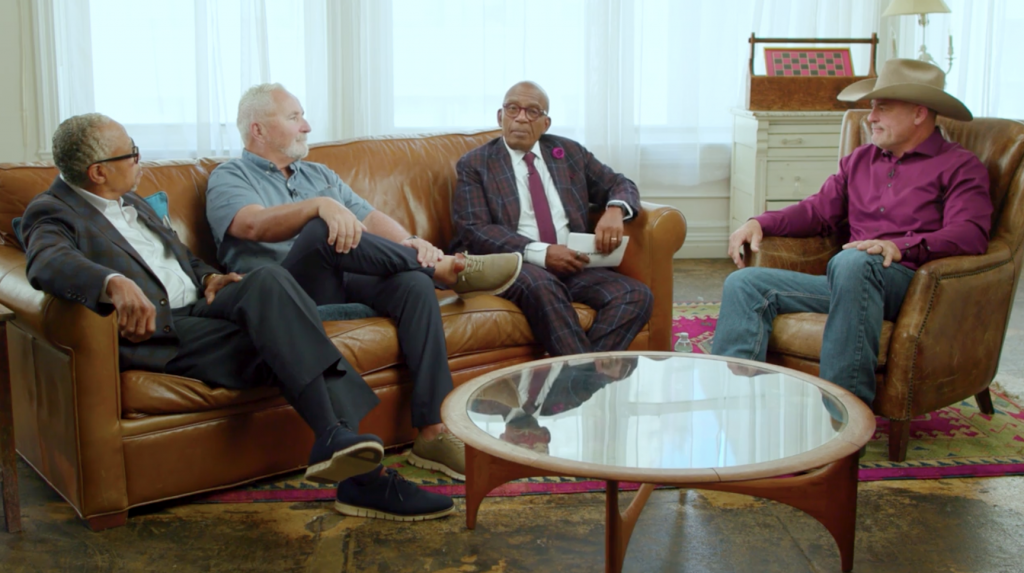
‘We Need to Talk About This’
“We all tend to internalize this, we don’t talk to much about it,” Roker said, urging: “We NEED to talk about this.”From a relaxed couch setting, Euvon Jones, 73, a former HVAC entrepreneur and avid musician from Maryland, was the first to share. He said that having to talk about his stage 4 diagnosis in 2011 was one of the most “fragile” elements of the experience for him.
“It was hard to talk about it originally. The only person I could talk to about it was my wife,” he said of Janet Jones, with whom he has been married for nearly 50 years.
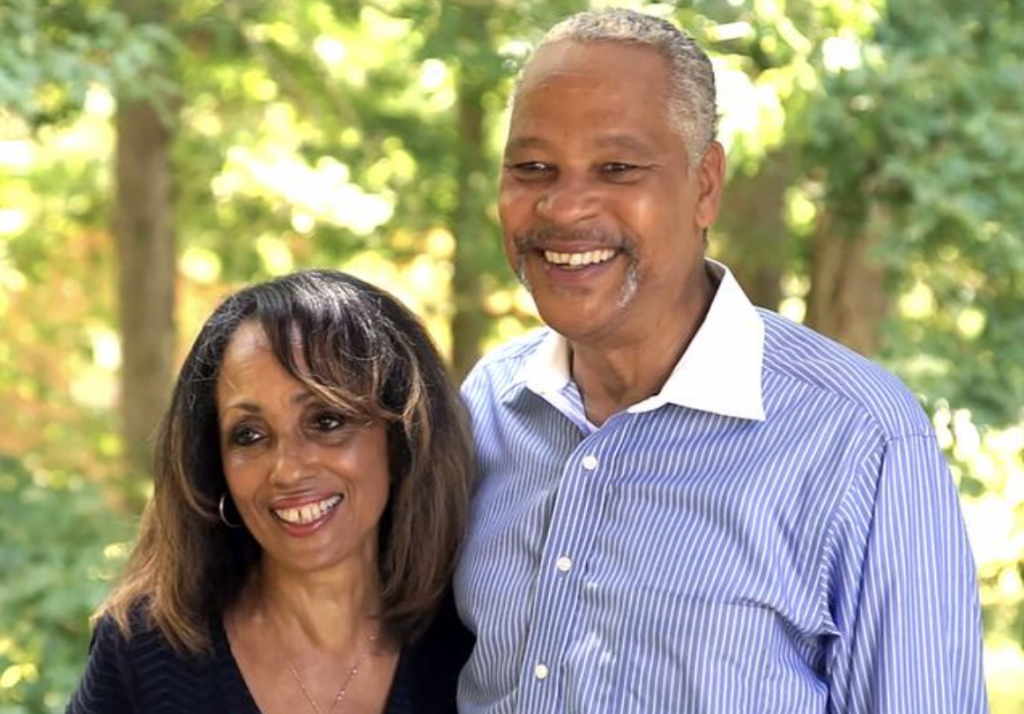
“I didn’t even talk to other guys because a lot of guys weren’t even familiar with prostate cancer,” Jones said.
“And then also, honestly, being African-American, that’s not something we talk about in the community,” he added, especially about topics that challenge someone’s “manhood.”
‘It’s Very Emotional For Me’
It was the opposite for Max Wade, a goat farmer from New Mexico, who learned of his health news in 2021. Chronicling his journey on social media, he has since received viral recognition on TikTok as millions of people have viewed his story.
The “cowboy” has now found a new calling when he’s not out on the farm — comforting and educating newly-diagnosed patients.
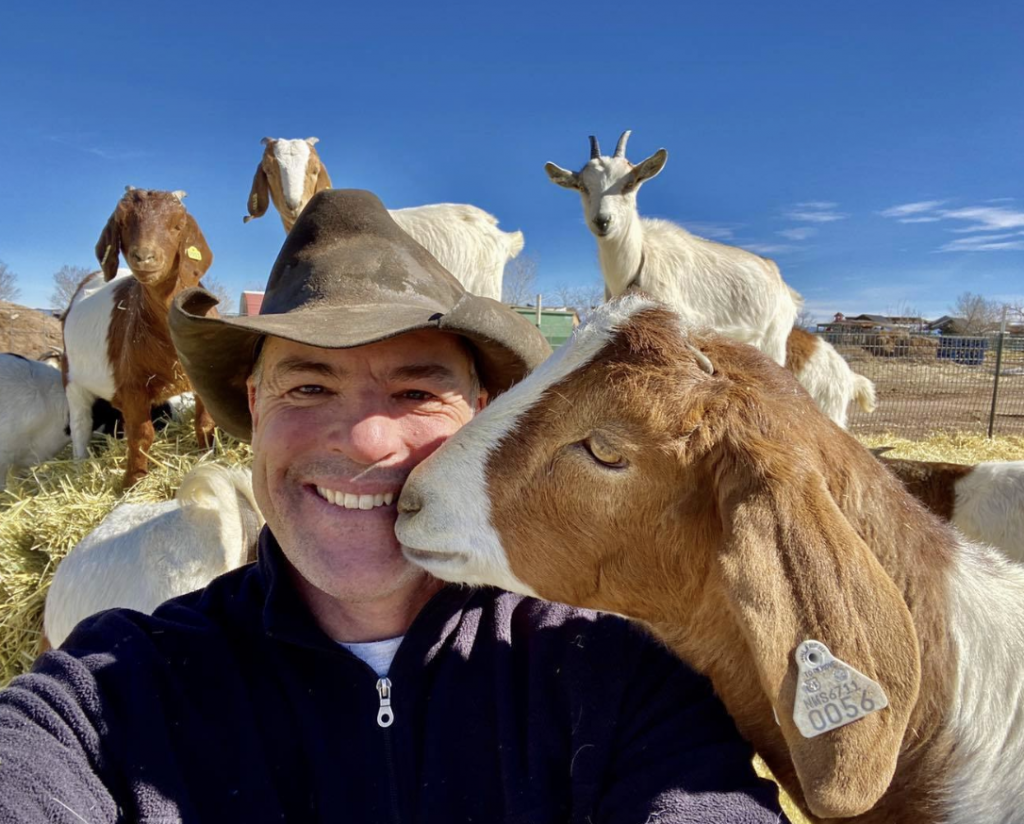
“I get a lot of men who will say to me that they thank me for putting it out there, for being open about it, for spreading the word, educating them,” Wade said. “It’s very emotional for me because I can so easily go back to that moment when I walked into the kitchen and my wife said, ‘You have cancer.’ And it’s scary, it’s devastating.”
RELATED: Adjusting to Your New Normal After Prostate Cancer Diagnosis
Wade said that every man he talks to is going “through the same emotional rollercoaster.” He remembered that when his father was diagnosed with prostate cancer, no one talked about it at first. “I didn’t know until dad had already had the surgery that he had the cancer.”
‘I Tell Everybody I Have Cancer’
As for John Douglas, “I don’t keep my mouth shut. I tell everybody I have cancer,” the Long Islander said in a serious tone, after prompting warm laughter with his undeniably “New York” energy and humor during filming.
The physical therapist, who also lives with metastatic cancer, said it is mainly because he doesn’t want to “keep it inside” of him. “So I share it with everybody,” Douglas added.
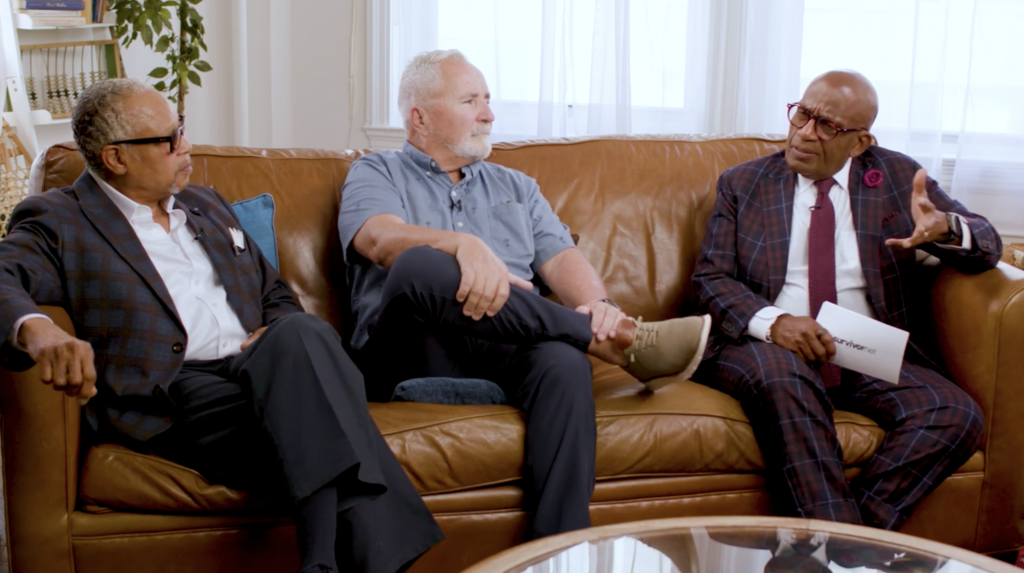
Seeking an outlet after learning of his own challenging news, Douglas recounted asking his doctor for advice on where to turn. “And they go, ‘We don’t have a support group.’ I said, ‘You’re kidding me. You don’t have a support group? It’s prostate cancer!”
RELATED: Check out SurvivorNet’s In-Depth Guide on Prostate Cancer
His doctor shared information on a general support group for people going through cancer. “I said, ‘No, no, I want a support group for prostate cancer.'”
‘Mind-Boggled’ Over Lack of Support Groups
Douglas’ name was added to a list. Months later, he still hadn’t heard anything, so Douglas followed up. The doctor’s response? “I can’t get enough men who are interested.”
“I was mind-boggled over it,” Douglas admitted. He later brought up the sensitive issue of prostate cancer threatening a man’s masculinity and sense of control. But being “macho” no longer concerns him.
“The macho thing, you couldn’t be more macho than me — I let it all go.”
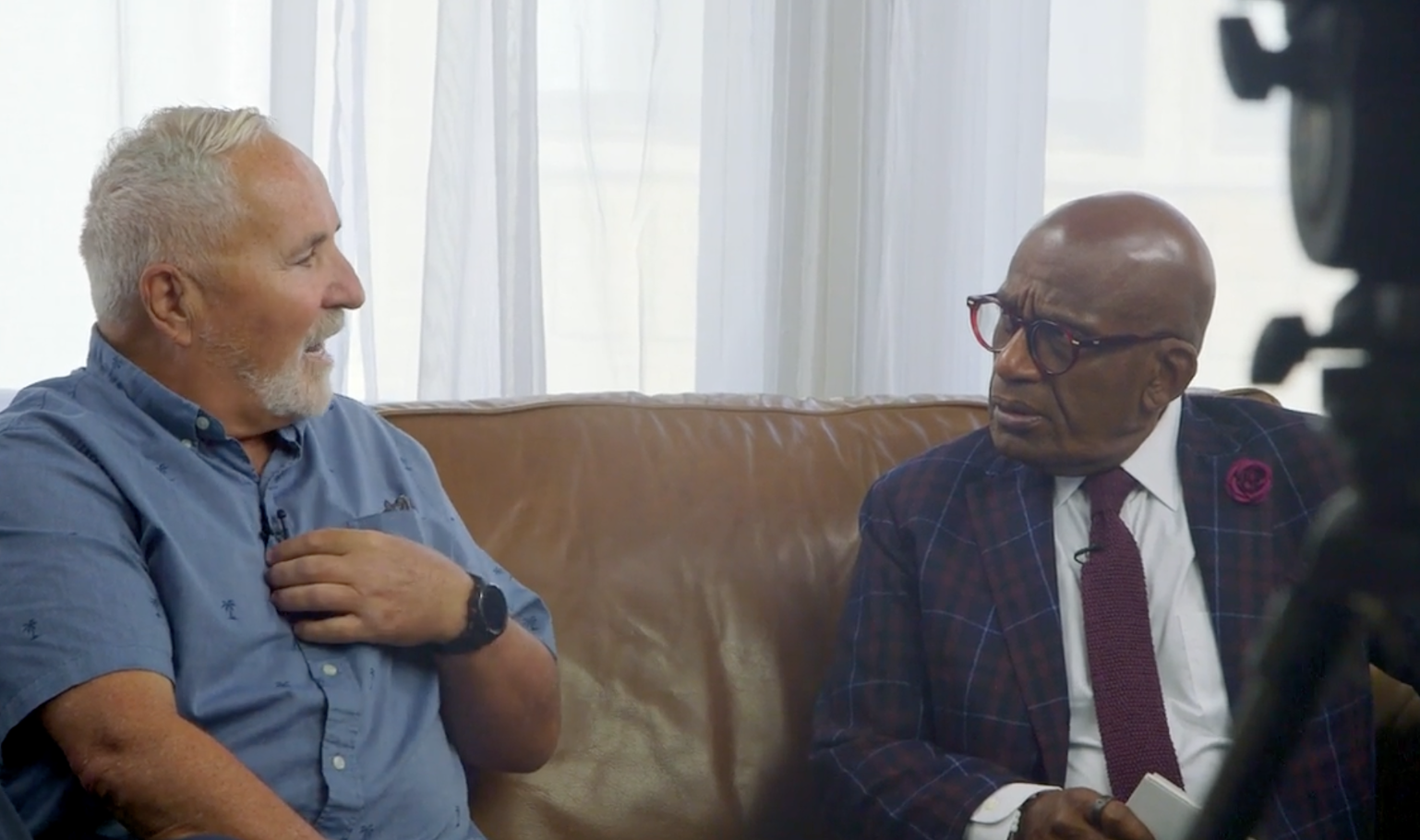
Similar to Wade’s story about his father, Roker brought up another reason why many men struggle to express their feelings: hesitance to show vulnerability in front of their kids.
“I think one of the reasons we also tend not to talk about it, especially within our family, and if [you’re] fortunate enough to have kids, you’re kind of used to being the dad and not wanting your kids [to] see you vulnerable,” Roker said.
“Yes sir,” agreed Jones, a father of four and grandfather of seven who says he doesn’t have a “bucket” list.
“I’m not kickin’ nothin’, I have a life list.”
A ‘Profound Crisis’ in Cancer Care
Thankfully, each of these men have overcome feelings of isolation, but not everyone is able to self-motivate or knows how to seek help. The truth is, outside of cancer treatment and day-to-day logistics with tests, surgeries and other steps along the way, there aren’t a lot of patients having their emotional needs met.
Doctors are often overworked, and treating the disease itself is, of course, their main goal. But many argue how the emotional impact of cancer can have such a profound effect on outcome, and managing side effects while living with cancer.
RELATED: Coping With Side Effects From Prostate Cancer Surgery: What To Expect
Earlier this month, the world-leading oncology journal The Lancet Oncology published “The Profound Crisis in Cancer,” a study assessing a failing health system in the more emotional aspects of cancer.
“Despite overall survival outcomes improving, the systems designed to deliver care increasingly fall short in addressing the emotional, relational and existential dimensions of cancer,” Gary Rodin and his team state.

Noting that “compassionate and attentive care” can certainly be found in each setting, “patients and families across global contexts continue to report being unheard, unsupported, and, at times, actively harmed by care structures that prioritize technical precision over human presence.”
In other words, patients need much more support.
The Commission “identifies a growing imbalance between technological innovation and the human dimensions of cancer care.”
A ‘Team of Support’ Is ‘Critical’
Dr. Kysa Christie, a clinical psychologist in the hematology and oncology clinic at the West Los Angeles VA, previously spoke with SurvivorNet about the weight of going through prostate cancer and her role of helping patients through it.
“One of the highest points of stress is before you even have that diagnosis,” Dr. Christie told SurvivorNet. “Because not knowing something is really scary.”
“You don’t know how to plan, you don’t know what it’s going to be like. You just don’t know,” she added. “And that can be consuming so often. That’s a very stressful time.”
A Guided Meditation for the SurvivorNet Community
Dr. Christie also explained how a diagnosis can affect the whole family.
“Cancer is something that affects not just the person who’s diagnosed, but the family, whether that’s your partner, whether that’s your kids, whether the community,” she explained, adding: “That team of support becomes critical to anybody that’s going through cancer.”
Content independently created by SurvivorNet with support from Novartis Pharmaceutical Corp.
Learn more about SurvivorNet's rigorous medical review process.


