
Coping With The Loss Of a Parent or Loved One
- As radio host and legendary TV presenter Ryan Seacrest is coping with the loss of his beloved dad Gary Seacrest, who peacefully passed away this year after a battle with prostate cancer, his family is planning to keep their Christmas traditions alive to honor his father.
- While the specific stage of Seacrest’s father’s cancer wasn’t made public, it’s important to remember that advances in care have greatly improved treatment options and management for people facing metastatic, stage four prostate cancer.
- Grief is a challenging and deeply personal journey, something Ryan Seacrest has openly demonstrated. Many people find comfort in allowing themselves to be vulnerable and expressing their feelings to others.
- As they work through their emotions, some discover that therapy provides valuable support. Others may lean on faith, connect with support groups, or keep family traditions alive to help them cope
- No matter which sources of comfort you turn to after a loss, it’s important to remember that there is no single “right””way to grieve — and no set timeline for healing.
Seacrest, whose dad passed away at age 81 on Halloween, exclusively told PEOPLE that his family will “certainly” be paying tribute to their loved one during the upcoming holidays, adding, “It’ll be a special Christmas.”
Read More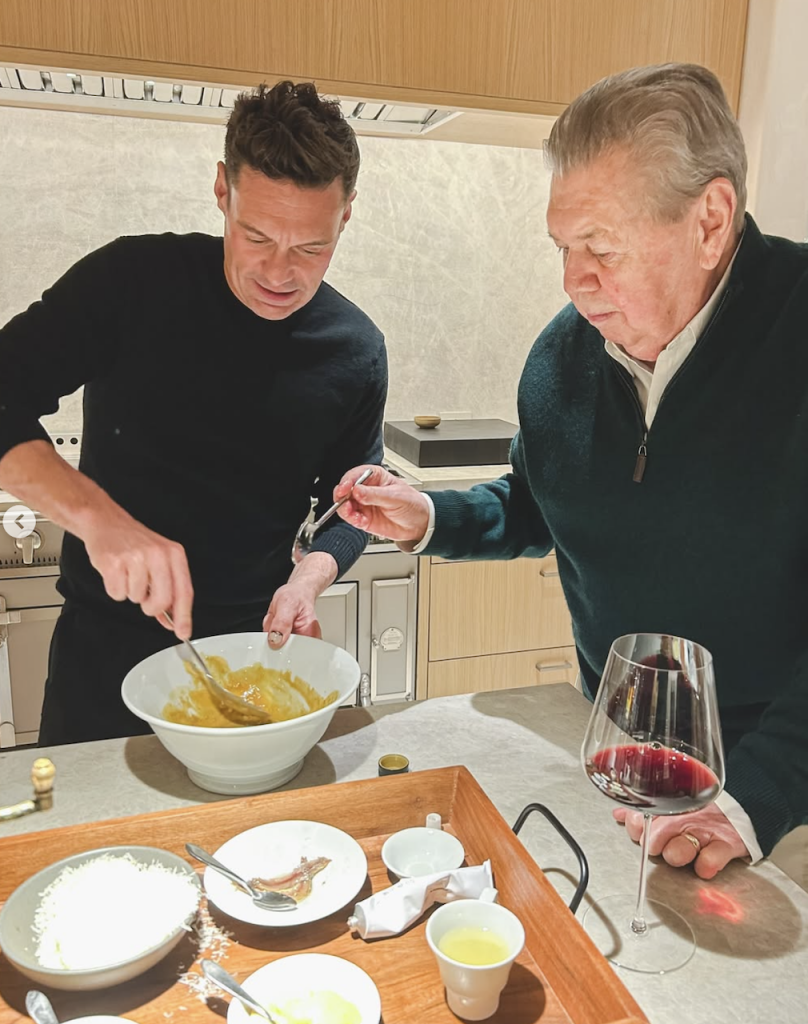
RELATED: 4 Ways to Start Over After a Life-Changing Event
Speaking further of his holiday traditions, while on are about five years ago, Seacrest said, “Sausage balls are Christmas morning.
“We do Christmas afternoon. You know I like to start the meal at 3:30 pm. … We will do the fondue on Christmas Eve and then we will wake up and make sausage rolled up with Bisquick and cheese and put them on a cookie sheet in the oven — they’re so good.”
View this post on Instagram
After previously opening up about his father’s cancer journey, on Instagram that his dad had passed away, posting a collection of throwback photos and writing, “It is with a heavy heart that I share with you that my loving father peacefully passed away earlier this week. My mom, sister and I have peace knowing he is in a better place and free of any pain or suffering.
“We are heartbroken.”
RELATED: Cancer Support Groups Aren’t for Everyone — We All Have Our Own Way of Coping
He continued, “He was a devoted husband for 56 years, an incredible Papa to Flora, and my best friend. Dad you will live in our hearts forever. I love you.”
The Ryan Seacrest Foundation remembered Seacrest’s dad in a sweet Instagram post, reading, “It is with the heaviest heart that we share the passing of Gary Seacrest. Together with his wife Connie and their children Meredith and Ryan, Gary helped found the Ryan Seacrest Foundation.
“He took immense pride in the joy and inspiration it brings to children and families during some of their toughest times, and his warmth, kindness, and unwavering support helped shape who we are today.”
Seacrest’s father passed away just months after the host shared on the July 21 episode of O”n Air with Ryan Seacrest” that his father had been living with prostate cancer for several years, which had recently progressed and metastasized, while his mother continues to be in remission from an unspecified form of cancer.
Although Seacrest had previously announced that his father’s cancer was “no longer detectable” around four years ago, Gary’s condition had declined. Seacrest chose to share the update publicly to raise awareness and let others facing similar challenges know they are not alone.
View this post on Instagram
Moving Through Grief
Grief is a difficult, truly personal process, something Ryan Seacrest has shown. Some find solace in vulnerability and sharing how they feel with others.
While working through grief and vulnerable tackling of the emotions that accompany it, some find tools like therapy to be helpful. Support groups can also be a benefit for those who are feeling isolated in their feelings of grief, as can turning to faith.
Whichever methods of support you look for after cancer loss, you should know that there is no correct way to grieve. There is no perfect timeline for grieving, either.
It’s important to remember that anxiety and fear are also totally normal reactions to the news of cancer, or the loss of a loved one, and acknowledging these emotions can be therapeutic and important to the healing process.
“I think the most important advice I would give to someone who has just received a cancer diagnosis is to find people whom they find as a source of support. To allow themselves to go through all of the different emotional reactions to that news,” said Dr. Susan Parsons, Director of the Center for Health Solutions/Center on Child and Family Outcomes at Tufts Medical Center, in a prior interview with SurvivorNet.
Fear, Anger, Anxiety You’re Entitled To Your Emotions
“The anger, the frustration, the fear. The disappointment. Whatever those emotions are, figure out what’s important to you and find those people that can help you realize that,” Dr. Parsons explained.
In times of frustration, it can be useful to a little bit of direction on specific ways to deal with it. A few of the most common ways to deal with fear and anxiety after a cancer diagnosis, that have helped people in the SurvivorNet community in the past, include:
- Let your family and close friends know and let them help. So many cancer survivors tell us they want and need support but are often too preoccupied to make specific requests. Urge those close to you to jump in with whatever practical help they can offer.
- Keep a journal. It can be extremely cathartic to let those feelings loose on paper. Grab a pen and a nice journal and chronicle your different thoughts throughout the day.
- Join a cancer support group. There are groups in nearly every community offering opportunities to connect with others going through a similar journey. You’ll learn incredibly helpful insight from others who can tell you about what to expect and how to stay strong on tough days.
- Consider seeing a therapist. Ask your doctor to refer you to a therapist so you can discuss your fears and concerns in a safe space. Often, vocalizing your thoughts and feelings rather than internalizing them can provide relief.
Understanding Prostate Cancer
If you or a loved one has been diagnosed with prostate cancer, it’s important to remember that most types of prostate cancers are treatable. According to the National Cancer Institute, the five-year survival rate of prostate cancer in the U.S. is 97.1%. There is, however, a small number of men whose type of prostate cancer may become unresponsive to treatment, for example, when cancer cells develop a resistance hormone therapy, the treatment may no longer work.
RELATED: Prostate Cancer: Overview
Prostate cancer begins in the prostate the walnut-shaped gland located between the rectum and bladder that produces the fluid that nourishes sperm. Outside of skin cancers, prostate cancer is the most common cancer in American men with about one in eight men being diagnosed with this disease during his lifetime.
Expert Prostate Cancer Resources
- Sex Is Possible After Prostate Cancer and 5 Other Facts You Should Know
- ‘A Profound Effect’: Treating Advanced Prostate Cancer With Hormone Therapy
- Advanced Prostate Cancer: Treatment For Metastatic Lesions To The Bone
- Don’t Believe the Hype: Do Your Own Research on Prostate Cancer Treatment
- Debating How to Treat Prostate Cancer: A Significant New Study Argues for Surgery Plus Radiation
- Metastatic Prostate Cancer Treatment is Improving
- There’s No One Definitive Symptom for Prostate Cancer, But There Are Clues
It’s important to remember a prostate cancer diagnosis is not always preceded by symptoms. And even when symptoms do occur, they can be inconsistent and hard to pinpoint.
“Prostate cancer is a very odd disease in that it doesn’t have a particular symptom,” Dr. Edwin Posadas, director of translational oncology and the medical director of the Urologic Oncology Program at Cedars-Sinai, told SurvivorNet.
Still, it’s important to note changes in urinary function, like urinating more or less often or waking up at night to go more than usual, could be a sign of prostate cancer. So, even if you think there’s nothing to worry about, always talk to your doctor about changes to your health when they occur.
There are many different treatment options for both early and later-stage prostate cancer including active surveillance, watchful waiting, surgery, radiation, cryotherapy, hormone therapy, chemotherapy, immunotherapy and targeted therapy. The disease is one where doctors may have differing opinions on the best treatment path to take, so don’t hesitate to ask lots of questions and seek out multiple opinions.
Second (& Third) Opinions Matter When Deciding Between Surgery or Radiation
“I think it behooves the patient to have multiple discussions or second opinions, not only by the urologist who did the biopsy and diagnosed that man, but also with other surgeons and other radiation oncologist just to get a very circumspect view of what the treatment options are,” Dr. Jim Hu, a urologic oncologist at Weill Cornell Medicine, told SurvivorNet. “Oftentimes, I think patients need to understand that our health system is based a lot on fee-for-service medicine.”
“And so therefore, a lot of physicians, I think, who are very well intentioned, will believe that their treatment is best for that particular man,” Dr. Hu added.
Treatment Decisions After a Prostate Cancer Diagnosis
Although there are numerous treatments available for prostate cancer, what your doctor recommends will depend on what category of risk your disease falls under. Sometimes that may mean doing nothing at all.
Prostate cancer is a slow-growing disease, so unless it’s been a majorly delayed diagnosis and in a more advanced stage, medical experts will sometimes suggest actively monitoring the growth, and the patient will go in for check-ups every six months or whatever timeframe the doctor deems best.
Dr. David Wise, NYU Langone medical oncologist, explains how Gleason score affects treatment and prognosis
The National Comprehensive Cancer Network (NCCN) guidelines divides prostate cancer into one of six risk categories based on how aggressive the cancer looks under the microscope and the chance of it coming back after treatment. These risk categories help guide treatment for the different subtypes of prostate cancers.
The main risk categories for prostate cancer are:
- Very-Low-Risk (VLR) and Low-Risk (LR)
- Favorable- (FIR) and Unfavorable-Intermediate-Risk (UFIR)
- High-Risk (HR) and Very-High-Risk (VHR)
Prostate cancers classified as VLR or LR represent the least aggressive forms of cancer. This categorization will be diagnosed depending on number of factors, including:
- Your doctor can’t feel the cancer on a physical exam, or it occupies one-half or less of one side of the prostate
- Your PSA is less than 10
- Your total Gleason (which is how the prostate cancer is graded) score is 6
- If your cancer is categorized as VLR or LR, your doctor may recommend active surveillance, which is sometimes called “watch and wait.”
Expert Prostate Cancer Resources
- Sex Is Possible After Prostate Cancer and 5 Other Facts You Should Know
- ‘A Profound Effect’: Treating Advanced Prostate Cancer With Hormone Therapy
- Advanced Prostate Cancer: Treatment For Metastatic Lesions To The Bone
- Don’t Believe the Hype: Do Your Own Research on Prostate Cancer Treatment
- Debating How to Treat Prostate Cancer: A Significant New Study Argues for Surgery Plus Radiation
- Metastatic Prostate Cancer Treatment is Improving
- There’s No One Definitive Symptom for Prostate Cancer, But There Are Clues
Dr. Nicholas Nickols, a radiation oncologist at the UCLA Department of Radiation Oncology, summarizes active surveillance as follows, ‘We carefully monitor the prostate cancer for evidence of progression or not, and then initiate treatment later, if at all.”
During active surveillance, you won’t receive any treatment but your doctor will key an eye on your cancer with a series of tests including:
- PSA Levels
- MRIs
- Repeat biopsies
It’s possible that your cancer may never progress to more aggressive forms of prostate cancer. Active surveillance should help your doctor catch any changes or progression.
RELATED: What is Active Surveillance?
Patients on active surveillance can be spared the side effects of pursuing the traditional ways of treating prostate cancer. If and when the disease becomes more aggressive, as indicated by a rising PSA, development of aggressive-looking disease on MRI, or increasing Gleason score, it can then be treated with surgery, radiation, hormone therapy, chemotherapy, or a combination of these therapies.
Dr. Edwin Posadas tells you what clues might signal that you have prostate cancer
How Do Doctors Stage Prostate Cancer?
Once your doctor has established that you do have prostate cancer, the next step is to learn its stage. The stage tells how far the cancer has spread, and knowing it can help your doctor decide on the right treatment for you.
The staging system doctors typically used for prostate cancer is called TNM, and it’s based on five factors:
- The extent of the main tumor
- Whether it has spread to any lymph nodes
- Whether it has spread (metastasized) to other parts of your body
- Your PSA level at the time of diagnosis
- The grade (based on your Gleason score), which is how aggressively your cancer is likely to behave
Prostate cancer has four stages, each of which is broken down further with a letter based on its extent.
Stage I
The doctor can’t feel the tumor or see it with an imaging test such as transrectal ultrasound. It was found during transurethral resection of the prostate (TURP) or biopsy. The cancer has not spread to nearby lymph nodes or to other parts of your body. Your Gleason score is 6 or less, and your PSA level is less than 10.
OR
The doctor can feel the tumor by digital rectal exam (DRE) or see it with imaging, and it is in one half or less of only one side (left or right) of your prostate. The cancer has not spread to nearby lymph nodes or elsewhere in the body. The Gleason score is 6 or less, and the PSA level is less than 10.
OR
You’ve had surgery to remove your prostate, and the tumor was only in the prostate. The cancer has not spread to nearby lymph nodes or elsewhere in your body. The Gleason score is 6 or less, and the PSA level is less than 10.
Stage IIA
The doctor can’t feel the tumor or see it with imaging. It was either found during TURP, or was diagnosed by needle biopsy. The cancer has not spread to nearby lymph nodes or elsewhere in your body. The Gleason score is less than or equal to 6, and the PSA level is at least 10, but less than 20.
OR
The doctor can feel the tumor by DRE or see it with imaging. The tumor is in one half or less of only one side of the prostate. Or, the prostate has been removed with surgery, and the tumor was only in the prostate. The cancer has not spread to nearby lymph nodes or elsewhere in the body. The Gleason score is less than or equal to 6, and the PSA level is at least 10 but less than 20.
OR
The doctor can feel the tumor with DRE or see it on imaging. It is in more than half of one side of the prostate or in both sides of the prostate. The cancer has not spread to nearby lymph nodes or elsewhere in your body. The Gleason score is less than or equal to 6, and the PSA level is less than 20.
Stage IIB
The cancer has not yet spread outside the prostate. Your doctor might feel it with DRE or see it with imaging. The cancer has not spread to nearby lymph nodes or elsewhere in your body. The Gleason score is 7, and the PSA level is less than 20.
Stage IIC
The cancer has not yet spread outside the prostate. Your doctor might feel it with DRE or see it with imaging tests. The cancer has not spread to nearby lymph nodes or elsewhere in the body. The Gleason score is 7 or 8, and the PSA level is less than 20.
Stage IIIA
The cancer has not yet spread outside the prostate. It might be felt by DRE or seen with imaging. The cancer has not spread to nearby lymph nodes or elsewhere in your body. The Gleason score is 8 or less, and the PSA level is at least 20.
Stage IIIB
The cancer has grown outside the prostate and might have spread to the seminal vesicles, or into other tissues next to the prostate, such as the urethral sphincter (the muscle that helps control urination), rectum, bladder, and/or wall of the pelvis. It has not spread to nearby lymph nodes or elsewhere in your body. The Gleason score is 8 or less, and the PSA can be any value.
Stage IIIC
The cancer might be growing outside the prostate and into nearby tissues. It has not spread to nearby lymph nodes or elsewhere in the body. The Gleason score is 9 or 10, and the PSA can be any value.
Stage IVA
The tumor might be growing into tissues near the prostate. The cancer has spread to nearby lymph nodes, but has not spread to other parts of your body. The Gleason score and the PSA can be any value.
Stage IVB
The cancer might be growing into tissues near the prostate and might have spread to nearby lymph nodes. It has spread to other parts of the body, such as distant lymph nodes, bones, or other organs. The Gleason score and the PSA can be any value.
Contributing: SurvivorNet Staff
Learn more about SurvivorNet's rigorous medical review process.
