
Coping With a Metastatic Cancer Diagnosis
- Dawn Roth, a body-positive fashion influencer, has announced on social media that she is battling metastatic cancer in her colon, lungs, and abdomen.
- Roth, 50, has since received an outpouring of support from her fans online, also inspiring others to get cancer screenings.
- Some people battling a disease like cancer are open to sharing their experiences as much as they can, while others prefer to keep it to themselves. SurvivorNet experts say both approaches and everything in between are valid.
- It’s important to remember that choosing to share a cancer journey is a personal choice, whether you’re a celebrity or not, and the same goes for other private topics.
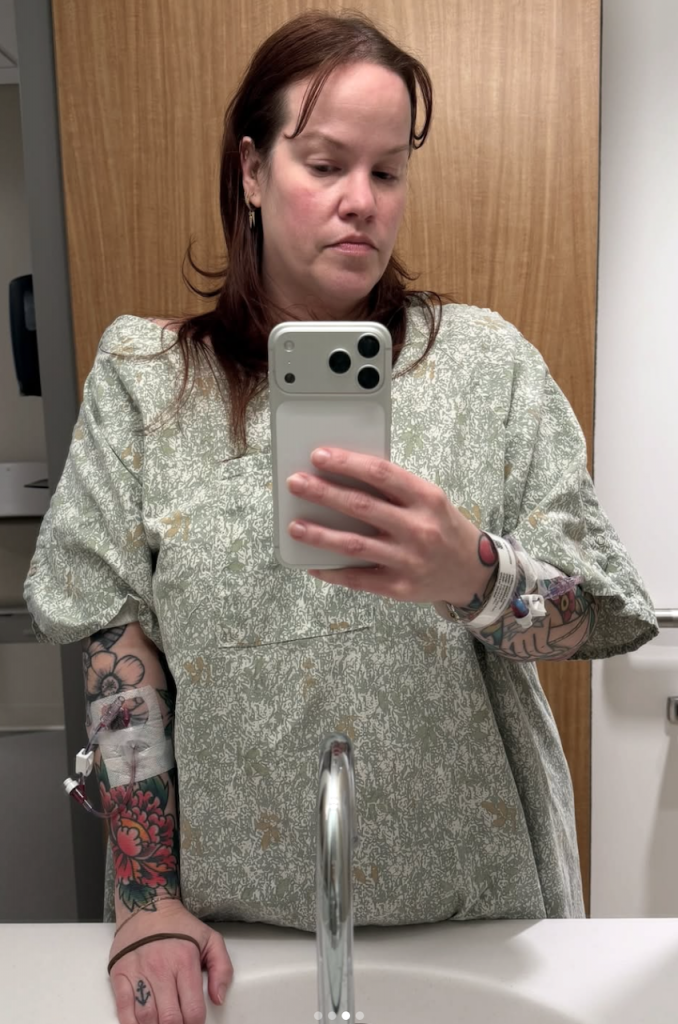
Roth, who champions personal style at every age, with a special focus on women over 50 in sizes 16/18 and beyond, revealed the news on her Instagram this week, sharing photos of her in a hospital gown.
Read More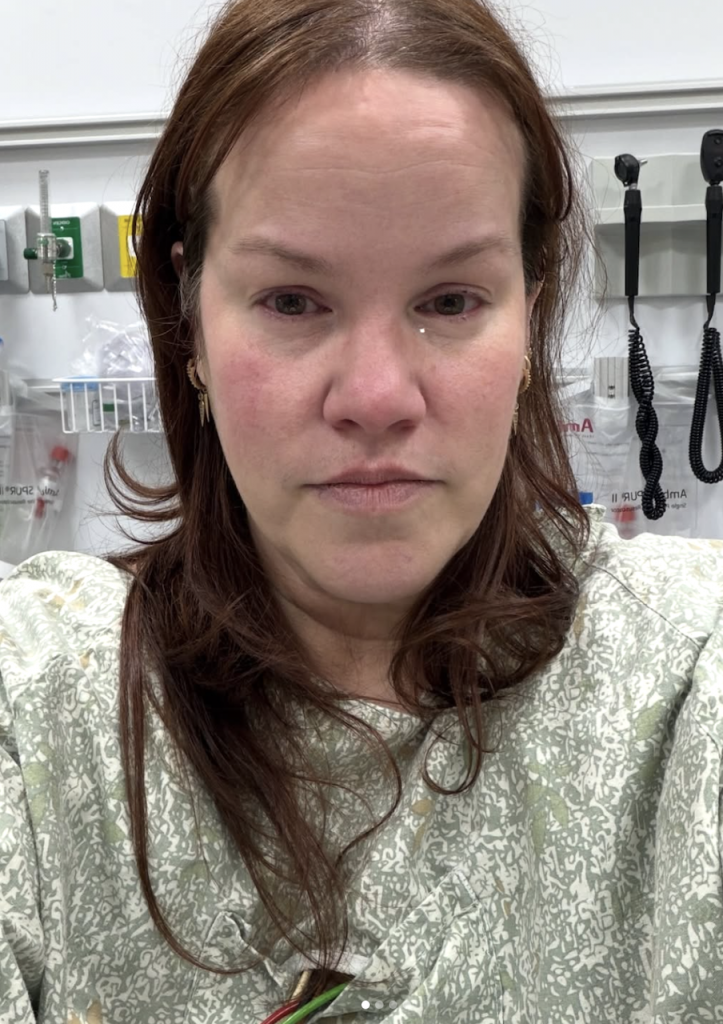
While the specifics of Roth’s cancer are still unknown, it’s heartening to see the outpouring of support as she moves forward with hope on this health journey.
RELATED: Can You Survive a Stage 4 Cancer Diagnosis? An Experts Weighs In
One of Roth’s fans commented, “From an internet stranger who gets joy from your post, sending you love, prayers, and light,” while another wrote, ” Oh, Dawn! I’m so sorry. This is a scary time, and we’re here to hold you up when you need it. I’m sending love and prayers to your and your family.”
Others shared their own stories, offering added optimism, with one writing, “So sorry you’re going through this…I am a stage 4 cancer survivor – I was diagnosed 22 years ago and have been in remission since. It was in my kidneys, liver and lungs. Know that we are all here for you, and your body is a miracle! Sending healing your way!”
A fourth supporter wrote, “Oh Dawn. Nothing softens that kind of news. You’ve got a world of internet friends fighting this battle with you and sending love.”
Addressing her supportive fan base, Roth took to her Instagram story to write, “I’m not really a threads user but the stories of hope on my last post feel like such a balm to my souls right now.”
Roth shared a screenshot of her thread’s post, reading, “I thought my last post would just reach a small group of my followers. Instread I got over 1,400 responses of hope, empathy, and encouragement.
“I’ll be holding on to all your stories in the hardest up coming days.”
Coping With Emotions During & After a Life-Changing Diagnosis
- Mental Health and Cancer — The Fight, Flight or Freeze Response
- SN & You Presents Mental Health: Coping With Emotions
- Mental Health: Understanding the Three Wellsprings of Vitality
- A Cancer Survivor’s Ode To Friends and Family: “My Support System Helped Me Heal”
- The Power Of Prayer: The Remarkable Link Between Religion And Resilience
According to People, Roth shared additional details about her diagnosis on her Instagram Stories, saying her cancer journey began when an ER visit and a CT scan led doctors to find the “unexpected.”
“It’s been since Sunday afternoon. I am waiting for my pathology on the biopsies. They did a biopsy of my liver. They did a biopsy of part of my colon. They will send it to oncology and assign me a care team, and I will know what the next steps are,” Roth said on her Instagram story. I just want to say how grateful that I am to be held by all of you.”
In another Instagram Stories post, Roth shared that she has already began “Ordering my ‘Kicking Cancers Ass’ Wardrobe.”
The Choice to Share
The choice to share or not share one’s cancer diagnosis is a personal one for anyone facing the disease, even if they’re not a celebrity. While some people choose to share only with close friends and family, others post their entire journey on social media, create blogs and detail their treatments, side effects and doctor reports.
Survivor Lauren Chiarello talks about staying present in the moment while battling cancer.
According to Dr. Renee Exelbert, a licensed psychologist and founding director of The Metamorphosis Center for Psychological and Physical Change in New York, the decision to openly disclose or not disclose one’s diagnosis may be made more complicated for someone in the public eye, as they may feel pressure to serve as a role model, or to use their notable platform for the greater good.
She says public figures and celebrities are often held to a harsher standard, frequently having their appearance and behaviors rigorously evaluated. This might make hiding a cancer diagnosis more difficult and may also make disclosing a cancer diagnosis a greater burden to bear.
Also, just because someone is a public figure or celebrity does not spare them from judgment and the insensitive comments of others, especially while they may be fighting for their life.
Dr. Exelbert says the decision to disclose or not disclose a cancer diagnosis is a very individual and personal one in any case.
“Certain Individuals may feel as though their sense of self has been deeply impacted by their diagnosis, and they want to keep it private. At their core, certain individuals may struggle with appearing weak, vulnerable or sick, and particularly do not want to withstand the opinion or commentary of others while facing a cancer diagnosis,” she explained.
“Additionally, some may feel that revealing a cancer diagnosis may pose a threat to their sense of professional identity and how capable they are perceived by others.”
Dr. Exelbert also said some may feel they don’t have the coping resources to withstand scrutiny, whereas others may welcome the distraction and attention. Most importantly, however, she said there is no right or wrong approach.
“When an individual experiences trauma, which cancer certainly is, they need to be in charge of how their story is told in order to avoid further disempowerment.
“Thus, the decision to disclose or not to disclose should be wholly and rightfully left up to each individual.”
So, is one way more beneficial than the other? Dr. Exelbert says there are pros and cons to sharing.
“A positive aspect of sharing one’s diagnosis on social media is the potential to receive an outpouring of support, occasionally from people all over the world who have experienced something similar, and who may be able to offer useful suggestions,” Exelbert says. “Additionally, someone’s unique story may catch the attention of those performing clinical trials or offering unique treatment options, looking for participants.”
She said the ability to inspire countless people with one’s experience and story can also be a very powerful motivating factor.
Learn to Accept Yourself — A Huge Part of Living With Cancer
“Some individuals are looking to chronicle their journey, almost as testament to what they have experienced and to leave a legacy. It might additionally be beneficial to publicly share one’s story, as it can serve as a platform to educate others about cancer and its emotional and physical symptoms, as well as challenge stigma and change society.”
On the other hand, she says a con of revealing one’s diagnosis on social media is that people may share unsolicited stories of poor outcomes that they have either heard about, or experienced personally, many of which are unrelated to your particular situation. For example, some may tell you they know someone who had the same type of cancer, but died, which can be overwhelming and create undue stress.
“Additionally, once you share your diagnosis, you often have to manage the emotional experience of others,” Dr. Exelbert told SurvivorNet. “Sometimes, people will be very upset by your diagnosis and need you to take care of them or make your situation easier for them to deal with. This can prove quite difficult when you are barely in control of managing your own emotions. Further, many individuals might find it quite difficult to present themselves in such a vulnerable way on social media, as many often utilize this medium to garner accolades from presenting their ‘ideal self’ versus their ‘real self.’”
No matter what someone’s choice is when it comes to sharing a cancer diagnosis, the most important thing is that they feel support. For some, support from a few close friends, family members or professionals may be enough, while others need to feel connected on a larger scale. The last thing anyone needs is to be made to feel bad about that choice.
It’s important to remember that due to cancer treatment not being a one size fits all approach, it affects everyone different mentally, and not everyone feels comfortable sharing what they are going through with others in social situations.
Do I need to share my diagnosis with others? Psychiatrist Dr. Lori Plutchik weighs in.
Some people want to share their experiences as much as they can and others don’t want to tell anyone. Both of these approaches, and everything in between (maybe you only want to tell a few close friends about your diagnosis), are valid.
“Patients who have just been diagnosed with cancer sometimes wonder how they are going to handle the diagnosis of the cancer in social situations,” psychiatrist Dr. Lori Plutchik explained to SurvivorNet in an earlier interview.
“How much information they should share and with whom they should share the information … everybody is different.”
Dr. Plutchik explains that some share the information widely, with family, friends, and beyond and feel comfortable doing so. “Other people are much more private about it,” she says. “And there is no one right way to handle this diagnosis.
“People should do what feels right to them. Going through a cancer diagnosis, through treatment, is often a very long process. And then if you also include after treatment ends where a person is in a kind of state of limbo, waiting to see if they are clear and get their scans. It may be three months or six months into the future. People are still dealing with uncertainty at that point,” she explains.
Dr. Plutchik also stresses that those close to a person going through cancer should be respectful of their wishes when it comes to disclosing their diagnosis and seeking support.
Finding the Support You Need
Through cancer and into the healing period, it’s important to know that you are not alone.
Roth is fortunate to have a huge supportive fan base, but if you find yourself needing support and you don’t know where to turn, just know that there is help out there. A social worker or life coach can advocate for you and help you navigate community groups of people in similar situations to befriend, or think of a friend or mentor whom you can trust.
“Some people don’t need to go outside of their family and friends’ circle. They feel like they have enough support there,” psychiatrist Dr. Lori Plutchik told SurvivorNet. “But for people who feel like they need a little bit more, it’s important to reach out to a mental health professional.”
‘My Faith Has Been Very Important’ – Survivor Monica Layton’s Story
Dr. Plutchik also stressed how important it is for people supporting cancer survivors to understand their emotions can vary day-to-day.
“People can have a range of emotions, they can include fear, anger, and these emotions tend to be fluid. They can recede and return based on where someone is in the process,” she explained.
Meanwhile, Dr. Charmain Jackman, a licensed psychologist and founder of InnoPsych, echoes the benefits of positive mental health while facing a health diagnosis.
“In the face of a life-threatening diagnosis, fear, hopelessness, and despair can quickly take space in your mind,” Dr. Jackman explained.
“However, your mindset is a superpower and can be a potent antidote to illness. Practicing gratitude, cultivating joy, and connecting to the community are practical ways to develop a resilient mindset.”
Contributing: SurvivorNet Staff
Learn more about SurvivorNet's rigorous medical review process.


