Helping Patients Regain Quality of Life
- Glioma surgery focuses on “maximal safe resection,” meaning surgeons remove as much tumor as possible while protecting essential functions like speech, movement, and memory. Because diffuse gliomas infiltrate the brain with microscopic “peach fuzz” edges, surgery alone cannot cure the disease — but it remains a crucial first step in treatment.
- Advanced planning and techniques improve both safety and outcomes. Surgeons use MRI, functional mapping, and sometimes awake surgery to identify critical brain regions in real time. This allows them to push the boundaries of tumor removal while minimizing the risk of permanent deficits.
- Recovery is a gradual process, but many patients return to meaningful, high-quality lives. Early rehabilitation, close follow-up, and support from neuro-oncology specialists help patients regain strength, speech, cognition, and independence, offering real hope and a path forward after surgery.
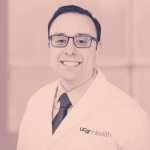
“Glioma just means a massive glial cells, which is where most brain tumors start, but more accurately, these tumors are considered diffuse gliomas,” Dr. Jacob Young, a Neurosurgeon focused on glioma surgery at the University of California San Francisco, tells SurvivorNet, about undergoing brain surgery.
Read MoreUnderstanding What Your Neurosurgeon Is Aiming For
In simpler terms:
Your tumor may have parts that spread microscopically into surrounding brain tissue (“peach fuzz”) even if they don’t show up on the MRI.
The goal of surgery is maximum safe resection (removal), where as much tumor is removed as safely possible while balancing preservation of neurological functions such as speech, mobility and memory.
Dr. Young emphasizes, “One of the keys … is how can I maximize the resection of this tumor or the removal in the safest possible way.”
This means the decision to proceed isn’t just “get all of it out now” but rather “get as much as we safely can, at the right time, in the right way, for you.”
Safety Resectability
Before you walk into the operating room, you’ll undergo a number of steps: imaging (MRI, possibly functional MRI), neurological exams (speech, memory, movement), discussions of your goals and your brain’s “real estate” (areas critical for speech or movement).
“Imaging interpretation is key when thinking about safety resectability,” Dr. Young.
“I’m looking at the scan to determine how quickly I think something needs to be done, whether it can be done safely asleep or if we need to consider an awake operation to remove this tumor. The characteristics of the mass that might indicate if it’s going to have elevated blood flow or a particular dense tumor, things that might change what I need to be ready for surgery.”
The Procedure
“Believe it or not, it’s very safe to do awake surgery. That doesn’t mean that the patient is wide awake the entire time. We are talking about many hours for these operations. We have to go slow to be safe, but what we do is we get patients very comfortable,” says Dr. Young.
“We use a combination of intravenous medications and local medicine, just like you would get at the dentist. To numb the skin and the area around the incision. [This] allow us to awake a patient when we need them, to participate in either language or cognitive testing.”
Dr. Young continues, “We can have patients awake and participating in tasks to help guide us. To let us know if they’re starting to either develop any indications that we’re getting close to critical areas.”
In practical terms:
- If the tumor is near “eloquent” brain areas (speech, language, movement), the surgery may be done partially awake: you might be sedated for part, and awake for part, so the surgeon can test your speech/movement in real time. This helps them remove more of the tumor safely.
- If the surgery is done under general anesthesia, similar careful planning applies and intraoperative brain-mapping can help protect your neurologic function.
What to expect immediately afterwards
Once you’re out of the operating room:
- You’ll usually go to a Neuro-Critical Care Unit or ICU for close monitoring.
- You may have tubes, drains, and a head dressing post-operatively. You will be monitored carefully including frequent assessment of your vitals (blood pressure, heart rate, oxygen saturation) and neurologic status, evaluating your speech, movement, sensations, and alertness.
- It’s common to feel groggy, disoriented, and to have headache, nausea, or sleepiness from anesthesia & surgery; this is expected.
- Within the first day you’ll typically be encouraged to sit up, take short walks (with assistance) unless your surgeon recommends otherwise. Early mobilization after surgery helps reduce risk of post-operative complications such as blood clots or pneumonia.
Recovery & Rehabilitation: Getting Back to Life
Hospital stay and early recovery
- Depending on your tumor location, surgery extent, and your health, hospital stay is often 3-10 days for brain tumor surgeries.
- While in the hospital, you’ll work with physical therapists, occupational therapists, speech therapists, and other specialists to start regaining strength, walking, speech and cognitive skills.
The first week or two can be the most challenging. You may feel worse than before surgery, but this is not unexpected as your brain is healing.
Getting home and longer-term recovery
Once home, keep in close contact with your neurosurgeon and the rest of your brain tumor care team to review final pathology and determine next steps including regular surveillance visits and MRIs.
Recovery time varies: many patients see meaningful improvement within 3-6 months, though full recovery (physical, cognitive, emotional) may take a year or longer.
Rehabilitation continues:
- Physical therapy for walking, balance, strength
- Occupational therapy to help you get back to daily tasks (driving, cooking, work)
- Speech and language therapy if you had language/speech changes
- Cognitive rehabilitation: strategies to deal with memory or attention changes.
Returning to work, quality of life and hopes
Many patients with gliomas recover to a good quality of life — working, spending time with family, pursuing meaningful activities. Your neurosurgeon’s goal, as Dr. Young emphasizes, is precisely this.
Ask your team about when you might safely resume driving, return to work, engage in leisure activities — these depend on your tumor location, surgery, recovery progress.
Remember, emotional health is important. Dealing with a brain tumor diagnosis and surgery is challenging. Don’t hesitate to seek support through counseling, patient support groups, or neuro-oncology social workers—they’re vital resources on your journey.
Living with Hope and Realistic Optimism
Dr. Young’s message is clear: we aim for maximal safe removal and preserved brain function, so you can return to meaningful life.
“It’s not the case that there will be no impact of surgery, but we’re trying to minimize that impact. We want people to be able to return to work. We want people to have high quality of life,” Dr. Young advises.
“We want people to have the same personality and memory and executive functioning as they have before surgery, and that’s our goal.”
The simple act of reading this indicates you’re taking a proactive step toward your journey. That matters.
Expert Resources On Gliomas
- After Treatment, The Importance of Monitoring For Glioma Recurrence
- Biopsy or Surgery First? How Surgeons Decide With Glioma Patients
- Brain Imaging Options for Glioma: What To Expect With MRI & CT Scan
- Chemotherapy For Glioma: What Are The Side Effects And How Can I Manage Them?
- Coping with Glioma: Managing the Emotional and Psychological Impact
- Diagnosing Gliomas — Resections and the Grading System
- Glioma Diagnosis: Take Control By Understanding The Value Of Your Treatment Team
While no one can guarantee “everything back to exactly as it was,” many patients do regain function, adapt, and live fulfilling lives.
It’s imperative to focus on what you can control: choosing your centre/surgeon wisely, asking informed questions, staying engaged with your care team, building your support system, and caring for your whole self (physical, cognitive, emotional, social).
WATCH: FDA Approved Vorasidenib for IDH Mutant Gliomas
Learn more about SurvivorNet's rigorous medical review process.