
Navigating a Non-Hodgkin Lymphoma Diagnosis
- An Arkansas woman discovered a tumor that was later diagnosed as non‑Hodgkin lymphoma after mistaking it for a popcorn kernel stuck in her mouth, a finding made even more emotional due to her father’s death from Hodgkin lymphoma.
- “The two main classifications I think of in terms of non-Hodgkin lymphoma are lymphomas that are more indolent and those that are more aggressive because those are treated very differently,” Dr. Jennifer Crombie, medical oncologist at Dana-Farber Cancer Institute, tells SurvivorNet.
- Her treatment plan included chemotherapy and radiation, which successfully targeted the tumor but caused long‑term dental complications, including the loss of her teeth. According to the National Cancer Institute, oral radiation can cause mouth issues.
- Non-Hodgkin lymphoma treatment depends on the type, stage, and how fast it grows. People with aggressive non-Hodgkin lymphoma can expect to get a chemotherapy combination called R-CHOP, which is a drug cocktail consisting of chemotherapy drugs plus an antibody drug and a steroid to treat diffuse large B-cell non-Hodgkin lymphoma.
“I thought I had got a popcorn kernel stuck in the roof of my mouth,” Lonenetta Bradford told KARK News. “They go in to clean it out, and there’s a tumor.”
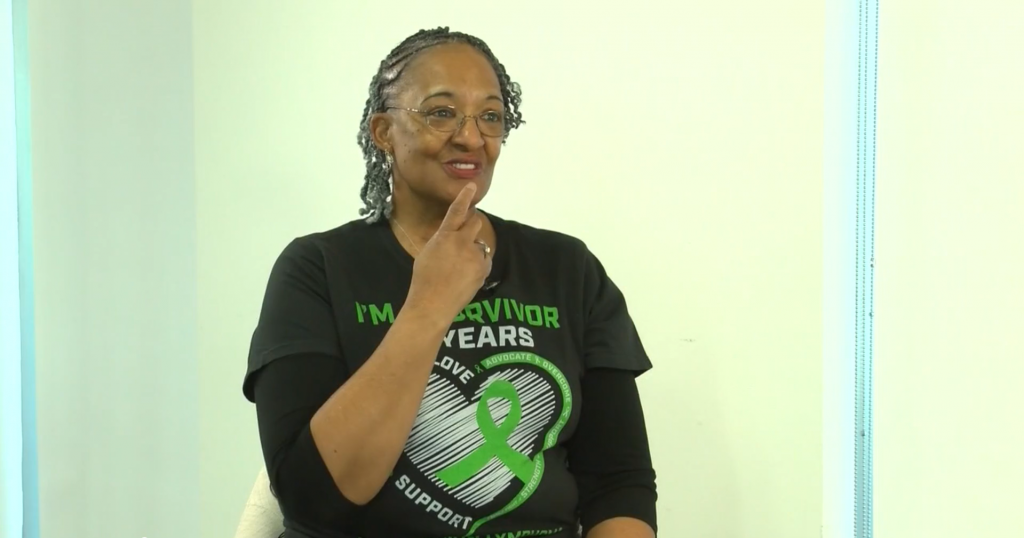
Her dad’s experience immediately raised the stakes, and Bradford quickly began working with her care team on a treatment plan involving chemotherapy and radiation.
WATCH: Biopsies for Non-Hodgkin Lymphoma
The radiation targeting the tumor in her mouth has since created new dental challenges, a painful echo of the very symptom that first alerted her that something was wrong.
“A lot of people might not say this, but at 65 years old, I have no teeth,” she explained. “I lost my teeth over the years because of the radiation, so I had to deal with that,” Bradford added.
“Radiation therapy is actually ionizing energy, where energy goes through your body, essentially causes DNA damage,” Radiation Oncologist Dr. Subhakar Mutyala explained to SurvivorNet.
“It is a treatment where you don’t feel the treatment itself. Now, sometimes, you might feel the place where we place the tumor. If we’re placing applicators in the cancer, you might feel that. Or if you’re lying on a table and we’re holding you still, you might feel that. But the actual treatment is just ionizing energy,” Dr. Mutyala continued.
According to the National Cancer Institute, typical side effects of radiation to the head and neck may include:
- Fatigue
- Hair loss
- Changes to the skin or sense of taste
- Difficulty swallowing
- Mouth issues
- A less active thyroid gland
As Bradford continues on her cancer journey, helping her stay uplifted has been her faith.
“I’m hoping that it will help people, not just with cancer, anything in life that will help them to trust God, have faith, and fight, and not give up until he says it’s time to go,” she said.
For many people facing cancer, faith becomes an anchor as they’re facing headwinds of treatment, treatment side effects, and the physical and emotional toll that comes with it all.
Research published in Cancer shows that nearly 70% of patients pray for their health—far more than the general population.
WATCH: Three-time cancer survivor shares how her faith helped her during cancer.
Cancer psychologist Dr. Andrew Kneier helped co-author “Coping with Cancer: Ten Steps toward Emotional Well-Being.” He also co-authored a column published by Stanford Medicine with Rabbi Jeffery M. Silberman, director of spiritual care at Danbury Hospital in Connecticut.
Together, they emphasize the deep emotional and psychological support that faith provides to those battling illness.
According to Kneier and Silberman, spirituality offers a powerful coping mechanism, helping individuals navigate the uncertainty that comes with a cancer diagnosis.
“A person’s faith or spirituality provides a means for coping with illness and reaching a deeper kind of inner healing,” they explain.
Faith helps patients in multiple ways, including:
- Seeking answers to the difficult questions illness presents.
- Finding comfort in the midst of fear and pain.
- Gaining a sense of direction during an overwhelming and uncertain time.
Religious teachings, they argue, can serve as a guidepost, offering strength and resilience when navigating the emotional and physical challenges of cancer.
New York City Presbyterian Pastor Tom Evans tells SurvivorNet about the importance of finding ways to cope with the complex web of feelings you may be experiencing after a challenging health diagnosis, such as cancer.
WATCH: SurvivorNetTV produced a special episode, “Turning to Faith,” in which we followed the journeys of four women and how they turned to faith to get through their diagnoses.
“It’s important to reach out in a simple prayer to God, even if you’ve never prayed before, you don’t know what to say, a heartfelt plea, ‘God, help me, be with me,’” Pastor Evans told SurvivorNet.
“You can reach out to God, and you can reach out to people, your friends and family, and say, ‘I can’t do this on my own. I need you.’ “It’s in that willingness to be open and to receive that we can find something deeper that we never would’ve encountered without this hardship,” Evans continued.
Expert Resources on Non Hodgkin Lymphoma
- All About Biopsies to Diagnose Non-Hodgkin Lymphoma
- All About Follicular Lymphoma: A Common Type of Non-Hodgkin Lymphoma
- All about Biopsies for Non-Hodgkin Lymphoma
- Bispecific Antibodies Deliver One-Two Punch to Non-Hodgkin Lymphoma
- Bispecific Antibodies vs. CAR T-Cell Therapy: What Are the Differences Non-Hodgkin Lymphoma Patients Need to Know?
- CAR T-Cell Therapy for Non-Hodgkin Lymphoma
Better Understanding Non-Hodgkin Lymphoma
“Non-Hodgkin lymphoma is a big category,” Dr. Julie Vose, chief of hematology/oncology at the University of Nebraska Medical Center, previously told SurvivorNet.
All non-Hodgkin lymphomas begin in white blood cells known as lymphocytes, which are part of your body’s immune system. From there, doctors separate these cancers into types depending on the specific kind of lymphocytes they grow from, B-cells or T-cells.
WATCH: The type of lymphoma you have matters.
Knowing which of these you have can help steer you to the most appropriate treatment.
One way doctors divide up these cancers is based on how fast they’re likely to grow and spread. “The two main classifications I think of in terms of non-Hodgkin lymphoma are lymphomas that are more indolent and those that are more aggressive because those are treated very differently,” Dr. Jennifer Crombie, medical oncologist at Dana-Farber Cancer Institute, tells SurvivorNet.
Once you’ve been diagnosed with non-Hodgkin lymphoma, the next question your doctor will want to answer is whether you have B-cell or T-cell lymphoma. That answer is important because it will help determine your treatment.
B-cells and T-cells are two kinds of lymphocytes. They’re both infection-fighting cells, but they work in different ways.
About 85% of non-Hodgkin lymphomas affect B cells. These cells produce antibodies, proteins that react to foreign substances like viruses or bacteria in your body. The antibodies attach to another protein on the surface of the invading cells, called an antigen, to target and destroy them.
Types of B-cell lymphoma include:
- Diffuse large B-cell lymphoma
- Follicular lymphoma
- Small lymphocytic lymphoma (SLL)/chronic lymphocytic leukemia (CLL)
- Mantle cell lymphoma
- Marginal zone lymphomas
- Burkitt lymphoma
- T-cell lymphomas make up only 15% of non-Hodgkin lymphomas. Unlike B-cells,
- T-cells directly destroy bacteria and other invaders.
Types of T-cell lymphoma include:
- T-lymphoblastic lymphoma/leukemia
- Peripheral T-cell lymphomas
- Cutaneous T-cell lymphoma
What Treatment for Non-Hodgkin Lymphoma Looks Like?
Lymphoma treatment largely depends on the nature of your specific diagnosis. For non-Hodgkin lymphoma patients, their cancer is more likely to spread randomly and be discovered in different groups of lymph nodes in the body. Hodgkin lymphoma cancers, on the other hand, are more likely to grow consistently from one group of lymph nodes directly to another.
WATCH: Non-Hodgkin lymphoma treatment options
“There are some lymphomas that are very treatable but not curable,” Dr. Lawrence Piro told SurvivorNet.
Dr. Lawrence Piro is the President and CEO of The Angeles Clinic and Research Institute in Los Angeles, a Cedars-Sinai affiliate. He adds that some lymphomas progress quickly if left untreated.
Non-Hodgkin lymphoma treatment depends on the type, stage, and how fast it grows. People with aggressive non-Hodgkin lymphoma can expect to get a chemotherapy combination called R-CHOP, which is a drug cocktail consisting of chemotherapy drugs plus an antibody drug and a steroid to treat diffuse large B-cell non-Hodgkin lymphoma.
R-CHOP stands for:
- R: Rituximab (Rituxan) is a monoclonal antibody that attaches to a specific protein called CD20, which sits on the surface of B cells. It targets cancerous cells and destroys them.
- C: Cyclophosphamide is a type of chemotherapy drug
- D: Doxorubicin hydrochloride (hydroxydaunomycin) is a type of chemotherapy drug
- V: Vincristine sulfate (Oncovin) is a type of chemotherapy drug
- P: Prednisone is a steroid that lowers inflammation
Patients receiving R-CHOP receive the drug in six cycles that are three weeks apart.
“R-CHOP is a cocktail of drugs. There are five different drugs in that recipe,” Dr. Jennifer Crombie, medical oncologist at Dana-Farber Cancer Institute, tells SurvivorNet.
WATCH: Understanding R-CHOP treatment.
R-CHOP side effects can include:
- Tiredness and weakness
- Hair loss
- Mouth sores
- Bruising and bleeding
- Increased risk of infection
- Appetite loss and weight loss
- Changes in bowel movements
Immunotherapy and targeted therapy are also treatment options for Non-Hodgkin Lymphoma patients.
Rituximab (Rituxan) was the first immunotherapy drug approved to treat some forms of non-Hodgkin lymphoma. “Rituximab is the immunotherapy that has been approved the longest, and we have the most experience with lymphoma,” Dr. Chong tells SurvivorNet.
Rituxan has side effects, including fever, chills, swelling under the skin, itching, and mild shortness of breath.
Brentuximab vedotin (Adcetris) is a relatively new targeted treatment for non-Hodgkin lymphoma and Hodgkin lymphoma. This drug is an antibody-drug conjugate that combines an antibody (a type of protein that recognizes foreign substances in the body) with a drug that treats cancer. It uses a particular protein to deliver medicine directly to the cancer cell.
Non-Hodgkin lymphoma can also be treated with radiation, which aims beams of intense energy at the cancer to stop cancer cells from growing and dividing.
Questions for Your Doctor
If you are dealing with a lymphoma diagnosis, it’s important to ask your doctor a series of questions so you will have an idea of what your next steps will look like. To help you during this difficult time, SurvivorNet has some questions to kickstart your conversation with your physician.
Also, make use of SurvivorNet’s proprietary AI-tool “My Health Questions” to further aid your cancer journey.
- What type of lymphoma do I have?
- What does my pathology report say about my diagnosis?
- Should I get a second opinion before I explore possible treatment options?
- Based on my diagnosis, what do you anticipate my treatment path?
- What common side effects should I expect when I begin treatment?
- Will I be able to continue working and performing normal daily activities during treatment?
- Where can I get help working with the insurance company regarding treatment costs?
- Who do you recommend I get mental health help from during my treatment?
Learn more about SurvivorNet's rigorous medical review process.


