
Understanding Colon Cancer
- NBC’s “Today” show co-host Craig Melvin recently created a polo and socks set to raise awareness for colon cancer, a disease his late older brother Lawrence Meadows battled.
- Colon cancer is highly treatable and curable when detected early. Screening options include at-home tests like Cologuard, though medical experts recommend a colonoscopy for more effective detection.
- Colorectal screenings are generally advised starting at age 45, but individuals with higher risk factors, such as a family history of colon cancer, may need earlier testing. Consulting a doctor about screening options is recommended.
- Know that it is normal to feel sad about changes in your life that might be brought on by death or a cancer diagnosis. Some days can be tougher than others, and overall, talk therapy is helpful — so it’s important to reach out to your doctor, to a therapist or to support groups in your community if you are struggling after loss.
- If you have a colon cancer screening coming up or have recently had one, you may have questions you want answered. SurvivorNet’s proprietary AI tool “My Health Questions” is designed specifically for patients and caregivers.
In an effort to raise awareness on the importance of screening for colon cancer, Melvin has created items for purchase, featuring the dark blue ribbon representing colon cancer awareness and the NBC “TODAY” logo.
Read More
“Over the years, I’ve been inspired to create special TODAY tie, pullover, and sock sets in honor of my brother. This year, I took a sportier approach with a navy TODAY polo and sock set. With your support, we can help raise awareness about the life-saving importance of preventive screening.”
The polo is priced at $66, and the socks are available for $30.
Melvin, who took to Instagram to share a video clip of him gifting the socks and polo to some of his coworkers, was praised by fans for taking part in a “very important cause.”

One fan commented, “Thank you for advocating for all of us living with colorectal cancers! My husband and I both diagnosed stage four. I’ve made it my mission to raise awareness and encourage everyone to get their: checked.”
Another chimed in, “Thanks for turning your loss into purpose!!!!”
“Thank you for all your advocacy @craigmelvinnbc. My Dad had colon cancer and, ultimately, died after it metastasized. Your brother would be so proud of the energy you give to raising awareness. Get screened, folks!” commented another fan.
A fourth fan of Melvin’s added, “What a fun way to spread the word about colorectal cancer!! Those socks are so cool.”
View this post on Instagram
Melvin’s Family History Of Cancer
Melvin’s brother Lawrence passed away at age 43 on December 9, 2020—after a four-year battle with the disease.
RELATED: Craig Melvin’s Mom Faced Early-Stage Breast Cancer – The Family Toll & Leaning on Faith
“One of the things that we found out after my brother was diagnosed is that there was, in fact, a family history of colorectal cancer. It didn’t come up until we started asking questions,” Melvin previously told SurvivorNet. “One of the things we’ve found over the last few years is that’s the case in a lot of families.”
He continued, “People don’t like talking about their colons or their rectums or blood in their stool. These aren’t conversations that families have.
“When you start to have conversations like that with family members and family history becomes apparent … then that leads to other conversations with primary care physicians. If one person does it and goes to their primary care physician, who then refers them to someone and they get a colonoscopy and they find something, we may have saved one life.”
View this post on Instagram
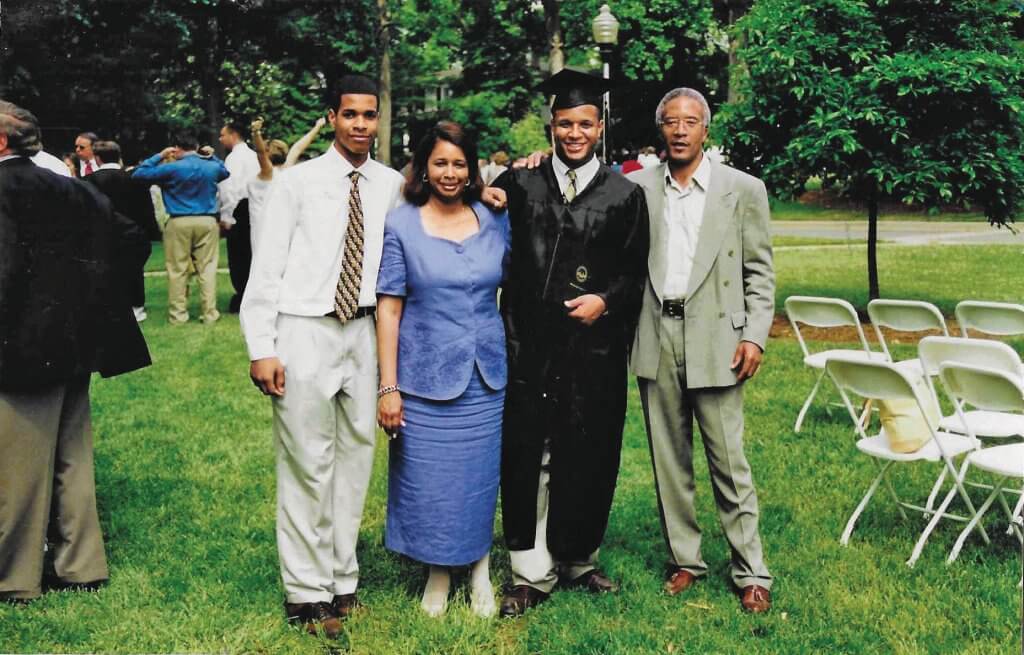
Just days after his brother’s passing, Melvin took to Instagram to share a photo of him, alongside his two brothers, writing, “We lost our older brother this week. Lawrence Meadows was a husband (to Angela, his childhood sweetheart), father (to Addie, 11 and Lawson, 7) Baptist minister, entrepreneur, and one of the best human beings you would’ve ever known.
“Colon cancer robbed him and us of so much. He was diagnosed at 39. He died Wednesday at 43. He spent a fair amount of time over the past few years raising awareness about the disease. We’ll be keeping up that fight. We love you, bro.”
Expert Colon Cancer Resources
- ‘Colon Cancer Has a PR Problem’: ‘Today’ Anchor Craig Melvin Urges Black Americans to Learn Their Family History, Talk About It
- Colon Cancer Screening is Extremely Important; Guidelines Now Say to Start at Age 45 if There Is No Family History
- Colon Cancer Screening Options And Genetics: Myth Busting With Dr. Heather Yeo
- Colon Cancer: Introduction to Prevention and Screening
- Screening for Colon Cancer At Home: The New Approval for Younger People — Still Not a Substitute for a Colonoscopy
- How to Approach Treatment for Advanced Colon Cancer
- Why a Tailored Approach to Colon Cancer Treatment Matters
More recently, Melvin’s beloved mother, Betty Jo Melvin was faced with her own battle with breast cancer.
Betty Jo was diagnosed in June after a routine mammogram revealed something unusual. Although she had been called back for additional screenings in the past, this time the results were different.
“When I got the phone call, I was speechless,” she told WIS News in August 2025, about two months after her diagnosis. “I was not expecting,” the diagnosis Betty Jo added.
She admitted that telling her children was one of the hardest moments.
“For my boys, this was the third time,” she said. “I lost my granddaughter to children’s cancer, and I lost my youngest son to colon cancer about five years ago. So, to tell them your mom had been diagnosed with cancer—it was hard to call them and let them know.”
Her youngest son, Lawrence, passed away in 2021 at just 43 years old after a four-year battle with colon cancer. Doctors had discovered a baseball-sized tumor that had already spread.
Thanks to early detection, Betty Jo’s prognosis was promising.
“I had the surgery in July, and I will start radiation in a couple of weeks,” she said. “I’ll be taking medication for a while, and I’ll be changing some of my habits.”
Understanding Colon Cancer
Colorectal cancer happens when polyps are not removed and become cancerous. It can take up to 10 years for a colon polyp to become cancerous, according to SurvivorNet experts.
“We know that colon cancers can be prevented when polyps are found early,” Dr. Heather Yeo, a surgical oncologist who specializes in colorectal cancers at Weill Cornell Medicine, told SurvivorNet.
“Lowering the screening age helps somewhat with this, but access to care is a real problem,” Dr. Yeo added.
Dr. Zuri Murrell, a colorectal cancer surgeon and Director of the Cedars-Sinai Colorectal Cancer Center, previously explained the colonoscopy procedure to SurvivorNet.
“When we see a polyp, we actually physically take the polyp out through the colonoscope,” he explained. “What does that mean? That means we basically put a wire through with a little bit of a flange at the end, and we pull the polyp out. Now, note there is no pain with that. Inside the colon, there are no pain fibers. So, there’s no pain.”
The advantage of a colonoscopy is that your doctor can remove any polyps found during the test. Many colon cancers can be caught on colonoscopy before they develop or when the polyps are small enough to be removed without surgery.
Looking for Polyps During Colonoscopy
The American Gastrointestinal Association lowered the recommended initial age for a colorectal screening from 50 to 45.
The U.S. Preventive Services Task Force recommends guidelines that state colon cancer screenings should begin at 45 years old. This is in response to the increase we see in colon cancer diagnoses in younger adults.
However, many insurance companies still do not cover the cost of screenings for those under 50. In the past, the disease had predominantly been found in adults 50 years or older, but for those predisposed to getting it at a younger age, these new guidelines could help catch it earlier.
Colon Cancer Can Progress Before You Notice Anything Is Wrong
Dr. Heather Yeo, a colorectal surgeon and surgical oncologist at Weill Cornell Medicine and New York-Presbyterian, previously told SurvivorNet, “Colon cancer is considered a silent and deadly killer.
RELATED: How Does a Colon Polyp Turn Into Cancer?
“What happens is people often don’t know that they have colon cancer. They don’t have any symptoms. That’s why we screen for colon cancer in the United States.”
The Rate of Colon Cancer is Increasing in Those Under 50
“You should be screened for colon cancer, even if you have no family history. Once you have your initial screening colonoscopy, if there are no polyps and you have no high-risk factors, usually once every 10 years is fine,” she advises.
“Colon cancer is a slowly progressing cancer. If you have any family history of colon cancer, you should be screened about 10 years before your family member had colon cancer. So if you have a family member that was 53, you should be screened at 43.”
Dr. Paul Oberstein Explains Common Colon Cancer Symptoms
What You Should Know About Colon Cancer Risk Factors
For some people, certain risk factors can influence their risk of getting colon cancer. They include the following:
- Are older. About 90% of cases are in people aged 50 or older, according to the U.S. Centers for Disease Control & Prevention (CDC). Yet it is possible to get this cancer earlier in life.
- Have inflammatory bowel disease. Crohn’s disease or ulcerative colitis can, over time, cause cells in your intestines to turn cancerous.
- Have a family history of this cancer. Just under one-third of people who get colon cancer have family members with the disease.
- Have a gene mutation. About 5% of colorectal cancers are caused by an inherited genetic mutation that causes syndromes such as familial adenomatous polyposis (FAP) or hereditary nonpolyposis colorectal cancer (Lynch syndrome).
- Don’t exercise very often. Staying active can lower your risk.
- Eat a diet that’s high in meat. Regularly eating red meats like burgers and steaks, and processed meats such as hot dogs and bacon might put you at higher risk. Eating more fruits, vegetables, and whole grains instead might lower your risk.
- You are overweight or obese. Having too much weight increases your risk of both getting colon cancer and dying from it.
- Drink a lot of alcohol. Limiting alcohol to one drink daily for women and two drinks daily for men could help lower your risk.
- Use tobacco. Long-term smokers are more likely to get this cancer than nonsmokers.
Which Treatments are Best for You?
It’s important to understand that your doctor has many ways to treat colon cancer, depending on what stage the cancer is, including:
- Surgery
- Radiation therapy
- Chemotherapy
- Targeted therapy
- Immunotherapy
Surgery
Surgery is the main treatment for most early-stage colon cancers, according to the doctors SurvivorNet spoke with. The surgeon will remove the part of the colon or rectum where there is cancer, along with a small area of healthy tissue around it. Taking out as much of the cancer as possible is important for improving your outcome.
The surgery may be performed through small incisions (laparoscopy), or through a larger incision. Some people may need to wear a special bag (ostomy) to collect wastes after surgery.
Radiation Therapy
This treatment aims high-energy x-rays at the cancer to destroy the abnormal cells. The radiation can come from a machine outside your body, or be placed directly inside your body. Sometimes people get radiation before surgery, to shrink the tumor and make it easier for the surgeon to remove. This is called neoadjuvant radiation.
Chemotherapy
This treatment uses strong medicine to stop cancer cells from dividing, no matter where they are in your body. You may get a combination of chemotherapy drugs as your first treatment. Chemotherapy has been very well studied for colorectal cancer, and it is known to improve survival.
The most common therapy is a combination of chemo drugs called FOLFOX:
- FOL = leucovorin calcium (folinic acid)
- F = fluorouracil
- OX = oxaliplatin
Your doctor may add medications like irinotecan (FOLFIRI) or cetuximab, depending on how well your tumor shrinks with treatment and other specifics about your particular cancer. For FOLFOX, the medications are given through the vein and require regular doctor visits.
To determine exactly which chemotherapy regimen you get, your doctor will consider your age and how well you might tolerate the side effects of chemotherapy. Gene mutations (for example, BRAF and KRAS) and the location of the primary colon tumor also factor into the decision.
You can also get chemotherapy before colon cancer surgery, which is called neoadjuvant chemotherapy. Getting chemo first helps to shrink the tumor, which can make both the surgery and recovery easier, according to SurvivorNet’s experts. Chemo is also a treatment for cancer that returns after therapy.
Targeted Therapy
This treatment targets substances like proteins or genes that the cancer needs to grow. This makes targeted therapy more precise than chemotherapy, and less likely to damage healthy cells. One example of targeted therapy is bevacizumab (Avastin), which stops the growth of new blood vessels that feed tumors. Another group of targeted therapies are called epidermal growth factor receptor (EGFR) inhibitors, which block the cancer from growing.
Immunotherapy
This treatment makes your own immune system a more efficient cancer fighter. A group of drugs called checkpoint inhibitors, which includes pembrolizumab (Keytruda) and nivolumab (Opdivo), work by preventing cancer cells from hiding from your immune system. Checkpoint inhibitors may extend the amount of time before the cancer spreads.
Dr. Paul Oberstein, on which treatments doctors use to turn stage 4 colon cancer into a chronic but manageable disease
Life After Loss
It’s normal to feel sad about changes in your life that might be brought on by death or a cancer diagnosis.
“Grief comes in waves,” says Dr. Scott Irwin, a psychiatrist and Director of Supportive Care Services at Cedars-Sinai Medical Center. “They’re grieving the change in their life, the future they had imagined is now different.”
Some days can be tougher than others, but Dr. Irwin says talk therapy is helpful so it’s important to reach out to your doctor, to a therapist or to support groups in your community.
Coping With Complex & Changing Emotions
When a stressful life event occurs, people may react with a range of different (and quickly changing) emotions. This is completely normal.
“The way people respond is very variable,” Psychiatrist Dr. Lori Plutchik tells SurvivorNet. “Very much consistent with how they respond to stresses and challenges in their life in general.”
In this video, Dr. Plutchik is speaking mostly about how people react after a cancer diagnosis which can be a huge range of emotions from fear to anger to determination.
Handling stressful life events
However, the conclusion remains the same no matter what stressor someone may be dealing with: your emotions are valid and seeking mental health help may look different for every person.
“People have a range of emotions when they’re diagnosed with cancer,” Dr. Plutchik explains. “And they can include fear, anger … and these emotions tend to be fluid. They can recede and return based on where someone is in the process. Going through a cancer diagnosis is just the beginning of a complicated, complicated process.”
Dr. Plutchik explains that the patient, or person going through the stressful event, should accept that emotions will be fluid. You may feel fine one day and then feel a massive wave of stress the next. It’s also important for those you look to for support whether that’s a therapist, friends and family, or both to understand the fluidity of stress-related emotions.
If a stressful event is affecting how you think and feel, it may be time to seek some sort of mental health treatment. This could mean traditional talk therapy, medication, changing lifestyle habits (like exercise and diet), seeking out a support group, or many other approaches.
Contributing: SurvivorNet Staff
Learn more about SurvivorNet's rigorous medical review process.


