
A Family’s Journey of Loss, Faith, and Cancer Advocacy
- Betty Jo Melvin, mother of “Today Show” host Craig Melvin, was diagnosed with breast cancer following a routine mammogram, adding to a family history marked by multiple cancer losses.
- The U.S. Preventive Services Task Force recommends women begin screening for breast cancer at age 40. Women should talk with their doctor to learn about their cancer risk and assess when it is a good time to start annual mammograms.
- Craig and Betty Jo have spoken publicly about their experiences, emphasizing the importance of family health conversations and early detection: “People don’t like talking about their colons… These aren’t conversations that families have.”
- Betty Jo is leaning on her deep faith and a strong support network—including friends, family, and her church community—to navigate treatment and recovery: “I trust God with everything.” A study published in Cancer includes data that found “69% of cancer patients reported praying for their health” compared to “only 45% of the general U.S. population.”
- “Today” co-host Craig Melvin has been an advocate for cancer ever since his older brother Lawrence lost his battle in 2021 at 43 years old. He says he’s proud of his mom for publicly sharing her cancer journey to inspire other women to get a mammogram.
“When you start to have conversations [about cancer] with family members and family history becomes apparent, then that leads to other conversations with primary care physicians,” Melvin told SurvivorNet, reflecting on how his family’s experience has shaped their approach to health.
Read MoreSharing the news with her children was one of the hardest moments.
“For my boys, this was the third time,” she said. “I lost my granddaughter to children’s cancer, and I lost my youngest son to colon cancer about five years ago. So, to tell them your mom had been diagnosed with cancer—it was hard to call them and let them know.”
Her youngest son, Lawrence, passed away in 2021 at just 43 years old after a four-year battle with colon cancer. Doctors had discovered a baseball-sized tumor that had already spread.
“One of the things that we found out after my brother was diagnosed is that there was, in fact, a family history of colorectal cancer,” Craig shared. “It didn’t come up until we started asking questions … that’s the case in many families.”
He added, “People don’t like talking about their colons or their rectums or blood in their stool. These aren’t conversations that families have.”
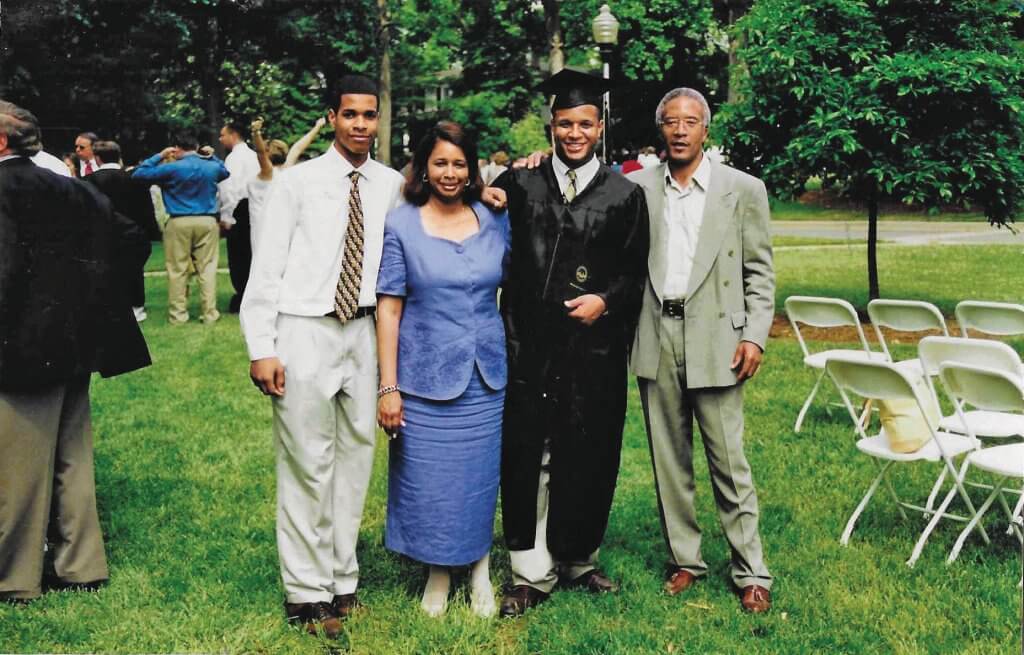
But Betty Jo’s decision to speak publicly about her diagnosis sparked a wave of support—and pride—from her son.
“I am so proud of you for doing this and talking about it,” Craig said in a heartfelt message.
“You’re going to save some lives with this conversation, and I’m also glad you were checking your breasts. We love you and we’ve got this. Thank you for not just being an inspiration for our family, but for being an inspiration for so many other people. We all love you.”
Despite the emotional toll, Betty Jo leaned on the foundation that had carried her through past tragedies: her faith.
“Anyone who knows me knows how deep my faith goes. I trust God with everything,” she said. “When they said those words to me, the first thing that crossed my mind was, God, why me again? But I know he doesn’t make mistakes. I went to my faith, I listened to songs, leaned on my friends, family, and church family. I had people praying with me.”
This time, Betty Jo is the one receiving the support she’s so often given from loved ones within her South Carolina community.
“People will call, text, and leave food on my porch,” she said.

“God surrounds us with certain people in our lives. This is a season where these people are important to me. It’s amazing the number of people I’ve surrounded myself with who’ve been diagnosed with breast cancer before.”
Experts at SurvivorNet emphasize the importance of building a strong support system—whether through family, friends, care teams, or online communities. These networks can offer emotional strength and practical advice during treatment and recovery.
Thanks to early detection, Betty Jo’s prognosis is promising.
“I had the surgery in July, and I will start radiation in a couple of weeks,” she said. “I’ll be taking medication for a while, and I’ll be changing some of my habits.”
She hopes her story encourages others—especially women—to prioritize their breast health.
“Women, make sure you’re checking your breasts and having your annual mammogram,” Betty Jo urged.
Helping Patients Cope with a Cancer Diagnosis
- Coping with Anxiety after an Ovarian Cancer Diagnosis
- Anxiety Around Colon Cancer Diagnosis
- Fear, Anger, Anxiety: You’re Entitled To Your Emotions
- High-Cost Parking at Hospitals Is Pain-Point for Cancer Patients Already Dealing With So Much
- ‘How Much Will It Cost?’: A Guide to Coping With the Cost of Cancer Treatment
Using Faith as a Tool for Healing
A study published in Cancer highlights the powerful role of faith in the lives of cancer patients, revealing that 69% of those diagnosed with cancer reported praying for their health, compared to 45% of the general U.S. population.
Cancer psychologist Dr. Andrew Kneier helped co-author “Coping with Cancer: Ten Steps toward Emotional Well-Being.” He also co-authored a column published by Stanford Medicine with Rabbi Jeffery M. Silberman, director of spiritual care at Danbury Hospital in Connecticut.
Together, they emphasize the deep emotional and psychological support that faith provides to those battling illness.
According to Kneier and Silberman, spirituality offers a powerful coping mechanism, helping individuals navigate the uncertainty that comes with a cancer diagnosis.
“A person’s faith or spirituality provides a means for coping with illness and reaching a deeper kind of inner healing,” they explain.
Faith helps patients in multiple ways, including:
- Seeking answers to the difficult questions illness presents.
- Finding comfort in the midst of fear and pain.
- Gaining a sense of direction during an overwhelming and uncertain time.
Religious teachings, they argue, can serve as a guidepost, offering strength and resilience when navigating the emotional and physical challenges of cancer.
WATCH: Three-time cancer survivor shares how her faith helped her during cancer.
New York City Presbyterian Pastor Tom Evans tells SurvivorNet about the importance of finding ways to cope with the complex web of feelings you may be experiencing after a challenging health diagnosis, such as cancer.
“It’s important to reach out in a simple prayer to God, even if you’ve never prayed before, you don’t know what to say, a heartfelt plea, ‘God, help me, be with me,’” Pastor Evans told SurvivorNet.
“You can reach out to God, and you can reach out to people, your friends and family, and say, ‘I can’t do this on my own. I need you.’ “It’s in that willingness to be open and to receive that we can find something deeper that we never would’ve encountered without this hardship,” Evans continued.
Help Coping With a Breast Cancer Diagnosis
If you are facing a breast cancer diagnosis, your emotions are likely to run high, which is completely normal. Psychiatrist Dr. Lori Plutchik says emotions are often fluid when coping with a diagnosis.
“The patient or person going through the stressful event should accept that emotions will be fluid. You may feel fine one day and then feel a massive wave of stress the next. It’s also important for those you look to for support, whether that’s a therapist, friends, and family, or both, to understand the fluidity of stress-related emotions,” Dr. Plutchik said.
WATCH: How to cope with complex and changing emotions.
If a stressful event affects how you think and feel, it may be time to seek mental health treatment. This could mean traditional talk therapy, medication, changing lifestyle habits (like exercise and diet), seeking a support group, or many other approaches.
SurvivorNet experts suggest women needing a little extra help coping with a breast cancer diagnosis.
- Let your family and close friends know and let them help. So many cancer survivors tell us they want and need support but are often too preoccupied to make specific requests. Urge those close to you to jump in with whatever practical help they can offer.
- Keep a journal. It can be extremely cathartic to let those feelings loose on paper. Grab a pen and a nice journal and chronicle your thoughts throughout the day.
- Join a cancer support group. Groups in nearly every community offer opportunities to connect with others going through a similar journey. You’ll learn constructive insight from others who can tell you what to expect and how to stay strong on tough days.
- Consider seeing a therapist. Ask your doctor to refer you to a therapist so you can discuss your fears and concerns in a safe space. Often, vocalizing your thoughts and feelings rather than internalizing them can provide relief.
Breast Cancer Symptoms & Self-Exams
Women are encouraged to do regular self-exams to become familiar with how their breasts feel normally, so when something unusual like a lump does form, it can be easily detected. A self-exam includes pressing your fingertips along your breast in a circular motion.
For some women, that means going to their doctor and walking through what a self-breast exam looks like, so they know what normal breast tissue feels like so if they do feel something abnormal, whether it’s a lump or discharge from the nipple, they know what to ask and what to look for.
Below are common symptoms to look out for:
- New lump in the breast or underarm (armpit)
- Any change in the size or the shape of the breast
- Swelling on all or part of the breast
- Skin dimpling or peeling
- Breast or nipple pain
- Nipple turning inward
- Redness or scaliness of breast or nipple skin
- Nipple discharge (not associated with breastfeeding)
Building the Courage to Share
Betty Jo chose to bravely share her diagnosis with the hopes of inspiring others. Some people battling a disease or cancer are open to sharing their experiences as much as they can, while others prefer to keep it to themselves or close loved ones. SurvivorNet experts say both approaches, and everything in between, are valid.
“Patients who have just been diagnosed with cancer sometimes wonder how they are going to handle the diagnosis of the cancer in social situations,” psychiatrist Dr. Lori Plutchik explains.
Plutchik says patients consider questions like “How much information should they share and with whom should they share the information?”
Dr. Plutchik explains, “There is no one right way to handle this diagnosis. People should do what feels right to them.”
WATCH: Sharing your diagnosis.
A cancer journey can last months to years, which means cancer warriors may be experiencing a lot of uncertainty until they fully understand where their health stands. This uncertainty can influence when a cancer patient is ready to share their diagnosis, Dr. Plutchik further explained.
Dr. Plutchik stresses that those close to a person going through cancer should be respectful of their wishes when it comes to disclosing their diagnosis and seeking support.
What To Ask Your Doctor
If you have been diagnosed with breast cancer, you may have questions about keeping your strength through treatment. Here are a few questions to help you begin the conversation with your doctor:
- What treatment will I be receiving?
- What side effects are associated with this treatment?
- Are there steps I can take daily to help minimize these side effects?
- What physical activity routine do you recommend for me during treatment?
- Do you have recommendations for someone who doesn’t particularly enjoy exercise?
- Can you recommend a dietician who can help me with healthy eating tips and weight maintenance?
- I’ve been having trouble sleeping. Do you have any treatment recommendations?
Learn more about SurvivorNet's rigorous medical review process.


