
Reaching Milestones After Cancer
- Country singer and actress Jillian Cardarelli, 33, will make her Grand Ole Opry debut on Oct. 27 at the 18th annual Opry Goes Pink, the Opry’s Breast Cancer Awareness Month show held with Susan G. Komen.
- Cardarelli was diagnosed with stage 2 invasive ductal carcinoma in May 2026. She says she sensed something was off, including unusual fatigue, despite years of routine monitoring for dense breast tissue.
- Cardarelli has not publicly said which breast cancer surgery she had. Dr. Sarah Cate, a breast surgeon, says factors pointing toward mastectomy include a large tumor relative to breast size, cancer in more than one area of the breast, or an inherited genetic mutation.
- She had surgery at Dana-Farber Cancer Institute, followed by 19 radiation treatments, and announced this summer that she is cancer-free.
- Dense breast tissue can make tumors harder to see on a mammogram. Women told they have dense breasts may want to ask their doctor whether supplemental imaging, such as ultrasound or MRI, makes sense for them.
The country music singer and actress, who revealed in June that she had been diagnosed with stage 2 breast cancer, announced on Instagram that she will make her Grand Ole Opry debut on Oct. 27 during “Opry Goes Pink,” the institution’s annual show in honor of Breast Cancer Awareness Month.
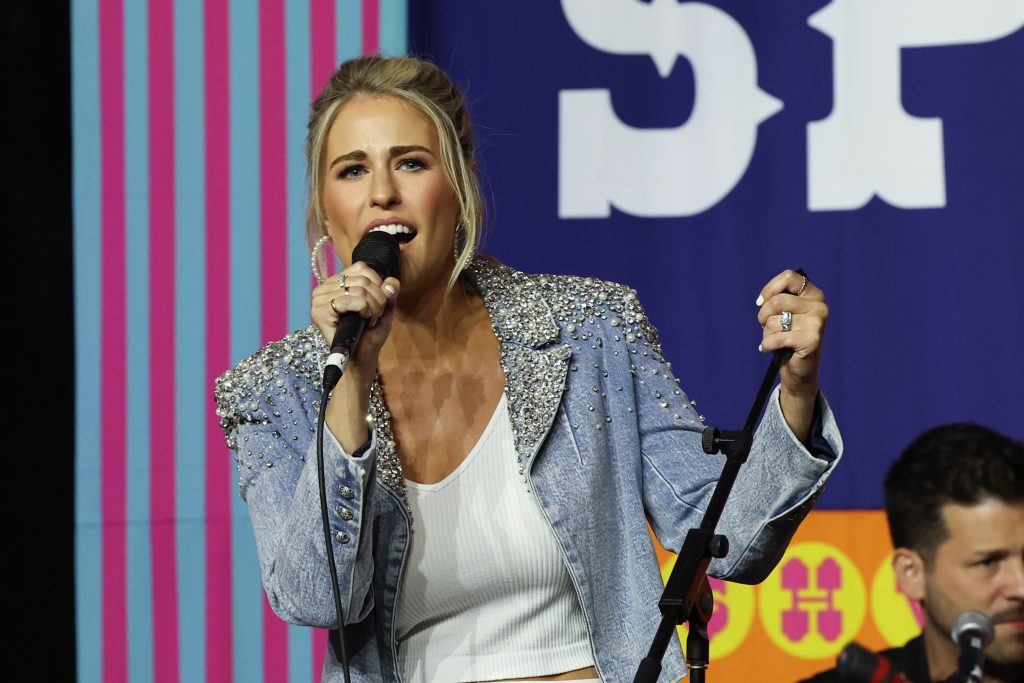
In recent years, the Opry has donated $5 from every ticket sold to Komen to support breast cancer research and patient care. Past switch-flippers include Amy Grant, Kacey Musgraves, Little Big Town and Carrie Underwood.
For Cardarelli, the Opry stage has been a goal for years. Promoting her debut EP, she told Fox News she would love to play the Grand Ole Opry. In 2024, after releasing her duet “I’ll Get Over You” with Vince Gill, she told “People” one of her goals was to sing the song in the Opry circle.
‘I Knew My Body’: How Cardarelli’s Diagnosis Unfolded
Cardarelli learned she had stage 2 invasive ductal carcinoma in May. At the time, she was celebrating her fifth wedding anniversary with husband Brian Parker, writing new music and preparing for the second season of Great American Family’s “Crossroad Springs.”
She had been monitored for dense, fibrous breast tissue since she was 25, and nothing concerning had ever appeared on her imaging. But in the weeks before her diagnosis, she told “People” she felt something was off.
WATCH: Early-Stage Breast Cancer Treatment
“I knew my body. I was a little more tired,” she said.
The change was in an area of very dense tissue, and she admitted she briefly wondered if she was overthinking it. Her gut told her otherwise, so she got checked. Doctors confirmed a malignant tumor.
In an Instagram post, she noted she had no family history of breast cancer, had tested negative for inherited genetic mutations, and was seven years away from the age when routine mammograms are recommended.
“If breast cancer can happen to an otherwise healthy young woman … it can happen to anyone,” she wrote.
From Surgery to ‘Cancer Free’
Cardarelli was being treated at Dana-Farber Cancer Institute in Boston by the same oncologist who cares for her mother. When SurvivorNet first reported on her diagnosis in June, she was awaiting final test results and expected surgery to come first.
Weeks later, she shared photos from her hospital bed after surgery.
“The first big step is behind me,” she wrote on Instagram, adding that it was time to heal while she waited for the next step in her treatment plan. She thanked the Dana-Farber team and encouraged followers to #CheckYourGirls.

That next step was radiation. After completing 19 sessions, Cardarelli posted an emotional video hugging her care team, thanking the radiation staff for brightening her early mornings and joking that they would miss hearing Elvis every day.
Then came the news she had been waiting for: she announced she is cancer-free.
Throughout treatment, Cardarelli has credited husband Brian Parker as her constant source of support.
Cancer was already part of Cardarelli’s story long before her own diagnosis. Her mother has lived with stage 4 colon cancer for more than a decade.
Cardarelli co-wrote the song “Strong” with Charles Esten, known for “Nashville” and “Outer Banks,” as a tribute to her mother’s fight. After her own diagnosis, the lyrics hit differently.
When Cardarelli steps into the Opry circle, she’ll be standing for her own recovery, her mother’s endurance, and the many women in the audience whose lives have been touched by breast cancer.
Expert Resources for Breast Cancer Patients
- “Hip Hop Chemo” – Breast Cancer Survivor’s Moves to Stop the Stigma
- Breaking Down the Major Shift in Chemotherapy for Breast Cancer
- Chemo for Triple Negative Breast Cancer
- The Debates Around Radiation for Breast Cancer
- Breast Cancer Risk For Post Menopausal Women — Taking Hormones Can Increase Your Risk
Breast Cancer In Young Women: Why Knowing Your Body Matters
Breast cancer is far less common in women under 40, but Cardarelli’s story is a reminder that it does happen — even in women who exercise, eat well, and have no family history.
Invasive ductal carcinoma, Cardarelli’s diagnosis, is the most common type of breast cancer. It begins in the milk ducts and grows into the surrounding breast tissue.
Stage 2 means the tumor is larger than a stage 1 tumor, has reached a few nearby lymph nodes, or both. It is still considered early-stage and highly treatable.
The U.S. Preventive Services Task Force recommends that women at average risk begin mammograms every other year at age 40.
Since younger women typically aren’t screened, many cancers in this age group are found after a woman notices a change herself.
Signs worth bringing to your doctor include:
- A new lump or thickening in the breast or underarm
- Changes in breast size, shape, or skin, such as dimpling or redness
- Nipple changes or discharge
- A change that simply feels different to you and doesn’t go away
What Dense Breasts Mean for Screening
Cardarelli had been monitored for dense breast tissue since her mid-20s.
Dense breasts have more fibrous and glandular tissue than fatty tissue. On a mammogram, both dense tissue and tumors appear white, which can make cancers harder to spot. Dense tissue is also linked to a modestly higher breast cancer risk.
Since 2024, federal rules require mammography facilities to tell patients whether their breasts are dense. If you’re told you have dense breasts, ask your doctor whether additional imaging, such as breast ultrasound or MRI, is appropriate based on your overall risk.
Surgery, Radiation and What Comes After ‘Cancer-Free’
For many women with early-stage breast cancer, surgery is the first step. That may be a lumpectomy, which removes the tumor and a margin of healthy tissue, or a mastectomy, which removes the whole breast.
WATCH: Recovering from a Lumpectomy
Cardarelli has not publicly said which surgery she had.
Dr. Sarah Cate, a breast surgeon, has told SurvivorNet that factors pointing toward mastectomy include a large tumor relative to breast size, cancer in more than one area of the breast, or an inherited genetic mutation.
After surgery, a pathologist examines the removed tissue to help guide what comes next.
Radiation is commonly recommended after a lumpectomy, and sometimes after mastectomy, to destroy any remaining cancer cells and lower the chance of recurrence.
Depending on the tumor’s features, some patients also need chemotherapy, targeted therapy, or hormone therapy.
Dr. Elizabeth Comen, a medical oncologist, has told SurvivorNet that even women with early-stage breast cancer ideally receive some form of therapy after surgery to help keep the cancer from coming back.
WATCH: Regaining your sense of self after reconstruction.
Life After Treatment
Hearing “no evidence of disease” is a huge milestone, but survivorship is its own phase of care. It typically includes:
- Regular follow-up visits and breast imaging
- For hormone receptor–positive cancers, daily hormone therapy that may continue for five to 10 years
- Managing lingering side effects, such as fatigue or skin changes from radiation
- For younger survivors, conversations about fertility, pregnancy and long-term health
Coping with the emotional side of breast cancer
Cardarelli’s mix of fear, sadness and gratitude is common.
Psychiatrist Dr. Lori Plutchik has told SurvivorNet that emotions during a stressful event tend to be fluid: a person may feel fine one day and overwhelmed the next. She says it helps when the people offering support understand that, too.
Ways to ease the emotional load:
- Lean on loved ones. Let family and friends help with meals, rides, or simply listening.
- Keep a journal. Writing can help you process what you’re feeling.
- Join a support group. Local and online groups connect you with people who understand.
- Talk to a professional. A therapist can help you work through fear and uncertainty.
Questions to Ask Your Doctor
- Do I have dense breasts, and does that change how I should be screened?
- Based on my personal and family history, when should I start mammograms?
- Would supplemental imaging, such as ultrasound or MRI, be helpful for me?
- If I’ve been diagnosed, what are my surgery options, and what follows surgery?
- What follow-up care will I need after treatment ends?
Learn more about SurvivorNet's rigorous medical review process.


