Coping With Pregnancy, Cancer, & Body Changes
- Kristin Edwards, a 32-year-old mom, got reconstructive areola and nipple tattoos after battling breast cancer while pregnant. Now she’s sharing her story to inspire others to stay on top of their breast health and show other women it’s possible to feel confident after undergoing breast cancer surgery.
- Detecting breast cancer so tricky while pregnant is that the breast changes in appearance. These changes can easily be masked by the body’s natural response to pregnancy; thus, diagnoses usually come after the cancer has reached advanced stages.
- Being your own advocate can be key to getting a correct diagnosis and obtaining the best treatment possible while dealing with a diagnosis.
- The U.S. Preventive Services Task Force recommends women at average breast cancer risk begin screening at age 40. Women with the BRCA gene mutation, who have a family history of cancer, or have dense breasts are at higher risk and should talk with doctors about screening earlier.
Edwards’ story of being diagnosed with stage three breast cancer while five months pregnant, which followed five years of noticing a fluctuating breast lump, offers inspiration to other women like herself.
Read More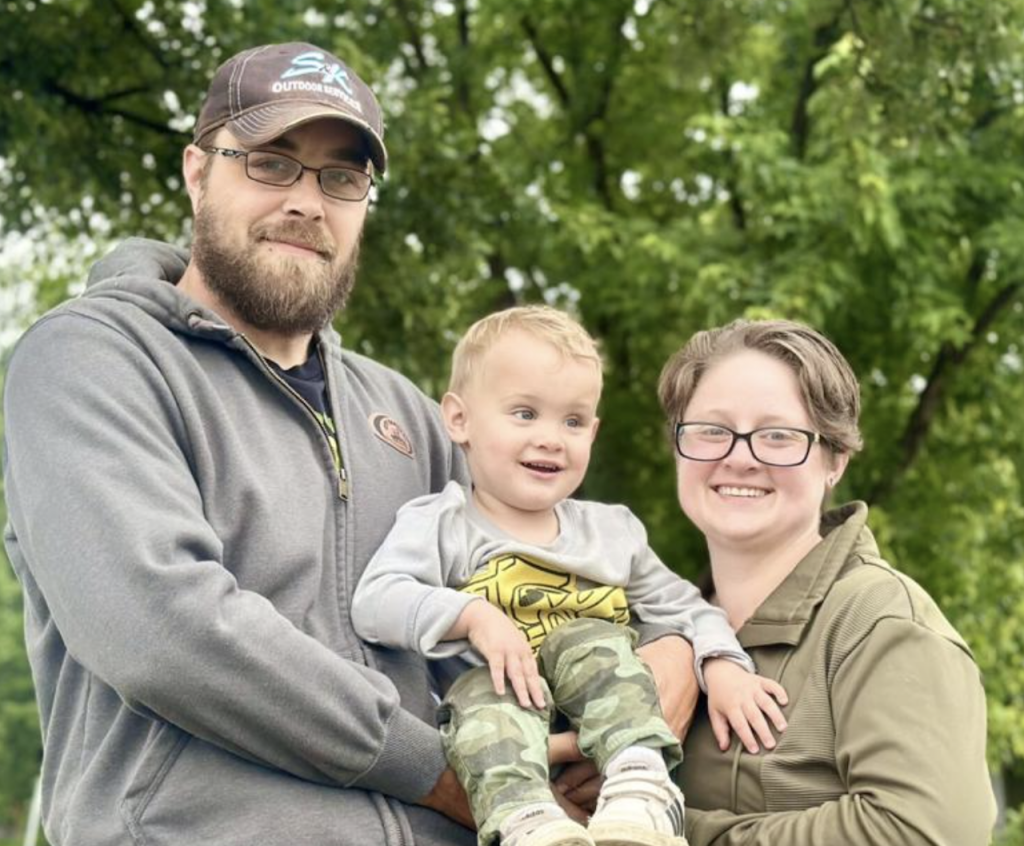
Edwards, who had a HER2-positive gene mutation, also decided to get her ovaries removed, along with both of her breasts, as her cancer was hormonal.
She underwent a double mastectomy and breast reconstruction, which left her without areolas and nipples—and she ultimately learned that her insurance didn’t cover reconstructive areola tattooing.
More Stories On Tattoos
- Should People With Tattoos Worry More About Skin Cancer Risk? A Leading Expert Breaks It Down For Us
- New Study Finds Potentially Toxic, Cancer-Causing Chemicals in Tattoo Ink; How Harmful is Your Body Art?
- When It Comes to Skin Cancer This Tattoo Artist Has ‘Got Your Back’: Have You Scheduled Your Skin Check Yet?
- Tattoo Ink Can Complicate Breast Cancer Screenings; Here’s What You Need to Know About Detection and Screening
However, when Edwards got back to work, one of her co-workers told her about a woman named Kelly Yetzer, owner of BeYOUtiful Ink Cosmetic + Medical Tattooing, which offers free areola and nipple tattoos at no charge for breast cancer survivors if applicable.
Edwards, who was able to wear a temporary tattoo prior to decided on what her tattoos would look like, is now more confident and comfortable in her own skin after getting her areolas and nipples tattooed on.
“I’m really happy with what they look like now,” Edwards, who recalled the painless process taking just 90 minutes, told the news outlet.
RELATED: Feeling Whole Again The Increasing Popularity Of Nipple Tattoos After Breast Cancer Surgery
View this post on Instagram
BeYOUtiful Ink Cosmetic + Medical Tattooing, which Edwards praises for helping her embrace her body after battling cancer, offers support for women who are healing from breast surgery.
“We see every person who walks through our doors as a masterpiece of resilience,” the company writes on Instagram. “The journey of healing after a mastectomy is one of incredible strength, and we are deeply humbled to be a small part of it.”
RELATED: To Reconstruct or Not: After Mastectomy, Two Women Take Very Different Paths
The company adds, “We like to think of areola restoration as the final, gentle brushstroke on that masterpiece.
“It is a hopeful, affirming step that signifies closure, peace, and the beautiful wholeness of you. Your spirit is the true work of art.”
How breast cancer survivor Chiara D’Agostino learned to accept herself
Patients Turning to Tattoo Art
Many cancer patients turn to body art as a form of expression, while mainly seeking comfort after beating the disease.
RELATED: Blink-182’s Mark Hoppus Gets A New Tattoo To Celebrate Beating Cancer
Breast cancer patients have been able to embrace their new bodies after mastectomies, the removal of their breasts, with the help of artists who tattoo nipples and other artwork on their breasts, just as Edwards underwent.
Dr. Raheem Nazerali, a breast reconstructive surgeon at Stanford Health Care, explained the nipple tattooing process in a previous interview with SurvivorNet.
“Nipple tattooing is generally for patients who have undergone a skin sparing mastectomy or a delayed reconstruction,” Dr. Nazerali explained.
“So patients who are not eligible for nipple-sparing mastectomies can have a nipple reconstructed by their plastic surgeon.”
“Generally I tell patients that there’s three different types,” he continued. “There’s a 2D reconstruction, a 3D reconstruction, and a 4D reconstruction.”
The 2D is basically just the tattoo done by either a tattoo artist, or done by a physician assistant, or an advanced practitioner, that provides color to where the nipple was supposed to be.
Reflecting After Your Cancer Journey Through Artwork
When getting a nipple tattoo, or any other tattoo, just do your research to make sure the benefits to you as a person outweigh the potential risks. Many cancer warriors have overcome so much and choose to not live in fear, but we also have to take into account how toxic certain products can be. Everything in moderation, they say. You do you!
“The 3D tattoo involves shading, so different amounts of shading just like makeup can make things look either flat or can make things look, in three dimension,” Dr. Nazerali said.
“And utilizing color and shading, tattoo artists are able to provide excellent 3D reconstructions of a nipple that appear from the front to have a papule of the nipple, or the center portion of the nipple, with the surrounding color.”
When Should You Consider a Mastectomy?
As for the surgery Edwards underwent, which led her to seek nipple and areola tattoos, Dana-Farber oncologist Dr. Ann Partridge told SurvivorNet in an earlier interview that the process around deciding to treat a patient with breast cancer surgery also called a mastectomy.
“So when I talk to a woman who comes to me and she has breast cancer, I evaluate what the standard options for treatment for her are,” she explains.
“[This] typically includes cutting out the cancer, which is either a lumpectomy if you can get it all with just a little scooping around of the area that’s abnormal or a mastectomy for some women meaning taking the full breast because sometimes these lesions can be very extensive in the breast,” she explains. “And I’ll talk to a woman about that and I’ll say these are two main options or the big fork in the road.”
Cancer During Pregnancy
The American Cancer Society says the type of cancer pregnant women may experience include:
- Breast cancer
- Melanoma
- Leukemia
- Cervical cancer
- Thyroid cancer
- Ovarian cancer
- Colon cancer
- Lymphoma
Remember, during pregnancy, the body undergoes several changes making cancer-related changes harder to detect. Still, some things to be watchful for include:
- Hormone levels change during pregnancy, which causes breasts to become larger, lumpy, and/or tender.
- Rectal bleeding could possibly be due to benign hemorrhoids, a common occurrence during pregnancy, or from colon or rectal cancer.
- Feeling tired could be from pregnancy weight gain or from low red blood cell counts (anemia), which can be seen in leukemias and lymphomas or during pregnancy.
- As the fetus and uterus grow throughout pregnancy, ovarian tumors get more difficult to detect.
- Staying current on all of your health and cancer-related screenings will help you manage your cancer risk.
How Cancer Treatments Impact Fertility
Chemotherapy can destroy eggs in your ovaries. This can make it impossible or difficult to get pregnant later. Whether or not chemotherapy makes you infertile depends on the drug type and age since your egg supply decreases with age.
“The risk is greater the older you are,” reproductive endocrinologist Dr. Jaime Knopman previously told SurvivorNet.
“If you’re 39 and you get chemo that’s toxic to the ovaries, it’s most likely to make you menopausal. But, if you’re 29, your ovaries may recover because they have a higher baseline supply,” Dr. Knopman continued.
Radiation to the pelvis can also destroy eggs. It can damage the uterus, too. Surgery to your ovaries or uterus can hurt fertility as well.
Meanwhile, endocrine or hormone therapy may block or suppress essential fertility hormones and may prevent a woman from getting pregnant. This infertility may be temporary or permanent, depending on the type and length of treatment.
If you have a treatment that includes infertility as a possible side effect, your doctor won’t be able to tell you whether you will have this side effect. That’s why you should discuss your options for fertility preservation before starting treatment.
WATCH: How chemotherapy affects fertility.
Research shows that women who have fertility preserved before breast cancer treatment are more than twice as likely to give birth after treatment than those who don’t take fertility-preserving measures.
Most women preserve their fertility before cancer treatment by freezing their eggs or embryos.
After you finish your cancer treatment, a doctor specializing in reproductive medicine can implant one or more embryos in your uterus or the uterus of a surrogate with the hope that it will result in pregnancy.
If you freeze eggs only before treatment, a fertility specialist can use sperm and eggs to create embryos in vitro and transfer them to your uterus.
When freezing eggs or embryos is not an option, doctors may try these approaches:
- Ovarian tissue freezing is an experimental approach for girls who haven’t yet reached puberty and don’t have mature eggs or for women who must begin treatment immediately and don’t have time to harvest eggs.
- Ovarian suppression prevents the eggs from maturing so they cannot be damaged during treatment.
- For women getting radiation to the pelvis, Ovarian transposition moves the ovaries out of the line of treatment.
In addition to preserving eggs or embryos, positive research has shown that women with early-stage hormone-receptor (HR) positive breast cancer were able to safely pause endocrine therapy (ET) to try to get pregnant, and they did not have worse short-term recurrence rates than people who did not stop endocrine therapy.
How to Advocate for Your Health as a Woman
In a previous interview with SurvivorNet, April Knowles explained how she became a breast cancer advocate after her doctor dismissed the lump in her breast as a side effect of her menstrual period. Unfortunately, that dismissal was a mistake.
Knowles was diagnosed with metastatic breast cancer at age 39. She said the experience taught her the importance of listening to her body and speaking up when something doesn’t feel right.
I Wanted My Doctor To Like Me, Then He Missed My Breast Cancer
“I wanted my doctor to like me,” she said. “I think women, especially young women, are really used to being dismissed by their doctors.”
Jenny Saldana is another woman who’s spoken up about advocating for yourself. She says she was told “you can’t keep coming back here taking up resources for women that really need them” when she was trying to get her breast cancer diagnosis.
“The squeaky wheel gets the oil,” she said as advice for others.
Advocating For Yourself While Navigating the Medical World
Evelyn Reyes-Beato feels similarly. As a Latina like Saldana and a colon cancer survivor, she urges people to “get knowledge” so they won’t feel intimated by their doctors. She wants to remind others that they have a right to ask questions and make physicians “earn that copay.”
Dr. Zuri Murrell, director of the Cedars-Sinai Colorectal Cancer Center, previously told SurvivorNet that healthcare guidelines are meant to do the right thing for the largest number of people while using the fewest resources.
“The truth is you have to be in tune with your body, and you realize that you are not the statistic,” he said.
Be Pushy, Be Your Own Advocate, Don’t Settle
Dr. Murrell says not every patient will “fit into” the mold, so it’s important to “educate yourself and be your own health care advocate.”
“Every appointment you leave as a patient, there should be a plan for what the doc is going to do for you, and if that doesn’t work, what the next plan is,” Dr. Murrell said. “And I think that that’s totally fair. And me as a health professional that’s what I do for all of my patients.”
Contributing: SurvivorNet Staff
Learn more about SurvivorNet's rigorous medical review process.