A Timeline of Progress: How CAR T-Cell Therapy Transformed Diffuse Large B-Cell Lymphoma Care
- Decades of Research Pay Off: The idea of reprogramming immune cells to fight cancer began in the 1980s, but it wasn’t until the 2010s that CAR T-Cell Therapy showed dramatic success in blood cancers — culminating in FDA approval in 2017 for large B-cell lymphoma.
- From Experimental to Standard of Care: Once considered experimental, CAR T-Cell Therapy is now an established treatment option for eligible lymphoma patients, with ongoing advances focused on making it safer, faster, and more widely available.
- Expanding Access and Impact: Dr. Leslie Popplewell of City of Hope Atlanta, who helped pioneer some of the earliest CAR T-Cell trials, notes that even older patients are now benefiting from this therapy — thanks to better management of side effects and stronger supportive care practices.
SurvivorNet spoke to one of Atlanta’s leading non-Hodgkin lymphoma experts, Dr. Leslie Popplewell about this groundbreaking treatment and how the therapy moved from the lab to the bedside, offering new hope to patients facing a relapse of diffuse large B-cell lymphoma in Atlanta and beyond.
Read More
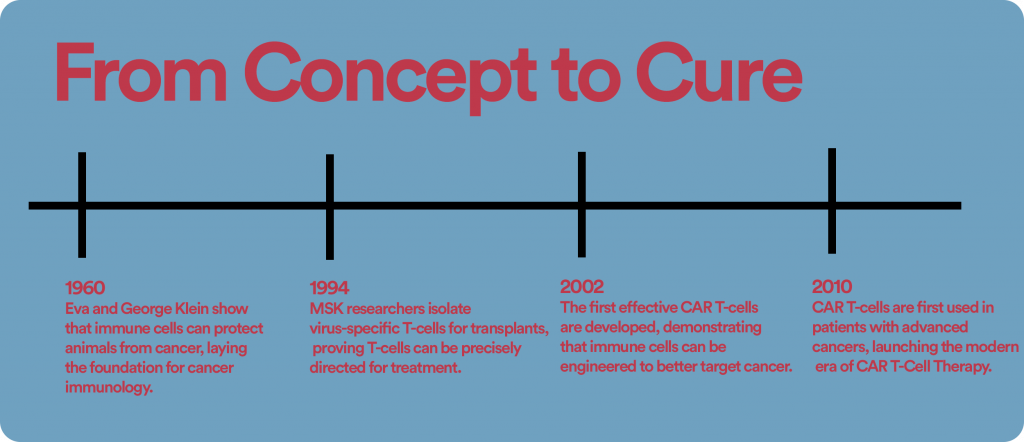
The Long Road: Key Milestones in the Development of CAR T-Cell Therapy
Early research (1980s-2000s)
The concept of genetically modifying T-cells to attack cancer emerged in the late 1980s and 1990s. Early “first generation” chimeric receptors lacked co-stimulatory signals; later “second generation” CARs included costimulatory domains essential for T-cell durability and response.
Progress was steady but slow—because engineering cells, ensuring safety, and moving into humans is complex work.
Translational advances and early clinical success (2010s)
In Atlanta, for example, the Winship Cancer Institute of Emory University began offering CAR T-Cell Therapy (such as axicabtagene ciloleucel) in 2018, with local patients achieving meaningful remissions.
Regulatory approval specifically for large B-cell lymphoma
In October 2017, the U.S. Food & Drug Administration (FDA) approved Axicabtagene ciloleucel (brand name Yescarta) for adults with relapsed or refractory large B-cell lymphoma after two or more lines of therapy.
Since then, other CAR T-Cell products have been approved, and indications are expanding.
With these regulatory milestones, CAR T-Cell Therapy shifted from “experimental” to “standard of care for eligible patients” in the Large B-cell lymphoma relapse setting.
Ongoing improvements & implications for Atlanta patients
Recent work has focused on improving manufacturing speed, reducing side-effects, widening eligibility, and starting CAR T-Cell Therapy earlier in the treatment course.
“And it took a long time to figure out how to do this safely for patients. The first few patients who were treated with CAR T-Cells had some really impressive cytokine release and there were a lot more patients who wound up in the intensive care unit.”
“It seemed, at the beginning, it might be very difficult to translate this treatment modality into the general public, into the average patient with relapsed lymphoma. But I have patients in their seventies and eighties who have had CAR T-Cells and have done very well.
“I think the community has done a good job at really looking at supportive care, at looking at ways to prevent cytokine release syndrome and really also at designing CAR T-Cells that are manageable.” – adds Dr Popplewell.
Learn more about SurvivorNet's rigorous medical review process.