
Getting Through Early-Stage Lung Cancer
- Pope Leo XIV’s early‑stage lung cancer was confirmed after surgeons removed the lower lobe of his right lung; as Dr. Joseph Friedberg notes, early lung cancer is often “completely asymptomatic” until it spreads.
- Pathology results confirmed Pope Leo XIV had pulmonary adenocarcinoma, and experts like Dr. Geoffrey Oxnard emphasize that identifying the exact subtype — small cell vs. non‑small cell — is essential for determining the right treatment strategy.
- Surgery remains the gold standard for early-stage disease, with options ranging from segmentectomy to lobectomy; recovery can be difficult, and thoracic nurse Melissa Culligan stresses that shifting pain is normal and staying connected to the care team is crucial.
- The Vatican reports the Pope’s prognosis is expected to be excellent following minimally invasive surgery, with the focus now on recovery, monitoring, and long‑term health.
Although the cancer was detected early, the recovery ahead is often lengthy and can be painful at times, as lung cancer surgery is among the more demanding postoperative experiences in oncology.
Read More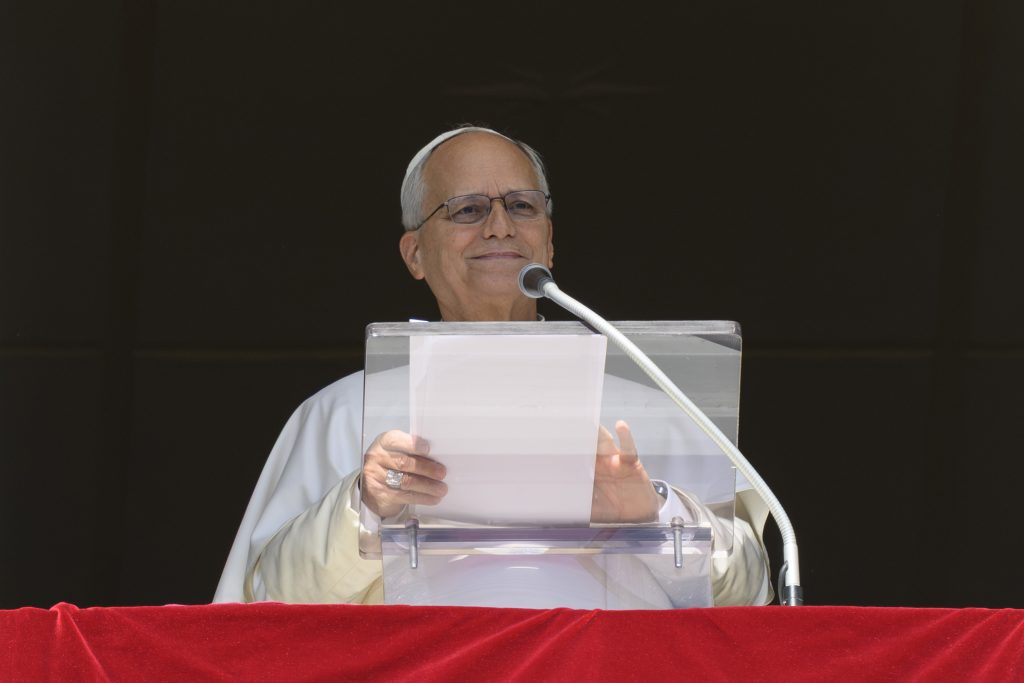
The Vatican sent CBS News a statement saying, “The lower lobe of the right lung was removed using a video-assisted technique…Intraoperative histological examination confirmed the diagnosis of pulmonary adenocarcinoma, as suspected from pre-operative tests.”
Understanding the Diagnosis and Treatment Path
Once lung cancer is identified, oncologists evaluate several critical factors: biopsy results, cancer subtype, and tumor location. Dr. Geoffrey Oxnard, thoracic oncologist at Boston Medical Center, explains that determining whether the cancer is small cell or non‑small cell — and further classifying non‑small cell into squamous or adenocarcinoma — guides treatment strategy.
“Surgery to remove the cancer is considered the gold standard for stage one lung cancer, says Dr. Friedberg.
WATCH: Surgical Options for Lung Cancer
Depending on tumor size and location, surgeons may perform:
- Segmentectomy – removal of a small portion of the lung
- Lobectomy – removal of an entire lobe
- Pneumonectomy – removal of the entire lung
If the tumor sits on the outer edge of the lung, a wedge resection may be possible, sparing more healthy lung tissue. However, not all patients can tolerate major lung surgery, especially those with compromised lung function.
Before surgery, doctors also assess heart and vascular health.
Smoking — the leading cause of lung cancer — also contributes to arterial disease, raising the risk of complications such as heart attack or stroke during surgery.
As Dr. Friedberg notes, surgeons work to minimize these risks as much as possible before proceeding.
Recovery: The Hardest Part
Even when surgery is successful, recovery can be challenging.
Thoracic nurse Melissa Culligan, RN, MS, says the toughest phase often begins once patients return home and must manage pain on their own. She emphasizes staying closely connected to the care team, especially as pain shifts in location and intensity — a normal part of healing.
WATCH: Pain Management After Lung Cancer Surgery
As patients become more active, discomfort often increases.
Culligan stresses that this doesn’t mean something is wrong; it’s simply the body rebuilding strength. She encourages patients to stay active, take pain medication as prescribed, and maintain open communication with their medical team.
WATCH: Diagnosing Lung Cancer and Determining Treatment
The Pope’s Strong Prognosis
Oncologists reportedly expect Pope Leo’s prognosis to be “excellent,” given the cancer was removed at an early stage.
The Vatican noted that the lower lobe was removed using a minimally invasive, video‑assisted technique, and with the tumor successfully excised, the focus now shifts to recovery, monitoring, and long‑term health.
RELATED: What is VATS Surgery for Lung Cancer?
Expert Resources for Lung Cancer Patients
- ‘Game-Changing’ Drug Enhertu Now Approved for Certain Types of Lung Cancer What Does This Mean for Patients?
- Checkpoint Inhibitors Before Surgery Could Improve The Odds For Lung Cancer Patients
- Do You Have A Small Lung Cancer Tumor? Consider If Video-Assisted Thoracoscopic Surgery Is Right For You.
- For Early Non-Small Cell Lung Cancer, Immunotherapy Keytruda Before and After Surgery May Significantly Reduce Risk of Disease Progression, Promising Study Shows
Understanding Lung Cancer and Why It’s Hard to Catch Early
Lung cancer forms when cancer cells develop in the tissues of the lung. It is the second most common form of cancer and the leading cause of cancer deaths in both men and women in the U.S., SurvivorNet experts say. It’s “completely asymptomatic,” says Dr. Friedberg.
“It causes no issues until it has spread somewhere. So, if it spreads to the bones, it may cause pain. If it spreads to the brain, it may cause something not subtle, like a seizure,” Dr. Friedberg adds.
WATCH: Detecting lung cancer in the absence of symptoms.
Scans such as X-rays can help doctors determine if a shadow appears, which can prompt further testing for lung cancer.
Lung cancer often doesn’t cause symptoms until it has already spread outside the lungs, according to SurvivorNet’s experts.
There are two main types of lung cancer, which doctors group together based on how they act and how they’re treated:
Non-small cell lung cancer (NSCLC) is the most common type and makes up about 85% of cases.
Small cell lung cancer (SCLC) is less common, but it tends to grow faster than NSCLC and is treated very differently.
Some people with lung cancer may experience symptoms such as:
- A cough that doesn’t go away, that gets worse, or that brings up bloody phlegm
- Shortness of breath
- Fatigue
- Chest pain
- Hoarse voice
- Appetite loss
- Weight loss
If you are experiencing these kinds of symptoms consistently, contact your doctor for further tests.
Learn more about SurvivorNet's rigorous medical review process.
